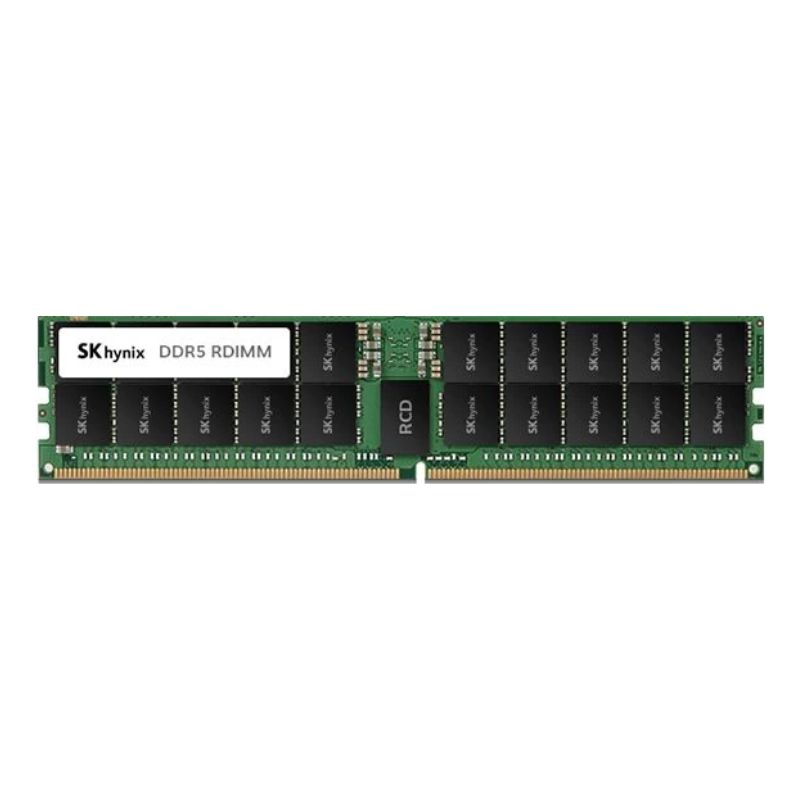
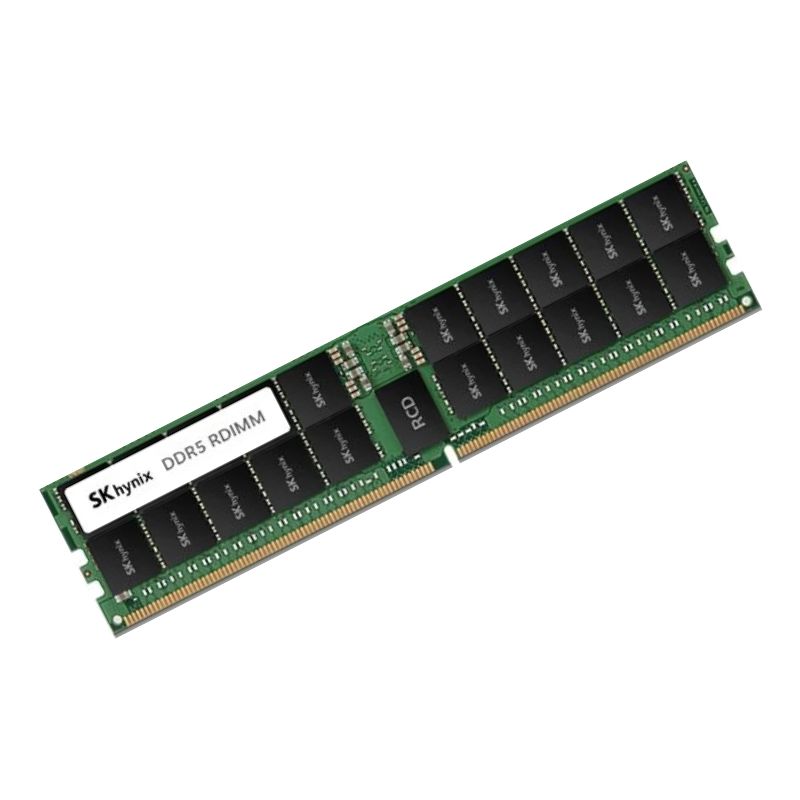
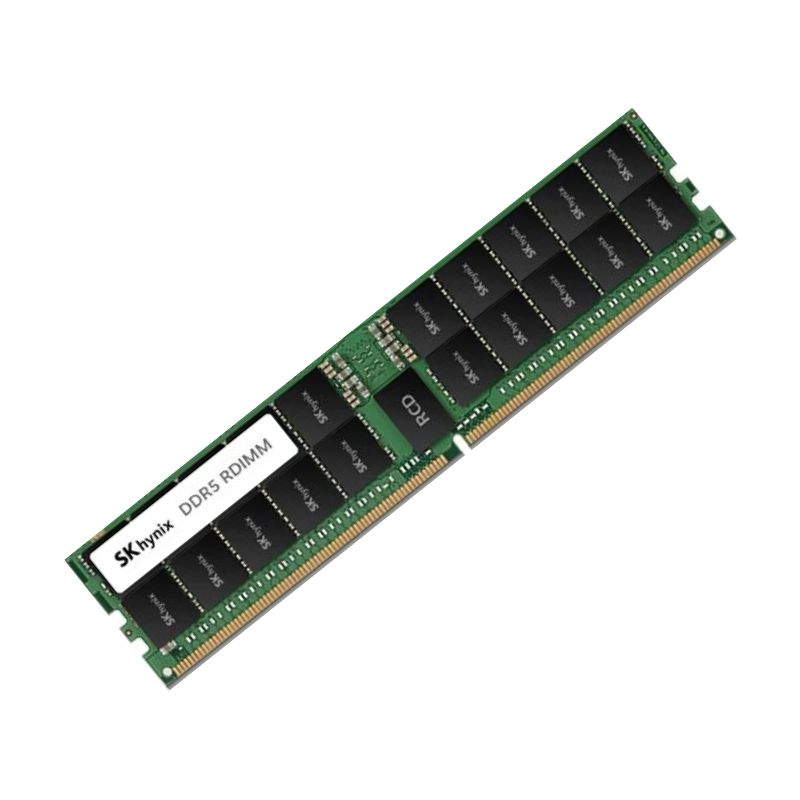
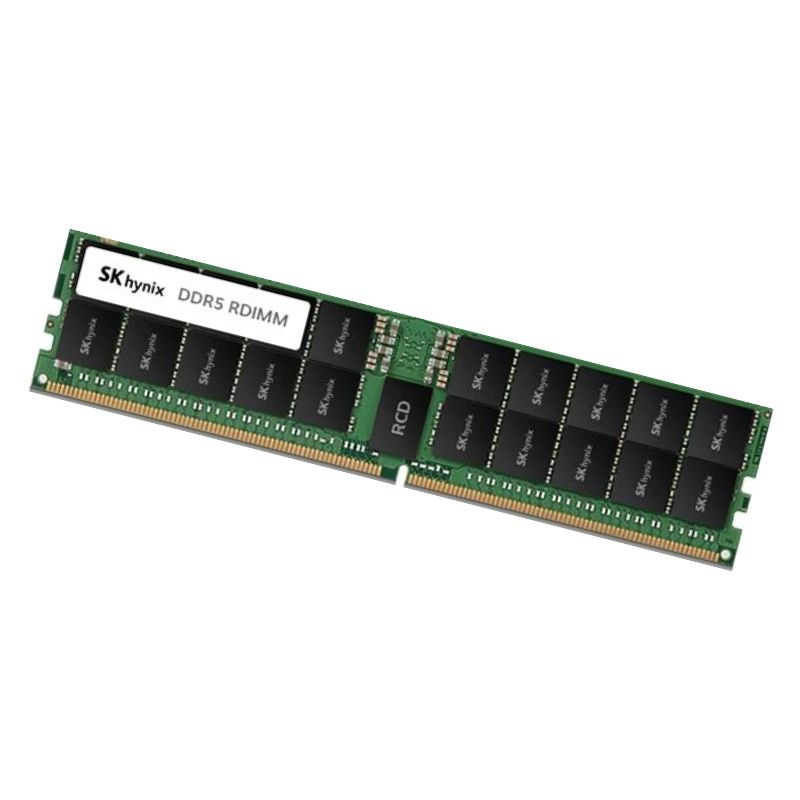
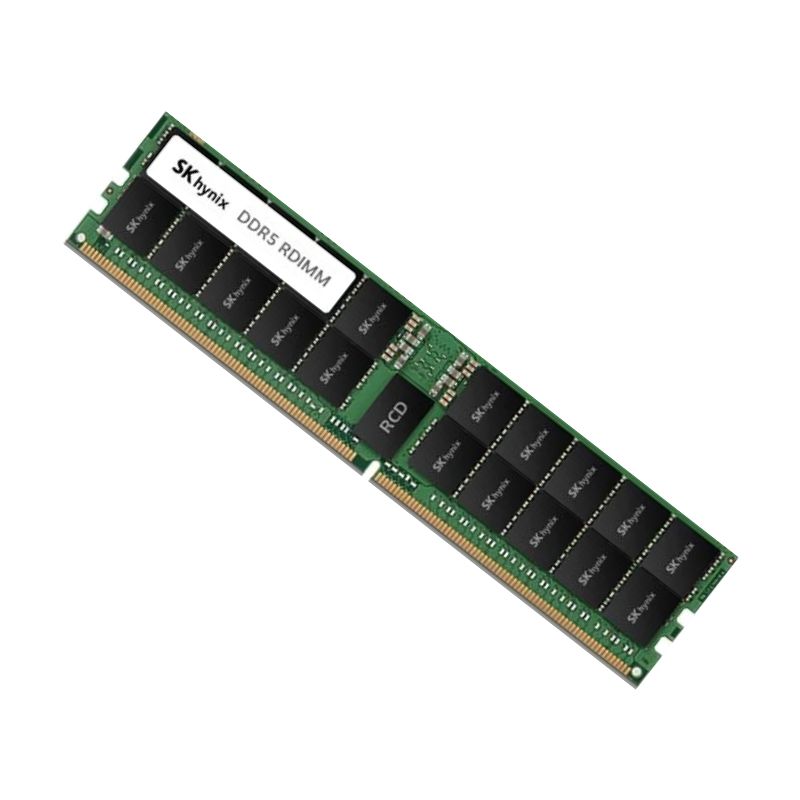
Hynix HMCT04AEERA140N 128GB DDR5 4800mhz Pc5-38400 Ecc SDRAM 288-pin Rdimm 1.1v Quad Rank X4 Memory Module
- — Free Ground Shipping
- — Min. 6-month Replacement Warranty
- — Genuine/Authentic Products
- — Easy Return and Exchange
- — Different Payment Methods
- — Best Price
- — We Guarantee Price Matching
- — Tax-Exempt Facilities
- — 24/7 Live Chat, Phone Support
- — Visa, MasterCard, Discover, and Amex
- — JCB, Diners Club, UnionPay
- — PayPal, ACH/Bank Transfer (11% Off)
- — Apple Pay, Amazon Pay, Google Pay
- — Buy Now, Pay Later - Affirm, Afterpay
- — GOV/EDU/Institutions PO's Accepted
- — Invoices
- — Deliver Anywhere
- — Express Delivery in the USA and Worldwide
- — Ship to -APO -FPO
- — For USA - Free Ground Shipping
- — Worldwide - from $30
Product Overview of Hynix HMCT04AEERA140N 128GB DDR5 ECC Registered RDIMM
The Hynix HMCT04AEERA140N is a high-capacity 128GB DDR5 SDRAM Registered DIMM designed for enterprise-grade servers and workstations. Built with quad rank x4 architecture, it offers exceptional reliability, consistent bandwidth, and faster processing for data-intensive applications.
General Specifications
- Manufacturer: SK Hynix
- Manufacturer Part Number: HMCT04AEERA140N
- Product Type: 128GB DDR5 SDRAM Registered Memory
Technical Features
This DDR5 module represents the next-generation standard in server memory, bringing higher frequencies, improved stability, and lower power usage. With advanced error-correcting code and optimized latency, it is built for critical workloads.
Main Attributes
- Capacity: 128GB single module
- Memory Type: DDR5 SDRAM
- Speed: 4800MHz (DDR5-48000 / PC5-38400)
- ECC: Yes, with full error detection and correction
- DIMM Type: Registered (RDIMM)
- CAS Latency: CL46
- Ranks: Quad Rank (4Rx4)
Performance Benefits
By adopting DDR5 technology, this memory module delivers nearly double the bandwidth compared to DDR4. It ensures faster response times, enhanced multitasking, and improved efficiency for virtualization, cloud computing, AI training, and database operations.
Physical Characteristics
- Form Factor: 288-pin Registered DIMM
- Voltage Requirement: 1.1V for optimized power usage
- Dimensions: 1.00 inch (height) x 6.75 inches (depth)
Advanced Reliability Features
With built-in Error-Correcting Code (ECC) technology, the Hynix HMCT04AEERA140N minimizes data corruption and ensures high data accuracy. The registered design further improves stability by reducing electrical load on the memory controller, making it ideal for large-scale deployments.
Why Choose This Module?
- Engineered for mission-critical servers that demand continuous uptime
- Supports virtual machines and database clusters with superior memory bandwidth
- Offers a balance of power efficiency and extreme performance
- Optimized for high-density computing environments
Applications and Use Cases
Enterprise-Level Performance
This 128GB DDR5 module is ideal for cloud servers, data centers, AI modeling, and virtualization platforms. Its enhanced throughput allows IT administrators to deploy more virtual machines without compromising on performance.
High-Density Workloads
- Big data processing and analytics
- Artificial intelligence and machine learning models
- Scientific research requiring high computational accuracy
- Enterprise-level virtualization and multi-user server systems
Performance Optimization Details
Improved Data Bandwidth
With a transfer rate of 4800MT/s, this memory ensures seamless handling of demanding applications. The PC5-38400 rating certifies its ability to handle modern workloads with greater efficiency.
Low Power Consumption
Operating at just 1.1V, this module reduces energy consumption while maintaining peak efficiency, making it a sustainable choice for large-scale data environments.
Technical Advantages
- Higher data throughput compared to DDR4 generations
- Reduced latency with CL46 for better responsiveness
- Reliable quad rank configuration for balanced performance
- ECC protection ensuring secure and accurate data transactions
Key Highlights
- 128GB single module capacity – maximum density in one DIMM
- DDR5 SDRAM technology for next-level server performance
- Registered and ECC-enabled for stability and integrity
- 4800MHz bus speed supporting modern enterprise workloads
- 288-pin RDIMM form factor for wide compatibility
Summary of Benefits
The Hynix HMCT04AEERA140N provides the perfect balance of speed, stability, and efficiency. Its robust design caters to data centers, enterprise servers, and mission-critical computing environments where performance and reliability are paramount.
Hynix HMCT04AEERA140N 128GB DDR5 4800MHz RDIMM — Product overview
The Hynix HMCT04AEERA140N 128GB DDR5 4800MHz PC5-38400 ECC Registered RDIMM represents a modern, high-density server memory solution engineered for mission-critical environments. Designed around the DDR5 standard, this quad-rank (4R) X4 register memory module delivers elevated capacity, improved power-efficiency at 1.1V, and ECC (Error-Correcting Code) reliability required by enterprise-class systems. It is tailored for data centers, virtualization hosts, database servers, high-performance computing (HPC) clusters, cloud infrastructure, and any workload that benefits from large memory footprints with low-error operation.
Key specifications at a glance
- Model: Hynix HMCT04AEERA140N
- Capacity: 128GB (one module)
- Memory type: DDR5 SDRAM, Registered (RDIMM)
- Speed / Bandwidth: 4800 MT/s (PC5-38400)
- CAS Latency: CL46 (timing dependent on system)
- Organization: Quad Rank (4R), x4 DRAM device width
- Pins / Form Factor: 288-pin DIMM
- Voltage: 1.1 V nominal
- ECC Support: On-module ECC plus system-level ECC support with RDIMM
- Applications: Enterprise servers, workstations, cloud nodes, network appliances
What “128GB DDR5 4800 PC5-38400 RDIMM” means
Breaking down the label helps buyers and admins instantly understand fit and performance:
- 128GB: High per-module capacity that enables large in-memory databases, dense virtualization, and fewer DIMM slots used to reach target memory sizes.
- DDR5 4800 (PC5-38400): The module operates at 4800 mega-transfers per second, with a peak theoretical bandwidth of 38,400 MB/s per module (note: effective bandwidth depends on system configuration and memory channel utilization).
- RDIMM (Registered DIMM): Includes a register between the memory controller and DRAM chips to improve signal integrity and allow for higher rank counts and larger capacities in servers.
- ECC Registered: Error-Correcting Code capability to detect and correct single-bit errors and detect multi-bit errors, essential for uptime and data integrity.
- Quad Rank X4: Four logical ranks of memory using x4-width DRAM devices; offers higher total capacity per module compared to dual-rank/dual-bank modules.
Architecture and internal design
Quad Rank (4R) architecture explained
Quad-rank modules pack four separate rank banks of DRAM into a single DIMM. Each rank appears to the memory controller as an independently addressable set of devices. Quad-rank designs allow memory manufacturers to increase per-module capacity without resorting to larger per-device densities, which can be beneficial for yield and cost. However, they also introduce additional electrical loading and can affect maximum supported speeds depending on the platform and number of populated ranks per channel.
X4 device configuration: advantages and trade-offs
Using x4 DRAM devices (data bus width of 4 bits per device) rather than x8 or x16 enables denser rank aggregation and flexible module design. X4 devices are typical in high-capacity RDIMMs and LRDIMMs. The trade-offs include increased complexity for error isolation and potential compatibility nuances with certain older systems or BIOS/firmware revisions.
Signal integrity, register, and PMIC
RDIMMs include a register chip that buffers address and command signals to the DRAM, reducing electrical loading on the memory controller. DDR5 also introduced on-DIMM power management features; many modules include PMICs (power management ICs) on the module to regulate voltages and improve power sequencing. The 1.1V nominal voltage of DDR5 lowers power draw compared to DDR4 while delivering higher performance.
Performance characteristics and latency
Raw throughput and practical performance
At 4800 MT/s, the Hynix 128GB DDR5 RDIMM offers significant throughput for memory-bound workloads. Practical performance depends on the server’s memory channel architecture (dual-, quad-, or octa-channel), the CPU’s memory controller, and the number of modules per channel. Systems configured with balanced channel population and interleaving will gain the most from DDR5’s increased bandwidth.
CAS latency (CL46) and real-world impact
CAS latency (CL46) describes the number of clock cycles between a READ command and the availability of data. DDR5’s higher clocks mean higher numeric CL values compared to DDR4, but absolute latency in nanoseconds is comparable or often improved due to faster transfer rates. For most enterprise server workloads—such as large database scans, virtualization, and analytics—bandwidth and capacity outweigh small differences in latency.
Thermal behavior and power efficiency
DDR5’s 1.1V operating voltage and integrated power management improve energy efficiency per gigabyte. In dense server deployments where dozens of DIMMs are installed, these savings can compound. Proper airflow and chassis design remain important; heavy workloads can raise module temperatures, so administrators should adhere to recommended operating temperature ranges and use validated server cooling strategies.
Use cases and workload suitability
Ideal workloads for Hynix 128GB DDR5 RDIMM
- Virtualization and cloud hosts: High per-node memory capacity allows more VMs or larger VM sizes without adding DIMM count.
- In-memory databases and caching: Databases like in-memory OLTP, Redis, or in-memory analytics frameworks benefit from large resident memory.
- High-performance computing (HPC): Simulations and scientific computing tasks that require large addressable memory spaces.
- Enterprise applications: ERP, CRM, and business intelligence workloads with significant working sets.
- Hyperconverged infrastructure: Dense memory per server node reduces the total number of nodes required to achieve capacity targets.
When to choose 128GB RDIMM vs alternatives
Choose 128GB RDIMMs when capacity per slot is a priority, you need ECC reliability, and the server platform supports quad-rank RDIMMs. If the workload prioritizes absolute minimum latency or the motherboard supports fewer ranks per channel, consider comparing with dual-rank DDR5 modules or LRDIMM (Load-Reduced DIMM) options depending on platform guidance.
Compatibility, validation, and platform support
Server and motherboard compatibility checklist
Before purchasing or installing Hynix HMCT04AEERA140N modules, verify the following:
- The target server or motherboard explicitly supports DDR5 RDIMM at 4800 MT/s and quad-rank modules.
- Maximum per-slot and per-channel rank counts supported by the CPU/memory controller.
- BIOS/UEFI firmware is updated to the vendor release which adds DDR5, RDIMM, and high-rank support.
- System vendor memory Qualified Vendor List (QVL) or compatibility matrix lists similar Hynix DDR5 RDIMMs.
- Memory population guidelines—mixing ranks, pairing with existing modules, and recommended slot population order—are followed.
Common server platforms and vendor notes
Leading server vendors (OEMs) typically publish QVLs for memory that list compatible module densities, rank types, and speeds. While Hynix is a major DRAM supplier and many modules are broadly compatible, always consult the system vendor’s documentation and firmware notes to avoid unsupported configurations that may reduce speed or prevent boot.
Population guidance for quad-rank modules
Quad-rank modules create more electrical loading than single- or dual-rank modules. Some systems reduce supported memory speeds when multiple quad-rank DIMMs are installed per channel. To achieve maximum stability and performance:
- Consult system documentation for maximum ranks per channel and speed throttling rules.
- Prefer balanced installations across channels (e.g., fill channel A and B equally rather than stacking ranks on a single channel).
- Update BIOS/UEFI to the latest vendor release before large-scale population events.
Error correction, reliability, and mission-critical features
How ECC and RDIMM contribute to reliability
ECC corrects single-bit errors automatically and detects multi-bit errors, improving system uptime and data integrity. Registered DIMMs add signal buffering for more reliable operation in multi-DIMM configurations. Together, ECC and RDIMM design goals align to reduce soft errors, reduce unplanned reboots, and increase mean time between failures (MTBF) in server deployments.
Advanced reliability features
- On-die ECC: Some DDR5 DRAM devices include on-die ECC, which corrects certain internal device errors before they are exposed to the system.
- System logging: Modern servers can log corrected ECC events; track rising corrected error counts to preemptively replace suspect modules.
- Memory mirroring and sparing: System-level features that can leverage ECC memory to provide redundancy for critical workloads.
Testing, diagnostics, and validation
Recommended testing procedures after installation
- Run vendor-supplied memory diagnostics (e.g., vendor boot utilities) to validate stability.
- Use burn-in tools or stress tests (e.g., memtest variations adapted to server platforms) to surface marginal modules.
- Monitor ECC corrected and uncorrected events in system management logs (IPMI/iDRAC/iLO/etc.).
- Verify that the DIMM is recognized at expected capacity and speed in the BIOS/UEFI and OS-level utilities.
Interpreting diagnostic results
Single corrected ECC events are not uncommon; they indicate the system is successfully correcting transient errors. However, repeated or increasing rates of corrected errors suggest a failing module, poor cooling/airflow, or a marginal motherboard slot. Uncorrectable errors require immediate remediation—replace the DIMM and examine system logs for correlated faults.
Comparison with related memory types
DDR5 RDIMM vs DDR4 RDIMM
Compared to DDR4, DDR5 provides higher bandwidth and density, improved power efficiency (1.1V vs 1.2V typical), and architectural features like on-DIMM PMIC and more advanced channel architecture. DDR5 numeric latencies (e.g., CL) are higher in clock cycles but generally comparable or faster in absolute nanoseconds due to the higher clock rate.
RDIMM vs LRDIMM vs UDIMM
- RDIMM: Registered buffering for address/command lines — good balance of cost, compatibility, and capacity.
- LRDIMM (Load-Reduced DIMM): Uses a buffer to reduce loading on the memory controller, allowing higher densities and ranks per channel at scale. Often chosen in memory-saturated servers where maximum capacity is required.
- UDIMM (Unbuffered): Typical for desktops and non-server workstations; not recommended for large-scale server deployments that require ECC and multiple DIMMs per channel.
Procurement, supply, and total cost of ownership (TCO)
Cost considerations for enterprise procurement
Per-gigabyte costs for 128GB DDR5 RDIMMs are influenced by DRAM market cycles, vendor warranties, and module screening/validation. When calculating TCO, consider:
- Reduced slot count (fewer modules to reach capacity) which simplifies inventory and may reduce failure points.
- Power savings from DDR5’s improved voltage/power management over the server lifespan.
- Support and warranty from the memory vendor and whether modules are server-OEM qualified.
- Compatibility testing and potential BIOS upgrades required before deployment.
Procurement best practices
- Buy from reputable vendors or authorized distributors to ensure genuine Hynix modules and proper support.
- Order spare modules to match the same part number for hot-swap replacements when needed.
- Document serial numbers and installation locations for rapid replace-and-return workflows.
Firmware, BIOS, and system-level considerations
BIOS/UEFI memory configuration and SPD
DDR5 RDIMMs rely on SPD (Serial Presence Detect) or DDR5 equivalent configuration tables to inform the BIOS of supported timings and voltages. Updated BIOS releases often contain optimized memory training algorithms and improved rank handling. For best results:
- Apply vendor-recommended BIOS updates before large memory population operations.
- Review BIOS memory training options—some systems provide conservative defaults that can be tuned for performance.
- Check for vendor-specific features like memory scrubbing, sparing, and mirroring that interact with ECC.
Operating system considerations
Modern server OSes will detect and utilize the installed memory, but some enterprise features (e.g., memory hot-add, NUMA optimizations) require kernel or hypervisor-level configuration. Ensure your OS or hypervisor supports the larger page sizes and memory management strategies appropriate for high-capacity modules.
Environmental, regulatory and lifecycle considerations
Operating environment and long-term reliability
Adhere to manufacturer-specified operating temperature and humidity ranges. Maintain appropriate airflow, dust filtration, and power quality to lengthen useful life. Track module uptime and ECC event counters to proactively replace DIMMs showing elevated error rates.
Regulatory and compliance
Memory modules typically adhere to industry standards and regulations—RoHS, JEDEC DDR5 specifications, and other regional safety certifications. Verify that purchased modules include regulatory declarations where required by your procurement or audit processes.
Maintenance, warranty, and lifecycle management
Maintenance best practices
- Keep spare modules of the same part number for fast replacement to minimize downtime.
- Record DIMM serial numbers, installation dates, and system mappings in asset databases for traceability.
- Schedule periodic diagnostic checks during maintenance windows to capture latent errors early.
Warranty and support
Hynix typically offers enterprise-grade warranties on server memory when purchased through authorized channels. Confirm warranty length, RMA processes, and cross-ship options if uptime SLAs require rapid hardware replacement.
Comparison, migration and upgrade strategies
Planning a DDR4 to DDR5 migration
Migration from DDR4 to DDR5 is not plug-and-play—DDR5 requires platform support (CPU/motherboard) and generally new server generations. When planning upgrades:
- Assess whether the existing server platform supports DDR5; most DDR4 platforms will not accept DDR5 DIMMs.
- Plan for staged migration: new nodes with DDR5 modules can be added into clusters while legacy nodes are phased out.
- Benchmark representative workloads to quantify benefits—memory bandwidth, reduced latency, and lower power per GB.
Scaling capacity vs. scaling nodes
Large memory modules like 128GB RDIMMs reduce the number of DIMMs needed to hit capacity goals, simplifying inventory and potentially lowering failure events. Evaluate whether increasing per-node capacity (by installing higher-density DIMMs) or adding more nodes is more cost-effective given licensing, CPU, networking, and power considerations.
Can I mix this 128GB RDIMM with other densities or DDR4 modules?
Mixing DDR5 modules of different densities or ranks is possible in some systems but may force reduced speeds or disabled channels. Mixing DDR5 with DDR4 is not supported—modules are physically and electrically incompatible. For best stability, use matched modules (same capacity, speed, and part number) across channels.
What performance difference will I see moving from DDR4 to DDR5?
Expect higher aggregate bandwidth and improved power efficiency with DDR5. Actual workload gains vary—bandwidth-bound workloads often see clearer gains, while latency-sensitive tasks may experience modest changes. Benchmark your workload to measure real-world improvements.
How does quad-rank affect maximum supported DIMMs per channel?
Quad-rank modules increase electrical loading and may limit the number of DIMMs per channel that the system can support at maximum speed. Some platforms will lower memory frequency when multiple quad-rank modules are installed; consult your platform documentation for rank and speed trade-offs.
What monitoring should I enable for long-term reliability?
Enable ECC event logging, thermal sensors for DIMM temperatures, and platform-level telemetry like SMART or BMC logs. Track corrected and uncorrected ECC events and set alerts for rising corrected error rates or any uncorrectable errors.
Content for integrators and resellers — product packaging and SKUs
When listing Hynix HMCT04AEERA140N on e-commerce, inventory, or procurement portals, include the full part number, capacity, speed, voltage, rank, and ECC type in the title and meta description. Provide clear compatibility notes and a link to the vendor’s datasheet and warranty information to reduce pre-sale support requests and returns.
Suggested product page elements
- High-resolution product photo of the DIMM
- Concise technical spec table (capacity, speed, timing, voltage, form factor, ECC type)
- Compatibility matrix or link to vendor QVL
- Installation guide snippet and link to full instructions
- Downloadable PDF datasheet and warranty terms
Technical deep-dive: timings, training, and interleaving
Memory timing parameters and what they mean
Beyond CAS latency (CL46), DDR5 modules have multiple timing parameters (tRCD, tRP, tRAS, etc.) which combined define responsiveness. The BIOS/UEFI performs memory training at boot to find stable operating points for these timings, especially in multi-rank configurations where electrical characteristics vary.
Channel interleaving and multi-DIMM performance
Memory channel interleaving distributes memory accesses across multiple channels to improve throughput and reduce contention. Properly populating DIMMs across channels is essential to unlock interleaving benefits—consult your platform’s channel population charts to achieve optimal layout.
Additional resources to include on a category page
- Links to the Hynix product datasheet and JEDEC DDR5 specifications.
- Compatibility checker tool or downloadable QVL spreadsheet.
- Installation video or diagram demonstrating safe DIMM insertion and population order.
- Performance whitepaper comparing DDR5-4800 with prior generation modules in representative workloads.
Long-form content snippets for rich signals
Use these paragraphs as on-page content blocks to increase topical relevance for search engines and to help users make informed decisions. They can be interleaved between headings, used as expandable “read more” sections, or exposed in FAQ schema for structured data.
On reliability and error mitigation
Enterprises prioritize uptime; ECC RDIMMs like Hynix HMCT04AEERA140N add hardware-level protections that correct single-bit errors and detect multi-bit errors. Coupled with systematic monitoring and fault-curation policies, ECC modules dramatically reduce the risk of silent data corruption. Implement automatic logging and alerting for corrected ECC events, and define threshold-based replacement policies to preempt module failure.

On density and consolidation
High-density modules reduce the number of DIMMs needed to reach target memory sizes, allowing server nodes to host larger virtual machine footprints or in-memory datasets. This consolidation can lower rack density, cooling complexity, and licensing costs tied to per-node software fees—factors that matter in long-term TCO calculations.
On verification and vendor support
Always validate memory with server vendors and follow OEM instructions for firmware and BIOS versioning. Many support contracts and SLAs hinge on using vendor-supported components; documentation and proof of qualification can expedite RMA cycles and technical support interactions.
Final practical checklist for purchasers and sysadmins
- Verify server support for DDR5 RDIMMs and quad-rank DIMMs.
- Confirm required BIOS/UEFI levels and update before installation.
- Order at least one spare DIMM per X servers (define X by SLA and patch cycles).
- Deploy memory diagnostics and burn-in for new modules prior to production use.
- Enable ECC logging and set alerts for correctable and uncorrectable events.
- Document module placement, serial numbers, and installation timestamps in asset inventory.