(7% discount is applied at checkout)
Cart is empty
Your go-to destination for cutting-edge server products
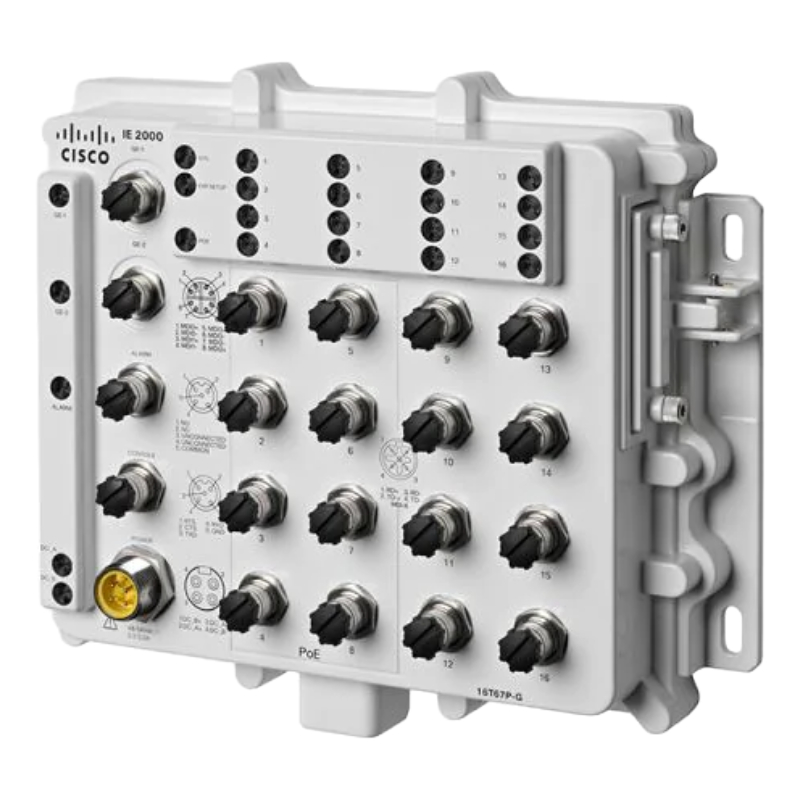


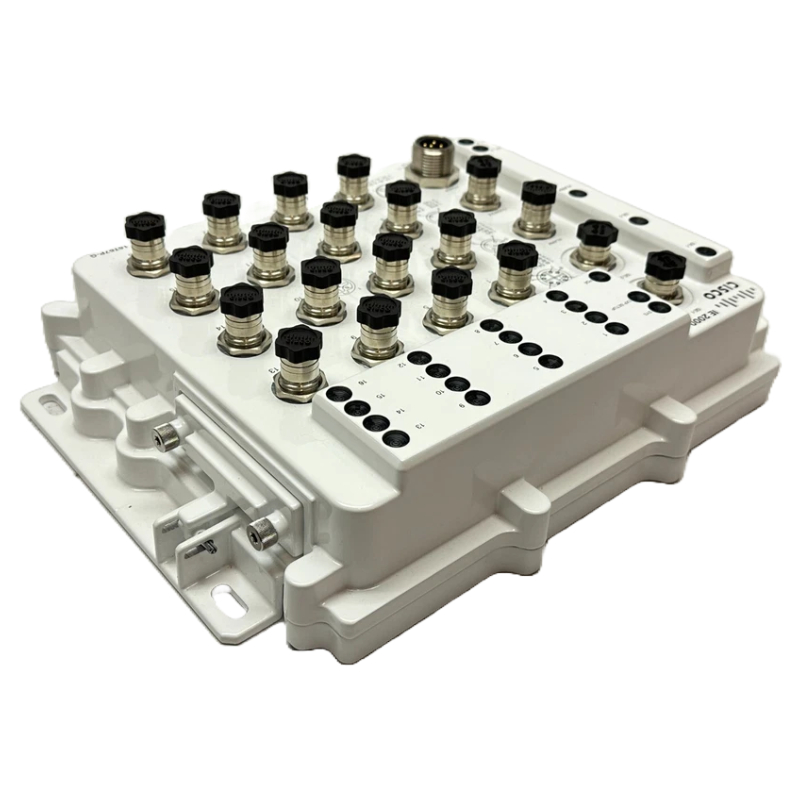
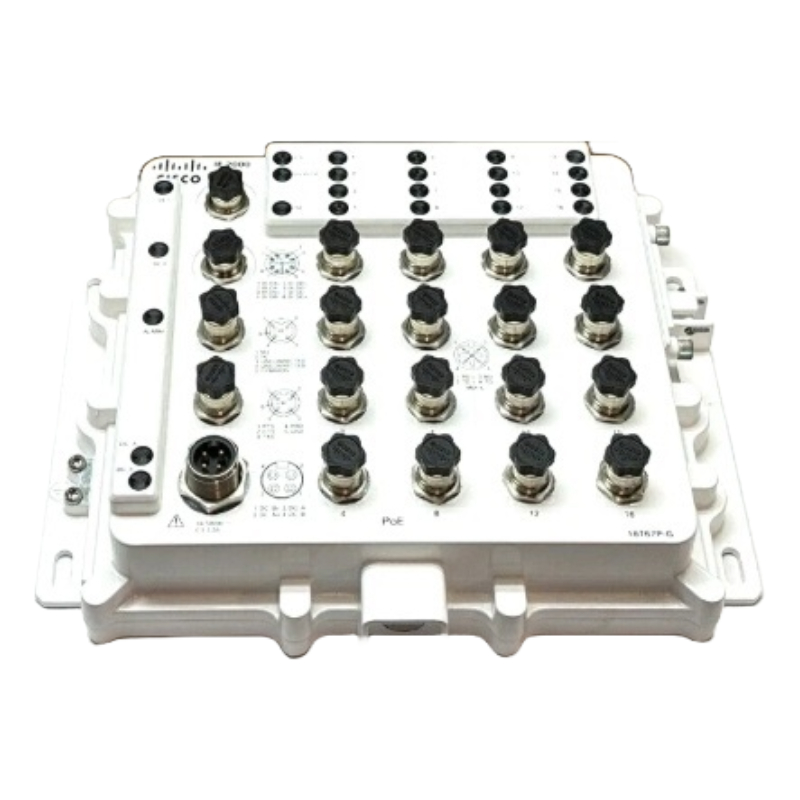
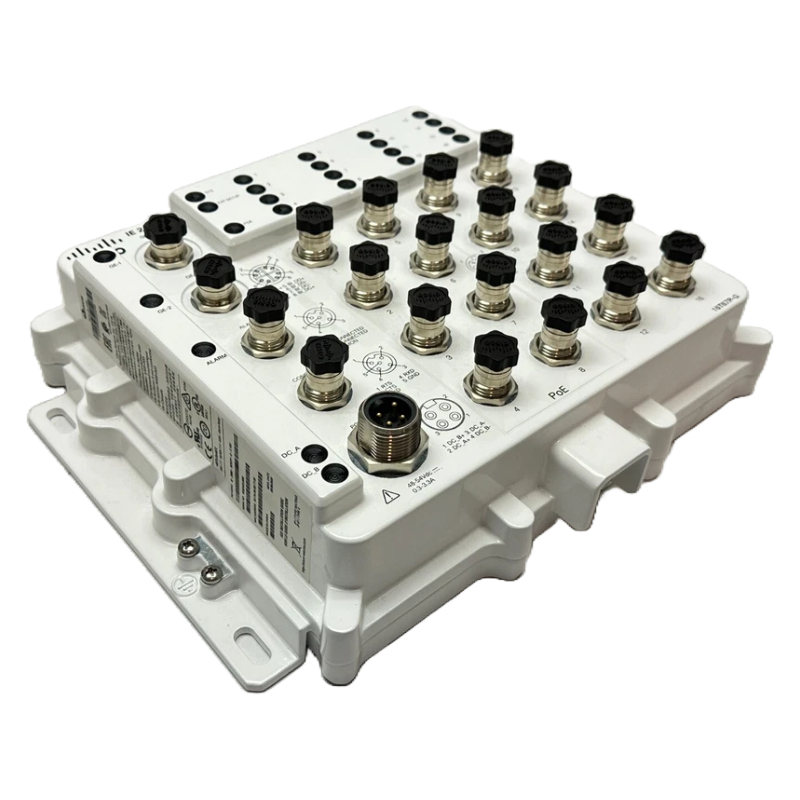
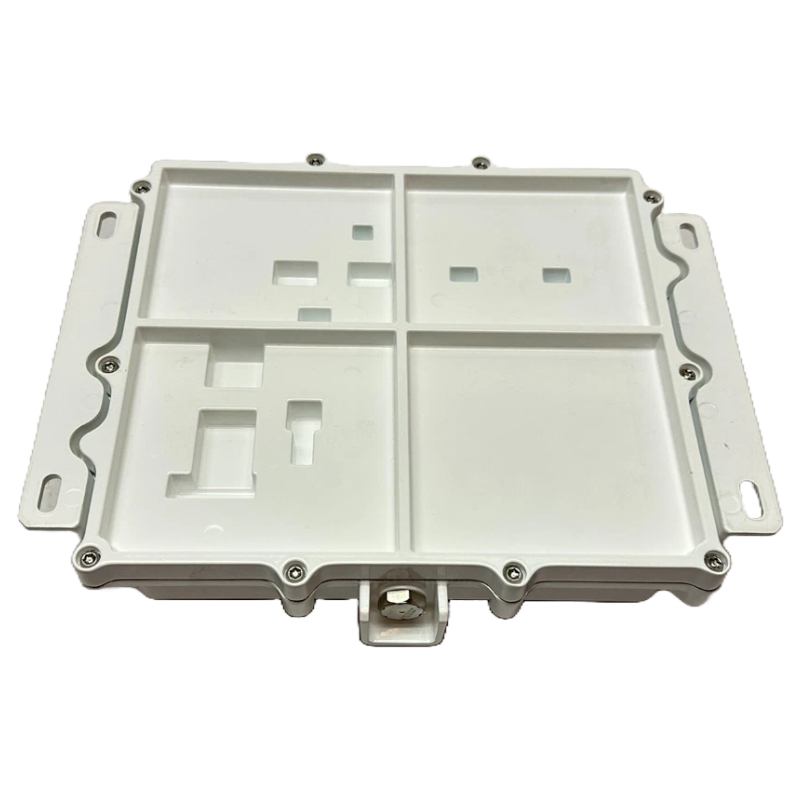
Cisco IE-2000-16T67P-G-E 16 Ports Ethernet Switch. Factory-Sealed New in Original Box (FSB) with 1 year replacement warranty
The Cisco IE-2000-16T67P-G-E is a robust industrial Ethernet switch designed for demanding network environments. It delivers reliable Layer 2 switching capabilities while supporting Power over Ethernet (PoE+) to simplify network deployments and power connected devices directly through the switch.
The Cisco IE-2000-16T67P-G-E 16 Ports Ethernet Switch represents a specialized category of industrial Ethernet switches designed to deliver deterministic, secure, and resilient network connectivity in harsh operational environments. This category focuses on ruggedized networking hardware that extends enterprise-grade Ethernet capabilities to industrial automation, transportation systems, utilities, energy production facilities, and smart infrastructure deployments. Unlike conventional commercial switches, industrial Ethernet switches are engineered to operate reliably under extreme temperatures, vibration, electrical noise, and extended duty cycles, ensuring uninterrupted communication between critical devices and control systems.
The Cisco IE-2000 series, including the IE-2000-16T67P-G-E model, addresses the growing demand for converged networks that support both information technology and operational technology. As industrial environments increasingly rely on Ethernet-based communication for automation, monitoring, and control, this category bridges the gap between traditional industrial field networks and modern IP-based architectures. The result is a unified infrastructure capable of supporting real-time control traffic, supervisory data acquisition, and enterprise-level applications on a single, resilient platform.
Within the broader Cisco industrial networking ecosystem, the IE-2000-16T67P-G-E occupies a strategic position as an access-layer industrial switch optimized for compact deployments and distributed architectures. This category includes switches that are commonly deployed close to the edge, directly connecting programmable logic controllers, sensors, actuators, industrial computers, cameras, and human-machine interfaces. By providing sixteen Ethernet ports, this model supports moderate-density connectivity while maintaining a small physical footprint suitable for control cabinets, substations, roadside enclosures, and factory floor installations.
The category emphasizes long-term product availability and lifecycle stability, which are critical requirements in industrial and infrastructure projects. Deployments in utilities, transportation, and manufacturing often span decades, making hardware consistency, backward compatibility, and extended support essential factors. Cisco industrial Ethernet switches are designed with these considerations in mind, ensuring that the IE-2000-16T67P-G-E integrates seamlessly into long-lived industrial systems while remaining compatible with evolving networking standards.
Industrial Ethernet switch categories are defined by their ability to withstand environmental stresses that would compromise standard office-grade networking equipment. The Cisco IE-2000-16T67P-G-E is engineered for operation in extended temperature ranges, making it suitable for installations in outdoor cabinets, unconditioned industrial facilities, and transportation infrastructure where temperature fluctuations are common. This resilience reduces the need for costly climate-controlled enclosures and simplifies deployment in remote or space-constrained locations.
The hardware design in this category prioritizes mechanical robustness and electrical reliability. Reinforced enclosures, industrial-grade components, and advanced thermal management techniques ensure consistent performance even in environments subject to vibration, shock, and electromagnetic interference. These characteristics are particularly important in manufacturing plants with heavy machinery, substations with high electrical loads, and transportation systems exposed to constant motion and environmental stress.
The IE-2000-16T67P-G-E belongs to a category that emphasizes flexible power input options and efficient power consumption. Industrial switches often support redundant power inputs to enhance network availability and reduce single points of failure. This design philosophy aligns with the high-availability requirements of industrial and infrastructure networks, where downtime can result in production losses, safety risks, or service interruptions.
Ethernet connectivity in this category is optimized for deterministic performance and low latency, ensuring reliable communication for time-sensitive industrial protocols. The sixteen Ethernet ports on the Cisco IE-2000-16T67P-G-E enable direct connection of multiple industrial devices, reducing the need for additional aggregation layers and simplifying network architecture. This approach supports scalable designs where multiple access switches can be deployed across large facilities or geographically distributed sites.
A defining feature of the industrial Ethernet switch category is comprehensive support for industrial communication protocols and standards. The Cisco IE-2000-16T67P-G-E is designed to interoperate with widely used industrial protocols, enabling seamless integration with automation systems from multiple vendors. This interoperability is critical in industrial environments where heterogeneous devices and legacy systems must coexist with modern Ethernet-based infrastructure.
Industrial Ethernet switches in this category support protocols that facilitate real-time communication, redundancy, and network resilience. These capabilities enable reliable data exchange between controllers, field devices, and supervisory systems, even in complex topologies. By supporting standard Ethernet and IP technologies alongside industrial-specific enhancements, this category allows organizations to leverage existing networking expertise while meeting the unique requirements of operational technology.
Time synchronization is a key requirement in many industrial applications, particularly those involving motion control, process automation, and power distribution. The industrial Ethernet switch category includes features that support precise time synchronization across the network, enabling coordinated operation of distributed devices. The Cisco IE-2000-16T67P-G-E aligns with this requirement by supporting time-sensitive networking principles that help maintain deterministic behavior under varying network loads.
Deterministic performance ensures that critical control traffic is delivered with predictable latency and minimal jitter. This capability is essential for maintaining process stability, ensuring safety, and optimizing production efficiency. By integrating deterministic networking features at the switch level, this category reduces the complexity of industrial network design and enhances overall system reliability.
Security is a fundamental consideration in the industrial Ethernet switch category, as industrial networks increasingly face cybersecurity threats. The Cisco IE-2000-16T67P-G-E is part of a category that incorporates advanced security features designed to protect critical infrastructure from unauthorized access, malware, and network-based attacks. These security capabilities are tailored to the unique operational constraints of industrial environments, where availability and safety are paramount.
Industrial Ethernet switches in this category support secure network segmentation, access control, and monitoring, enabling organizations to enforce security policies without disrupting operational processes. By integrating security directly into the switching infrastructure, this category helps reduce the attack surface and enhances visibility into network activity across industrial assets.
Effective network segmentation is essential for isolating critical control systems from less trusted network segments. The Cisco IE-2000-16T67P-G-E category supports segmentation mechanisms that allow industrial networks to be logically divided into secure zones. This approach aligns with industry best practices for defense-in-depth and supports compliance with industrial cybersecurity standards.
Access control features in this category ensure that only authorized devices and users can connect to the network. These mechanisms help prevent unauthorized changes, reduce the risk of insider threats, and maintain the integrity of industrial processes. By combining segmentation and access control at the switch level, this category simplifies security deployment and management in complex industrial environments.
The industrial Ethernet switch category emphasizes scalable architectures that can grow alongside operational requirements. The Cisco IE-2000-16T67P-G-E is designed to function as a building block in larger industrial networks, supporting both standalone deployments and integration into hierarchical or ring-based topologies. This flexibility enables organizations to design networks that meet current needs while accommodating future expansion.
Scalability in this category is not limited to port density but also encompasses management, performance, and interoperability. Industrial Ethernet switches are designed to support consistent configuration and policy enforcement across multiple devices, simplifying network expansion and reducing operational complexity. This approach is particularly valuable in large manufacturing plants, transportation systems, and utility networks where hundreds or thousands of devices may be deployed across multiple sites.
High availability is a core requirement in industrial and infrastructure networks, and the industrial Ethernet switch category includes features that support rapid recovery from failures. The Cisco IE-2000-16T67P-G-E aligns with this requirement by supporting network redundancy mechanisms that minimize downtime and maintain continuous operation.
Redundant network paths, fast convergence, and fault detection capabilities ensure that communication is quickly restored in the event of a link or device failure. These features are essential in applications where even brief network interruptions can have significant consequences, such as power distribution, transportation control systems, and continuous manufacturing processes.


 Contact Us
 Information
 Catalog
 Solid State Drives (SSD)
 Network Switches
 Hard Disk Drives
 HBA & Controllers
 PC & Servers
 PC & Server Memory
 CPU & Processors
 Network Routers
 Power Supplies
 Tape Drives & Libraries
 Network Devices
 Computer & Network Cables