(7% discount is applied at checkout)
Cart is empty
Your go-to destination for cutting-edge server products
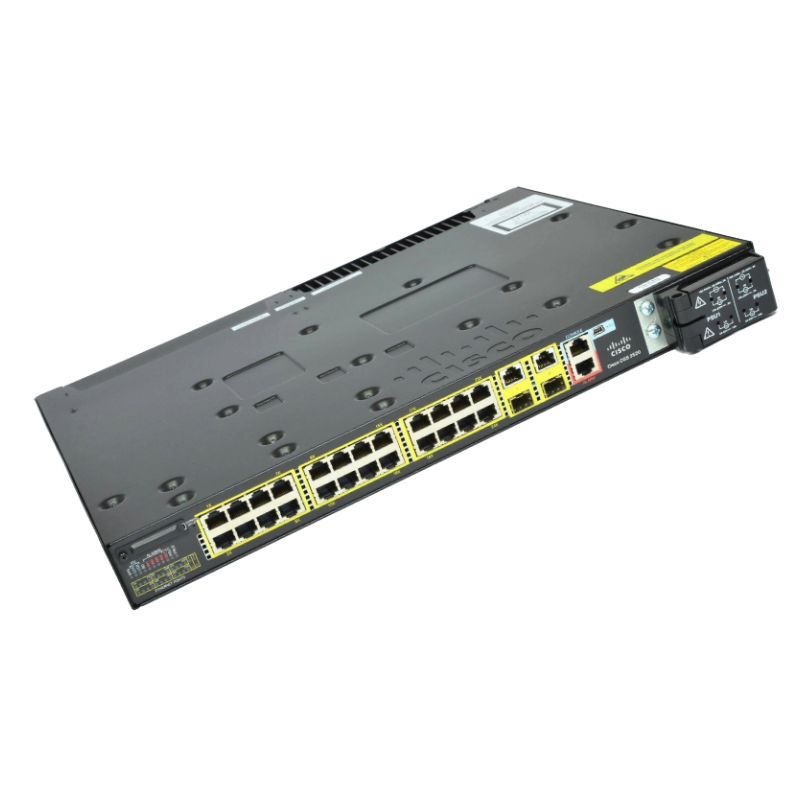


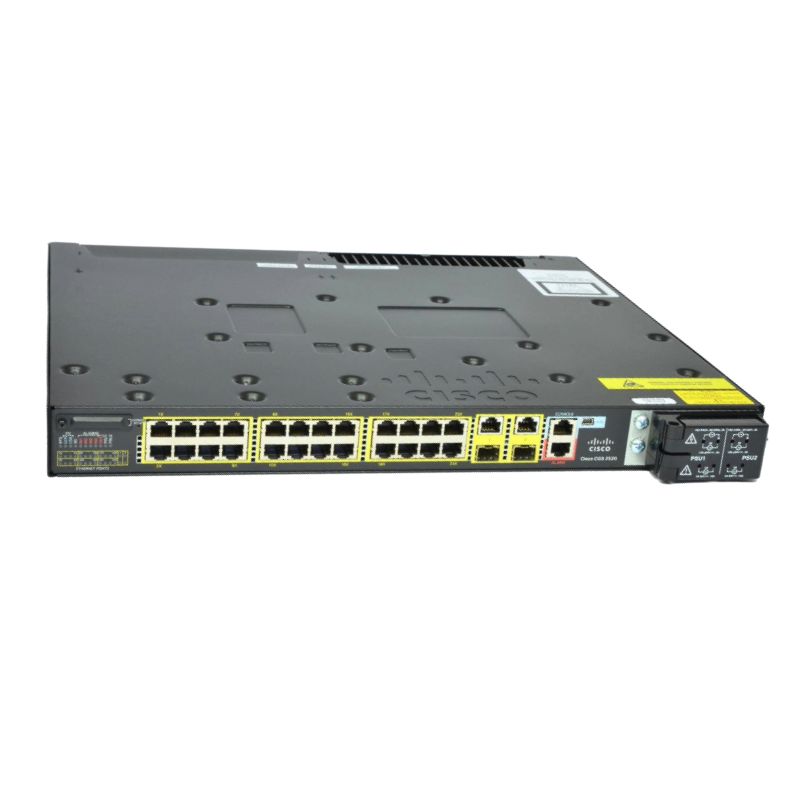
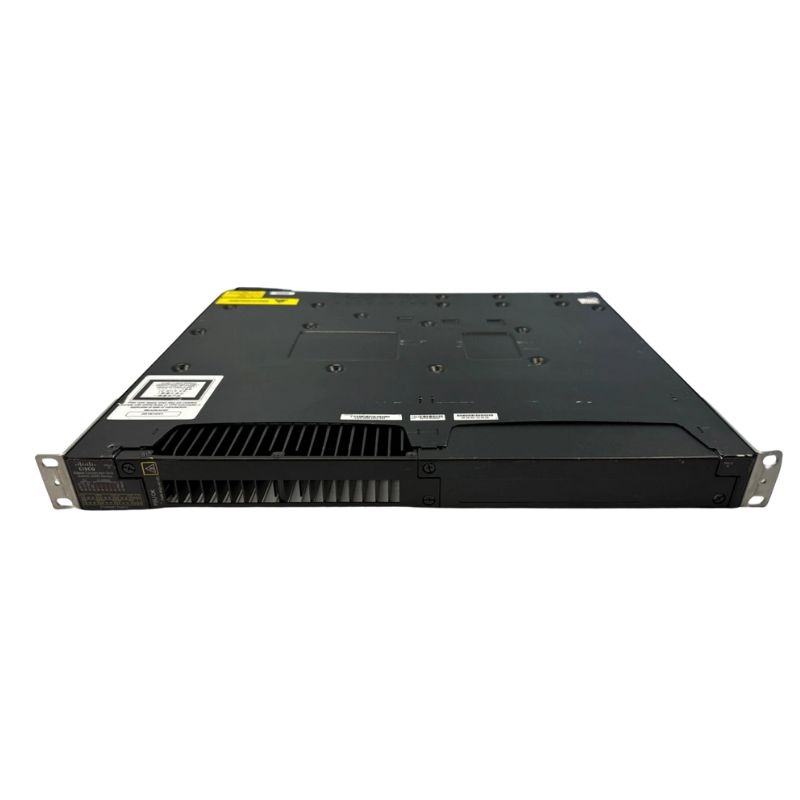
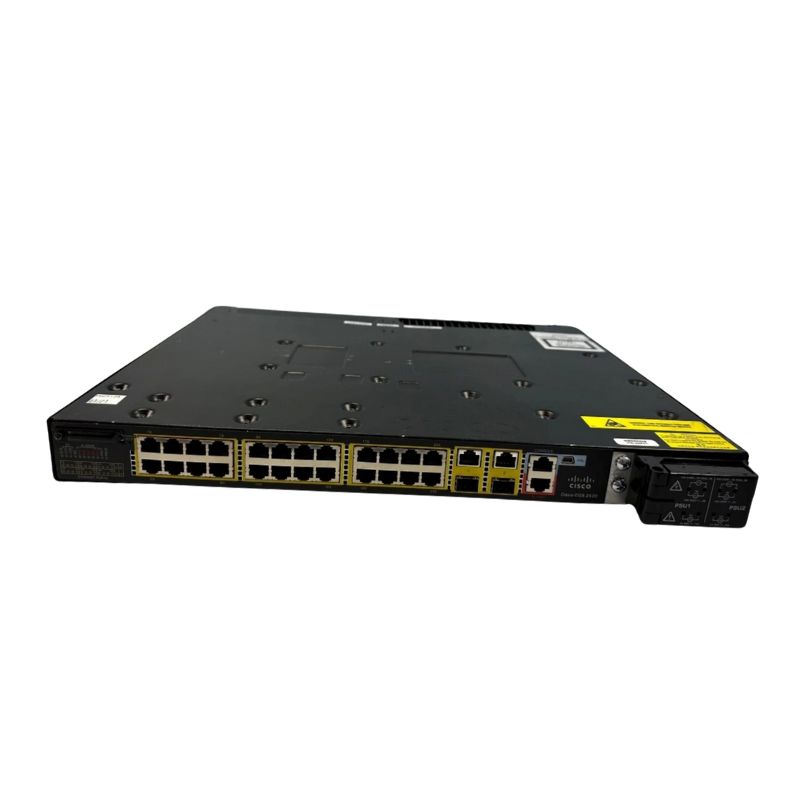
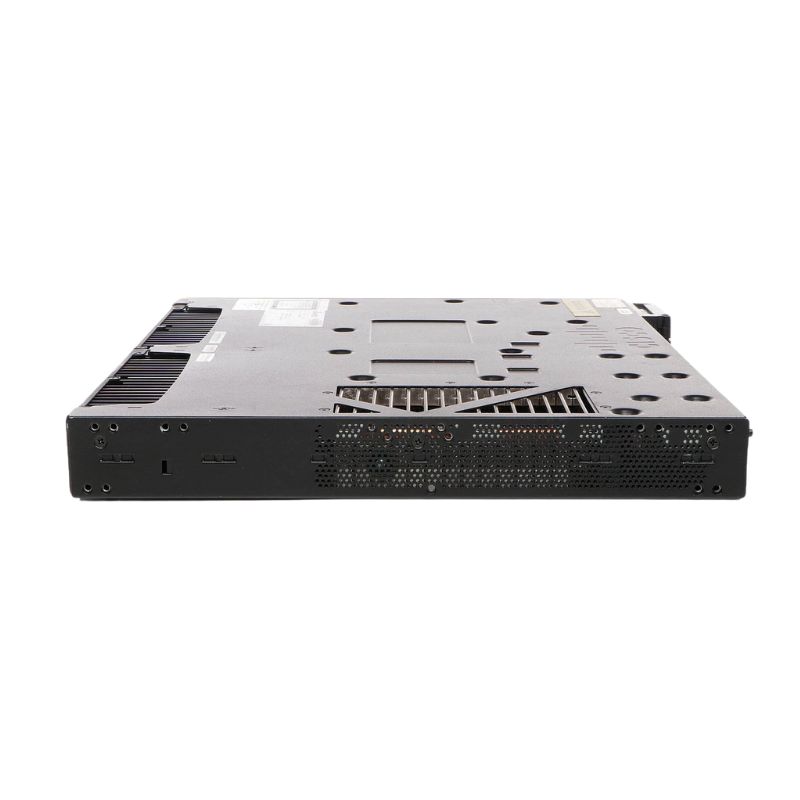
Cisco CGS-2520-24TC 24 Ports IE 2520 Manageable Switch. Factory-Sealed New in Original Box (FSB) with 1 year replacement warranty
| SKU/MPN | Warranty | Price | Condition | You save |
|---|---|---|---|---|
| CGS-2520-24TC | 1 Year Warranty | $490.00 | Factory-Sealed New in Original Box (FSB) | You save: $171.50 (26%) |
| CGS-2520-24TC | 1 Year Warranty | $130.00 | Excellent Refurbished | You save: $45.50 (26%) |
The Cisco CGS-2520-24TC is a resilient, utility-grade managed switch crafted for demanding network infrastructures. Its versatile port configuration, streamlined administration features and durable form factor make it a dependable option for expanding industrial connectivity.
The Cisco CGS-2520-24TC 24 Ports IE 2520 manageable switch represents a purpose-built networking solution designed for organizations that require reliability, manageability, and industrial-grade connectivity in demanding environments. As a member of the Cisco Industrial Ethernet family, the CGS-2520-24TC is engineered to deliver robust switching performance across enterprise campus networks, factory floors, transportation systems, utility substations, and other mission-critical deployments. This category focuses on managed industrial switches with hardened components, flexible port configurations, advanced security, and simplified operations for network teams that must balance uptime with operational efficiency. The CGS-2520-24TC stands out for combining 24 copper ports with additional uplink/transit capabilities, offering a practical balance between port density and cost while retaining Cisco’s hallmark software features and hardware reliability.
Switches in this category are characterized by stable layer 2 switching capabilities with limited but essential layer 3 features, VLAN segmentation, QoS controls, and options for link aggregation and redundancy. The CGS-2520-24TC specifically addresses environments where predictable deterministic behavior and minimal maintenance overhead are required. It integrates a compact physical footprint with industry-standard management interfaces, making it suitable for rackmount installations, compact networking cabinets, and controlled industrial enclosures. The category emphasizes operational simplicity without sacrificing control: administrators expect a manageable GUI and CLI, SNMP support for monitoring, and firmware update workflows that minimize network disruption. These traits position the CGS-2520-24TC within the subset of industrial and campus edge switches that prioritize resilience and straightforward management.
The physical design of the Cisco CGS-2520-24TC prioritizes high port density and reliable connectivity. The product typically features 24 10/100/1000 Mbps copper Ethernet ports optimized for standard device connections alongside a set of uplink ports that may include SFP or Gigabit RJ45 uplink options depending on the variant. The presence of these uplink ports enables flexible stacking into existing network topologies and allows traffic aggregation to distribution or core switches. The switch chassis and internal power subsystems are chosen for durability; the thermal design supports continuous operation and helps maintain predictable switching performance under load. Cable management and port labeling are implemented to facilitate rapid installation and troubleshooting in multi-switch racks and industrial panels, reducing human error during deployments and maintenance cycles.
Performance considerations for the CGS-2520-24TC category revolve around wire-rate switching, low latency forwarding, and hardware-based MAC learning for efficient packet delivery. The switch is engineered to maintain consistent throughput even when all ports are active, supporting mixed traffic patterns typical in industrial and enterprise edge scenarios. Its switching fabric and forwarding table capacities are sized to accommodate dozens to hundreds of unique MAC addresses, VLANs, and multicast groups without significant performance degradation. Quality of Service controls allow prioritization of latency-sensitive traffic such as voice, video, or industrial control protocols. For deployments with converged networks, predictable queueing behavior and configurable priority mappings are essential to deliver deterministic application performance.
Manageability is a core pillar for the Cisco CGS-2520-24TC category. Administrators expect a comprehensive set of configuration options accessible via an intuitive web-based interface, command line access for automation and advanced control, and compatibility with centralized network management platforms. The switch supports industry standard management protocols including SNMP for telemetry collection, RMON for basic network diagnosing, and syslog for event logging. Firmware management and rollback capabilities are crucial for maintaining network stability during upgrades. Additionally, the product supports configuration backup and restore mechanisms, reducing recovery time if a unit needs replacement. For environments that use automation frameworks, CLI scripting and support for configuration templates make large-scale rollouts and updates more efficient.
Security features are central to the CGS-2520-24TC category because edge and industrial switches are common targets for misconfigurations or unintended access. The switch includes port-based access control mechanisms such as 802.1X authentication to ensure only authorized endpoints join the network. MAC address filtering and dynamic ARP inspection help mitigate unauthorized device connections and certain spoofing attacks. Management-plane protection is enforced using secure protocols like SSH for command line access and HTTPS for web management, while role-based access control allows administrators to delegate fine-grained permissions without exposing full administrative functions. The combination of these controls helps operators defend critical infrastructure and meet regulatory or organizational security standards.
High availability is a defining concern for networks using industrial-grade switches. The CGS-2520-24TC category supports link redundancy technologies such as Spanning Tree Protocol with enhancements for faster convergence, and link aggregation to combine multiple physical links into single logical channels for resilience and increased throughput. Redundant uplinks and the capability to interoperate with higher-tier routers and switches help create failover paths that reduce the impact of single link failures. Power redundancy may be achieved through external power supply options or dual power input designs in compatible models; this reduces downtime risk in critical deployments where power interruptions are a realistic threat. The overall design and feature set deliver operational continuity without complex configuration overhead.
Switches in this category are often designed to function within a wider environmental range than standard office hardware. The CGS-2520-24TC supports ruggedized deployment with improved tolerance to temperature extremes, shock, and vibration when specified for industrial variants. Conformal coating or sealed enclosures may be available for locations with high humidity, dust, or corrosive atmospheres. These environmental considerations expand the use cases beyond traditional data centers into manufacturing plants, transportation corridors, and outdoor cabinets where network equipment must remain reliable with minimal servicing. Selecting a switch that matches its intended environmental conditions directly impacts total cost of ownership through reduced failure rates and maintenance demands.
The CGS-2520-24TC category maps to several recurring deployment patterns. In campus and branch networks, it functions as an access switch connecting end-user devices, wireless access points, and IP phones while providing PoE options on specific variants to power edge devices. In industrial automation, the switch connects PLCs, HMIs, sensors, and supervisory control systems where deterministic packet delivery and tight security are essential. For transportation and smart infrastructure projects, the switch provides resilient connectivity for CCTV systems, traffic controllers, and environmental sensors. In retail and hospitality, compact form factor and manageable feature sets enable integration into store networks that require secure POS connections and guest Wi-Fi segmentation. Each scenario benefits from the switch’s manageability and predictable behavior, ensuring consistent network service levels across diverse environments.
Part of the attraction for organizations choosing the CGS-2520-24TC is its compatibility with Cisco’s broader networking ecosystem. The switch integrates with Cisco management tools, network monitoring platforms, and security architectures already deployed in many enterprises. Interoperability with third-party devices is achieved through adherence to networking standards and common protocols, enabling gradual migrations and hybrid topologies that blend Cisco gear with other vendors’ products. This interoperability supports phased upgrades, simplifies procurement decisions, and reduces the need for wholesale network redesigns when expanding or modernizing infrastructure.
Compared to high-end enterprise switches, the CGS-2520-24TC category emphasizes simplicity, reliability, and industrial suitability rather than an extensive suite of advanced routing and virtualization features. It occupies a middle ground between unmanaged access switches, which offer minimal control, and feature-rich chassis-based systems that serve as campus cores. For teams seeking a balance between manageability and cost, this category offers a compelling choice: enough features to enforce segmentation, QoS, and security while remaining more affordable and easier to operate than top-tier modular switches. When compared with fully industrial hardened models, the CGS-2520-24TC might trade some extended environmental certifications for a more economical footprint suitable for many but not all rugged use cases; selecting the right sub-variant ensures the switch aligns with environmental and compliance needs.
Capacity planning for networks that use CGS-2520-24TC switches should consider port utilization, expected growth, and uplink architecture. Typical deployments cluster multiple access switches with aggregated uplinks to layer 3 distribution switches or routers. Because the CGS-2520-24TC provides both sufficient edge port density and uplink flexibility, it supports growth by adding additional access switches and leveraging link aggregation for higher throughput. Administrators should evaluate VLAN growth, multicast groups, and forwarding table size to ensure the chosen switch variant meets future requirements. Factoring in expected increases in traffic from video surveillance, wireless offloads, and IoT sensors will help prevent bottlenecks and reduce the need for disruptive upgrades.


 Contact Us
 Information
 Catalog
 Solid State Drives (SSD)
 Network Switches
 Hard Disk Drives
 HBA & Controllers
 PC & Servers
 PC & Server Memory
 CPU & Processors
 Network Routers
 Power Supplies
 Tape Drives & Libraries
 Network Devices
 Computer & Network Cables