
(7% discount is applied at checkout)
Cart is empty
Your go-to destination for cutting-edge server products
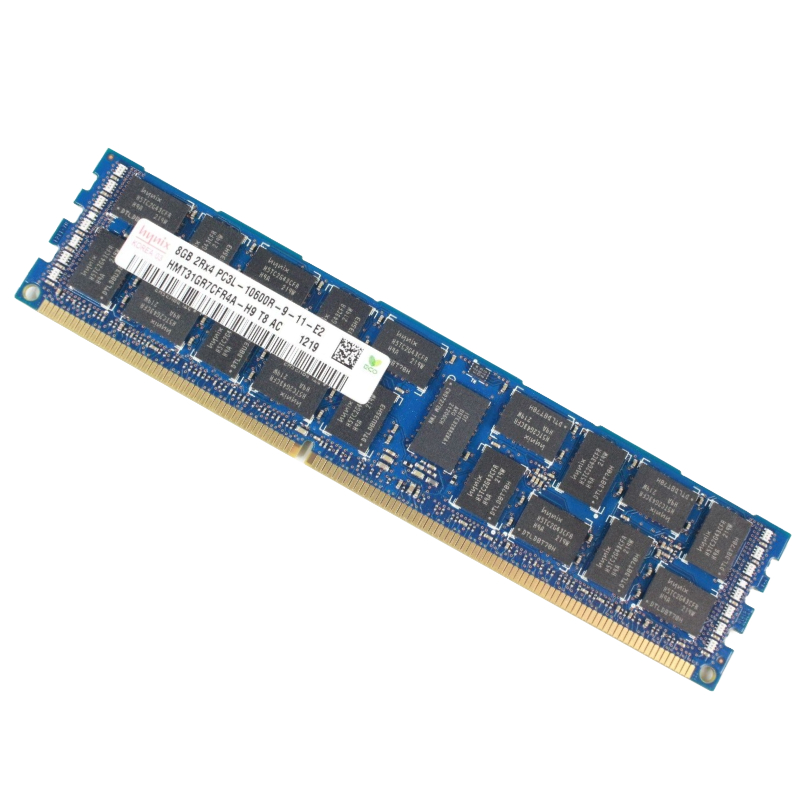
Hynix HMT31GR7CFR4A-H9 8GB RAM PC3-10600 DDR3 1333MHz SDRAM CL9 ECC Registered 240-pin. New (System) Pull with 1 year replacement warranty
| SKU/MPN | Warranty | Price | Condition | You save |
|---|---|---|---|---|
| HMT31GR7CFR4A-H9 | 1 Year Warranty | $50.00 | New Sealed in Box (NIB) | You save: $17.50 (26%) |
| HMT31GR7CFR4A-H9 | 1 Year Warranty | $48.00 | New (System) Pull | You save: $16.80 (26%) |
Highlights of Hynix 8GB DDR3 1333MHz RAM
Elevate server reliability with the Hynix HMT31GR7CFR4A-H9, an 8GB DDR3 ECC Registered (RDIMM) module engineered for stable performance in enterprise-class environments. This dual-rank x4 module delivers consistent throughput at 1333MHz, ideal for virtualization, databases, and high-uptime workloads.
The Hynix HMT31GR7CFR4A-H9 8GB DDR3 1333MHz SDRAM module represents a dependable component within the broader category of DDR3 ECC Registered server memory designed for enterprise environments. This class of memory occupies an important role in maintaining stability, consistency, and workflow continuity inside demanding infrastructures. By supporting error correction, registered buffering, and optimized frequency performance, this memory category ensures smooth operational behavior across server-grade systems. The continuous refinement of such modules throughout the progression of DDR3 standards has provided organizations with a cost-effective and reliable platform for multi-application computing. Through the HMT31GR7CFR4A-H9, users can expect balanced speed, reinforced data integrity, and sustained performance that aligns with the expectations of diverse workloads ranging from virtualization to data analytics.
ECC Registered DDR3 memory modules form a vital part of server functionality due to their specialized construction. The inclusion of error correction code offers resilience against data corruption, while the registered buffer contributes to improved signal stability for systems operating with multiple DIMMs per channel. The 240-pin design integrates seamlessly within recognized server platforms, allowing efficient data transmission and consistent electrical behavior. The architecture is built upon an advanced SDRAM structure that coordinates internal timing, refresh cycles, and data retrieval processes to ensure that latency and throughput remain harmonized under high-intensity usage patterns.
Error correction code forms a foundational feature of modules in this category. The primary goal of ECC functionality is to monitor data integrity and correct single-bit errors that occasionally occur during high-speed transmission. Through a series of mathematical checks, ECC algorithms ensure that the memory system can safeguard application runtimes that rely on dependable and error-free calculations. This capability becomes especially critical within infrastructures that manage sensitive databases, scientific computations, virtual machines, or financial operations that cannot tolerate unexpected interruptions or corrupted datasets. The constant monitoring and correction process works automatically within the system, allowing administrators to maintain confidence in overall data fidelity.
Server infrastructure demands consistency and predictable behavior. ECC Registered DDR3 memory contributes significantly to these qualities by offering an environment in which data stored or processed in memory is less susceptible to silent corruption. Such consistency ensures that mission-critical processes operate without disruption, enabling companies to build stable and scalable ecosystems. Reliability is further enhanced by the registered architecture, which reduces electrical load on the memory controller. With the buffer in place, servers can utilize more memory modules concurrently without sacrificing signal accuracy or performance quality.
The integration of a register between the memory controller and DRAM chips helps maintain signal precision. This buffer distributes command signals more uniformly, reducing strain on the memory controller and allowing additional DIMMs to operate within the same channel. This design gives DDR3 Registered memory a unique advantage over unbuffered modules, making it well-suited for dense server environments that require abundant memory capacity. As systems demand increased memory scalability, the usefulness of registered buffering becomes even more apparent, permitting optimized data management while lowering the risk of electrical interference.
This particular module operates at 1333MHz, offering a measured balance between speed and power efficiency. Its CL9 latency contributes to responsive memory behavior, ensuring that transactional workloads can proceed without unnecessary delays. Hynix engineers structured the module to deliver durability and consistent output through rigorous testing and adherence to JEDEC standards. As an 8GB module, it fits ideally within scalable systems that require standardized capacity increments for upgrades or expansions. The memory’s architecture ensures that it communicates effectively with server processors across compatible platforms, facilitating smooth data flow and predictable timing operations.
The 1333MHz operational speed reflects a stable and widely compatible standard for DDR3 enterprise systems. This frequency level maintains a strong equilibrium between energy consumption and data transfer performance. The CL9 timing sequence works in harmony with this speed to provide responsive interactions between the processor and memory, enabling quicker access to stored values. These attributes become especially important when hosting virtualization workloads or database-driven applications where rapid data retrieval directly influences system responsiveness. The throughput generated by this module ensures that server activities maintain fluid motion even during periods of elevated demand.
Latency refers to the time required for the memory module to respond to a command. In DDR3 server memory, minimizing latency enhances application responsiveness and helps ensure task execution aligns with system workflow expectations. The CL9 latency rating of the HMT31GR7CFR4A-H9 ensures that repeated cycles of data requests can be processed promptly. This condition boosts the performance of high-frequency operations and keeps application delays to a minimum. As a result, the memory module contributes to an efficient computational environment where latency does not impede daily operations.
Precision timing is crucial when multiple DIMMs operate simultaneously. Registered ECC memory ensures that timing is regulated to avoid discrepancies that could lead to instability or reduced throughput. The meticulous synchronization managed by the module supports consistent operations even in complex environments where extensive multitasking and parallel computations are routine. This precision strengthens overall system reliability and ensures that the module plays a dependable role within the memory infrastructure.
Compatibility remains a central aspect of memory deployment. This module is engineered to align with server platforms that support ECC Registered DDR3 technology. System administrators must ensure that the server motherboard and processor architecture are compatible with registered and ECC-enabled memory modules. Once validated, the installation process becomes straightforward due to adherence to industry-standard 240-pin layouts. Because this memory category is widely used across various enterprise systems, it provides a flexible upgrade path for organizations that need to scale or modernize their equipment without replacing their entire server fleet.
Many popular server series from major manufacturers support this type of memory module. Such platforms often rely on the stability and resilience offered by ECC Registered DIMMs to support critical processes. Administrators utilizing legacy or mid-generation servers can deploy this module to sustain their system’s lifecycle and ensure operational continuity. This compatibility also makes DDR3 ECC Registered memory a cost-effective solution for expanding capacity without transitioning immediately to newer memory standards.
Proper configuration ensures that the module delivers optimal performance. Administrators typically follow motherboard guidelines to maintain balanced memory channels and observe appropriate DIMM slot population rules. Registered memory modules provide added flexibility in multi-slot configurations, allowing servers to handle larger memory pools while reducing complications associated with signal integrity. Proper configuration guarantees smoother operations and supports heavy workloads efficiently, ensuring that the memory bank remains stable even during peak processing intervals.
Thermal efficiency is an important consideration for memory longevity. The design of the HMT31GR7CFR4A-H9 supports effective heat dissipation and stable temperature maintenance during continuous operation. Server environments often involve extended workloads that produce elevated thermal output, but the stability of this module ensures that performance does not decline due to excessive heat. The durability of Hynix components allows the module to operate reliably for extended periods, making it suitable for data centers or enterprise setups where uptime is essential.
The memory category represented by this module is applicable across a broad selection of enterprise operations. These environments rely heavily on consistent performance, predictable behavior, and secure data handling. Virtualization platforms, database servers, and analytics systems frequently depend on ECC Registered memory to keep processes running without interruption. The 8GB capacity of this module makes it an excellent choice for environments where incremental upgrades are routinely performed to meet evolving demands.
Virtualized workloads require dependable memory performance because numerous virtual machines may run concurrently on the same server. ECC Registered memory helps ensure that each instance receives stable and error-free data access. The 8GB capacity can serve as a base unit for scaling virtual environments, allowing administrators to increase system memory progressively as usage grows. This capability is crucial for organizations aiming to maximize resource allocation and minimize the risk of instability that could interfere with hosted services.
Database servers rely heavily on memory stability. Even minor disruptions can compromise data tables, interrupt queries, and cause delays that cascade into large-scale workflow issues. The HMT31GR7CFR4A-H9, with its ECC functionality, provides the necessary reliability to handle database transactions without risking silent corruption. Its 1333MHz speed ensures that queries are executed with consistency, supporting both small and large data operations. This stability is of particular importance for organizations dealing with financial records, user accounts, or inventory systems where precision is essential.
Scientific applications often involve extensive calculations and repetitive operations. ECC memory ensures the accuracy of these computations, preventing marginal data errors from influencing results. In engineering simulations or scientific modeling, the integrity of each bit matters, and thus ECC Registered DDR3 memory becomes a practical solution. Its dependable operation allows researchers and engineers to run lengthy simulations confidently, knowing that the data remains consistent throughout the process.
The structural integrity of this memory module showcases Hynix’s expertise in producing durable server-grade components. The PCB layout is engineered to enable efficient signal routing, while the DRAM chips are placed to support optimal thermal distribution. The module’s design adheres to industry standards that ensure longevity, reliability, and stable operation through years of deployment. Because servers often run twenty-four hours a day, build quality becomes a core part of the module’s value, as it prevents failures and reduces the need for maintenance cycles.
The DRAM chips used in the HMT31GR7CFR4A-H9 follow strict quality controls. Their internal architecture supports consistent timing and rapid data cycling. The structure of each chip is engineered to maintain electrical uniformity, helping prevent anomalies that might otherwise occur under heavy workloads. The internal configuration ensures that the electrical load is managed appropriately, preventing strain on the memory controller and facilitating harmonious communication across every operational phase.
Signal clarity is essential for server memory. Registered ECC modules have a natural advantage in preserving signal stability due to the buffer that intermediates communication. The consistent transmission patterns reduce the likelihood of signal collisions or waveform distortions. This stability ensures that data operations continue efficiently, even when the server operates with multiple modules in large array configurations.
The durability of the Hynix module makes it suitable for long-term usage in data centers, business servers, and professional hosting infrastructures. Because memory failures can significantly impact system performance and cause downtime, modules such as this are engineered to withstand rigorous operating conditions. The emphasis on durability ensures that users benefit from consistent behavior throughout the lifecycle of their server hardware.
The stability of ECC Registered DDR3 memory allows it to thrive in high-intensity workloads. Whether running enterprise applications, managing web servers, or supporting compute-heavy tasks, this module maintains performance consistency. Its ability to preserve data integrity at all times ensures that workloads remain uninterrupted, even when the server handles multiple resource-heavy operations. Because workload stability is a top priority for system administrators, this memory category offers a reliable solution for predictable output.
Servers frequently manage numerous processes at once. ECC Registered memory, by virtue of its buffered architecture, prevents interference between processes and maintains a clean transmission pathway. This characteristic allows the system to execute parallel operations more effectively. As applications scale, the memory continues to support the workload without causing performance degradation.
Many enterprise applications such as CRM platforms, ERP systems, and cloud-hosted services depend on robust memory structures. The HMT31GR7CFR4A-H9 module supports these environments through its steady output and capacity for error correction. Because large-scale applications must always remain accessible and reliable, ECC Registered memory contributes directly to uninterrupted service continuity.
Silent data corruption represents a significant concern in enterprise computing. ECC technology minimizes this risk by correcting errors automatically. This resilience ensures that data remains accurate and dependable, enabling businesses to rely on memory-based operations without concern. Servers equipped with ECC Registered memory safeguard mission-critical functions by preventing potentially damaging interruptions.
The structure of this memory category supports expansion as organizational needs evolve. Enterprises can begin with modest capacity and scale upward as workloads increase. The 8GB density of this module provides a convenient increment that fits neatly into most server expansion strategies. Because registered memory enables high-density configurations, organizations can add more modules without sacrificing stability.
Upgrading memory is an efficient method for extending server usefulness. Instead of replacing entire systems, administrators can install additional DDR3 ECC Registered modules to increase capacity. This flexibility enhances ROI because businesses can continue utilizing existing server hardware even as software demands become more complex.
The predictable behavior of ECC Registered memory helps organizations plan long-term infrastructure expansion. Memory remains one of the most influential aspects of server performance, and its scalability ensures that businesses can maintain relevance as data workloads multiply. The endurance and reliability of the Hynix module support these expansion efforts, offering a consistent performance baseline.
Hynix has earned global recognition for producing advanced semiconductor and memory technologies. The HMT31GR7CFR4A-H9 exemplifies the company’s dedication to quality and innovation within the server memory market. Their manufacturing processes follow strict standards designed to produce components capable of meeting enterprise-level expectations. By consistently delivering dependable memory solutions, Hynix has become an essential supplier to data centers, corporations, and cloud service providers around the world.
Hynix follows meticulous testing protocols to ensure that every module performs reliably under diverse conditions. These standards include endurance testing, thermal evaluation, timing accuracy verification, and compatibility assessments. The result is a module that performs consistently across environments ranging from traditional office servers to complex data center configurations.
The development of DDR3 ECC Registered memory reflects Hynix’s contribution to long-standing server architecture. Even as newer memory generations arise, DDR3 remains an important platform for organizations that require stability and cost-conscious performance. Hynix’s expertise ensures that DDR3 modules such as the HMT31GR7CFR4A-H9 continue to serve effectively within established infrastructures.
Energy consumption plays a significant role in determining operational costs in data centers and corporate server rooms. The Hynix HMT31GR7CFR4A-H9 module functions efficiently within DDR3’s established power envelope. Its design helps reduce power draw compared to older memory technologies while maintaining dependable functionality. This efficiency contributes to overall savings on energy expenses and lowers the thermal load, reducing cooling requirements.
The standard power consumption of DDR3 memory provides a comfortable operating threshold for businesses seeking economical performance. While DDR4 and DDR5 memory offer more advanced energy savings, DDR3 remains a viable option for systems where performance stability and cost balance are prioritized. This module aligns with those expectations by maintaining moderate energy usage even under constant operational loads.
Maintaining proper thermal levels ensures longevity and performance stability. DDR3 ECC Registered memory exhibits predictable thermal behavior, allowing servers to maintain optimal temperatures without excessive cooling demands. Effective thermal regulation enhances reliability and supports extended operational periods.
Many organizations continue to rely on legacy or mid-generation servers that utilize DDR3 memory due to the significant investment in infrastructure. The HMT31GR7CFR4A-H9 offers an economical path for extending the life of these systems while maintaining performance stability. Because infrastructure replacement can be costly, upgrading memory becomes a practical solution for budget-conscious operations.
Even as newer memory technologies evolve, DDR3 ECC Registered memory maintains relevance in modern workflows. Many software platforms continue to operate effectively on DDR3-based servers, enabling organizations to maintain cost-efficient IT ecosystems. The consistent performance of modules such as the HMT31GR7CFR4A-H9 ensures that servers continue to support daily functions in environments ranging from small businesses to large-scale enterprises.
Organizations employing hybrid infrastructures often combine legacy systems with modern cloud solutions. DDR3 ECC Registered memory remains an integral part of this approach, supporting workloads that do not require cutting-edge hardware. This strategy allows businesses to maximize the value of existing infrastructure while incorporating cloud resources where needed.
Many business applications rely on consistent memory performance to process data accurately. ECC Registered memory ensures that these applications can continue functioning reliably regardless of workload size or environmental conditions. Data consistency is preserved even in environments requiring frequent access to memory-stored information.
Modern server environments must perform diverse tasks simultaneously. ECC Registered memory supports this requirement by maintaining stable interactions across multi-threaded applications and multitasking operations. As a result, systems experience fewer performance interruptions and maintain a high degree of responsiveness across all tasks.


 Contact Us
 Information
 Catalog
 Solid State Drives (SSD)
 Network Switches
 Hard Disk Drives
 HBA & Controllers
 PC & Servers
 PC & Server Memory
 CPU & Processors
 Network Routers
 Power Supplies
 Tape Drives & Libraries
 Network Devices
 Computer & Network Cables