
(7% discount is applied at checkout)
Cart is empty
Your go-to destination for cutting-edge server products
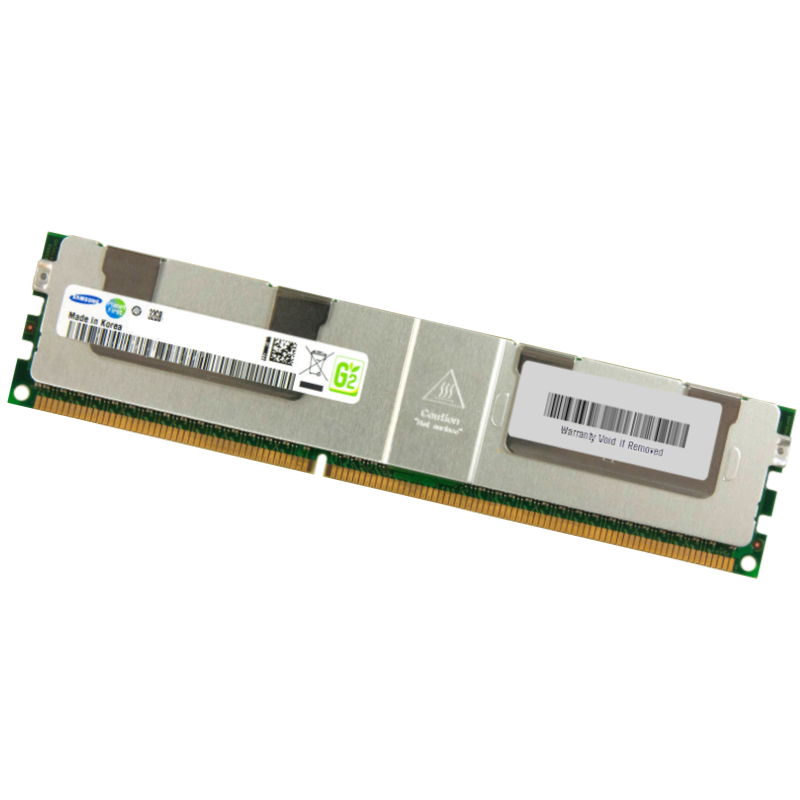
Samsung M386B4G70BM0-YK0 32GB 1600MHZ PC3-12800 DDR3 SDRAM Ecc Reg Ram. New (System) Pull with 1 year replacement warranty
Elevate server reliability and speed with the Samsung M386B4G70BM0-YK0 memory module. This high-capacity 32GB PC3-12800 DDR3-1600MHz 4Rx4 ECC Registered DIMM is engineered for enterprise workloads, virtualization, and data-intensive computing, delivering consistent throughput and error-correct resilience.
The Samsung M386B4G70BM0-YK0 belongs to the enterprise-grade DDR3 load-reduced dual in-line memory module category, commonly abbreviated as DDR3 LRDIMM. This class of memory is engineered specifically for data center servers, mission-critical enterprise platforms, and high-density computing environments where stability, scalability, and predictable performance are required over extended operational lifecycles. Unlike unbuffered or standard registered memory, LRDIMM technology incorporates a memory buffer that electrically isolates the DRAM chips from the memory controller, allowing systems to populate more memory modules per channel without compromising signal integrity.
This memory module operates at a data rate of 1600 megahertz and complies with the PC3-12800 specification, positioning it within the performance-focused segment of DDR3 SDRAM. The 32GB capacity per module enables dense memory configurations that are essential for virtualization platforms, database servers, cloud infrastructure, and enterprise applications that rely heavily on in-memory processing. As a quad-rank x4 module, it further enhances capacity scalability while maintaining enterprise-class reliability.
DDR3 SDRAM represents a mature and widely deployed memory architecture that delivers double data rate transfers by moving data on both the rising and falling edges of the clock signal. In the Samsung M386B4G70BM0-YK0, this architecture is optimized through careful signal conditioning and buffering, ensuring that data integrity is preserved even under heavy workloads and continuous operation. The 240-pin form factor conforms to JEDEC standards, enabling compatibility with a wide range of enterprise server motherboards that support DDR3 LRDIMM technology.
The PC3-12800 rating indicates a theoretical maximum bandwidth of 12.8 gigabytes per second per module. This bandwidth level is particularly beneficial for workloads that involve frequent memory access, such as transactional databases, large-scale analytics engines, and virtualization hosts running multiple virtual machines simultaneously. The internal organization of the module is designed to minimize latency while maximizing throughput within the constraints of the DDR3 specification.
Load-reduced DIMMs differ from standard registered DIMMs by incorporating an isolation memory buffer that manages communication between the memory controller and the DRAM chips. This buffer significantly reduces the electrical load presented to the memory controller, allowing more ranks and higher-capacity modules to be installed per channel. In the case of the Samsung M386B4G70BM0-YK0, the quad-rank configuration would otherwise impose a substantial electrical burden without load reduction.
This architectural advantage enables enterprise servers to achieve higher total memory capacity, which is critical for consolidation, virtualization density, and future scalability. Load-reduced DIMMs are particularly valuable in multi-socket server systems where memory channels are shared across processors and must maintain stability under high utilization.
The quad-rank x4 design of this module indicates that the memory is organized into four separate ranks, each using x4-width DRAM chips. This configuration enhances memory density and fault tolerance while supporting advanced error correction mechanisms. Quad-rank modules are commonly used in enterprise environments where maximizing capacity per slot is a priority.
The x4 DRAM organization is especially important for error correction code functionality, as it allows more granular detection and correction of memory errors. This contributes to improved system uptime and reduced risk of data corruption, making the module suitable for applications that demand high levels of reliability and data integrity.
Error correction code memory is a defining characteristic of enterprise-class memory modules. The Samsung M386B4G70BM0-YK0 integrates ECC functionality that can detect and correct single-bit memory errors and detect multi-bit errors. This capability is essential in environments where even minor data corruption can lead to system instability, application crashes, or data loss.
As a registered memory module, this LRDIMM includes a register that buffers command and address signals. This buffering improves signal timing and stability, particularly in systems with multiple memory modules installed per channel. The combination of ECC, registered signaling, and load reduction creates a robust memory solution designed for continuous operation.
Enterprise workloads often involve long-running processes, large datasets, and mission-critical transactions. In such scenarios, the probability of transient memory errors increases over time. ECC memory mitigates this risk by actively monitoring and correcting errors before they propagate through the system. This proactive approach enhances system reliability and reduces the likelihood of unplanned downtime.
The Samsung M386B4G70BM0-YK0 is well suited for database servers, enterprise resource planning systems, and virtualization platforms where data accuracy and consistency are paramount. ECC support is typically mandatory in these environments, reinforcing the module’s role as a professional-grade memory solution.
Registered memory modules buffer the address and command lines between the memory controller and the DRAM chips. This buffering reduces electrical noise and improves timing margins, allowing servers to operate reliably even with high memory population levels. In multi-processor systems, registered signaling plays a crucial role in maintaining consistent performance across all memory channels.
The registered design of this module ensures compatibility with server platforms that require registered or load-reduced DIMMs, while also preventing its use in consumer-grade systems that lack the necessary memory controller support.
The Samsung M386B4G70BM0-YK0 operates at a nominal voltage of 1.35 volts, aligning with DDR3L power efficiency standards. Lower operating voltage translates to reduced power consumption and lower thermal output, which are critical considerations in data center environments where energy efficiency and cooling costs directly impact operational expenses.
By reducing voltage without sacrificing performance, this module supports greener computing initiatives and enables higher memory densities within existing power and thermal budgets. This efficiency is particularly valuable in large-scale deployments where hundreds or thousands of memory modules are installed.
Efficient thermal behavior is essential for maintaining memory reliability over time. The reduced voltage operation of this LRDIMM contributes to lower heat generation, which in turn reduces stress on system cooling infrastructure. Consistent operating temperatures help extend the lifespan of both the memory module and the surrounding system components.
Enterprise servers often operate continuously under heavy load, making thermal stability a key factor in overall system health. The design of this module supports such demanding usage patterns.
This memory module features a CAS latency of CL11, which represents a balanced timing configuration for DDR3-1600 operation. Latency characteristics influence how quickly data can be accessed after a request is made, and CL11 is a common and well-supported timing for enterprise DDR3 platforms.
In server environments, overall system performance is influenced more by memory capacity, bandwidth, and reliability than by minimal latency differences. The timing profile of the Samsung M386B4G70BM0-YK0 is optimized to deliver stable and predictable performance across a wide range of workloads.
While low latency is beneficial, enterprise applications often prioritize throughput and scalability. The CL11 latency of this module ensures compatibility with server BIOS configurations and memory controllers that are tuned for stability and broad compatibility. This makes the module suitable for deployment in standardized enterprise platforms.
The 240-pin DIMM form factor of this memory module adheres to industry standards for DDR3 registered and load-reduced memory. This standardized physical design ensures compatibility with enterprise server motherboards that support DDR3 LRDIMM technology. The module’s layout is engineered to accommodate the memory buffer, ECC circuitry, and DRAM chips in a compact and efficient arrangement.
Physical durability is also a consideration, as enterprise memory modules are often installed, removed, and reconfigured during system upgrades or maintenance. The construction quality of this module supports reliable handling and long-term use.
This module is designed for use in servers and workstations that explicitly support DDR3 LRDIMM memory. Compatibility depends on the memory controller and motherboard chipset, and such platforms are typically found in enterprise-grade systems from major server manufacturers. Proper support for quad-rank load-reduced DIMMs is essential for successful deployment.
The Samsung M386B4G70BM0-YK0 is well suited for a wide range of enterprise use cases, including virtualization hosts, private and public cloud infrastructure, database servers, and high-performance computing clusters that rely on large memory footprints. Its 32GB capacity per module enables efficient scaling of system memory without occupying excessive physical slots.
In virtualization scenarios, higher memory capacity allows more virtual machines to run concurrently, improving hardware utilization and reducing total cost of ownership. In database and analytics workloads, ample memory supports faster query processing and reduced reliance on slower storage tiers.
Enterprise servers are expected to operate continuously with minimal downtime. The combination of ECC, registered signaling, load reduction, and low-voltage operation makes this memory module a reliable choice for such environments. These features work together to minimize errors, maintain signal integrity, and reduce thermal stress.
Within the broader DDR3 memory ecosystem, the Samsung M386B4G70BM0-YK0 occupies a premium position as a high-capacity, load-reduced, ECC registered module. It is specifically targeted at professional and enterprise users rather than consumer or entry-level systems. Its feature set aligns with the requirements of data centers that prioritize capacity, reliability, and efficiency.
As organizations continue to operate and maintain DDR3-based server infrastructures, modules like this remain integral to sustaining performance and scalability. The balance of capacity, speed, power efficiency, and reliability makes this memory module a valuable component in enterprise computing environments.


 Contact Us
 Information
 Catalog
 Solid State Drives (SSD)
 Network Switches
 Hard Disk Drives
 HBA & Controllers
 PC & Servers
 PC & Server Memory
 CPU & Processors
 Network Routers
 Power Supplies
 Tape Drives & Libraries
 Network Devices
 Computer & Network Cables