
(7% discount is applied at checkout)
Cart is empty
Your go-to destination for cutting-edge server products
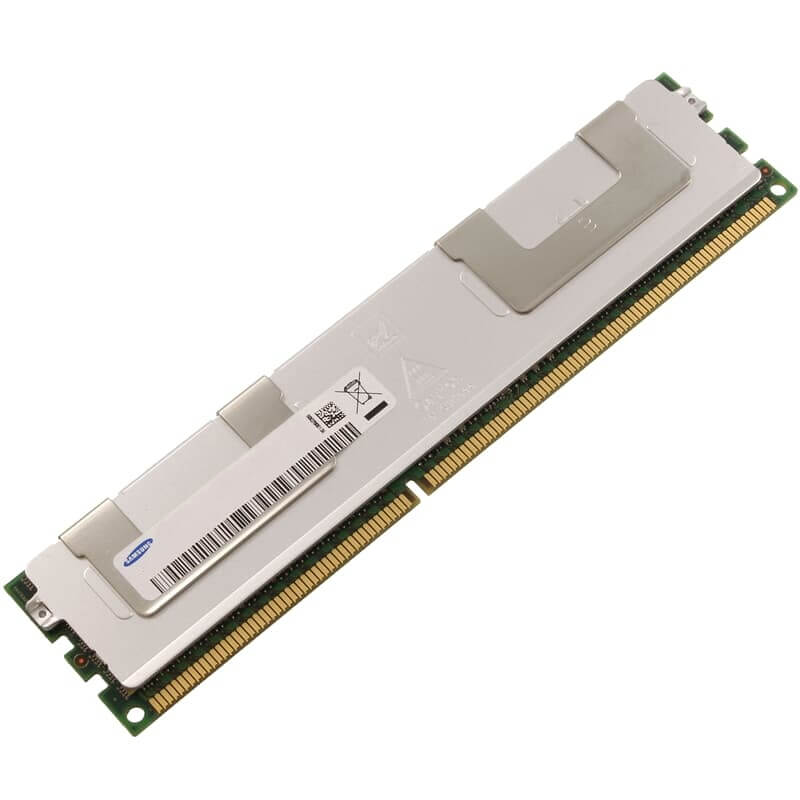
Samsung M386B4G70DM0-YK030 32GB 1600mhz Pc3-12800 Reg DDR3 SDRAM Ram. New (System) Pull with 1 year replacement warranty
Elevate server reliability and speed with the Samsung M386B4G70DM0-YK030 memory module. This high-capacity 32GB PC3-12800 DDR3-1600MHz 4Rx4 ECC Registered DIMM is engineered for enterprise workloads, virtualization, and data-intensive computing, delivering consistent throughput and error-correct resilience.
The enterprise DDR3 load reduced memory module category represents a mature yet highly dependable class of server memory engineered for stability, scalability, and predictable performance in mission-critical computing environments. Within this category, modules such as the Samsung M386B4G70DM0-YK030 32GB DDR3 LRDIMM are designed to address the memory density and electrical loading challenges that arise in multi-socket servers, virtualization platforms, and data-intensive enterprise applications. DDR3 LRDIMM technology enables higher capacity per slot while maintaining signal integrity, making it suitable for legacy and transitional infrastructures that require reliability over raw frequency advancements.
This memory category continues to play a crucial role in enterprise data centers where DDR3 platforms remain operational due to validated workloads, long depreciation cycles, and software compatibility requirements. Load reduced DIMMs, unlike unbuffered or standard registered modules, incorporate additional buffering that minimizes electrical load on the memory controller, allowing systems to populate more DIMMs per channel without compromising stability. This makes the category especially valuable for servers running large databases, enterprise resource planning software, virtualization stacks, and analytics workloads that benefit from expanded memory footprints.
DDR3 load reduced DIMM architecture is engineered around the concept of isolating the memory controller from the electrical demands of high-density DRAM configurations. In LRDIMM modules such as the Samsung M386B4G70DM0-YK030, both the command/address and data signals are buffered through a memory buffer component. This design significantly reduces the electrical load presented to the integrated memory controller, enabling support for higher capacity DIMMs and greater total system memory.
The quad rank configuration further enhances capacity density by organizing the DRAM chips into four logical ranks. This structure allows enterprise servers to achieve maximum memory scalability within limited physical slots. The x4 DRAM organization contributes to enhanced fault tolerance by enabling advanced error correction mechanisms, which are critical in environments where uptime and data integrity are non-negotiable requirements.
Registered memory modules buffer command and address signals, improving stability in multi-DIMM configurations. Load reduced memory extends this concept by buffering data signals as well, providing a more comprehensive reduction in electrical load. This distinction places LRDIMM modules in a specialized subcategory optimized for high-capacity enterprise servers rather than entry-level or workstation systems.
The Samsung M386B4G70DM0-YK030 exemplifies this approach by delivering 32GB capacity per module while maintaining consistent performance at DDR3-1600 speeds. This balance of capacity and frequency is ideal for servers that require large memory pools without sacrificing predictable latency behavior.
DDR3-1600 memory operates at an effective data rate of 1600 megatransfers per second, commonly referred to as PC3-12800. This bandwidth rating indicates a theoretical maximum transfer rate of 12.8GB per second per memory channel. In enterprise systems, this level of bandwidth supports a wide range of workloads, including transactional databases, middleware services, and virtualized environments.
Latency characteristics, such as CAS latency 11, play an important role in determining real-world performance. While DDR3 does not match the raw speed of newer DDR4 or DDR5 standards, its mature timing profiles and stable behavior under sustained load make it well suited for consistent enterprise operations. The Samsung M386B4G70DM0-YK030 is designed to deliver reliable throughput under continuous utilization scenarios, which is often more important than peak performance metrics in data center environments.
Quad rank memory modules allow servers to access multiple ranks of memory in an interleaved manner, improving effective throughput when supported by the memory controller. This configuration can enhance performance in multi-threaded workloads by allowing the controller to schedule memory accesses more efficiently across ranks.
In enterprise servers with advanced memory controllers, quad rank LRDIMMs contribute to improved utilization of available bandwidth, particularly in systems with high core counts. This makes the category well suited for virtualization hosts and application servers that must handle concurrent memory requests from numerous processes.
Error correcting code memory is a defining characteristic of enterprise-grade memory modules. ECC functionality enables the detection and correction of single-bit memory errors, significantly reducing the risk of data corruption. In modules such as the Samsung M386B4G70DM0-YK030, ECC is implemented in conjunction with registered and load reduced buffering to provide a robust foundation for reliable computing.
Data integrity is paramount in enterprise environments where memory errors can lead to system crashes, corrupted databases, or inaccurate computational results. ECC DDR3 LRDIMM modules are specifically designed to mitigate these risks, ensuring that critical workloads continue to operate without interruption.
The x4 DRAM organization enhances error correction capabilities by allowing more granular detection of faulty bits. This design is commonly used in enterprise memory modules to support advanced RAS features such as chip kill technology, which enables systems to continue operating even if an entire DRAM chip fails.
By combining x4 DRAM with ECC and load reduced buffering, the DDR3 LRDIMM category delivers a comprehensive reliability profile suitable for high-availability server deployments. This makes modules like the Samsung M386B4G70DM0-YK030 a preferred choice for mission-critical systems.
Operating at 1.35 volts, DDR3L memory modules provide improved power efficiency compared to standard 1.5-volt DDR3. Lower operating voltage translates to reduced power consumption and lower heat output, which are important considerations in densely populated server racks.
The Samsung M386B4G70DM0-YK030 leverages low-voltage DDR3L technology to help data centers manage energy costs while maintaining performance and reliability. Reduced thermal output also contributes to longer component lifespan and improved overall system stability.
High-capacity memory configurations can generate significant heat, particularly in servers populated with multiple DIMMs per channel. Load reduced memory modules are designed to operate reliably under these conditions, with thermal characteristics optimized for continuous operation.
Effective thermal management ensures that memory performance remains consistent over time, even in environments with sustained workloads. This stability is a key factor in the continued adoption of DDR3 LRDIMM memory in enterprise data centers.
DDR3 LRDIMM memory modules are compatible with a wide range of enterprise server platforms that support load reduced memory. These platforms typically include multi-socket systems from major server manufacturers, designed to accommodate high memory capacities for virtualization and database workloads.
The Samsung M386B4G70DM0-YK030 is engineered to meet strict compatibility and qualification standards, ensuring seamless integration with supported server architectures. Proper compatibility is essential for maintaining system stability and achieving optimal performance.
Support for LRDIMM modules depends on the capabilities of the server’s memory controller and firmware. Enterprise platforms that support quad rank DDR3 LRDIMM memory are designed to recognize and manage the additional buffering present in these modules.
Ensuring that the server BIOS is configured correctly is crucial for optimal operation. When properly supported, LRDIMM modules enable maximum memory scalability without sacrificing reliability.
32GB DDR3 LRDIMM modules occupy a strategic position within the enterprise memory category, offering a balance between capacity, performance, and cost. These modules are commonly used in virtualization hosts where large memory pools are required to support multiple virtual machines.
Database servers also benefit from high-capacity memory modules, as increased memory availability can reduce disk I/O and improve query performance. In such environments, the reliability and consistency of DDR3 LRDIMM memory are critical to maintaining service levels.
Virtualized environments place significant demands on system memory, as multiple operating systems and applications share the same physical resources. High-capacity LRDIMM modules enable higher consolidation ratios, allowing organizations to maximize the utilization of their server hardware.
The Samsung M386B4G70DM0-YK030 supports these use cases by providing stable, high-density memory that can operate continuously under heavy workloads.
Hybrid data centers often combine legacy infrastructure with newer technologies to balance performance, cost, and operational requirements. DDR3 LRDIMM memory plays a key role in these environments by supporting legacy workloads that remain business-critical.
By maintaining compatibility with existing systems while delivering high capacity and reliability, DDR3 LRDIMM modules help organizations transition gradually toward newer platforms without disrupting operations.
Stable memory platforms provide a foundation for consistent application performance and reliable service delivery. In hybrid environments, the ability to depend on proven memory technologies simplifies management and reduces the risk associated with infrastructure changes.
DDR3 LRDIMM memory continues to serve this strategic role by offering dependable performance and enterprise-grade reliability in a wide range of server deployments.


 Contact Us
 Information
 Catalog
 Solid State Drives (SSD)
 Network Switches
 Hard Disk Drives
 HBA & Controllers
 PC & Servers
 PC & Server Memory
 CPU & Processors
 Network Routers
 Power Supplies
 Tape Drives & Libraries
 Network Devices
 Computer & Network Cables