
(7% discount is applied at checkout)
Cart is empty
Your go-to destination for cutting-edge server products
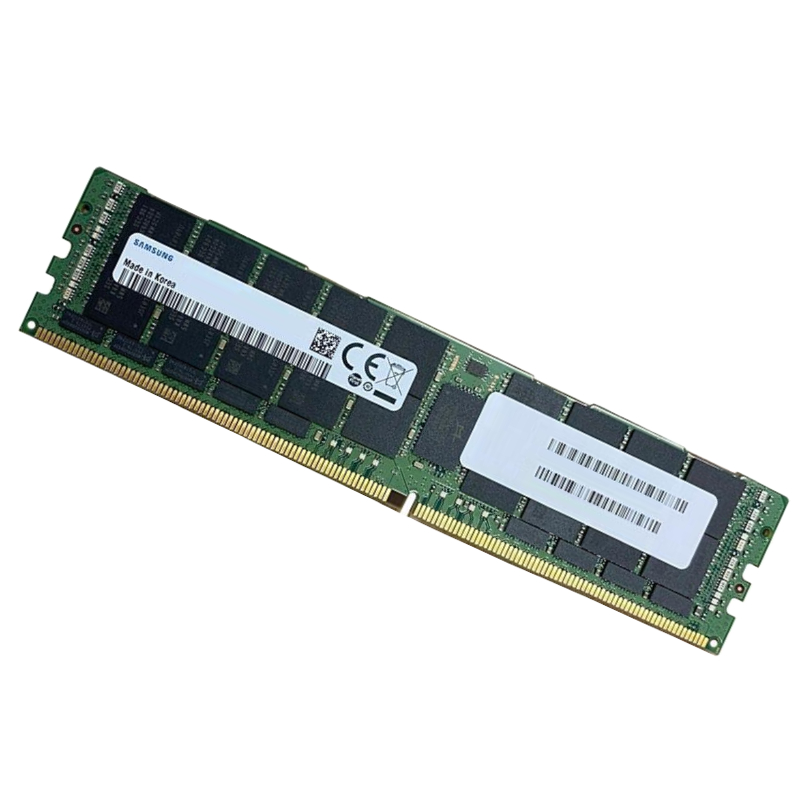
Samsung M391A2K43BB1-CPB 16GB 2133MHZ PC4-17000 Cl15 Ecc DDR4 SDRAM 288-Pin RAM. New (System) Pull with 1 year replacement warranty
The Samsung M391A2K43BB1-CPB is a high-performance 16GB DDR4 SDRAM memory module designed for reliability and speed. With advanced ECC support and optimized latency, this 288-pin RAM ensures seamless multitasking and enhanced system stability.
The Samsung M391A2K43BB1-CPB 16GB 2133MHz PC4-17000 CL15 ECC DDR4 SDRAM 288-Pin RAM belongs to a specialized enterprise memory category designed for servers, workstations, and data-centric computing environments where reliability, data integrity, and predictable performance are mandatory. This category focuses on ECC Registered DDR4 memory modules that support continuous operation, heavy multitasking, virtualization workloads, and mission-critical applications across corporate data centers and professional IT infrastructures.
Unlike consumer-grade memory, this category emphasizes error correction, signal stability, and platform compatibility with server-grade chipsets. These modules are engineered to meet stringent standards required by enterprise hardware manufacturers, making them ideal for long-term deployments in environments where downtime, data corruption, or unpredictable behavior is unacceptable.
DDR4 SDRAM represents a significant advancement over earlier DDR3 architectures, delivering improved bandwidth efficiency, reduced operating voltage, and enhanced signal integrity. Within this category, DDR4 memory operates at a base voltage of 1.2V, which helps reduce overall system power consumption while maintaining high-speed data transfer capabilities. This efficiency is critical in enterprise servers that run continuously and house multiple memory modules across multiple channels.
The Samsung M391A2K43BB1-CPB is built on a DDR4 architecture that supports a data transfer rate of 2133MHz, also known as PC4-17000. This speed grade ensures stable throughput for database operations, virtualization layers, enterprise resource planning software, and other memory-intensive workloads that depend on consistent latency and bandwidth.
Error-Correcting Code memory is a defining feature of this category. ECC memory detects and corrects single-bit memory errors in real time, preventing silent data corruption that could compromise applications, operating systems, or stored information. In professional computing environments, even a minor memory error can cascade into major system instability or data loss.
The ECC functionality integrated into Samsung server memory modules ensures that workloads remain protected under heavy load conditions. This is particularly valuable in servers handling financial transactions, healthcare data, scientific simulations, or cloud services where accuracy and consistency are non-negotiable requirements.
Registered DIMMs, also known as RDIMMs, incorporate a register between the memory controller and the DRAM chips. This register buffers command and address signals, significantly reducing electrical load on the memory controller. As a result, servers can support higher memory capacities and more populated DIMM slots without sacrificing stability.
The registered design of the Samsung M391A2K43BB1-CPB places it firmly within the enterprise memory category, allowing system architects to scale memory configurations efficiently. This buffering improves signal integrity and enables consistent performance even in systems with large memory footprints.
The 2133MHz operating frequency delivers a balanced combination of speed and compatibility. While higher-frequency DDR4 modules exist, 2133MHz remains widely supported across multiple server generations, ensuring broad platform interoperability. This frequency provides sufficient bandwidth for multi-core processors that rely on fast memory access to maintain high throughput.
In enterprise environments, predictable and sustained performance often outweighs peak theoretical speeds. The PC4-17000 specification ensures that memory bandwidth remains consistent across workloads, supporting virtualization clusters, application servers, and storage controllers with minimal latency variation.
CAS latency plays a crucial role in determining memory responsiveness. With a CL15 timing specification, this category of DDR4 ECC memory maintains a practical balance between access speed and system stability. Lower latency contributes to faster data retrieval, which benefits applications that perform frequent memory accesses.
CL15 timing at 2133MHz is a well-established configuration that aligns with server BIOS defaults, reducing the need for manual tuning. This stability-focused approach is ideal for enterprise IT teams seeking reliable deployment without extensive configuration overhead.
Enterprise memory must deliver consistent latency even under sustained workloads. The Samsung M391A2K43BB1-CPB is designed to maintain stable timing behavior during continuous operation, ensuring that performance does not degrade during peak usage periods. This characteristic is essential for service-level agreements and performance-sensitive applications.
The 288-pin DIMM form factor is the standard for DDR4 memory modules and is universally adopted across modern server platforms. This standardized physical design ensures secure electrical connectivity, mechanical stability, and compatibility with enterprise-grade motherboard layouts.
Within this category, the 288-pin RDIMM format allows for optimal signal routing and thermal management. Server chassis are engineered to accommodate these modules with adequate airflow, ensuring that memory temperatures remain within safe operating ranges.
With a capacity of 16GB per module, this category supports flexible memory scaling strategies. System integrators can deploy multiple 16GB modules across available DIMM slots to achieve higher total memory capacities while maintaining balanced channel configurations.
This modular scalability is particularly valuable in growing IT environments where memory requirements increase over time. Administrators can expand memory incrementally without replacing existing modules, reducing upgrade costs and system downtime.
The internal organization of the memory chips on the module is optimized for enterprise workloads. Samsung utilizes high-quality DRAM components that deliver consistent electrical characteristics and long-term reliability. This design supports sustained operation in environments with fluctuating temperatures and continuous memory access patterns.
This category of Samsung ECC RDIMM memory is engineered to be compatible with a wide range of server processors and chipsets. It is commonly supported by Intel Xeon platforms and select AMD EPYC configurations that require registered ECC DDR4 memory.
Platform compatibility is a critical factor in enterprise deployments. Memory modules like the M391A2K43BB1-CPB adhere to JEDEC standards, ensuring seamless integration with certified server motherboards and firmware.
Server BIOS and firmware are designed to recognize and configure ECC registered memory automatically. This category benefits from plug-and-play compatibility, allowing systems to initialize memory settings correctly without manual intervention.
Automatic ECC enablement and timing configuration reduce the risk of misconfiguration, contributing to system stability and reducing administrative overhead in large-scale deployments.
Samsung enterprise memory modules are frequently validated by major server OEMs. This validation process ensures that the memory meets platform-specific requirements for performance, reliability, and thermal behavior. As a result, this category is well-suited for branded servers used in enterprise and data center environments.
Operating at 1.2V, DDR4 memory consumes less power than previous generations, reducing heat output and overall system energy consumption. Lower power usage is particularly important in densely populated server racks where thermal management is a critical concern.
The thermal characteristics of this category are optimized to maintain stable operation under varying environmental conditions. Proper airflow and heat dissipation ensure that memory performance remains consistent even during peak usage.
Samsung’s manufacturing processes emphasize strict quality control at every stage of production. Each module undergoes comprehensive testing to verify electrical performance, timing accuracy, and ECC functionality. This commitment to quality ensures that enterprise customers receive memory modules that meet or exceed industry standards.
This category is well-suited for virtualization environments where multiple virtual machines share system memory resources. ECC protection and registered buffering ensure that memory access remains stable even when workloads fluctuate dynamically.
Cloud service providers rely on memory modules like the Samsung M391A2K43BB1-CPB to deliver predictable performance across hosted applications. Memory reliability directly impacts service availability and customer satisfaction in cloud environments.
Databases require fast, reliable memory access to handle queries, indexing, and transaction processing. The combination of ECC error correction and stable latency makes this category ideal for database servers handling sensitive or high-volume data.
Consistent memory performance ensures that query response times remain predictable, supporting business-critical operations and analytics workloads.
Enterprise resource planning systems, customer relationship management platforms, and middleware services depend on reliable memory to function efficiently. This category supports these applications by providing stable bandwidth, low error rates, and compatibility with enterprise hardware ecosystems.
Scientific simulations, engineering analysis, and technical computing workloads often require large memory footprints and continuous processing. ECC registered memory ensures data accuracy during complex calculations, making this category suitable for research institutions and technical enterprises.
While designed for DDR4 platforms, this category maintains compatibility across multiple server generations that support PC4-17000 memory. This flexibility allows organizations to reuse memory modules when upgrading or repurposing systems.
Such compatibility reduces electronic waste and maximizes return on investment for enterprise IT infrastructure.


 Contact Us
 Information
 Catalog
 Solid State Drives (SSD)
 Network Switches
 Hard Disk Drives
 HBA & Controllers
 PC & Servers
 PC & Server Memory
 CPU & Processors
 Network Routers
 Power Supplies
 Tape Drives & Libraries
 Network Devices
 Computer & Network Cables