(7% discount is applied at checkout)
Cart is empty
Your go-to destination for cutting-edge server products
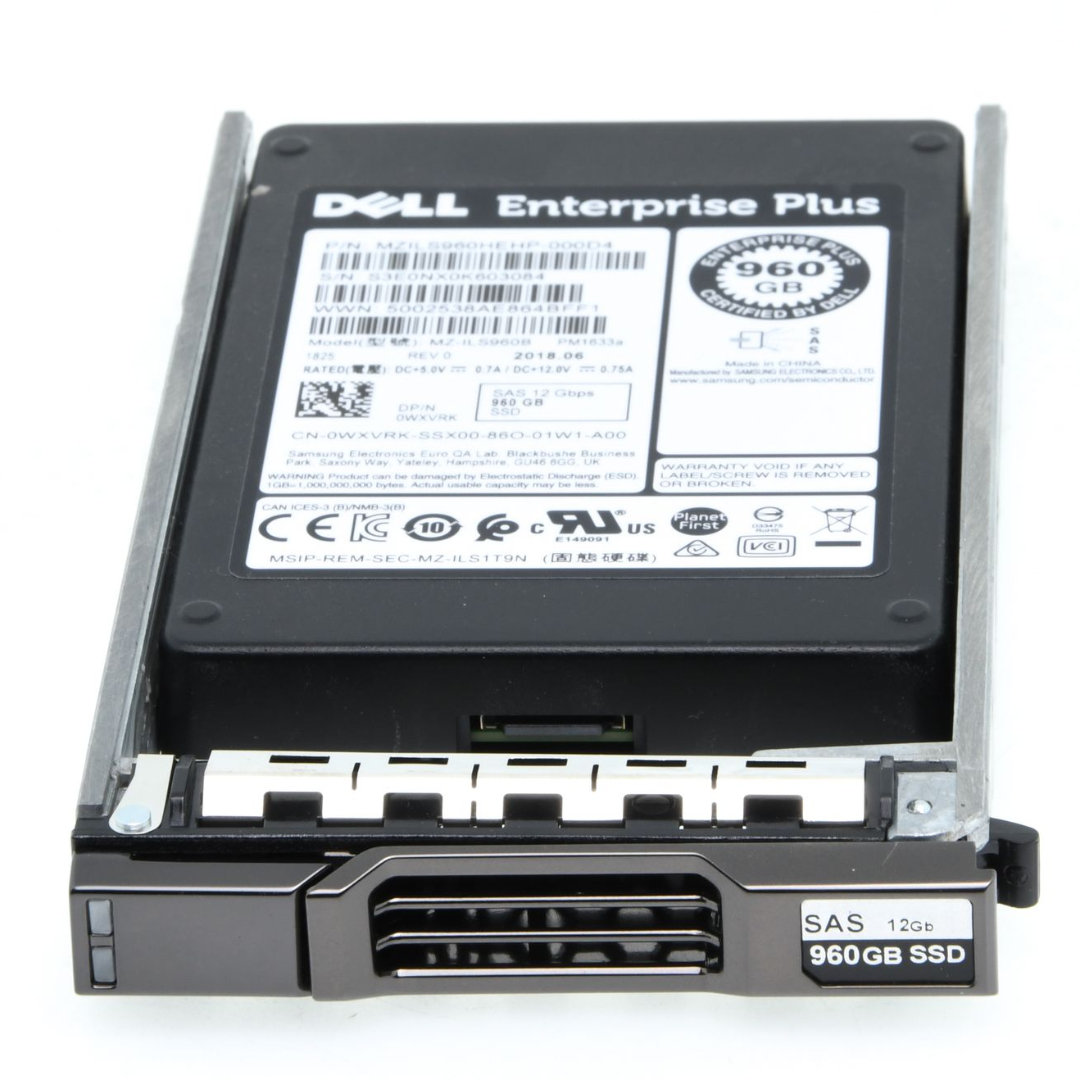


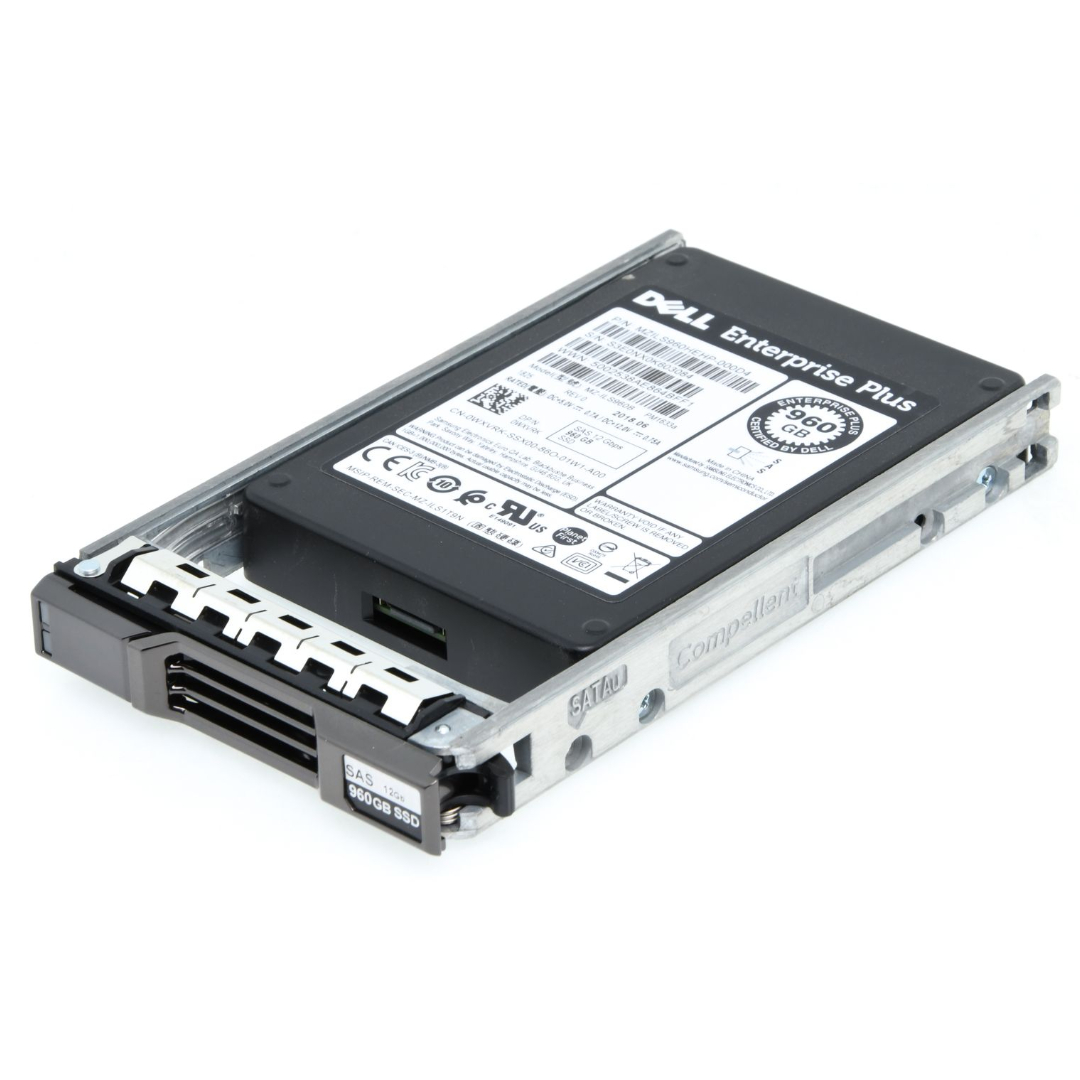
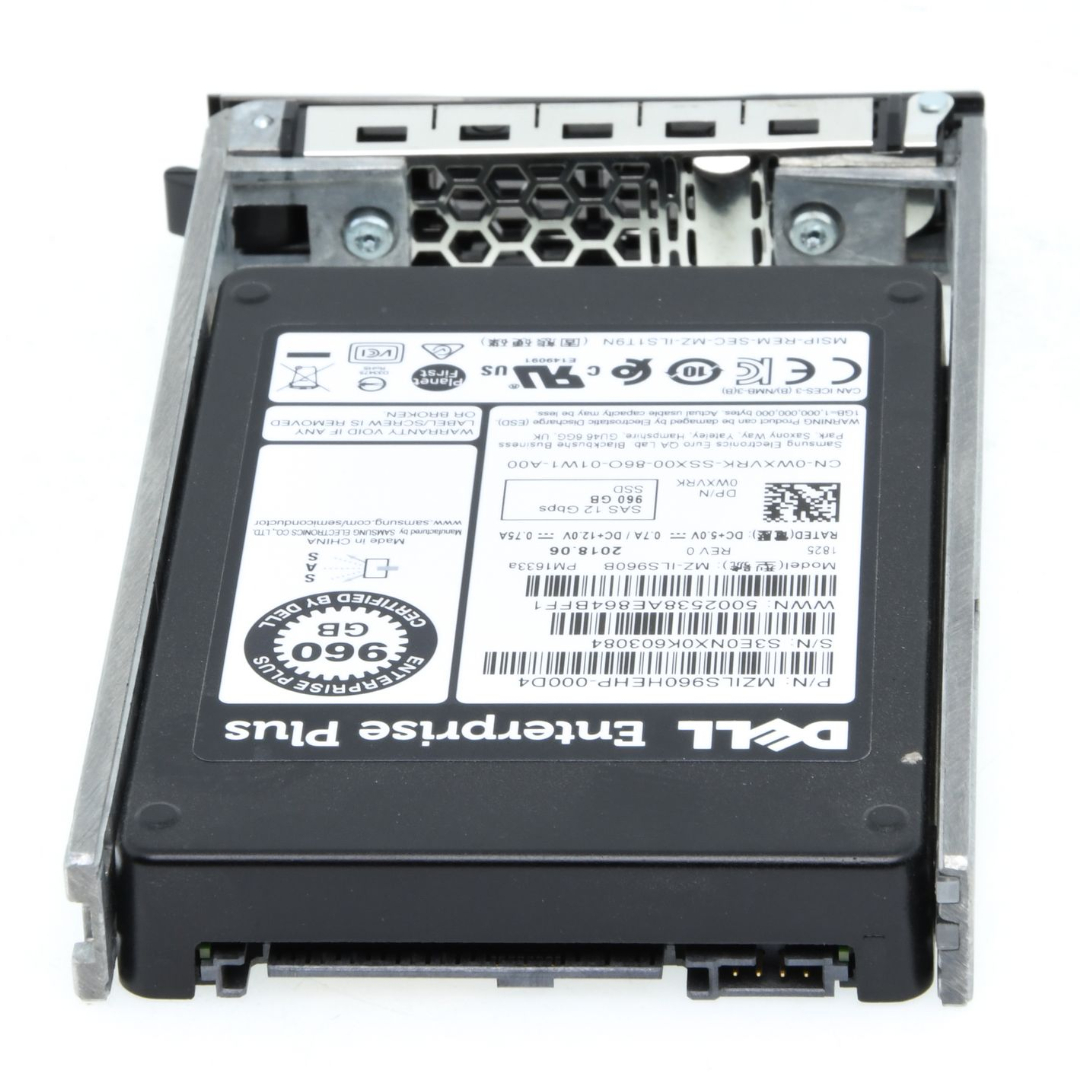
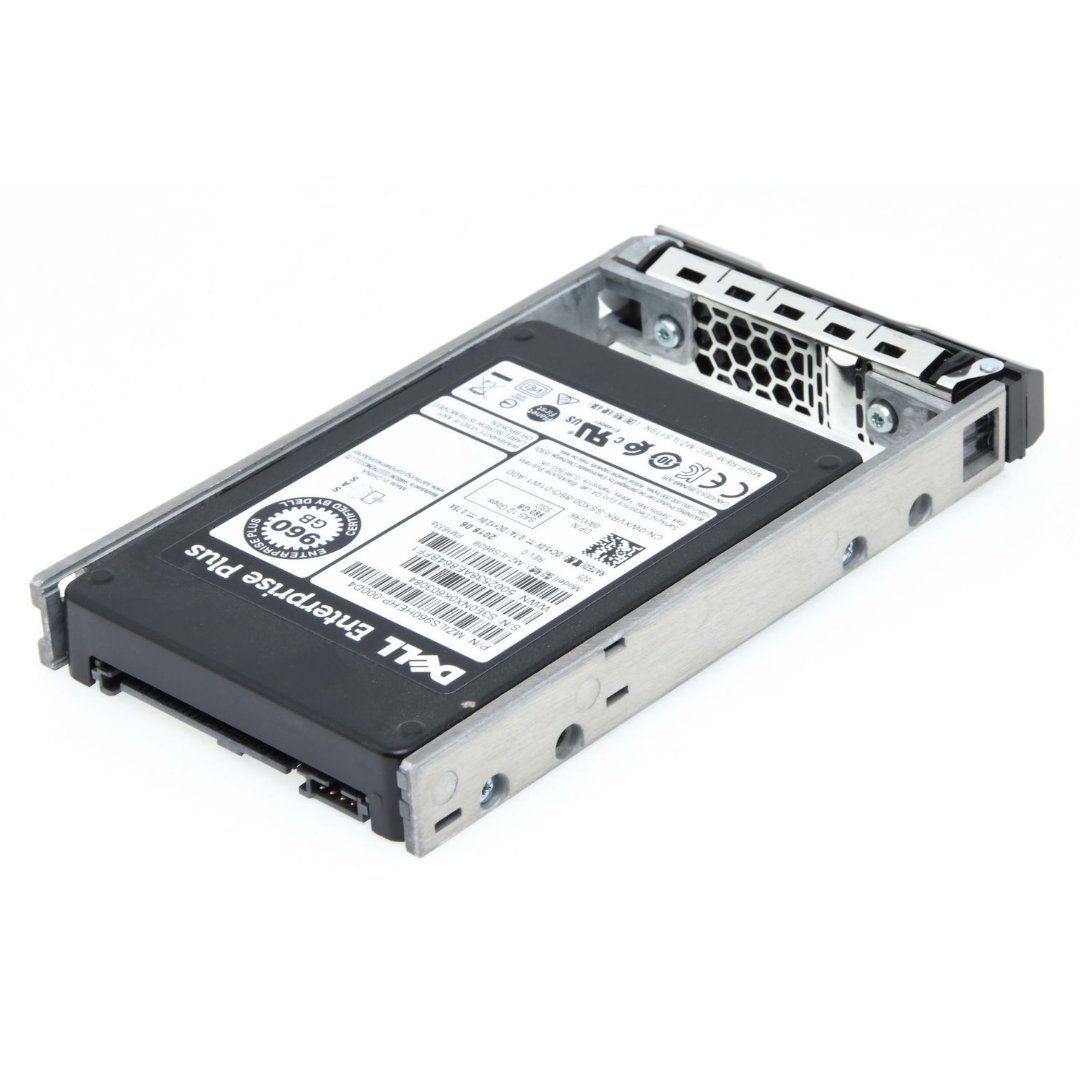
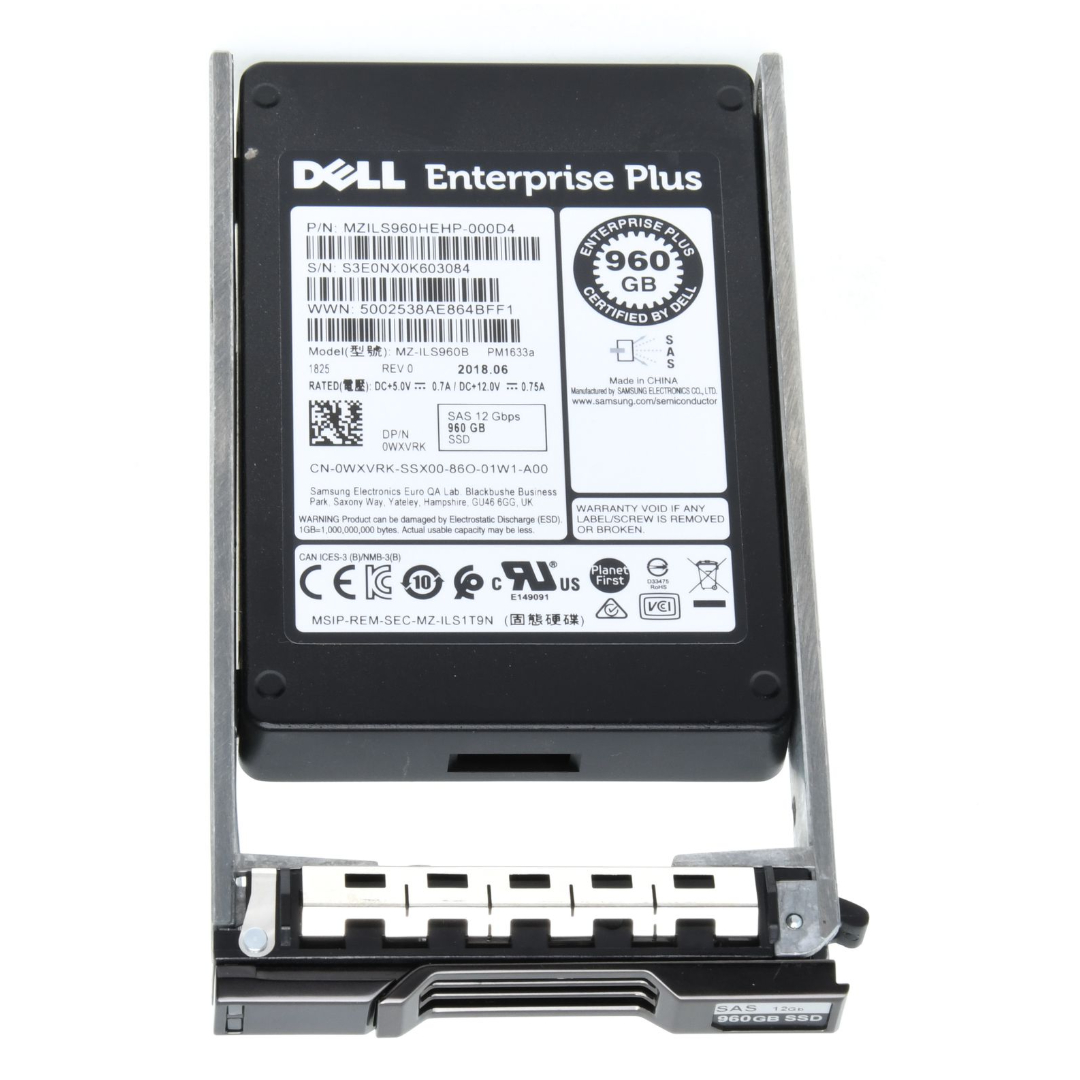
Dell 7J7M0 960GB Read-Intensive MLC SAS-12GBPS SFF Hot-Swap Solid State Drive for Server. Excellent Refurbished with 1 year replacement warranty
The Dell 7J7M0 960GB solid-state drive is engineered for data-intensive environments, offering robust performance and reliability for server applications.
This SSD integrates seamlessly with a wide array of Dell PowerEdge systems:
The Dell 7J7M0 960GB Read-Intensive MLC SAS-12GBPS SFF Hot-Swap Solid State Drive occupies a focused niche in enterprise storage: high-capacity, read-optimized flash that integrates seamlessly into modern server environments. This category centers on 2.5-inch small form factor (SFF) SAS drives engineered for heavy read workloads, delivering fast random reads and consistent low-latency response under multi-user, multi-threaded server applications. The combination of Multi-Level Cell (MLC) NAND, SAS 12Gbps interface, and hot-swap capability makes these modules especially well-suited to use cases such as virtual desktop infrastructure (VDI), database query acceleration, content delivery, and read-heavy caching layers in hyperconverged infrastructure. When merchants, system administrators, and procurement teams evaluate storage options for read-dominant workloads, this category represents a balance between cost-efficiency and enterprise-grade performance that often outperforms spinning disks and mixed-use flash in sustained read scenarios.
The SAS 12Gbps interface is a defining attribute of the Dell 7J7M0 family: it combines point-to-point serial connectivity with enterprise-grade reliability features, including full-duplex communication, robust error detection and recovery, and support for dual-port topologies. For servers and storage arrays using SAS backplanes, 12Gbps provides a substantial throughput ceiling relative to older 6Gbps devices while maintaining compatibility with enterprise-class controllers and RAID cards. The SAS protocol also enables advanced management capabilities such as out-of-band diagnostics and secure device identification, which benefit large deployments where remote monitoring and lifecycle management reduce operational overhead.
Multi-Level Cell (MLC) NAND remains a popular choice for read-optimized enterprise SSDs because it delivers a strong mix of cost per gigabyte and read performance. In the Dell 7J7M0 960GB variant, MLC technology balances endurance and affordability: the drive is tuned to prioritize read throughput and predictable latency, while firmware and overprovisioning strategies mitigate write amplification and extend practical service life in read-dominant environments. For workloads where read IOPS and sequential throughput matter more than sustained heavy writes, MLC-based read-optimized SSDs frequently deliver superior TCO compared to higher-cost single-level cell (SLC) alternatives or write-optimized flash.
The SFF (2.5-inch) form factor adopted by this category supports dense server configurations and blade or rack-mounted storage arrays where space efficiency is critical. Hot-swap capability means drives can be removed and replaced without powering down the host, enabling minimal service interruption during maintenance, upgrades, or drive replacement. Hot-swap compatibility is especially valuable in enterprise operations that demand continuous availability and in data center environments where rapid hardware replacement is a regular part of lifecycle management.
Drives in the Dell 7J7M0 960GB category are designed to excel at high random read IOPS and consistent low latency under concurrent load. In real-world deployments, this translates to faster query response times in database-driven applications, snappier VM boot storms in VDI clusters, and more efficient content caching for frequently accessed assets. The drives are calibrated so that sustained read performance remains predictable even when many clients or virtual machines are issuing small-block reads simultaneously. Throughput for large sequential reads also benefits from the 12Gbps interface, making these SSDs a solid choice for streaming large datasets where read performance is critical.
Although optimized for reads, these SSDs still handle writes within expected enterprise parameters. Firmware-level garbage collection, wear-leveling algorithms, and reserved overprovisioning ensure that write operations are managed safely and that data integrity is maintained. For environments with mixed or write-heavy workloads, administrators should carefully evaluate endurance metrics and consider staging write-heavy tasks on drives specifically rated for mixed or write-intensive workloads. In many storage architectures, combining read-intensive Dell 7J7M0 series drives with higher-endurance write-optimized drives in tiered storage setups delivers an optimal balance between performance and longevity.
Enterprise SSDs in this category are engineered to operate within server thermal envelopes and to take advantage of server chassis cooling. While power consumption is generally lower than spinning media at similar performance points, system architects should still account for drive heat generation, especially in ultra-dense racks. Proper airflow, accurate thermal monitoring, and firmware that supports SMART attributes help maintain stable operating temperatures and prevent thermal throttling under heavy sustained read loads.
When selecting drives from this category, compatibility with chassis backplanes, RAID controllers, and server OEM firmware is essential. The Dell 7J7M0 960GB family typically integrates with a wide range of enterprise servers—particularly those from the same OEM—offering recorded device IDs and firmware support that simplify deployment across large fleets. Before large-scale rollouts, IT teams should verify controller firmware compatibility, backplane support for SAS 12Gbps speeds, and boot/RAID configuration guidelines to ensure the drives operate as expected within the chosen storage topology.
These SSDs are commonly deployed behind SAS RAID controllers where RAID levels are selected to meet required fault tolerance and performance targets. Read-intensive workloads often benefit from RAID configurations that maximize read throughput and minimize rebuild windows. Combining solid-state read-optimized drives with RAID controllers that support advanced caching and battery-backed write cache strategies helps protect data while preserving high read performance. In environments where data protection is paramount, pairing these drives with RAID levels that provide redundancy—such as RAID 6 or RAID 10—can reduce the risk of data loss while balancing usable capacity and I/O performance.
One of the standout use cases for the Dell 7J7M0 960GB read-optimized SSD is virtual desktop infrastructure, where simultaneous boot storms and desktop operations generate intense, concurrent read traffic. The drive’s fast random read performance reduces login times and enhances user experience in dense VDI deployments. System architects commonly deploy these SSDs in write-light, read-heavy virtual desktop pools to achieve more cost-effective per-seat storage without sacrificing responsiveness.
Databases that perform numerous read queries—such as reporting databases, data warehouses, and analytics engines—benefit from the low-latency, high-IOPS profile of this SSD category. Offloading frequently accessed tables or indexes to read-intensive SSDs improves query turnaround and reduces load on primary storage tiers. For analytical workloads that rely heavily on read throughput, the 12Gbps SAS interface helps maintain steady throughput for large result sets and repeated ad-hoc queries.
Web servers, content delivery caches, and media streaming services often require fast access to frequently requested files. Deploying read-optimized SSDs in caching layers yields faster content delivery, lower latency for end users, and more consistent throughput during traffic spikes. The SFF form factor and hot-swap capability also support quick scale-out strategies where drives are added or replaced with minimal disruption.
Compared to traditional HDDs, the Dell 7J7M0 class of read-optimized SSDs delivers far lower latency, higher random read IOPS, and better power efficiency for read-heavy tasks. HDDs still offer higher raw capacity per dollar for archival or sequential write tasks, but for applications where responsiveness and concurrent read throughput matter, the SSD category dramatically improves user experience and application performance.
Write-optimized SSDs and mixed-use flash targets emphasize endurance for heavy write workloads and often employ different NAND types or controller tuning. Read-intensive MLC drives typically offer better cost per GB while retaining excellent read performance. For architectures that separate hot read workloads from write-dominant operations, combining read-optimized Dell 7J7M0 drives with higher-endurance write-tier SSDs results in a cost-effective, tiered solution that adheres to performance and durability requirements.
NVMe drives connected via PCIe can deliver even higher raw throughput and lower latency than SAS-based SSDs, especially for workloads that exploit the parallelism of NVMe queues. However, SAS 12Gbps SFF SSDs remain relevant where existing SAS infrastructure, backplane compatibility, or certain enterprise management features are required. Cost, architectural constraints, and compatibility considerations often determine whether organizations upgrade to NVMe or continue leveraging high-performance SAS SSDs in current fleets.


 Contact Us
 Information
 Catalog
 Solid State Drives (SSD)
 Network Switches
 Hard Disk Drives
 HBA & Controllers
 PC & Servers
 PC & Server Memory
 CPU & Processors
 Network Routers
 Power Supplies
 Tape Drives & Libraries
 Network Devices
 Computer & Network Cables