(7% discount is applied at checkout)
Cart is empty
Your go-to destination for cutting-edge server products


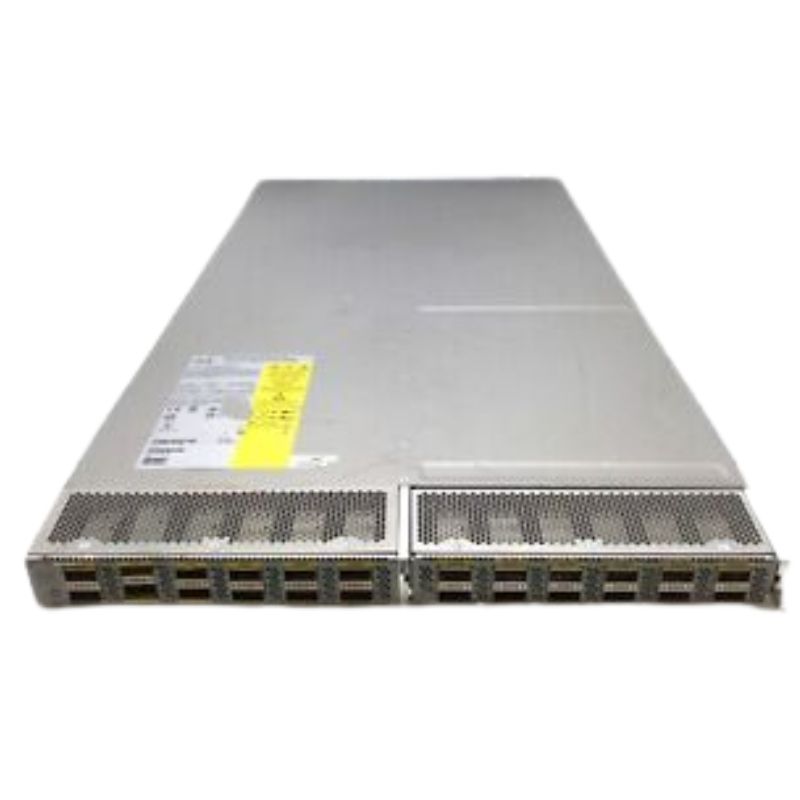
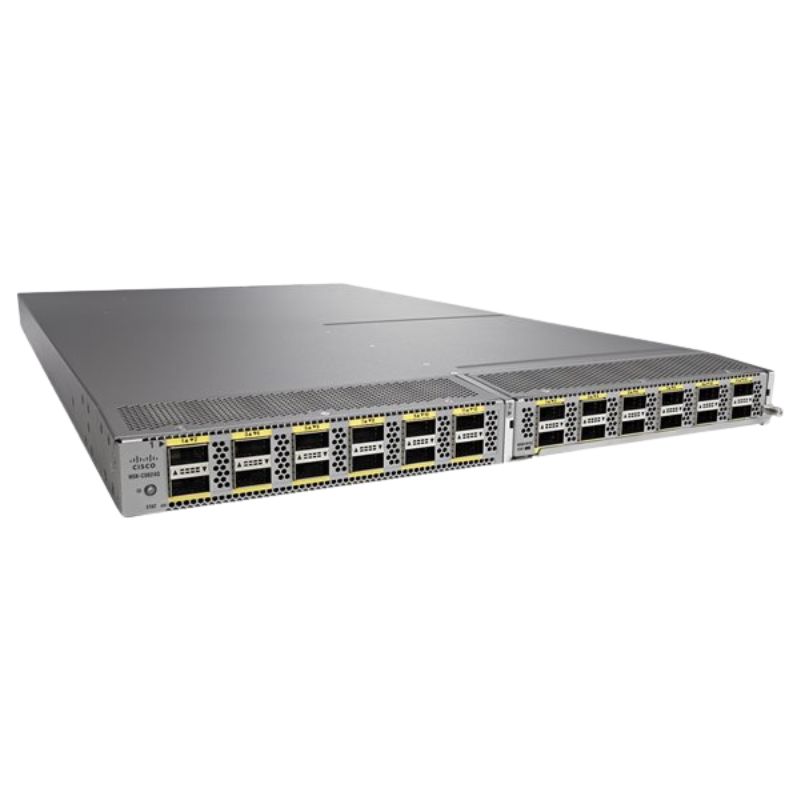
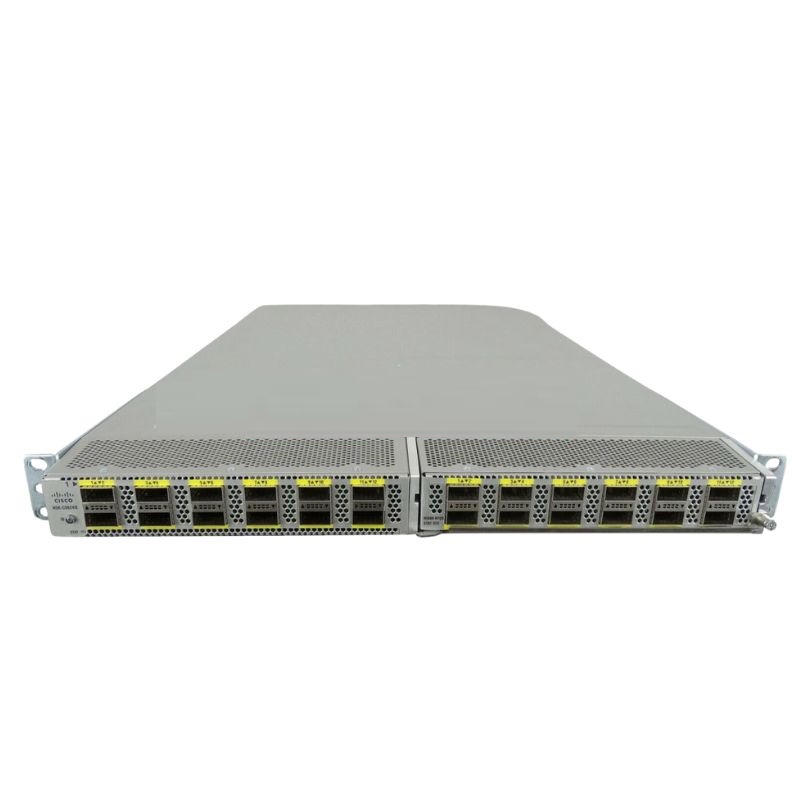
Cisco C1-N5624Q ONE Nexus 5624Q VXLAN 1RU Chassis Switch. Factory-Sealed New in Original Box (FSB) with 1 year replacement warranty
The Cisco C1-N5624Q ONE Nexus 5624Q VXLAN 1RU Chassis Switch is a powerful Layer 3 networking solution designed for modern data centers. Built for high-density environments, this enterprise-grade switch delivers reliable performance, scalability, and advanced VXLAN support to meet growing network demands.
This Cisco Nexus switch is engineered for high-speed connectivity and modular expansion, making it ideal for scalable network infrastructures.
With QSFP+ interfaces, the Nexus 5624Q supports ultra-fast data transfer, ensuring optimal throughput for bandwidth-intensive applications.
The switch is designed to deliver consistent performance in demanding enterprise and cloud environments, supporting efficient traffic flow and low latency.
The flexible expansion slots allow businesses to adapt their network infrastructure as requirements evolve, reducing long-term costs.
Housed in a single rack unit (1RU), the Nexus 5624Q maximizes space efficiency without sacrificing capability. Its port configuration is tailored for high-density server access and upstream connectivity, making it an ideal choice for both enterprise data centers and service provider environments.
The switch's physical design is centered on flexibility and high-speed connectivity, offering a blend of port types to meet diverse cabling and bandwidth requirements.
Recognizing the need for gradual migration from 1G/10G to higher speeds, the Cisco QSA (Quad Small Form-Factor Pluggable Adapter) can be used with specific ports. This adapter allows a QSFP+ port to accept an SFP/SFP+ module, providing critical flexibility for connecting to existing 1GbE or 10GbE server or storage interfaces without sacrificing a high-speed port for the future.
With an aggregate switching capacity of over 1.3 Tbps and a packet forwarding rate of 950 Mpps, the Nexus 5624Q guarantees non-blocking performance across all ports simultaneously. This ensures that latency-sensitive applications like high-frequency trading, real-time analytics, and clustered databases perform predictably, even under full load.
The most transformative feature of the C1-N5624Q is its native hardware-based VXLAN (Virtual Extensible LAN) capability. VXLAN is a foundational technology for network overlay architectures, solving critical scalability and agility limitations of traditional VLANs.
Traditional IEEE 802.1Q VLANs are limited to 4,096 segments, a number insufficient for large-scale cloud and multi-tenant environments. VXLAN uses a 24-bit segment identifier, known as a VXLAN Network Identifier (VNI), scaling the theoretical limit to 16 million unique segments. This allows each tenant, application, or environment to have its own isolated overlay network, enabling true large-scale multi-tenancy.
Unlike solutions that rely on software-based encapsulation, the Nexus 5624Q performs VXLAN encapsulation and de-encapsulation directly in its application-specific integrated circuit (ASIC). This hardware-offloaded approach ensures that VXLAN overlay traffic is switched at wire speed with minimal latency, making overlay networks viable for performance-critical production workloads. The switch supports both VXLAN bridging and routing, functioning as a VTEP (VXLAN Tunnel Endpoint) to terminate overlay tunnels.
The 5624Q can act as a Layer 2 and Layer 3 gateway between VXLAN overlay networks and classic VLAN-based underlay networks. This is crucial for phased migrations and hybrid environments, allowing legacy applications in VLANs to communicate seamlessly with modern workloads in VXLAN segments.
In unified fabric environments where storage, data, and cluster traffic converge on a single network, the Nexus 5624Q provides a robust set of Data Center Bridging protocols. These IEEE-standard technologies enable lossless transport, essential for protocols like Fibre Channel over Ethernet (FCoE).
Priority Flow Control (PFC - IEEE 802.1Qbb): Creates a lossless class of service by applying per-priority pause frames, preventing packet drops for sensitive traffic like storage.
Enhanced Transmission Selection (ETS - IEEE 802.1Qaz): Provides a flexible mechanism for bandwidth allocation among traffic classes, ensuring guaranteed minimum bandwidth for storage and other priority flows.
Data Center Bridging Exchange (DCBX): A discovery and capability exchange protocol that simplifies the configuration of PFC and ETS parameters between adjacent switches and Converged Network Adapters (CNAs).
This DCB foundation allows the 5624Q to function as a consolidated I/O switch, carrying traditional IP traffic, high-performance computing (HPC) cluster traffic, and FCoE storage traffic on a unified, high-speed 10/40 Gigabit Ethernet fabric.
The switch is built to integrate deeply with virtualized and automated data center environments, providing visibility and policy enforcement that extends into the hypervisor.
The Nexus 5624Q works seamlessly with the Cisco Nexus 1000V distributed virtual switch, a critical component for software-defined networking at the server hypervisor level. This integration enables:
End-to-End Policy: Network policies (ACLs, QoS, security) defined at the physical switch can be extended to the virtual machine vNIC level via the Nexus 1000V.
Operational Consistency: The same CLI, SNMP, and XML API models are used across physical (Nexus 5000/6000) and virtual (Nexus 1000V) switches, reducing operational complexity.
Enhanced Visibility: Provides a unified view of traffic from the VM, through the virtual switch, to the physical network, dramatically simplifying troubleshooting.
To support modern infrastructure-as-code and DevOps practices, the C1-N5624Q offers a rich set of programmatic interfaces.
NX-OS Programmability: Built on the robust, modular NX-OS operating system, it supports Python scripting directly on the switch for automation of configuration and operational tasks.
Open APIs: Features comprehensive XML management interfaces and supports industry-standard protocols like NETCONF for model-driven programmability.
PowerShell Toolkit: Cisco provides a PowerShell toolkit for administrators familiar with the Windows ecosystem to manage and automate switch operations.
Data center top-of-rack switches require carrier-grade reliability. The Nexus 5624Q incorporates multiple hardware and software features to ensure maximum uptime.
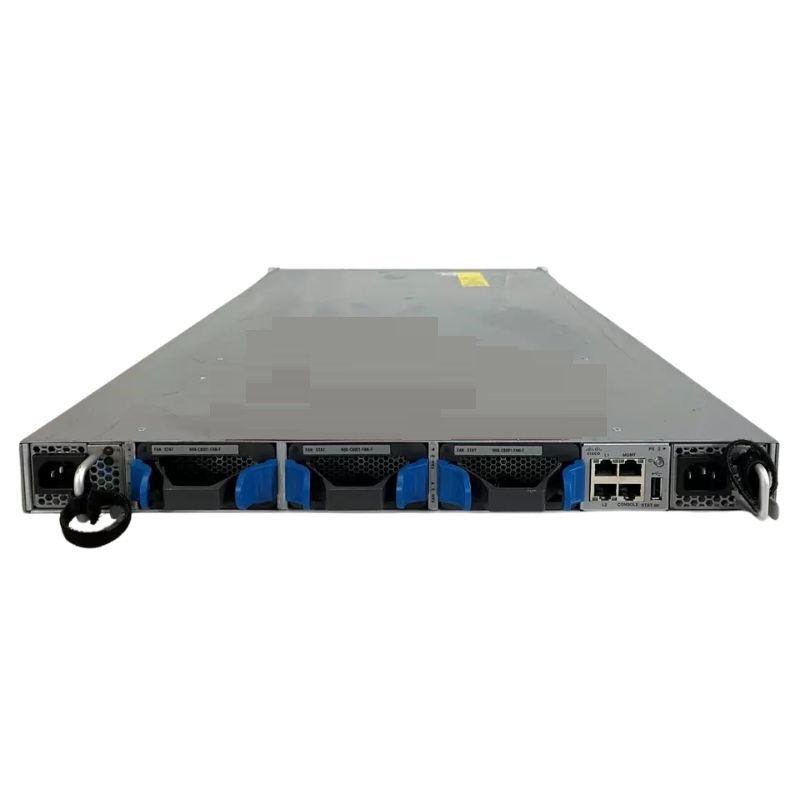
The switch is designed with redundant, hot-swappable power supplies and fan trays. The power supplies support advanced grid redundancy modes for connecting to separate power sources. The port-side exhaust and port-side intake airflow variants allow for flexible deployment in hot-aisle/cold-aisle configurations.
Beyond hardware, the NX-OS software offers stateful process restart, where individual software processes can be restarted without impacting data plane forwarding. Key protocols are also enhanced for fast convergence:
Rapid Per-VLAN Spanning Tree+ (Rapid PVST+): Provides fast recovery for Layer 2 topologies.
Bidirectional Forwarding Detection (BFD): Offers sub-second failure detection for routing protocol neighbors and attached hosts.
Equal-Cost Multi-Path (ECMP) Routing: Allows for multiple active paths upstream, providing inherent load balancing and redundancy.
In multi-tenant and secure government environments, strong isolation and access control are paramount. The 5624Q provides a multi-layered security model.
Each VNI creates a logically isolated broadcast domain. Traffic between VNIs is prohibited unless explicitly permitted through a routed interface (Layer 3 VNI gateway) or configured gateway. This provides inherent segmentation at a massive scale.
The switch supports a full suite of L2-L4 security features:
ACL Flexibility: Supports ingress and egress ACLs (standard, extended, and VLAN ACLs) that can match on L3/L4 fields, even within VXLAN encapsulated traffic.
DHCP Snooping, Dynamic ARP Inspection, IP Source Guard: A triad of features that mitigate common attacks on the Address Resolution Protocol (ARP) and Dynamic Host Configuration Protocol (DHCP).
IEEE 802.1X Port-Based Authentication: Provides network access control, ensuring only authorized devices can connect to switch ports.
Role-Based Access Control (RBAC): Integrates with TACACS+ and RADIUS servers to provide detailed administrative control and auditing.
The Nexus 5624Q is a pioneer in the Unified Fabric concept, converging LAN and SAN traffic over a single Ethernet infrastructure to reduce capital and operational expenses.
As a full-fledged FCoE Forwarder (FCF), the switch can:
Receive native Fibre Channel frames encapsulated in Ethernet (FCoE) from servers with Converged Network Adapters (CNAs).Forward these frames to upstream native Fibre Channel SAN switches via its Fibre Channel uplink ports, acting as a gateway.
Apply Fibre Channel-specific quality of service and zoning policies, maintaining the integrity and performance of storage traffic.
This convergence allows organizations to leverage their existing Fibre Channel storage investments while building a 10 Gigabit Ethernet unified network. Server cabling and adapter counts are reduced by half, simplifying management and lowering power/cooling costs in the server rack.
The versatility of the Cisco C1-N5624Q makes it suitable for a broad range of demanding data center applications.
Its 10GbE server port density makes it ideal for aggregating traffic from racks filled with blade servers or high-performance computing nodes, providing a high-bandwidth, low-latency path to the network core.
The native VXLAN support is perfect for building scalable, secure, and agile cloud pods. It enables the dynamic creation of tenant networks on-demand, integrated with cloud orchestration platforms like OpenStack via plugins.
For VMware vSphere or Microsoft Hyper-V deployments using the Nexus 1000V, the 5624Q provides a seamless, policy-extended fabric that unifies network operations between the physical and virtual world.
The deterministic, microsecond-level latency, combined with features like BFD and ECMP, meets the stringent requirements of financial trading networks where every microsecond counts.


 Contact Us
 Information
 Catalog
 Solid State Drives (SSD)
 Network Switches
 Hard Disk Drives
 HBA & Controllers
 PC & Servers
 PC & Server Memory
 CPU & Processors
 Network Routers
 Power Supplies
 Tape Drives & Libraries
 Network Devices
 Computer & Network Cables