(7% discount is applied at checkout)
Cart is empty
Your go-to destination for cutting-edge server products
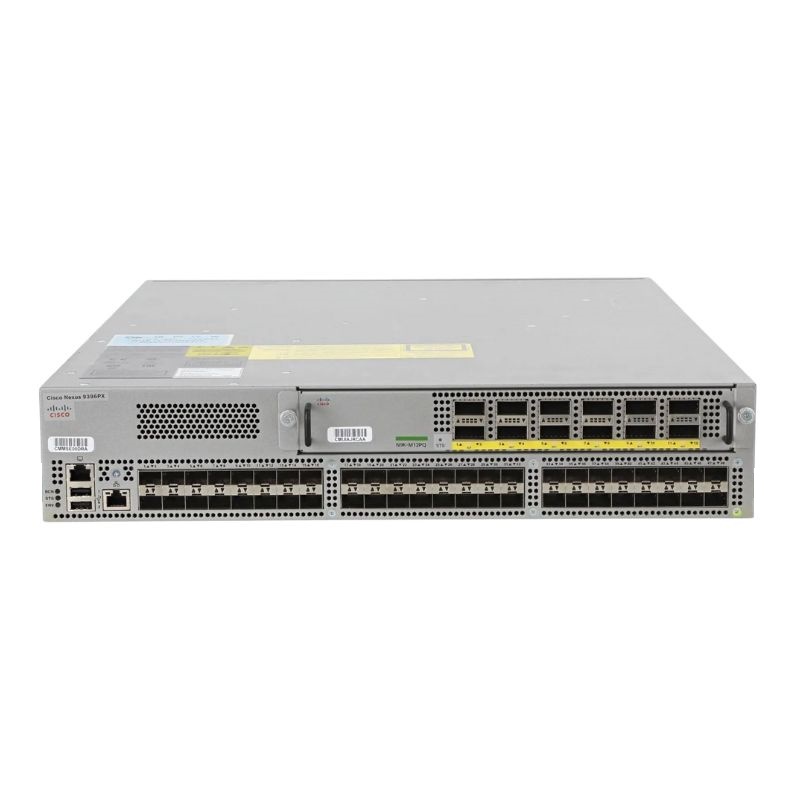


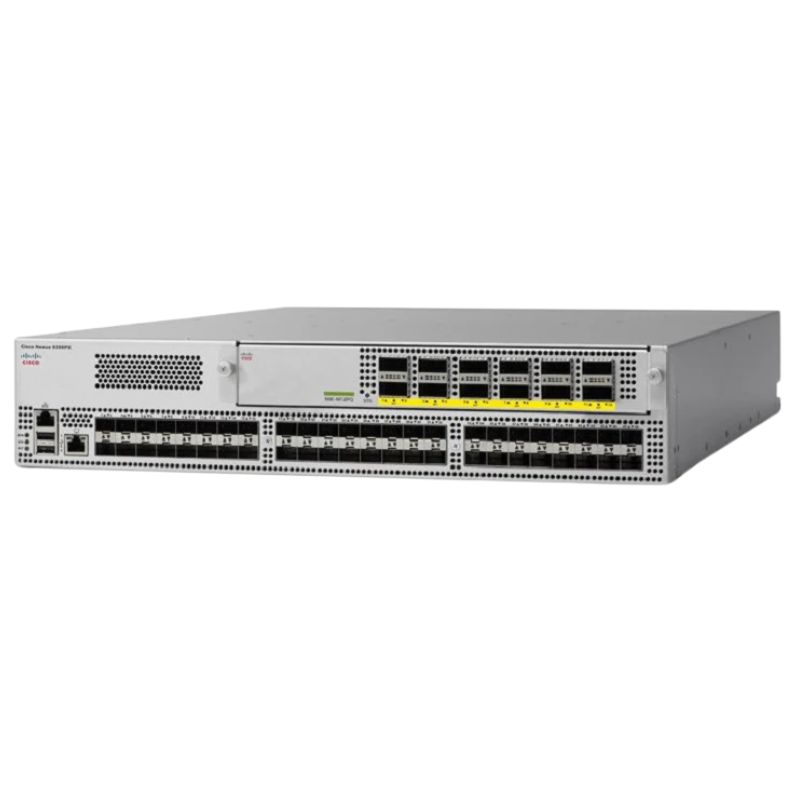
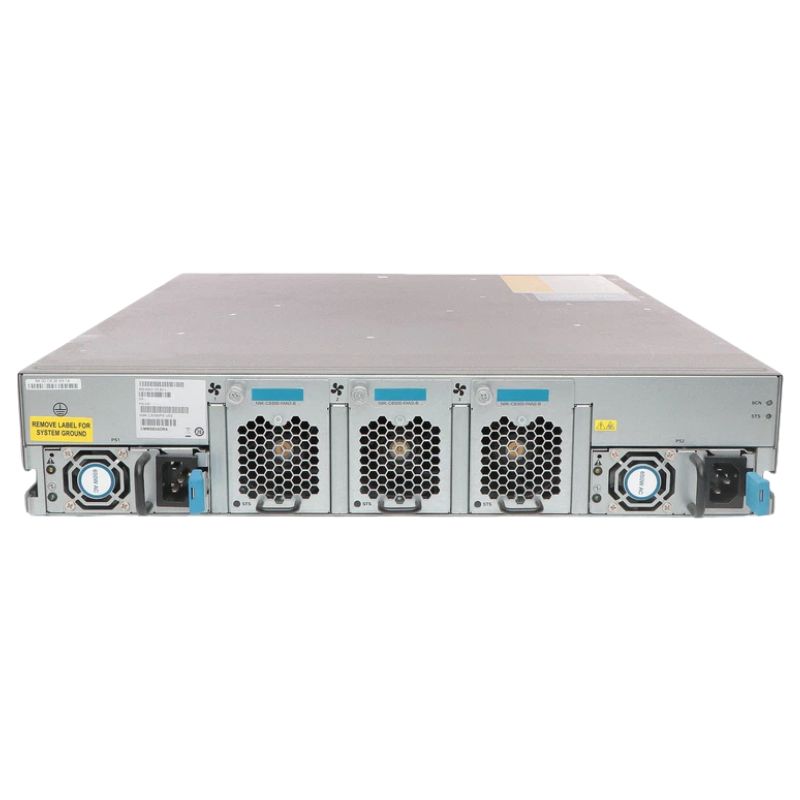
Cisco C1-N9K-C9396PXB18Q ONE Nexus 48 Ports Managed Switch. Excellent Refurbished with 1 year replacement warranty
The Cisco C1-N9K-C9396PXB18Q ONE Nexus Managed Switch is a high-performance, enterprise-grade networking solution engineered for modern data centers. Designed for scalability, speed, and reliability, this Cisco Nexus 9300 Series switch delivers advanced Layer 3 capabilities with exceptional throughput.
This Cisco Nexus switch offers a versatile port configuration suitable for high-density network environments and mission-critical workloads.
Built for future growth, the switch includes multiple expansion slots that enhance bandwidth and connectivity.
With full Layer 3 support, this Cisco Nexus switch enables intelligent routing, optimized traffic management, and improved network efficiency.
The Nexus 9396PX is built on a robust, non-blocking switching fabric designed for predictable performance. Its architecture is purpose-built to handle the east-west traffic patterns that dominate modern virtualized and cloud-native applications.
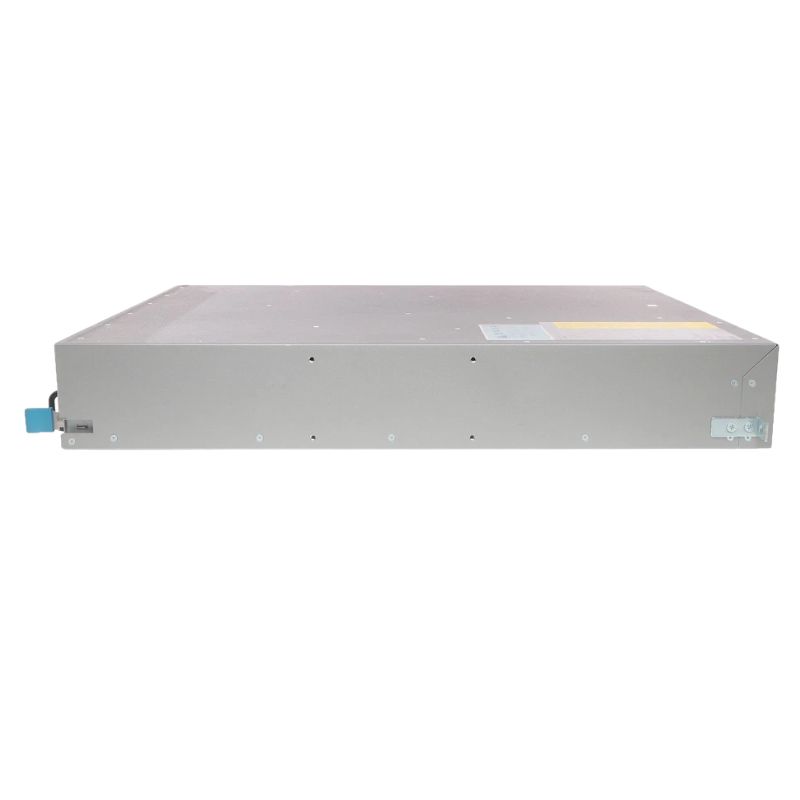
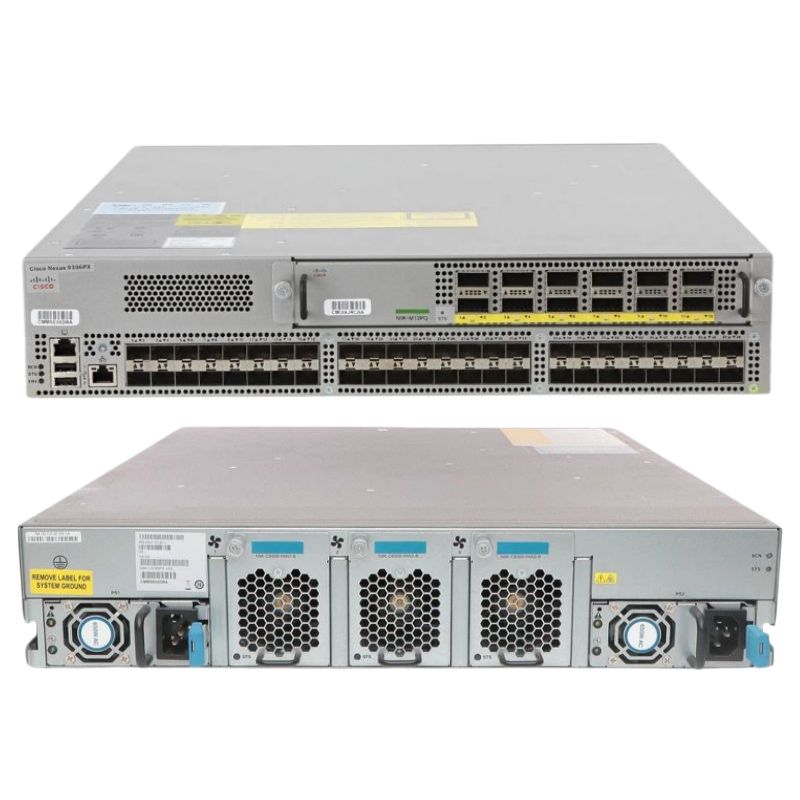
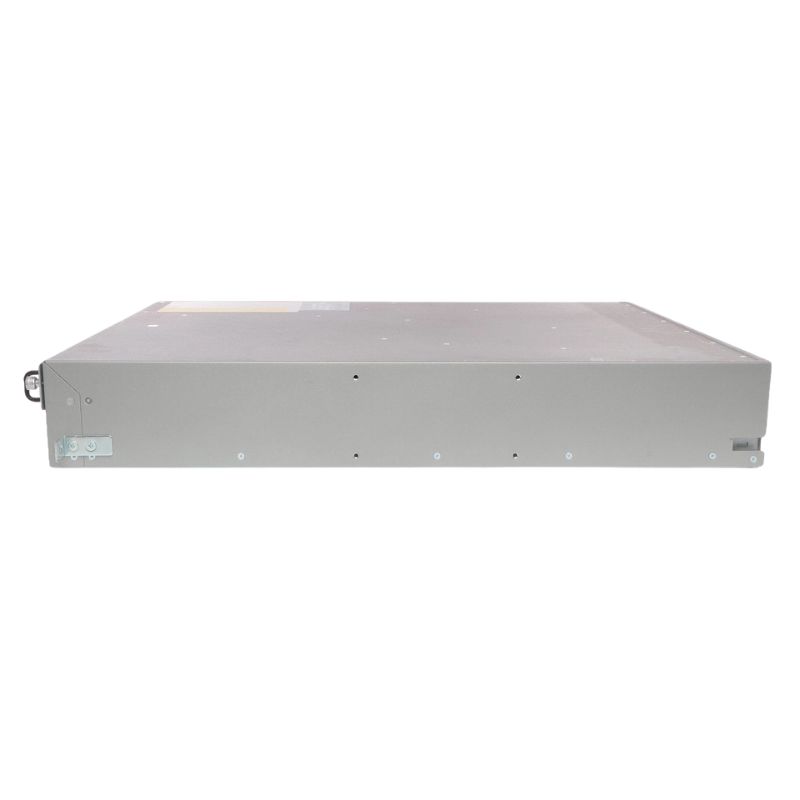
The physical design of the 9396PX centers on a 2RU form factor that maximizes port density and power efficiency. The switch is constructed with high-grade, redundant components to ensure maximum uptime. The airflow design (port-side exhaust or intake) is a key consideration for data center hot/cold aisle containment strategies, making it adaptable to various rack layouts.
At its heart, the switch boasts a substantial switching capacity of over 1.15 Tbps. This non-blocking architecture ensures that all ports can operate at line rate simultaneously, preventing internal congestion and providing consistent, low-latency performance for applications, a critical requirement for financial trading, high-performance computing (HPC), and large-scale virtualization.
Redundancy is paramount. The 9396PX supports multiple, hot-swappable power supply units (PSUs) in an N+1 or grid-redundant configuration. Similarly, the fan trays are modular and hot-swappable, with speed control that dynamically adjusts based on thermal sensors. This intelligent cooling reduces acoustic noise and energy consumption during lower utilization periods.
The "48 Ports" designation is just the beginning. The C1-N9K-C9396PXB18Q model features a specific, optimized mix of interfaces designed for server and uplink connectivity in a leaf-spine architecture.
The switch provides 48 fixed 1/10GBASE-T (copper RJ-45) Ethernet ports. These auto-negotiating ports are ideal for connecting a vast array of servers, appliances, and storage devices that commonly feature 1GbE or 10GbE copper network interface cards (NICs). This eliminates the need for costly SFP+ transceivers for every server connection, simplifying cabling and reducing initial capital expenditure.
Beyond the fixed ports, the switch includes six dedicated QSFP+ (Quad Small Form-factor Pluggable Plus) uplink ports. Each QSFP+ port can operate as a single 40-Gigabit Ethernet interface or can be broken out (via a splitter cable) into four independent 10-Gigabit Ethernet interfaces. This provides immense flexibility:
High-Bandwidth Uplinks: Use 40GbE ports for high-speed connections to spine switches or core network aggregation points.
Port Density Expansion: Break out all six QSFP+ ports to add an additional twenty-four 10GbE connections, effectively turning the switch into a 72-port 10GbE device.
Mixed Connectivity: Support a combination of 40GbE uplinks and expanded 10GbE server ports within the same chassis.
The hardware is empowered by Cisco's robust, data center-optimized operating system: NX-OS. This mature, stable, and feature-rich OS is what makes the Nexus 9396PX a truly "managed" and intelligent switch.
NX-OS is built from the ground up for continuous operation. Key features include:
In-Service Software Upgrades (ISSU): Allows for software upgrades and patching without disrupting network traffic, a must for 24/7 operations.
Stateful Switchover (SSO): In redundant supervisor configurations (though the 9396PX is a fixed switch, this is a core NX-OS capability), SSO ensures that control plane state information is synchronized, enabling sub-second failover.
Virtual PortChannel (vPC): A cornerstone technology that allows a server or switch to dual-home to two separate Nexus switches via a standard EtherChannel, eliminating Spanning Tree Protocol (STP) blocked ports and using all available uplink bandwidth.
This switch operates at both the data link and network layers, providing routing intelligence.
Supports all standard and advanced VLAN features, including 802.1Q tagging, Private VLANs (PVLAN) for tenant isolation, and robust Spanning Tree Protocols (Rapid PVST+, MST) for loop prevention. Advanced features like Cisco FabricPath provide layer 2 multipathing for flatter, more efficient data center fabrics.
The switch functions as a full Layer 3 router with support for static routing, OSPF, EIGRP, and Border Gateway Protocol (BGP) for scalable inter-domain routing. It supports Equal-Cost Multi-Pathing (ECMP) to load-balance traffic across multiple equal-cost paths, maximizing fabric utilization.
In a modern data center, the network must be as dynamic as the virtual machines it connects. The Nexus 9396PX is built for this environment.
Features like Cisco Discovery Protocol (CDP) version 2 and Link Layer Discovery Protocol (LLDP) enable the switch to identify directly connected VMware ESXi hosts. This integration allows for automated policy propagation through the VMware vCenter server using the Cisco Nexus 1000V VEM or via VSphere Distributed Switch (VDS) integrations.
VRF-lite technology allows the creation of multiple, independent routing tables within a single physical switch. This enables network segmentation for multi-tenancy, security zones, or separate development/production environments, all on the same hardware.
Aligning with the Cisco ONE philosophy, the switch exposes its capabilities through open Application Programming Interfaces (APIs). It supports:
NX-API: A RESTful API that uses HTTP/HTTPS to send and receive JSON or XML data, enabling configuration, management, and data collection via modern automation tools.
Python Scripting: An on-box Python interpreter allows for the execution of custom scripts directly on the switch for localized automation and task orchestration.
Model-Driven Programmability: Support for YANG data models and protocols like NETCONF and gRPC, providing a structured, model-driven approach to configuration and telemetry streaming.
As a managed switch at the network edge, it enforces critical security and quality of service (QoS) policies.
The switch includes a comprehensive suite of security tools: Access Control Lists (ACLs) for granular traffic filtering, port security to limit MAC addresses, DHCP snooping to prevent rogue DHCP servers, Dynamic ARP Inspection (DAI) to thwart ARP spoofing attacks, and IP Source Guard to prevent IP address spoofing. These features work in concert to create a strong first line of defense.
To ensure critical applications receive the necessary bandwidth and low latency, the switch offers rich QoS features. It can classify traffic based on Layer 2 (CoS), Layer 3 (DSCP), or Layer 4 (TCP/UDP port) information. It supports policing to limit bandwidth, shaping to smooth traffic bursts, and multiple output queues with weighted round robin (WRR) or deficit weighted round robin (DWRR) scheduling to prioritize latency-sensitive traffic like voice or storage.
The switch is equipped with a deep packet buffer memory. This is crucial for handling microbursts of traffic common in virtualized and big data environments, preventing packet loss during instantaneous traffic spikes and maintaining application performance.
The versatility of the Nexus 9396PX makes it suitable for a wide range of data center applications.
This is its primary role. As a leaf switch, it connects directly to servers within a rack. Its 10GbE copper ports connect to servers, while its QSFP+ uplinks provide high-speed, low-latency connections (40GbE or aggregated 10GbE) to the spine layer, forming a scalable, high-bandwidth Clos fabric.
For deployments that are transitioning from 1GbE to 10GbE server connectivity, the 9396PX offers an excellent density of copper 10GbE ports, reducing the cost and complexity of cabling compared to fiber-based solutions, while still providing a clear path for future high-speed uplinks.
With its low latency, deep buffers, and support for data center bridging (DCB) features, the switch is well-suited for connecting to IP-based network-attached storage (NAS) or as part of a converged fabric carrying both LAN and SAN (Fibre Channel over Ethernet - FCoE) traffic, consolidating network infrastructure.
Successfully deploying this category of switch requires careful planning.
The "C1-N9K-C9396PXB18Q ONE" designation indicates it is part of the Cisco ONE software subscription model. This typically provides access to the NX-OS software and a range of feature licenses (like LAN Enterprise or Storage protocols) via a subscription, offering flexibility and predictable costs compared to perpetual licensing.
While the 48 RJ-45 ports use standard Cat6a/Cat7 copper cables, the QSFP+ uplinks require careful selection of optics or Direct Attach Copper (DAC) cables. Cisco-branded or Cisco-certified third-party optics are recommended for guaranteed compatibility and support.


 Contact Us
 Information
 Catalog
 Solid State Drives (SSD)
 Network Switches
 Hard Disk Drives
 HBA & Controllers
 PC & Servers
 PC & Server Memory
 CPU & Processors
 Network Routers
 Power Supplies
 Tape Drives & Libraries
 Network Devices
 Computer & Network Cables