(7% discount is applied at checkout)
Cart is empty
Your go-to destination for cutting-edge server products
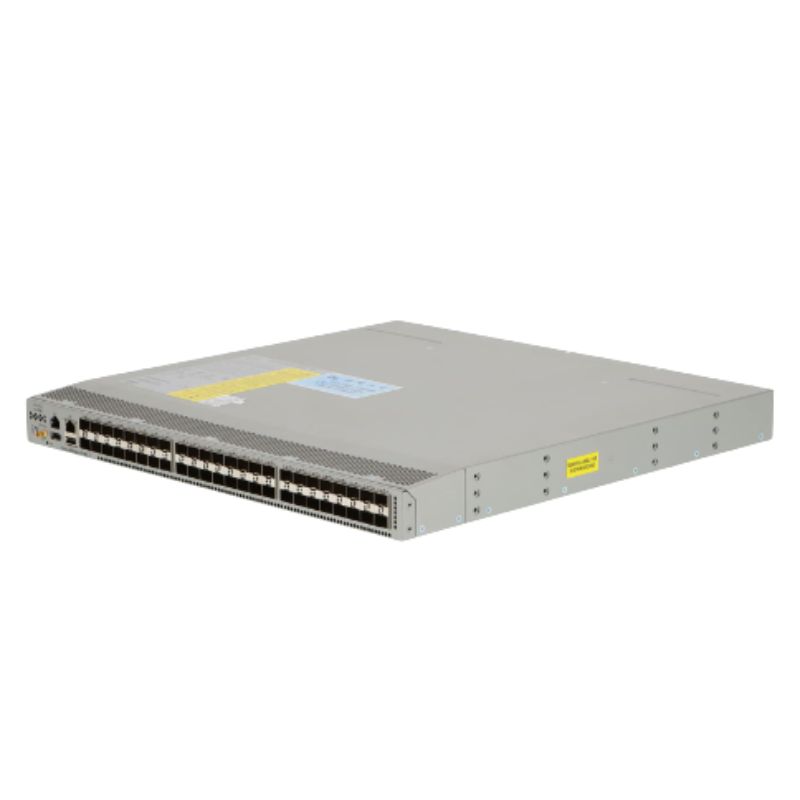


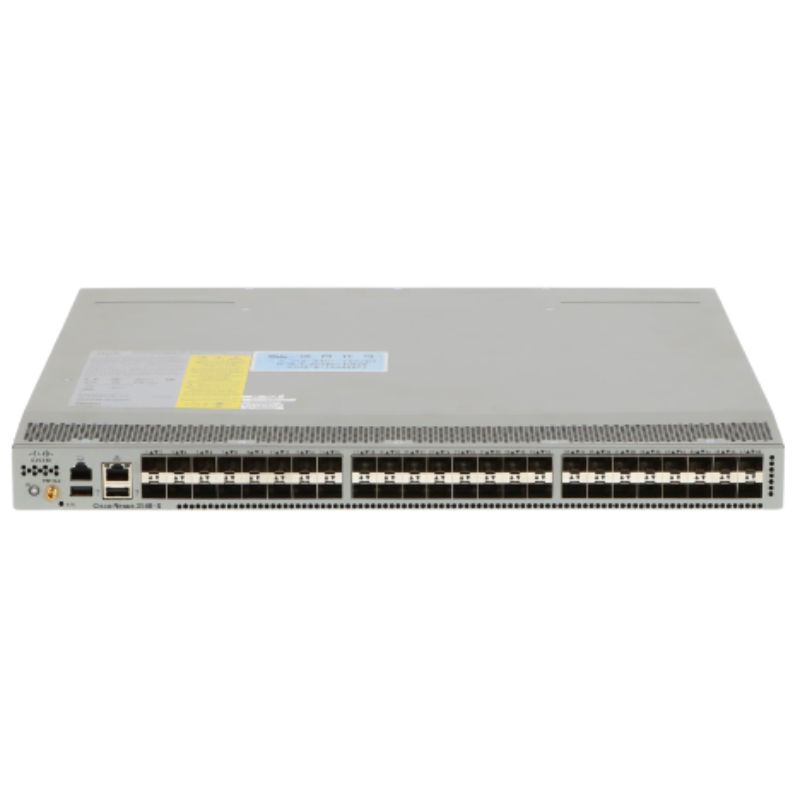
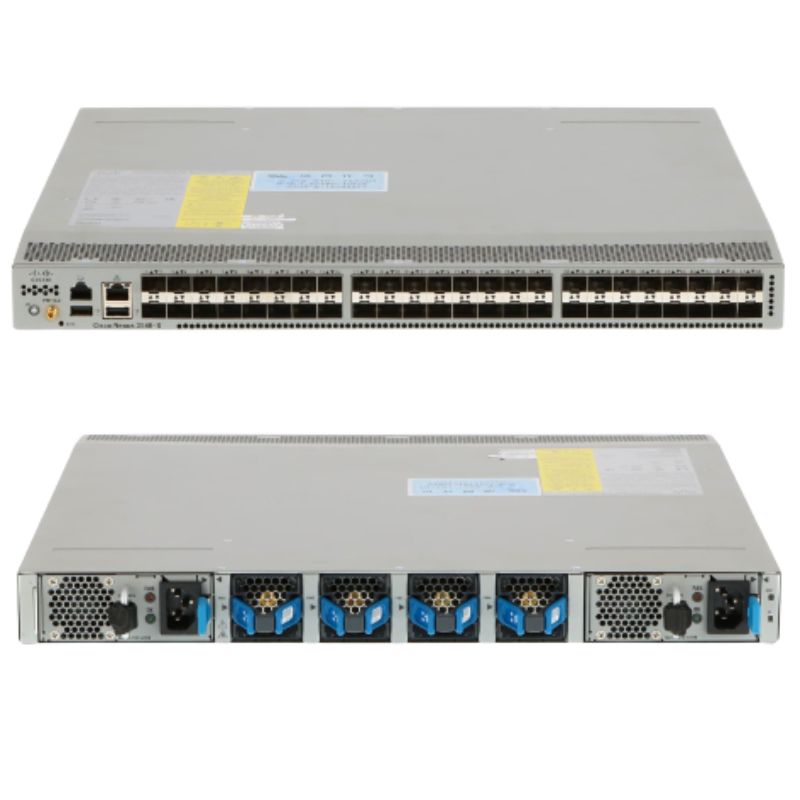
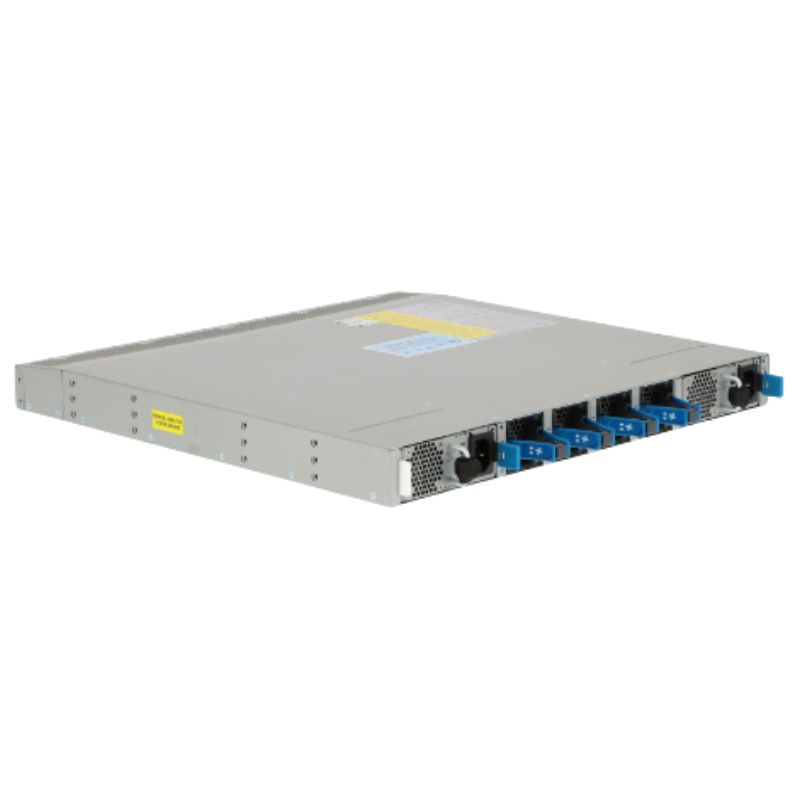
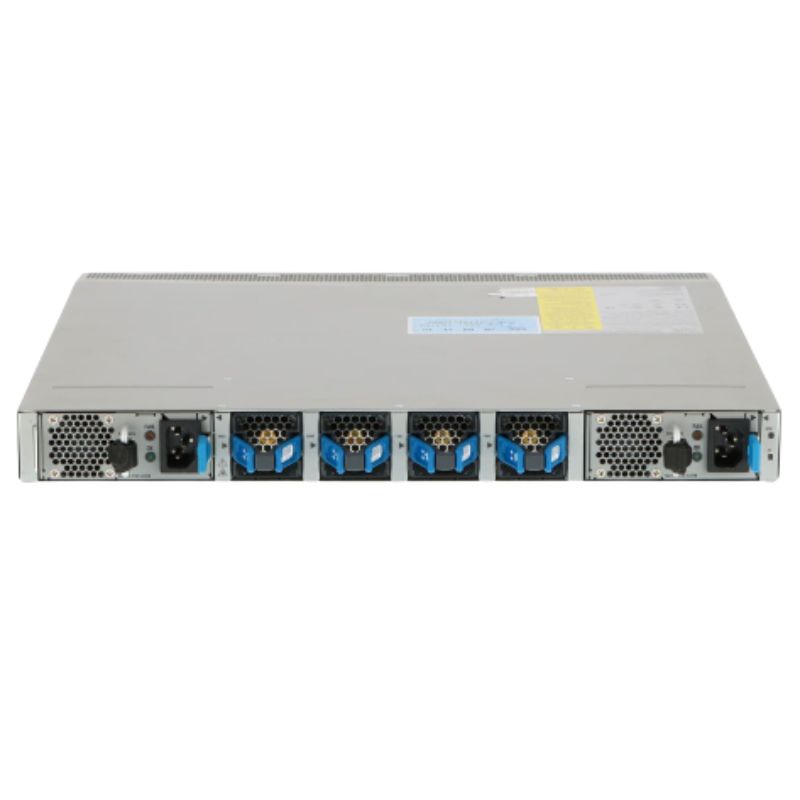
Cisco C1-N3K-C3548X ONE Nexus 48 Ports Ethernet Switch. Excellent Refurbished with 1 year replacement warranty
The Cisco C1-N3K-C3548X ONE Nexus 48-Port Ethernet Switch is a high-performance networking solution designed for modern data centers and enterprise environments. Built under the trusted Cisco Nexus portfolio, this switch delivers reliability, scalability, and ultra-fast connectivity for demanding workloads.
This Cisco Nexus switch is engineered with a modular architecture, enabling flexible deployment and future expansion to meet evolving network requirements.
The Cisco Nexus 3548X is optimized for high-speed data transmission and consistent performance in enterprise and cloud infrastructures.
This Layer 3 switch supports advanced traffic handling and routing features, making it suitable for complex network environments.
At its heart, the Cisco Nexus 3548X is built on a purpose-designed ASIC that provides consistent, predictable performance across all ports. This hardware-centric approach minimizes jitter and latency, which is non-negotiable for latency-sensitive applications.
The switch's primary configuration offers 48 fixed 1/10GBASE-T (copper RJ-45) ports, providing versatile connectivity for servers, storage, and other devices using standard Ethernet cabling. This high-density copper design is ideal for mainstream server connectivity where 10GbE over Cat6a/Cat7 is the standard.
A key differentiator is the inclusion of four Quad Small Form-Factor Pluggable (QSFP+) uplink ports. These ports are not fixed in function; each can operate as a native 40 Gigabit Ethernet interface or be broken out via a cable into four independent 10 Gigabit Ethernet interfaces. This flexibility allows network designers to tailor the switch's uplink capacity to the specific needs of the data center spine or core layer, supporting configurations of 4x40G, 16x10G, or a mixture thereof.
With a total throughput of 1.44 Terabits per second and a forwarding rate of over 1 billion packets per second (bps), the 3548X handles traffic floods with ease. It is equipped with a deep packet buffer memory, a critical feature for preventing packet loss during microbursts common in east-west data center traffic and storage replication scenarios.
Running Cisco NX-OS, a robust, mature, and highly stable operating system, the Nexus 3548X inherits a suite of enterprise-class features. NX-OS is built for availability, with fault-tolerant processes and hitless in-service software upgrades (ISSU) ensuring continuous operation.
The switch provides comprehensive Layer 2 switching protocols (VLAN, VTP, STP variants including Rapid-PVST+ and MST) and full Layer 3 IP routing. It supports static routing, OSPF, EIGRP, and BGP for dynamic routing, enabling it to function effectively as a leaf in a Clos-based spine-leaf architecture or in traditional multilayer designs.
For financial services, media broadcasting, and collaborative applications, the switch offers advanced multicast features with hardware-based replication. Protocols like PIM Sparse Mode and SSM ensure efficient delivery of multicast streams without burdening the network.
In multi-tenant or secure environments, segmentation is paramount. The 3548X supports Virtual Routing and Forwarding (VRF) instances to create separate routing tables, and VLANs for Layer 2 isolation. For more granular policy enforcement, it integrates with Cisco TrustSec technology for group-based access control.
A significant capability is its function as a VXLAN (Virtual Extensible LAN) Layer 2 and Layer 3 gateway. VXLAN is an encapsulation protocol that creates overlay networks, enabling Layer 2 adjacency across a routed (Layer 3) underlay. This allows for the creation of scalable, flexible network segments that span physical boundaries, a foundation for modern cloud and software-defined networking (SDN).
The versatility of the Cisco Nexus 3548X allows it to excel in several critical data center roles, adapting to the architectural paradigm in use.
This is its most common and powerful deployment. As a leaf switch, each 3548X connects to a cluster of servers (via its 48x10G ports) and provides high-bandwidth, low-latency uplinks to the spine layer (using its QSFP+ ports). This design creates a non-blocking, predictable fabric ideal for east-west traffic.
The switch supports Fibre Channel over Ethernet (FCoE) and FCoE Initialization Protocol (FIP) snooping, allowing for the consolidation of LAN and SAN traffic onto a single 10GbE wire. This reduces adapter count, cabling, and power/cooling requirements in the rack.
For density-optimized deployments, the 3548X can serve as an aggregation switch for a row of racks. Its high port count and flexible uplinks make it suitable for consolidating traffic from multiple lower-speed access switches or servers before passing it to the core.
In HFT environments, latency is measured in nanoseconds. The switch's cut-through switching mode (where supported), combined with its low-latency ASIC and support for Precision Time Protocol (PTP), makes it a fixture in trading platforms where the fastest data transmission wins.
Beyond the CLI, the Nexus 3548X offers a spectrum of management tools aligned with modern DevOps practices.
The embedded NX-API provides a RESTful API interface, allowing network operators to manage the switch using HTTP/HTTPS and JSON. This enables automation through Python, Ansible, or other orchestration tools, facilitating configuration management, bulk updates, and operational state checks.
While a standalone device, the 3548X can be integrated into broader Cisco ecosystems. It can operate as a leaf node in an Application Centric Infrastructure (ACI) fabric under the control of an APIC controller. Alternatively, it can be managed centrally by the Cisco Data Center Network Manager (DCNM) for streamlined provisioning, monitoring, and lifecycle management across the Nexus portfolio.
Moving beyond traditional SNMP polling, the switch supports model-driven streaming telemetry. This allows it to push high-fidelity operational data (interface counters, buffer utilization, temperature) to collectors at regular intervals, enabling real-time network analytics and proactive troubleshooting.


 Contact Us
 Information
 Catalog
 Solid State Drives (SSD)
 Network Switches
 Hard Disk Drives
 HBA & Controllers
 PC & Servers
 PC & Server Memory
 CPU & Processors
 Network Routers
 Power Supplies
 Tape Drives & Libraries
 Network Devices
 Computer & Network Cables