
(7% discount is applied at checkout)
Cart is empty
Your go-to destination for cutting-edge server products
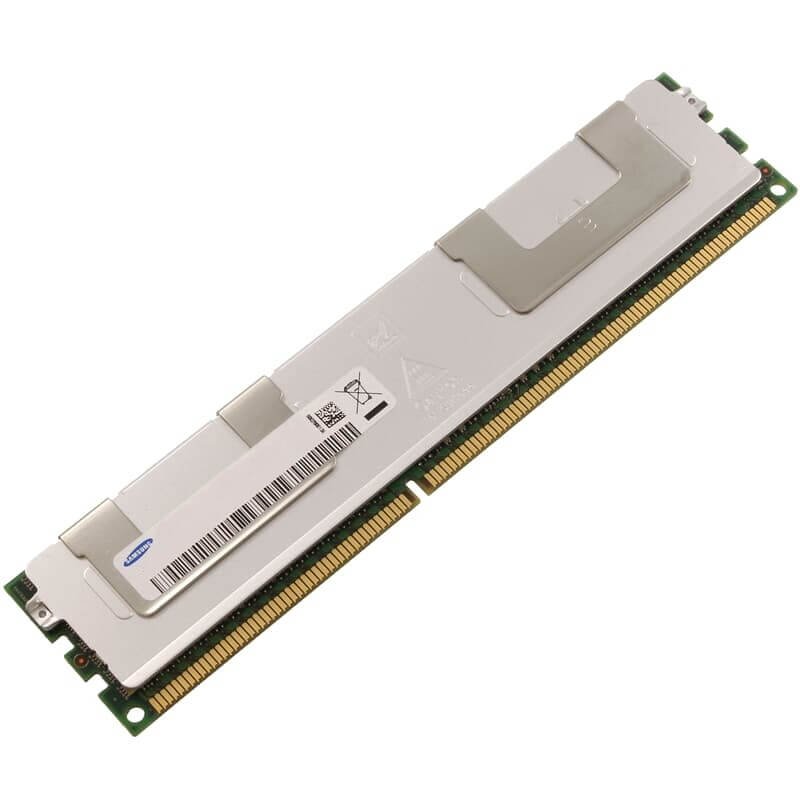
Samsung M386A8K40BM1-CRC 64GB DDR4 2400MBPS PC4-19200 CI17 SDRAM LRDIMM 288-Pin ECC Registered Memory Module. Factory-Sealed New in Original Box (FSB) with 3 Year Warranty
| SKU/MPN | Warranty | Price | Condition | You save |
|---|---|---|---|---|
| M386A8K40BM1-CRC | 1 Year Warranty | $545.00 | Factory-Sealed New in Original Box (FSB) | You save: $190.75 (26%) |
| M386A8K40BM1-CRC | 1 Year Warranty | $393.00 | New (System) Pull | You save: $137.55 (26%) |
The Samsung M386A8K40BM1-CRC is a high-capacity server-grade memory solution designed for enterprise systems, data centers, and mission-critical workloads. Built with premium components, this 64GB DDR4 LRDIMM ensures stability, speed, and efficiency for modern server platforms.
The Samsung M386A8K40BM1-CRC 64GB DDR4 2400MHz PC4-19200 CI17 SDRAM LRDIMM 288-Pin ECC Registered Memory Module belongs to a specialized category of enterprise server memory engineered for large-scale data processing, virtualization platforms, in-memory databases, and mission-critical workloads. This category focuses on Load Reduced DIMM technology, a memory architecture designed to significantly reduce the electrical load placed on the memory controller while enabling higher memory capacities per channel.
Samsung is globally recognized for its semiconductor manufacturing expertise, and this category of server memory modules benefits directly from vertically integrated production processes. From DRAM wafer fabrication to module assembly and validation, Samsung maintains strict quality control standards that ensure uniform performance across large memory deployments. The M386A8K40BM1-CRC category reflects Samsung’s focus on enterprise-grade validation, including extensive compatibility testing with leading server platforms and chipsets.
The 64GB capacity featured in the Samsung M386A8K40BM1-CRC category addresses the growing need for high-density memory configurations in modern server architectures. As applications increasingly rely on in-memory processing, larger memory footprints enable faster data access, reduced disk I/O, and improved overall system responsiveness. Servers equipped with multiple 64GB LRDIMM modules can reach terabyte-scale memory capacities, making them ideal for enterprise databases, ERP systems, and virtualization hosts.
The DDR4 2400MHz operating frequency defines an important performance tier within the server memory landscape. Operating at an effective data rate of 2400 MT/s, modules in this category deliver a balance between bandwidth efficiency and platform compatibility. PC4-19200 bandwidth ensures sufficient throughput for a wide range of enterprise workloads, including virtual machines, application servers, and transactional databases. This category is optimized for platforms that support DDR4-2400 memory speeds, ensuring stable operation without the thermal and power trade-offs associated with higher-frequency modules.
The CI17 CAS latency specification within this category reflects a carefully tuned balance between access latency and signal stability. While latency is only one component of overall memory performance, consistent and predictable timing characteristics are essential for enterprise workloads that rely on deterministic behavior. The Samsung M386A8K40BM1-CRC category is designed to maintain stable latency under sustained load, even when memory channels are fully populated. In real-world server environments, memory timing consistency often has a greater impact than marginal latency reductions. This category emphasizes reliability and timing integrity across varying workloads, ensuring that performance remains consistent regardless of memory utilization patterns.
Error Correcting Code functionality is a defining characteristic of this category, providing essential data protection for enterprise systems. ECC memory detects and corrects single-bit memory errors in real time, significantly reducing the risk of data corruption and system crashes. In environments where data accuracy is paramount, such as financial systems, healthcare databases, and scientific computing platforms, ECC memory is not optional but mandatory. The registered memory design further enhances signal stability by buffering control signals between the memory controller and the DRAM chips. This buffering allows for higher memory capacities and improved electrical characteristics, making the category suitable for servers with large memory footprints.
LRDIMM technology represents a key differentiator within this category, offering distinct advantages over traditional RDIMM and UDIMM designs. By incorporating a memory buffer that manages data signals, LRDIMM modules reduce the electrical load on the memory controller. This enables higher memory densities and more flexible memory configurations, particularly in servers with multiple memory channels. This category is especially relevant for organizations seeking to future-proof their server infrastructure. As memory demands increase, LRDIMM-based systems can scale more effectively without requiring complete platform replacement. The Samsung M386A8K40BM1-CRC category supports this scalability while maintaining performance consistency and signal integrity.
The 288-pin DIMM form factor is the industry standard for DDR4 server memory, ensuring broad compatibility across enterprise server platforms. This category adheres strictly to mechanical and electrical specifications, allowing seamless integration into supported server motherboards. Proper alignment, secure seating, and reliable electrical contact are essential for long-term stability, and this category is designed to meet those requirements.
This category is intended for deployment in enterprise-grade servers from leading manufacturers, including platforms designed for data centers, private clouds, and high-performance computing environments. Compatibility with a wide range of Intel and AMD server chipsets ensures flexibility in system design and upgrade paths. Proper BIOS support and memory population guidelines are essential for optimal performance, and this category aligns with established server memory standards. Common use cases include virtualization clusters hosting dozens or hundreds of virtual machines, database servers handling large transactional workloads, and application servers supporting enterprise software stacks.
Virtualization platforms benefit significantly from high-capacity memory configurations, as each virtual machine consumes a portion of system RAM. The Samsung M386A8K40BM1-CRC category enables higher VM density per host, improving hardware utilization and reducing infrastructure costs. Stable memory performance ensures consistent VM behavior, even under peak load conditions. In private and hybrid cloud environments, memory scalability is a key factor in resource planning. This category supports dynamic workloads and evolving capacity requirements, making it an ideal choice for cloud service providers and enterprise IT departments alike.
Modern databases increasingly rely on large memory pools to deliver low-latency query performance. In-memory databases, caching layers, and analytics engines all benefit from the high-capacity, reliable memory provided by this category. By reducing reliance on slower storage tiers, systems equipped with Samsung M386A8K40BM1-CRC modules can achieve significant performance gains. Consistency and error correction are particularly important in database environments, where data integrity directly affects business operations. This category ensures that memory-related errors are detected and corrected before they can impact stored or processed data.
Enterprise memory deployments demand long-term reliability, as frequent component replacement can disrupt operations and increase maintenance costs. The Samsung M386A8K40BM1-CRC category undergoes rigorous validation processes, including stress testing, thermal cycling, and compatibility verification. These measures ensure that modules can withstand continuous operation in demanding environments. Reliability is further enhanced through conservative timing specifications and robust error correction mechanisms. This category is designed to deliver consistent performance throughout its service life, supporting enterprise uptime requirements and service-level agreements.
Optimal performance and stability depend on proper firmware and BIOS configuration. This category is compatible with standard server firmware implementations that support DDR4 LRDIMM memory. Ensuring that systems are updated with the latest firmware revisions helps maximize compatibility and unlock full memory capacity. Server administrators benefit from predictable behavior when deploying memory from this category, as it aligns with established best practices for memory population and configuration. This reduces deployment complexity and minimizes the risk of configuration-related issues.
The ability to scale memory capacity over time is a critical consideration for enterprise infrastructure planning. The Samsung M386A8K40BM1-CRC category supports this scalability by enabling higher per-slot memory capacity without compromising system stability. Organizations can expand memory as workloads grow, extending the useful life of existing server platforms. This category aligns with long-term IT strategies that prioritize flexibility and cost efficiency. By investing in high-capacity LRDIMM memory, enterprises can accommodate evolving application requirements without frequent hardware refresh cycles.
Efficient use of rack space and power resources is essential in modern data centers. High-capacity memory modules reduce the number of servers required to achieve a given workload capacity, improving overall resource utilization. The Samsung M386A8K40BM1-CRC category contributes to these efficiencies by enabling dense memory configurations within standard server footprints. Reduced server count translates into lower power consumption, simplified management, and improved cooling efficiency. This category supports data center optimization initiatives focused on sustainability and operational cost reduction.


 Contact Us
 Information
 Catalog
 Solid State Drives (SSD)
 Network Switches
 Hard Disk Drives
 HBA & Controllers
 PC & Servers
 PC & Server Memory
 CPU & Processors
 Network Routers
 Power Supplies
 Tape Drives & Libraries
 Network Devices
 Computer & Network Cables