(7% discount is applied at checkout)
Cart is empty
Your go-to destination for cutting-edge server products
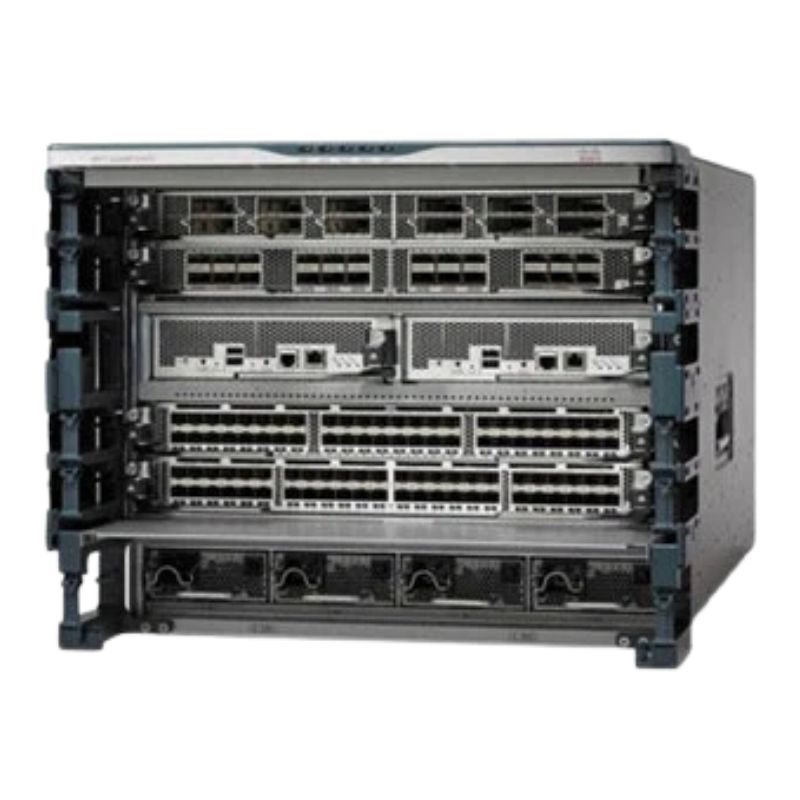


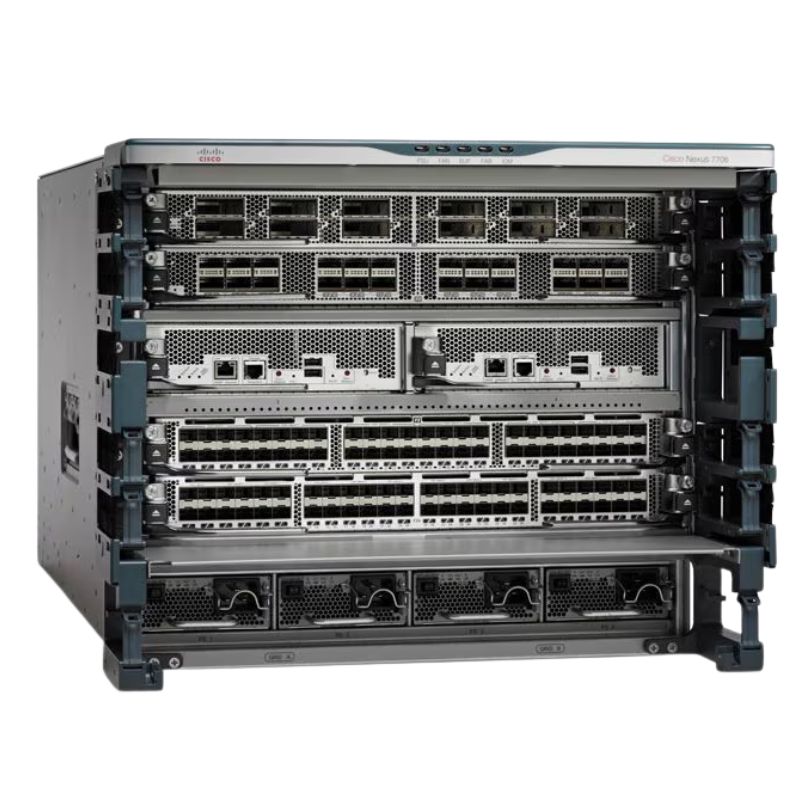
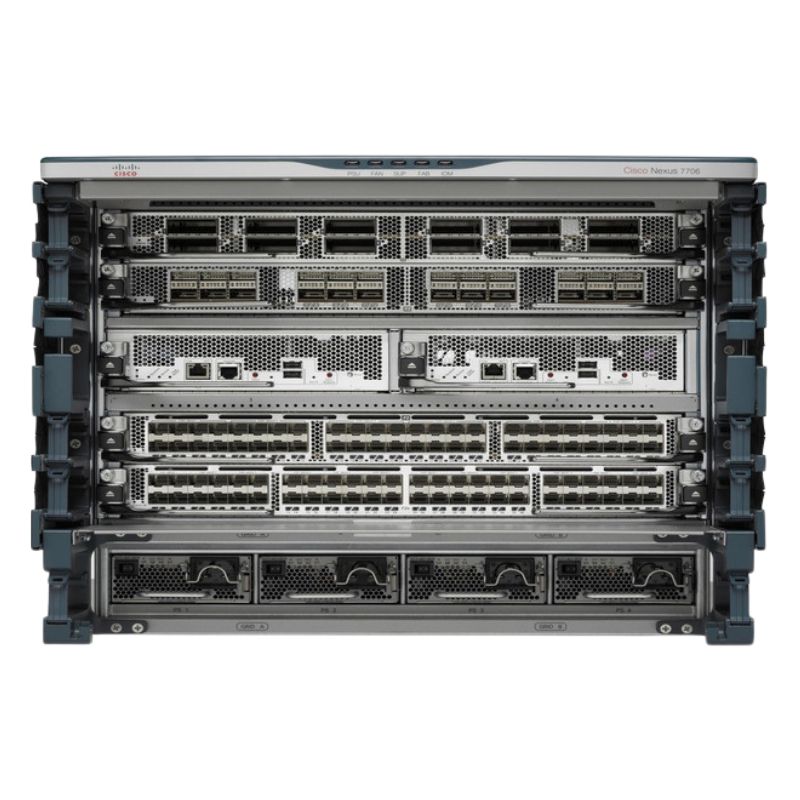
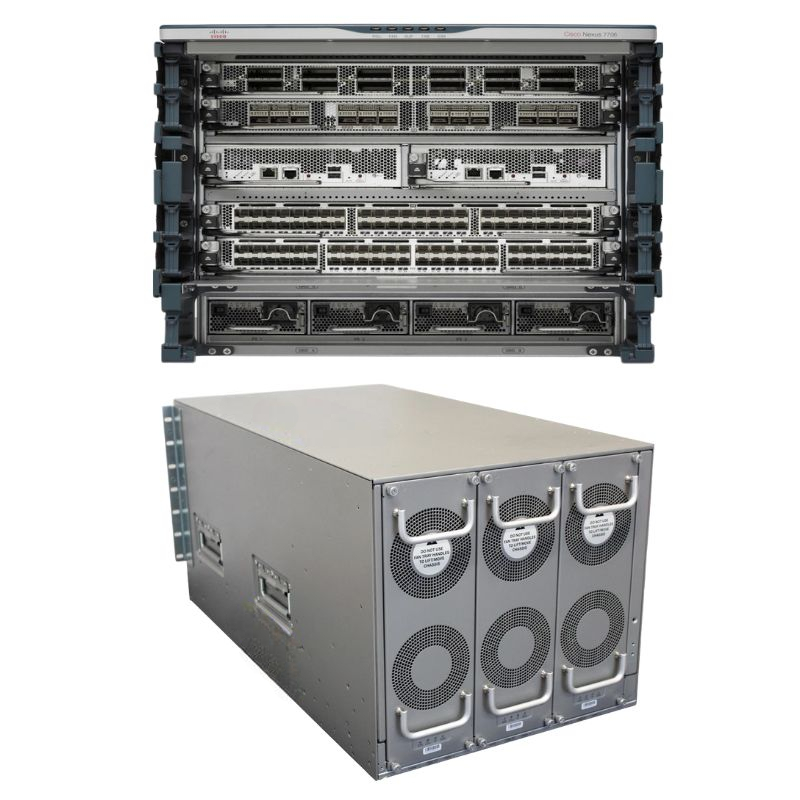
Cisco N77-C7706 Nexus Switch Chassis. Excellent Refurbished with 1 year replacement warranty
The Cisco N77-C7706 is a high-performance Nexus 7700 series switch chassis designed for enterprise and data center networking. Engineered to deliver exceptional scalability and reliability, this chassis offers advanced network management and robust expansion capabilities.
The Cisco N77-C7706 Nexus Switch Chassis represents a core component within the Cisco Nexus 7700 Series, engineered to deliver scalable, high-density, and highly resilient data center switching. Designed for enterprise, service provider, and cloud-scale environments, this chassis-based switching platform supports mission-critical workloads that demand consistent performance, predictable latency, and advanced Layer 2 and Layer 3 capabilities. As part of the Nexus family, the N77-C7706 integrates tightly with Cisco’s NX-OS operating system, enabling operational consistency, automation readiness, and comprehensive network visibility across large-scale infrastructures.
The Cisco N77-C7706 chassis is optimized for modern data centers that require a balance between modular flexibility and future-proof investment protection. With its ability to support a wide range of line cards, supervisors, and fabric modules, the platform allows organizations to scale bandwidth, port density, and feature sets without disruptive forklift upgrades. This makes the chassis particularly well suited for evolving environments where growth, virtualization, and multi-cloud connectivity are ongoing priorities.
The architectural foundation of the Cisco N77-C7706 Nexus Switch Chassis is built around a modular, distributed forwarding design that separates control plane, data plane, and fabric resources. This separation ensures predictable performance even as traffic loads increase, while also enabling non-disruptive maintenance and upgrades. The chassis provides dedicated slots for supervisor modules, fabric modules, and line cards, all interconnected through a high-capacity switching fabric that delivers consistent throughput across all ports.
The six-slot chassis form factor is designed to optimize space efficiency while maintaining sufficient expansion capability for mid-sized to large data center deployments. Each slot is engineered to support high-power, high-performance modules, enabling the platform to accommodate advanced line cards with dense 10 Gigabit, 40 Gigabit, and 100 Gigabit Ethernet connectivity. The physical design also emphasizes serviceability, with front-to-back or back-to-front airflow options that align with common data center cooling strategies.
Supervisor modules within the Cisco N77-C7706 chassis serve as the control and management backbone of the system. These modules host the control plane, run the NX-OS software, and manage system-wide functions such as routing protocols, policy enforcement, and device monitoring. Redundant supervisor configurations are supported to ensure high availability, allowing seamless failover in the event of a module failure.
The integration of advanced supervisor modules enables features such as In-Service Software Upgrade (ISSU), which allows software updates without network downtime. This capability is critical in environments where continuous uptime is mandatory, such as financial services, healthcare, and large-scale cloud operations. By supporting high-performance CPUs and ample memory resources, the supervisors ensure that control plane operations remain responsive even under heavy load.
Fabric modules play a central role in the Cisco N77-C7706 Nexus Switch Chassis by providing the internal switching capacity that interconnects all line cards and supervisors. These modules deliver a non-blocking, high-bandwidth fabric that ensures uniform performance across the entire chassis. The distributed nature of the fabric allows traffic to be efficiently forwarded between any two ports, regardless of their physical location within the system.
The chassis supports redundant fabric module configurations, enhancing resilience and fault tolerance. In the event of a fabric module failure, traffic can continue to flow through remaining modules without service interruption. This design aligns with the high-availability requirements of modern data centers, where even brief outages can have significant operational and financial consequences.
The Cisco N77-C7706 Nexus Switch Chassis supports a broad range of line cards, allowing organizations to tailor the system to their specific connectivity and performance needs. These line cards provide high-density Ethernet ports across multiple speeds, enabling seamless integration with existing infrastructure while also supporting future upgrades. The flexibility to mix and match line card types within the same chassis ensures that the platform can adapt to diverse workloads and traffic patterns.
High-density line cards enable the consolidation of network infrastructure, reducing the overall footprint and simplifying cabling requirements. This is particularly beneficial in environments where rack space and power efficiency are critical considerations. By supporting multiple generations of line cards, the chassis protects long-term investments and allows incremental upgrades as networking technologies evolve.
High-speed Ethernet support is a defining characteristic of the Cisco N77-C7706 chassis. The platform accommodates line cards with 10 Gigabit, 40 Gigabit, and 100 Gigabit Ethernet interfaces, making it suitable for bandwidth-intensive applications such as big data analytics, high-performance computing, and large-scale virtualization. The ability to support multiple speeds within a single chassis simplifies network design and enables gradual migration to higher bandwidths.
Advanced buffering and traffic management features on the line cards help ensure consistent performance during traffic bursts and congestion scenarios. This is essential for maintaining application responsiveness and meeting service-level objectives in multi-tenant and cloud environments. The combination of high port density and intelligent traffic handling makes the chassis a robust foundation for modern data center networks.
The Cisco N77-C7706 Nexus Switch Chassis delivers comprehensive Layer 2 and Layer 3 functionality, supporting a wide range of switching and routing protocols. At Layer 2, the platform provides features such as VLAN segmentation, spanning tree enhancements, and link aggregation, enabling scalable and resilient network designs. These capabilities are essential for building stable access and aggregation layers within the data center.
At Layer 3, the chassis supports advanced routing protocols, including OSPF, BGP, and IS-IS, allowing seamless integration into complex enterprise and service provider networks. Hardware-based forwarding ensures that routing decisions are executed at line rate, maintaining low latency and high throughput even as route tables grow. This depth of functionality enables the chassis to serve as a core or aggregation switch in demanding environments.
The Cisco NX-OS operating system underpins the functionality of the Cisco N77-C7706 Nexus Switch Chassis, providing a robust, modular, and highly scalable software foundation. NX-OS is designed specifically for data center environments, emphasizing stability, programmability, and operational efficiency. Its modular architecture allows individual processes to restart independently, reducing the impact of software issues and enhancing overall system resilience.
Operational intelligence is a key strength of NX-OS, with built-in tools for monitoring, telemetry, and diagnostics. These capabilities provide real-time visibility into network performance, enabling proactive troubleshooting and capacity planning. By leveraging streaming telemetry and open APIs, organizations can integrate the chassis into automation frameworks and software-defined networking initiatives.
Automation is increasingly critical in large-scale data centers, and the Cisco N77-C7706 chassis is designed to support this paradigm through extensive programmability features. NX-OS provides support for scripting, RESTful APIs, and model-driven interfaces, enabling network administrators to automate configuration, provisioning, and monitoring tasks. This reduces operational overhead and minimizes the risk of human error.
Integration with orchestration platforms allows the chassis to participate in end-to-end automated workflows, aligning network operations with application and infrastructure provisioning. This level of automation is particularly valuable in cloud and DevOps-driven environments, where rapid deployment and consistent configuration are essential.
Security is a fundamental consideration in data center design, and the Cisco N77-C7706 Nexus Switch Chassis incorporates a comprehensive set of security features. These include access control mechanisms, control plane protection, and support for secure segmentation through technologies such as virtual routing and forwarding instances. By enabling logical separation of traffic, the chassis helps protect sensitive data and supports multi-tenant architectures.
Advanced security features operate at line rate, ensuring that protection does not come at the expense of performance. Integration with external security systems and policy frameworks further enhances the ability to enforce consistent security postures across the network. This makes the chassis suitable for environments with stringent compliance and regulatory requirements.
High availability is a core design principle of the Cisco N77-C7706 Nexus Switch Chassis. The platform supports redundant components across all critical subsystems, including power supplies, fans, supervisors, and fabric modules. This redundancy ensures continuous operation even in the event of hardware failures, aligning with the always-on expectations of modern data centers.
Non-disruptive maintenance capabilities, such as hot-swappable components and in-service software upgrades, allow organizations to perform upgrades and repairs without impacting network availability. These features significantly reduce planned downtime and contribute to higher overall service reliability.
The power and cooling design of the Cisco N77-C7706 chassis emphasizes efficiency and flexibility. Multiple power supply options are available to accommodate different deployment scenarios, with support for redundant configurations that enhance resilience. Intelligent power management features help optimize energy consumption, reducing operational costs over the lifecycle of the system.
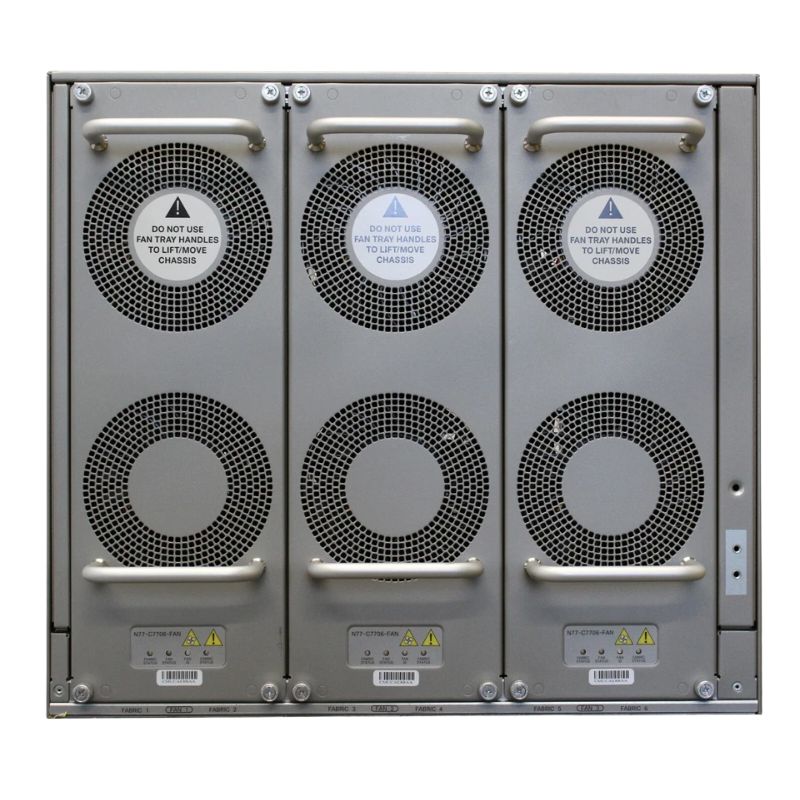
Flexible airflow options allow the chassis to integrate seamlessly into various data center layouts. By supporting both front-to-back and back-to-front airflow, the platform can align with existing hot aisle and cold aisle designs, improving overall cooling efficiency and thermal management.
Scalability is a defining attribute of the Cisco N77-C7706 Nexus Switch Chassis, enabling organizations to grow their network infrastructure in line with evolving business needs. The modular design allows additional line cards, fabric modules, and supervisors to be added as demand increases, without requiring a complete system replacement. This approach supports long-term growth while protecting initial investments.
As data center architectures continue to evolve toward higher bandwidths and greater levels of virtualization, the chassis provides a stable foundation that can adapt to new requirements. Support for emerging technologies and ongoing software enhancements ensures that the platform remains relevant and capable over an extended service life.
The Cisco N77-C7706 Nexus Switch Chassis is well suited for a wide range of deployment scenarios across multiple industries. In enterprise data centers, it serves as a reliable core or aggregation switch, supporting business-critical applications and large user populations. In service provider environments, the platform delivers the scalability and performance needed to support high-volume traffic and diverse customer services.
Cloud and hosting providers benefit from the chassis’s high port density, automation capabilities, and support for multi-tenant segmentation. These features enable efficient resource utilization and consistent service delivery across large-scale infrastructures. The platform’s robustness and flexibility also make it suitable for research, education, and government deployments where reliability and performance are paramount.


 Contact Us
 Information
 Catalog
 Solid State Drives (SSD)
 Network Switches
 Hard Disk Drives
 HBA & Controllers
 PC & Servers
 PC & Server Memory
 CPU & Processors
 Network Routers
 Power Supplies
 Tape Drives & Libraries
 Network Devices
 Computer & Network Cables