(7% discount is applied at checkout)
Cart is empty
Your go-to destination for cutting-edge server products
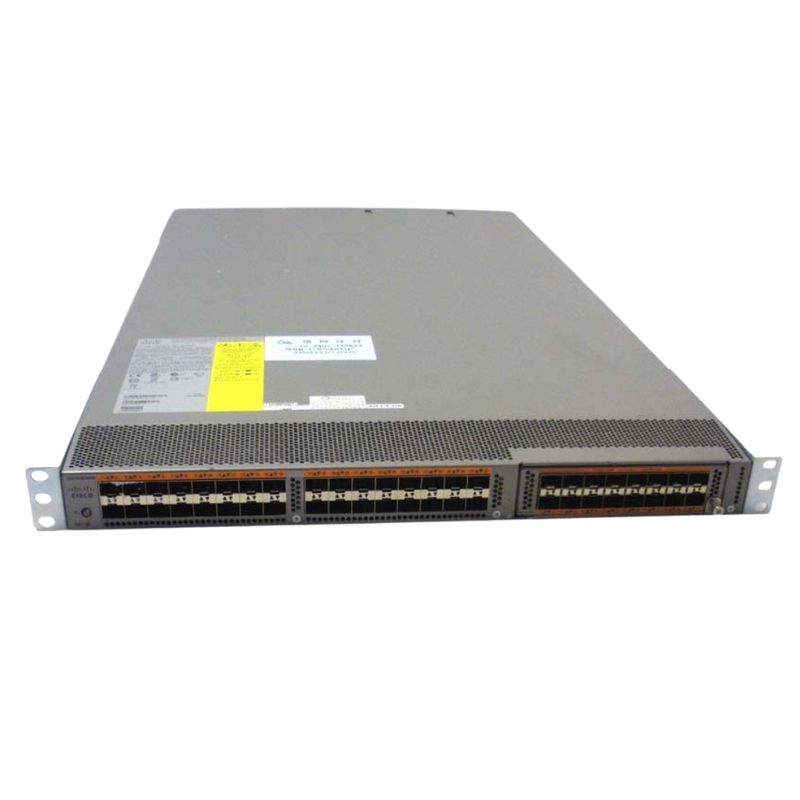


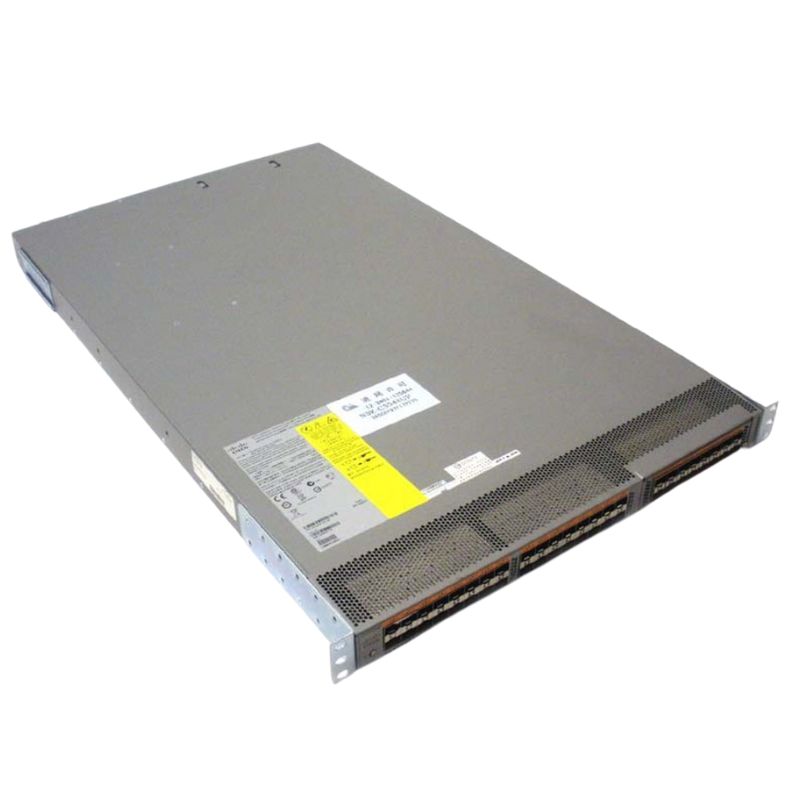
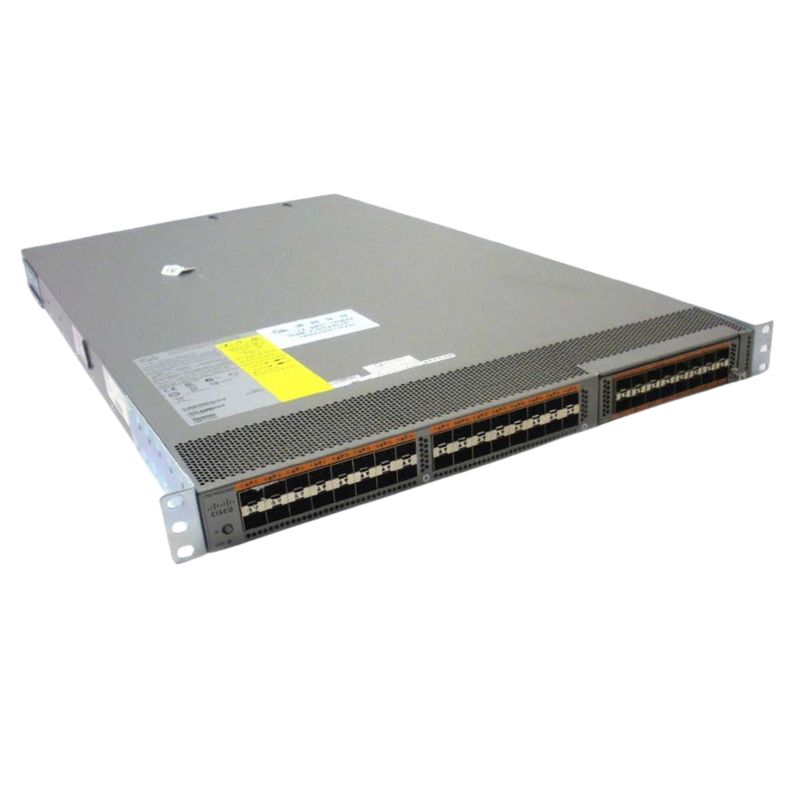
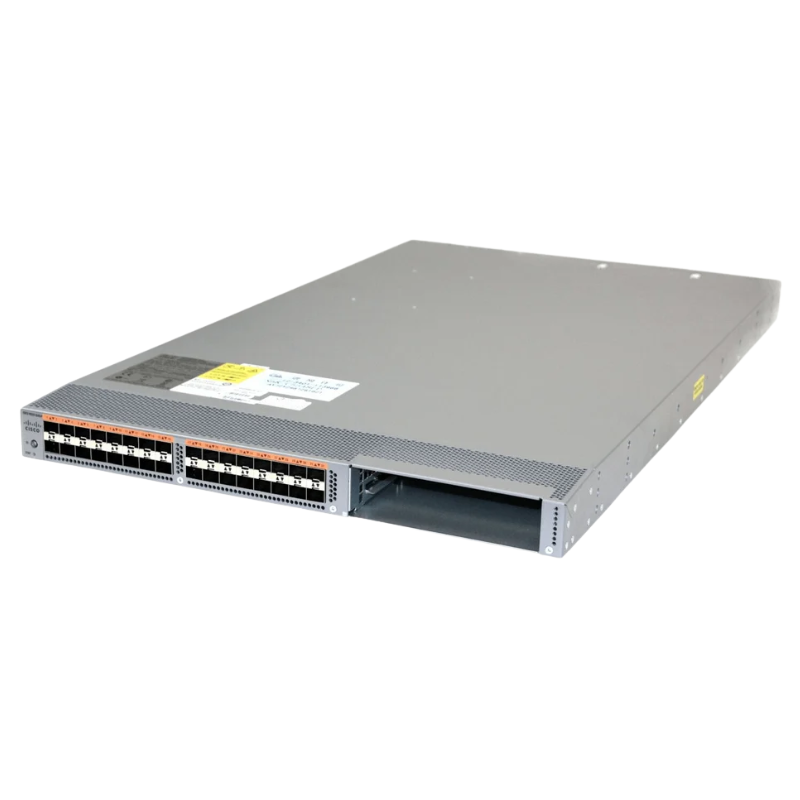
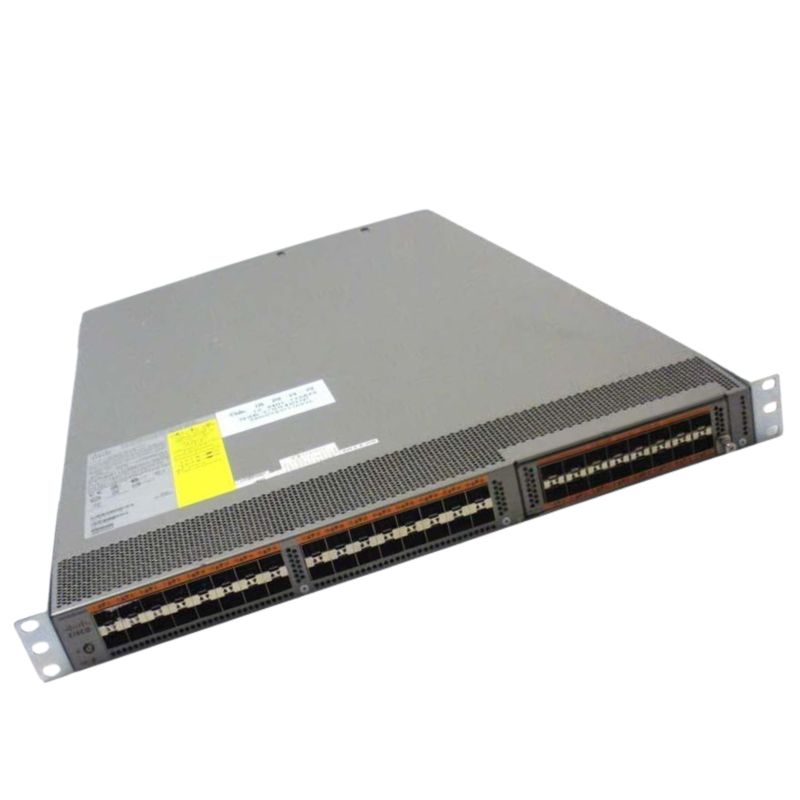
Cisco C1-N5548P-FA ONE Nexus 5548P 32 Ports Manageable Switch. Excellent Refurbished with 1 year replacement warranty
The Cisco C1-N5548P-FA ONE Nexus 5548P is a high-performance, enterprise-grade manageable switch engineered for modern data centers and mission-critical networks. Built on Cisco’s trusted Nexus 5000 Series, this Layer 3 switch delivers scalability, speed, and reliability for demanding networking environments.
This Cisco Nexus switch features a modular architecture that supports flexible deployment and future growth. It is optimized for high-speed connectivity in enterprise and data center networks.
Designed for high-throughput environments, the Nexus 5548P supports advanced Ethernet technologies to ensure fast and reliable data transmission.
The switch is equipped with extensive expansion capabilities, allowing network administrators to customize connectivity based on operational needs.
With full Layer 3 support, the Cisco Nexus 5548P is ideal for complex routing, advanced traffic management, and scalable enterprise networks.
The Cisco C1-N5548P-FA-ONE Nexus 5548P 32-Port Switch represents a pivotal chapter in data center evolution, engineered to bridge the gap between traditional server access and the demands of a unified fabric. As a core component of the renowned Cisco Nexus 5000 Series, this manageable switch is more than just networking hardware; it is a strategic platform designed to consolidate LAN and SAN traffic onto a single, low-latency, lossless Ethernet fabric. Its introduction marked a significant leap towards simplifying data center architecture, reducing operational overhead, and paving the way for virtualization and cloud-ready infrastructures. This category encompasses the switch's enduring role as a robust, high-performance access layer solution, offering deterministic performance for both classic and modern application workloads.
The Nexus 5548P was conceived during a transformative period when data centers were grappling with sprawling infrastructure—separate networks for data (Ethernet) and storage (Fibre Channel). Its core philosophy is unified fabric: the convergence of these disparate networks over a single wire using Fibre Channel over Ethernet (FCoE) technology. This convergence reduces cabling, adapter counts, and switch management points, leading to direct capital and operational expense savings. Positioned as a top-of-rack (ToR) or end-of-row (EoR) switch, it delivers wire-speed Layer 2 and Layer 3 switching with port-to-port latency of less than 3 microseconds, making it ideal for performance-sensitive environments.
While the Nexus 5500 platform includes various models, the C1-N5548P-FA-ONE variant stands out with its specific configuration. It is a 32-port switch where all ports are "universal," meaning each can be individually configured as either a standard 1/10 Gigabit Ethernet port or a unified fabric port supporting FCoE. This flexibility is its superpower, allowing network architects to adapt the switch to exact server connectivity needs without hardware changes. The "-FA-ONE" designation typically indicates a factory assembly with specific licensing, often including the essential feature set for a unified fabric deployment.
A thorough understanding of the Cisco Nexus 5548P's capabilities begins with its hardware architecture. Built for density and performance, it serves as a high-throughput engine for the data center access layer.
The switch provides 32 fixed 1/10 Gigabit Ethernet SFP+ ports. These are not mere copper ports; they are SFP+ based, supporting a wide range of optics and direct-attach cables for connectivity from 1GbE to 10GbE. Furthermore, it includes two expansion module slots, which are critical for upstream connectivity and fabric extension.
The Nexus 5548P can act as a parent switch to Cisco's Nexus 2000 Series Fabric Extenders. This innovative architecture allows you to connect hundreds of server ports over a low-latency 40 Gigabit uplink, treating all downstream FEX ports as if they are locally on the 5548P. This massively simplifies management and scaling.
The two expansion slots can host various modules, such as:
6-port 40 Gigabit Ethernet QSFP Module: For high-bandwidth aggregation or inter-switch links.
4-port 10 Gigabit Ethernet SFP+ Module: For additional 10G ports or flexible uplinks.
Layer 3 Daughter Card: An internal module that enables hardware-based IPv4/IPv6 routing, transforming the switch from a pure Layer 2 bridge to a full Layer 3 routing switch.
With a total switching capacity of up to 960 Gbps and a forwarding rate of up to 720 million packets per second (Mpps), the 5548P ensures non-blocking performance across all ports simultaneously, even at line rate. This headroom is crucial for handling east-west traffic in virtualized server farms.
This is the hallmark feature. The switch integrates native Fibre Channel switching logic, allowing it to forward FCoE frames and connect directly to a Fibre Channel SAN via dedicated Fibre Channel uplink modules or converged network adapters (CNAs) in servers.
Data Center Bridging (DCB) Suite: Includes Priority Flow Control (PFC), Enhanced Transmission Selection (ETS), and DCB Exchange (DCBX) to create a lossless fabric essential for storage traffic.
FCoE Initialization Protocol (FIP): Handles the discovery and initialization between CNAs and FCoE switches.
Integration with Cisco MDS SANs: Seamless connectivity to core Fibre Channel directors for a end-to-end unified fabric.
The Cisco Nexus 5548P runs on Cisco NX-OS, a robust, modular operating system designed specifically for data center environments. NX-OS offers carrier-class availability, operational continuity, and comprehensive management tools.
Inherited from the SAN-OS of Cisco's MDS switches, NX-OS provides a stable, feature-rich environment. Its key attributes include:
Modularity: Processes run in independent memory spaces, ensuring fault isolation.
High Availability: Features like In-Service Software Upgrades (ISSU), stateful process restart, and nonstop forwarding minimize downtime.
Comprehensive Security: ACLs, port security, DHCP snooping, dynamic ARP inspection, and Cisco TrustSec for role-based access control.
The switch includes advanced features to support dynamic virtualized environments.
The 5548P serves as an ideal physical underlay for the Cisco Nexus 1000V distributed virtual switch, enabling consistent policy enforcement and visibility from the virtual machine all the way to the physical network core.
This groundbreaking technology allows a server or another switch to use a PortChannel across two separate Nexus 5548P switches, eliminating the Spanning Tree Protocol blocked ports and using all available uplink bandwidth actively. It is a cornerstone for building highly available, loop-free Layer 2 topologies.
While more common on the Nexus 7000, certain licensing on the 5500 platform allows for logical segmentation of a single physical switch into multiple independent switches (VDCs), perfect for multi-tenant or functional segmentation.
Manageability is a core strength, offering multiple pathways for configuration and monitoring.
The industry-standard Cisco CLI, with contextual help and a consistent structure, is the primary tool for many network engineers.
Integration with Cisco Data Center Network Manager (DCNM) provides a comprehensive GUI for provisioning, monitoring, and troubleshooting, especially for SAN and unified fabric configurations.
Support for XML management interfaces, SNMP, and emerging model-driven programmability with NX-API, allowing integration with modern automation tools like Ansible and Python scripts.
The versatility of the Cisco Nexus 5548P allows it to excel in several key data center roles, often extending its lifecycle in strategic niches.
The flagship deployment. Here, servers equipped with Converged Network Adapters (CNAs) connect via a single cable carrying both LAN (data) and SAN (storage) traffic. The 5548P splits this traffic, forwarding Ethernet frames to the core network and FCoE frames to the connected MDS SAN switch, dramatically simplifying server cabling.
Even without FCoE, the 5548P serves as an extremely efficient, low-latency 10GbE top-of-rack switch. Its high throughput and support for vPC make it ideal for aggregating traffic from blade server chassis or high-performance computing clusters.
In VMware vSphere or Microsoft Hyper-V environments, the switch's low latency, high bandwidth, and features like NetFlow for visibility make it a preferred choice for connecting ESXi or Hyper-V hosts, especially when using the Nexus 1000V.
Acting as a gateway, the 5548P can take FCoE traffic from servers and translate it to native Fibre Channel to connect to an existing SAN. This allows organizations to adopt server convergence gradually while protecting their legacy FC investment.
The switch requires Cisco SFP+ optics or certified third-party equivalents for reliable operation. Compatibility lists should be consulted for specific 1GbE SFP, 10GbE SFP+, and 40GbE QSFP+ modules.
Convergence requires compatible CNAs from vendors like Cisco, QLogic, or Emulex, and support from the server operating system/hypervisor. Storage array compatibility for direct FCoE connection should also be verified.
Deploying the 5548P in pairs using vPC is considered a best practice for creating highly resilient access layer blocks. This design requires careful planning of vPC peer-links, keep-alive links, and downstream device configuration.


 Contact Us
 Information
 Catalog
 Solid State Drives (SSD)
 Network Switches
 Hard Disk Drives
 HBA & Controllers
 PC & Servers
 PC & Server Memory
 CPU & Processors
 Network Routers
 Power Supplies
 Tape Drives & Libraries
 Network Devices
 Computer & Network Cables