(7% discount is applied at checkout)
Cart is empty
Your go-to destination for cutting-edge server products
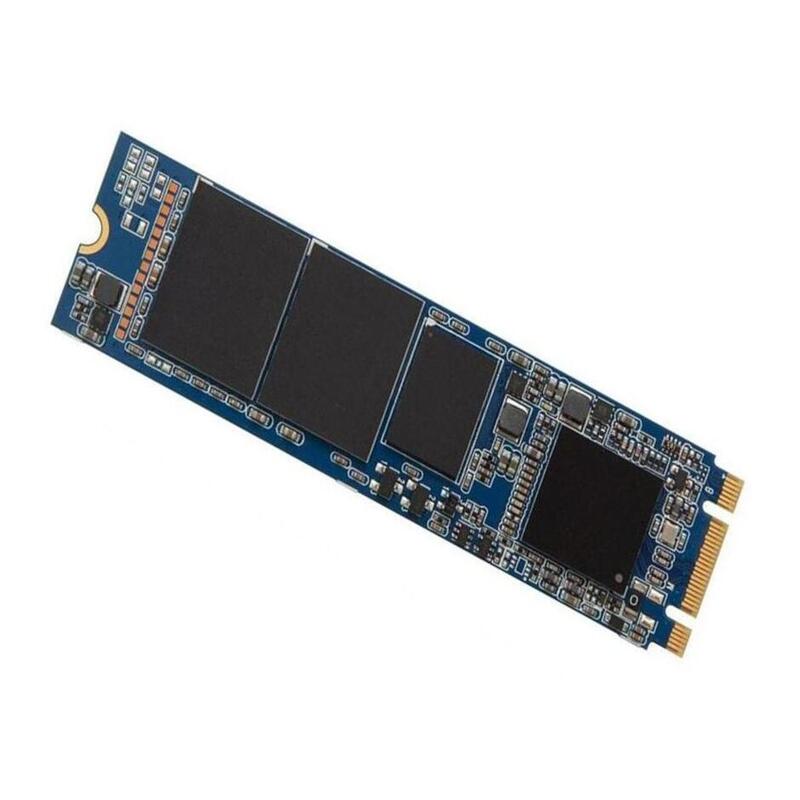


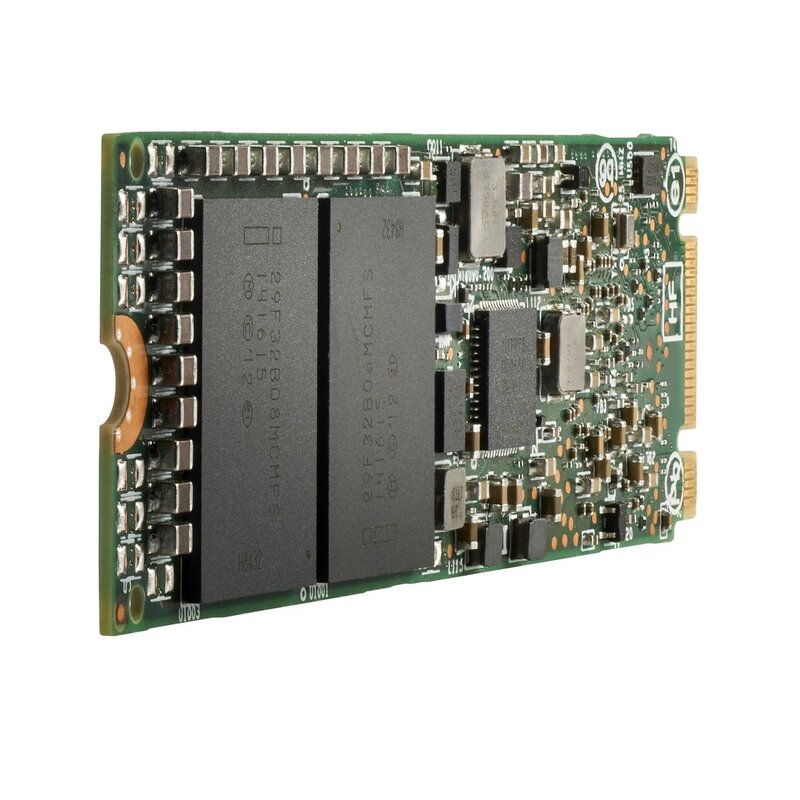
HPE 875319-B21 480GB SATA-6GBPS Digitally Signed Firmware ProLiant Read Intensive M.2 2280 SSD. Excellent Refurbished with 1 year replacement warranty
The HPE 875319-B21 480GB SATA-6GBPS Digitally Signed Firmware ProLiant Read Intensive M.2 2280 SSD is a purpose-built server-class solid state drive designed to act as a high-performance boot, caching, and read-optimized storage tier inside HPE ProLiant servers and compatible enterprise platforms. As a 480GB M.2 2280 device using the SATA 6Gb/s interface, this model focuses on dense, low-latency random reads and sustained sequential throughput appropriate for operating system volumes, metadata stores, read-heavy virtual machine images, and cache acceleration layers. Its classification as a read-intensive SSD and the inclusion of digitally signed firmware emphasize a balance between cost-efficiency and platform-level security, providing a stable, validated storage element for workloads where read operations dominate write activity.
Physically, the HPE 875319-B21 adheres to the M.2 2280 form factor, making it compact and suitable for systems that include M.2 sockets or M.2 enablement kits on server motherboards or riser cards. The drive implements a SATA 6Gbps (SATA III) interface rather than NVMe, which gives broad backwards compatibility with legacy SATA controllers and HPE ProLiant platforms that expose SATA lanes for onboard M.2 slots. Internally the drive typically uses multi-level cell (MLC) NAND designed for enterprise use, which provides a compromise of capacity, cost, and write endurance suitable for read-dominant workloads. The SATA interface delivers a maximum external transfer rate of approximately 6 Gbit/s, with practical sequential throughput and I/O characteristics tuned by HPE’s firmware for server boot and caching responsiveness.
A distinguishing characteristic of the 875319-B21 is its digitally signed firmware. Digitally signed firmware ensures that the drive’s firmware image is cryptographically verified by the host platform during initialization, reducing the risk of corrupted, tampered, or incompatible firmware being loaded. For enterprise administrators managing HPE ProLiant fleets this feature reduces service interruptions and hardens the boot path because only firmware images signed by an authorized vendor key are accepted. The result is tighter integration with HPE system firmware validation flows and a reduced support footprint when drives are used as OS boot devices or in system-critical cache roles. The digitally signed firmware designation also simplifies compliance with IT security policies that require cryptographic control of firmware provenance.
Although the SATA interface places an upper limit on raw link bandwidth, the HPE 875319-B21 is optimized to deliver strong real-world read performance for the classes of tasks it targets. Typical sequential read throughput values for drives of this family are in the range of multiple hundreds of MiB/s under ideal conditions, and reported figures for similar HPE 480GB M.2 SATA read-intensive models show sustained sequential read performance around 360–370 MiB/s with sequential writes in the mid-200s MiB/s. Random read IOPS at small queue depths are a more important metric for boot and VM image workloads; the drive’s controller and firmware are tuned to minimize latency and to deliver consistent low-latency reads, which improves operating system boot times, application startups, and database index lookups when compared to spinning media. Drive Writes Per Day (DWPD) for this model is conservatively rated for read-intensive usage, typically around 0.3 DWPD, reflecting the expectation that the majority of I/O will be reads rather than writes.
Endurance ratings and reliability metrics for the 875319-B21 align with enterprise expectations for read-focused SSDs. The quoted DWPD (drive writes per day) and manufacturer-level endurance testing reflect how the product is positioned: it is not intended for heavy mixed-write workloads such as sustained database logging or write-intensive transactional caching, but rather for operating system volumes, read caches, and content delivery roles where long-term stable read performance is the priority. HPE catalogs and distribution partners list this SSD under ProLiant-compatible options for Gen8, Gen9 and Gen10 server families, which indicates acceptance of the drive across multiple server generations and reinforces its value for lifecycle refreshes and spares strategies. Administrators should match endurance rating to workload profile when deploying these devices at scale to avoid unexpected early wear in write-dominant scenarios.
The HPE 875319-B21 is commonly sold and documented as compatible with a broad set of HPE ProLiant systems that provide M.2 mounting or enablement kits, including popular rack and blade servers where small-form-factor boot devices are desirable. HPE’s official product pages and partner datasheets list compatibility across a range of ProLiant Gen8 through Gen10 models and many of the latest Gen10 configurations when M.2 enablement is present. For administrators this means the 480GB M.2 SATA option can be used as a drop-in boot device, replacing older SATA SSDs or spinning disks, and can be standardized across a server fleet to simplify spares inventory, firmware management, and deployment scripts. Always confirm the physical M.2 socket, keying and BIOS/UEFI firmware support for M.2 SATA devices on the specific server model before mass deployment.
Primary use cases for the HPE 875319-B21 include operating system boot volumes, hypervisor image storage, read cache layers for software-defined storage, static content hosting (such as web assets and containers’ base images), and metadata storage in distributed filesystems. The form factor and pricing point also make the drive attractive as a local scratch or temporary read tier for analytics nodes that stage large read-only reference datasets. In clustered or hyperconverged environments, the drive’s role as a read cache can significantly reduce access latency to hot blocks and dramatically speed VM boot storms and application startups when combined with server memory and higher-tier NVMe storage. While not ideal as a primary write-heavy datastore, it serves as an efficient, lower-cost SSD option to replace legacy hard drives for read-dominant roles.
Integration into HPE’s management ecosystem is an important part of the 875319-B21’s value proposition. HPE’s system management and lifecycle tools recognize digitally signed firmware and the M.2 device’s presence, enabling firmware rollouts, health monitoring and asset inventorying from centralized consoles. When included as a boot device for HPE ProLiant servers, the SSD can be monitored using standard HPE system utilities that report media health, SMART attributes, S.M.A.R.T. thresholds and remaining rated life. Firmware updates for the drive must be handled via HPE-approved channels to preserve the digitally signed firmware chain of trust; using vendor-supplied update packages ensures cryptographic validation during the update process and reduces the risk of rendering a drive unsupported by the host firmware.
When choosing between SATA M.2 devices like the 875319-B21 and NVMe-class SSDs, the decision is frequently driven by the workload’s I/O profile, cost constraints, and platform compatibility. NVMe drives offer much higher throughput and IOPS at the cost of greater expense and different host requirements. The 875319-B21 remains a compelling option where SATA compatibility, lower cost per GB, and secure firmware signing are priorities; for example, using M.2 SATA as a boot tier in front of an NVMe data tier provides an economical and secure design pattern. HPE’s portfolio includes higher-endurance and NVMe models for write-intensive and latency-critical roles, so mapping requirements to device class—M.2 SATA read-intensive vs. NVMe performance class—is a recommended planning step.
Architecturally, the HPE 875319-B21 fits into several deployment patterns. In a typical three-tier configuration, it can serve as a local boot and cache tier in each server node while an all-flash NVMe array provides the persistent data tier. In hyperconverged or edge server deployments where density and cost control are essential, the M.2 SATA drives can be used to host hypervisor images and frequently accessed read-only datasets, reducing pressure on higher-cost storage and the network fabric. For stateless compute pools or container hosts, placing container base images on the M.2 read tier reduces network pulls and improves startup latency for scaled operations. These patterns leverage the drive’s read profile and compact form factor while preserving higher-cost media for write-critical or latency-sensitive data.


 Contact Us
 Information
 Catalog
 Solid State Drives (SSD)
 Network Switches
 Hard Disk Drives
 HBA & Controllers
 PC & Servers
 PC & Server Memory
 CPU & Processors
 Network Routers
 Power Supplies
 Tape Drives & Libraries
 Network Devices
 Computer & Network Cables