
(7% discount is applied at checkout)
Cart is empty
Your go-to destination for cutting-edge server products
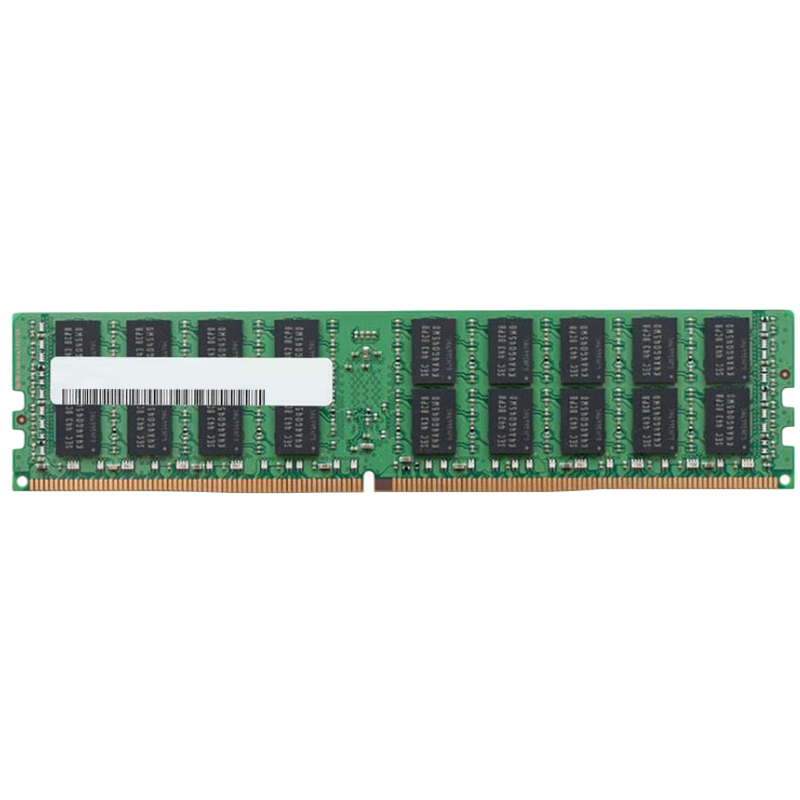
Dell AA579530 64GB 2933mhz Pc4-23400 Ecc Registered DDR4 SDRAM 288-Pin Ram. New Sealed in Box (NIB) with 1-Year Replacement Warranty
| SKU/MPN | Warranty | Price | Condition | You save |
|---|---|---|---|---|
| AA579530 | 1 Year Warranty | $758.00 | New Sealed in Box (NIB) | You save: $265.30 (26%) |
| AA579530 | 1 Year Warranty | $662.00 | New (System) Pull | You save: $231.70 (26%) |
Discover the Dell AA579530 64GB DDR4 SDRAM Memory Module, engineered for High-Performance computing environments, offering robust features and superior data integrity for your server or workstation needs. Dell AA579530 64GB 2933MHz PC4-23400 CL21 ECC Registered Dual Rank X4 1.2v DDR4 SDRAM 288-Pin RDIMM for Poweredge Server Memory Module.
The category for Dell AA579530 64GB 2933MHz PC4-23400 CL21 ECC Registered Dual Rank X4 1.2v DDR4 SDRAM 288-pin RDIMM for PowerEdge Server Memory Module centers on enterprise-grade server memory engineered for high-availability data centers, virtualization hosts, database servers, and compute-dense workloads. This segment of server memory focuses on the blend of large capacity, high transfer rates, error-correcting reliability, and registered (buffered) signaling required by modern server platforms. The Dell AA579530 identifies a 64GB module built to PC4-23400 specifications operating at 2933MT/s, with CAS latency 21 and ECC Registered dual-rank organization using x4 chip architecture and a standard 288-pin RDIMM form factor.
The 64GB capacity of the Dell AA579530 RDIMM positions it in the higher-density module tier commonly used to scale server memory without occupying every DIMM slot. A single 64GB RDIMM reduces the number of modules required to reach large memory pools, easing channel population strategies and potentially lowering total motherboard slot stress. For database caching, in-memory analytics, virtualization with many guests, and memory-intensive applications, these 64GB modules offer a compact path to multi-terabyte configurations while maintaining the stability and control expected of ECC registered memory.
Operating at 2933MT/s, often labeled PC4-23400, this module delivers higher data throughput than earlier DDR4 speeds such as 2400MT/s or 2666MT/s. In memory-bound scenarios, faster data rates reduce latency to memory pages, improve sustained throughput for sequential and random access patterns, and assist multicore processors in maintaining feed rates for large working sets. System designers should match memory speed expectations to the CPU memory controller capabilities in the target PowerEdge platform to realize the advertised 2933MHz performance. When paired correctly, the increased bandwidth of PC4-23400 accelerates tasks like large-scale virtualization, real-time analytics, and high-performance caching subsystems.
CAS latency, indicated here as CL21, describes the internal clock cycle delay between a READ command and when data is available. While higher frequency often brings improved bandwidth, CAS latency can rise; CL21 at 2933MT/s is balanced to maintain effective access times while running at the faster clock rate. For many enterprise workloads, sustained bandwidth trumps single-cycle latency, and CL21 at this speed represents a trade-off that favors throughput-heavy server tasks. Understanding the balance between CL21 timing, frequency, and the particular access patterns of your workload is important when optimizing memory performance on PowerEdge servers.
ECC (Error-Correcting Code) functionality corrects single-bit errors and detects multi-bit errors, which is vital for mission-critical systems where silent data corruption cannot be tolerated. The Registered (RDIMM) aspect adds a register between the memory controller and DRAM chips that buffers and re-times control and address signals, improving signal integrity and enabling higher module counts and capacities per channel. ECC Registered memory is the de facto standard for servers supporting uptime, data integrity, and fault-resilient operations, making the AA579530 module suitable for production PowerEdge deployments and environments with strict reliability requirements.
Dual rank modules contain two sets of DRAM chips that the memory controller sees as two separate ranks; each rank can be accessed independently in interleaved patterns to maximize throughput. The x4 designation denotes that each DRAM chip contributes four data bits to the module’s data bus. An x4 organization often improves error correction granularity and aligns with enterprise RDIMM designs for robust ECC implementations. Dual rank x4 modules may deliver improved effective bandwidth compared to single-rank modules in certain configurations, particularly when the memory controller can interleave accesses. When populating channels on a PowerEdge motherboard, administrators should be mindful of rank counts and channel limits to generate an optimal memory topology.
Operating at 1.2 volts, DDR4 modules provide lower power consumption than prior DDR generations, beneficial for dense rack deployments where power and heat are constrained. The 1.2V specification aligns with modern server platform power profiles and helps reduce overall data center power draw when scaling to high memory capacities. Lower operating voltage also moderates thermal output, easing cooling requirements for blade servers and short-depth rack servers running many simultaneous high-memory workloads. Thermal management remains an important consideration; adequate airflow and proper chassis layout ensure the modules operate within Dell’s recommended thermal envelope for sustained high-performance operation.
Although the Dell AA579530 module is designed for PowerEdge systems, successful deployment requires validating BIOS/UEFI compatibility, processor memory controller support, and chassis population guidelines. Server firmware updates may include memory training improvements and updated SPD (Serial Presence Detect) interpretation that enable the system to achieve rated speeds and stable operation. Administrators should consult Dell’s compatibility matrices for their specific PowerEdge models to ensure the 2933MHz operating point is supported and to determine recommended slot population orders. Using identical module speeds and capacity across channels typically yields the most predictable results during memory training and avoids fallback to lower speeds.
Mixing RDIMMs of different speeds, capacities, or organizations can result in the system operating at the lowest common denominator in terms of speed, or it may prevent the system from achieving multi-channel interleaving benefits. Mixing dual-rank with single-rank modules affects channel balancing and may influence achievable frequency or stability. For critical environments, the safest approach is to populate memory with matched modules to ensure uniform timing, thermal behavior, and predictable error correction performance.
ECC RDIMM modules provide automated correction of single-bit errors and detection of multi-bit errors, reducing the risk of silent data corruption. The memory controller, when paired with ECC RDIMMs, logs corrected errors and can be configured to alert administrators of increasing error rates that may precede module failure. In high-availability clusters and storage controllers, ECC’s role is not just error correction but also early warning of failing components, which can be integrated into monitoring platforms for proactive maintenance and replacement policies. For systems running databases or virtual machine hypervisors, ECC substantially lowers the probability of memory-induced data integrity issues.
In virtualized environments, memory density per socket is often the limiting factor for guest consolidation. The 64GB AA579530 RDIMM provides a compact, high-capacity building block enabling higher virtual machine counts per host while maintaining ECC protection. When combined with multi-socket PowerEdge servers, administrators can configure hosts with multiple terabytes of RAM to support large-scale virtualization, memory overcommit strategies, and in-memory acceleration layers. Proper memory allocation strategies and NUMA-aware scheduling are critical to derive performance benefits from increased capacity without compromising latency-sensitive workloads.
Compute clusters performing large-scale simulations, data science training, or batch processing tasks benefit from the increased per-node memory that 64GB RDIMMs provide. Memory bandwidth improvements at 2933MT/s help maintain data flow to many-core processors performing parallel operations, while ECC safeguards long-running compute jobs against transient memory errors. For HPC applications where checkpointing and fault tolerance are crucial, memory reliability becomes as important as capacity, making ECC registered modules a pragmatic choice for server nodes participating in compute grids and distributed processing pipelines.


 Contact Us
 Information
 Catalog
 Solid State Drives (SSD)
 Network Switches
 Hard Disk Drives
 HBA & Controllers
 PC & Servers
 PC & Server Memory
 CPU & Processors
 Network Routers
 Power Supplies
 Tape Drives & Libraries
 Network Devices
 Computer & Network Cables