
(7% discount is applied at checkout)
Cart is empty
Your go-to destination for cutting-edge server products
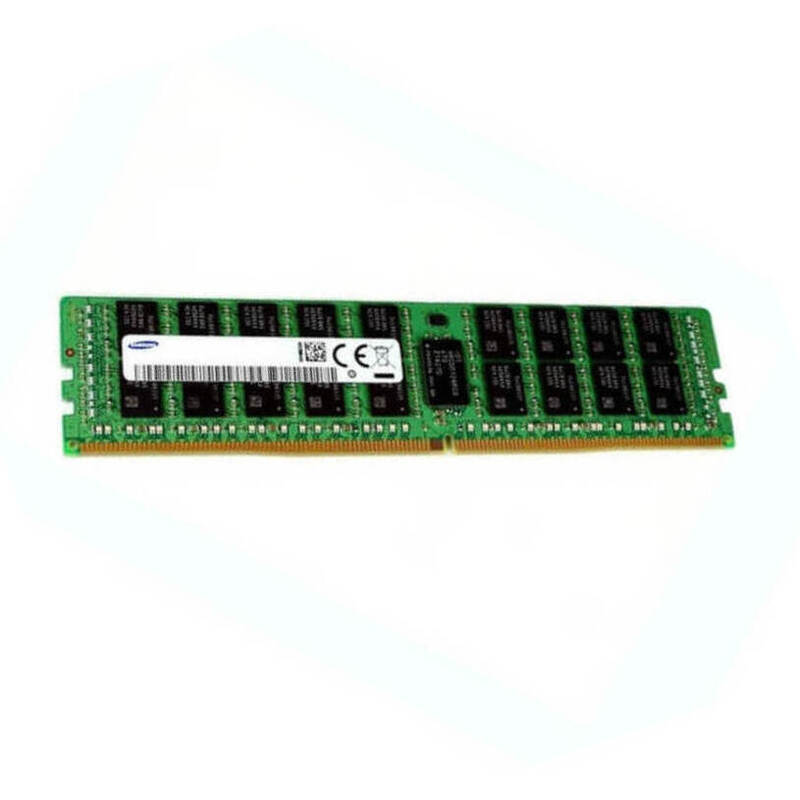
Samsung M393A8G40AB2-CWEQB 64GB PC4-25600 DDR4-3200MHz 288-Pin 1.2V Memory Module. New Sealed in Box (NIB) with 3 Years Warranty
| SKU/MPN | Warranty | Price | Condition | You save |
|---|---|---|---|---|
| M393A8G40AB2-CWEQB | 1 Year Warranty | $768.00 | New (System) Pull | You save: $268.80 (26%) |
| M393A8G40AB2-CWEQB | 1 Year Warranty | $1,056.00 | New Sealed in Box (NIB) | You save: $369.60 (26%) |
The Samsung M393A8G40AB2-CWEQB represents the pinnacle of reliable, high-density memory for modern data centers and enterprise servers. As a 64GB DDR4-3200 module, it is engineered to deliver exceptional bandwidth, unwavering data integrity, and robust performance for mission-critical applications, from large-scale virtualization and in-memory databases to high-performance computing (HPC) and cloud infrastructure.
In the realm of enterprise computing and data center operations, memory is not merely a component; it is the critical substrate upon which computational tasks are executed. The category of DDR4 Server Memory, specifically Registered Dual In-Line Memory Modules (RDIMMs), represents the pinnacle of reliability, capacity, and error-resilient performance for mission-critical systems. Modules like the Samsung M393A8G40AB2-CWEQB are engineered to meet the relentless demands of servers, high-performance workstations, and storage area networks, where system stability and data integrity are non-negotiable.
Understanding the product's nomenclature provides immediate insight into its capabilities. The part number M393A8G40AB2-CWEQB is a detailed blueprint of the module's characteristics.
This module is a DDR4 SDRAM (Synchronous Dynamic Random-Access Memory) device. The "288-pin" designation specifies the physical interface, which is the standard for DDR4 DIMMs, ensuring it fits into contemporary server motherboards. Its form factor is an RDIMM (Registered DIMM), which incorporates a register (or buffer) between the memory controller and the DRAM chips. This register reduces the electrical load on the controller, enabling higher module densities and more stable operation in multi-channel, multi-DIMM configurations typical of servers.
The module offers a substantial 64GB of capacity in a single stick. The "(1x64GB)" denotes a single module of 64 gigabytes, allowing for flexible system population. Servers can be equipped with multiple of these modules to reach terabytes of total system memory, catering to memory-intensive workloads without sacrificing physical slot availability.
The module operates at a data rate of 3200 Megatransfers per second (MT/s), commonly referred to as 3200Mbps. This translates to a peak theoretical bandwidth of 25,600 MB/s per module, as indicated by the PC4-25600 classification (PC4 for DDR4, 25600 for 25600 MB/s bandwidth). This high-speed interface accelerates data movement between the CPU and memory, reducing bottlenecks in compute-intensive tasks.
Beyond raw capacity and speed, this module incorporates several technologies that are non-negotiable for enterprise environments where uptime and data accuracy are paramount.
The module features Error-Correcting Code (ECC) and is of the Registered (buffered) type. ECC is a fundamental reliability feature that detects and corrects the most common types of data corruption in real-time. It can fix single-bit errors and detect (though not always correct) multi-bit errors on-the-fly, preventing silent data corruption that could lead to application crashes, calculation errors, or system instability. The combination of ECC with the Registered design makes this an ECC Registered RDIMM, the de facto standard for servers requiring both high capacity and maximum data integrity.
The CAS Latency (CL) is specified as 22. This timing indicates the number of clock cycles between a read command and the moment data is available. At 3200 MT/s, a CL22 timing represents a balanced profile optimized for server workloads that prioritize consistent throughput and stability over ultra-tight latencies, which are more critical in desktop gaming scenarios.
The "Dual Rank" and "x4" specifications describe the internal organization of memory chips. A dual-rank module essentially presents two logical banks of memory to the memory controller on the same physical stick. This architecture improves performance by allowing for interleaving—the controller can access one rank while the other is preparing data, leading to better bus utilization and efficiency. The "x4" refers to the data width of the individual DRAM chips (4 bits). x4 organization is crucial for supporting advanced error correction like SDDC (Single Device Data Correction), which can correct errors within a single DRAM chip, a feature often required in high-end servers from vendors like Dell, HPE, and Lenovo.
The module operates at the standard DDR4 voltage of 1.2 volts. This lower voltage (compared to DDR3's 1.5V) contributes to reduced power consumption and heat generation at the system level, a critical consideration for dense server racks where energy efficiency and thermal management directly impact operational costs.
The Samsung M393A8G40AB2-CWEQB is not designed for consumer PCs. Its purpose is to serve as the high-performance, reliable backbone in enterprise hardware.
This memory excels in environments that demand high throughput, large capacity, and flawless operation. Key applications include enterprise virtualization platforms (VMware vSphere, Microsoft Hyper-V, Citrix Hypervisor) where consolidating numerous virtual machines requires massive, pooled memory resources. It is equally critical for database servers (SQL Server, Oracle DB) and in-memory data platforms (SAP HANA), where vast datasets are loaded into RAM for instantaneous processing. High-Performance Computing (HPC) clusters, rendering farms, and advanced analytics engines also benefit from the module's density and bandwidth.
This specific module is engineered for compatibility with a wide range of modern server platforms. It is designed to work with Intel Xeon Scalable Processors (from the "Purley" platform onwards, including Cascade Lake, Ice Lake, and newer generations) and compatible AMD EPYC processors that support DDR4-3200 RDIMMs. It is crucial to verify compatibility with your specific server model's Qualified Vendor List (QVL) or memory compatibility guide from manufacturers such as Dell EMC (PowerEdge), HPE (ProLiant, Apollo), Lenovo (ThinkSystem), and Cisco (UCS). Always ensure the system BIOS is updated to the latest version for optimal compatibility and performance.
For IT professionals and system integrators, a deeper understanding of the module's technical aspects informs procurement and deployment decisions.
The dual-rank design of this module is a key performance differentiator. In a server motherboard, the memory controller has a limited electrical drive strength. Using single-rank (SR) modules, a system might be limited to populating only a certain number of slots before encountering signal integrity issues. Dual-rank (DR) modules, like this one, place two sets of chips on the module but use the same electrical load as a single-rank module from the controller's perspective. This allows a system to be fully populated with high-density modules (e.g., 64GB or 128GB per slot) without overloading the memory controller, maximizing total system memory capacity.
The "x4" organization (where each DRAM chip provides a 4-bit data path) is essential for achieving higher reliability through Chipkill and SDDC (Single Device Data Correction) technologies. These advanced ECC schemes, supported by modern server platforms, can survive the complete failure of an entire DRAM chip without data loss or system crash. This is possible because with x4 chips, the ECC code word is spread across more chips. Modules with x8 organization typically do not support this level of protection. Therefore, the M393A8G40AB2-CWEQB's x4 design is a critical feature for Tier-1 mission-critical applications.
Modern server CPUs feature multi-channel memory architectures (e.g., 6-channel for Intel Xeon Scalable, 8-channel for AMD EPYC). To achieve the full memory bandwidth potential, channels must be populated symmetrically. A single 64GB RDIMM like this one would occupy one channel. Optimal performance is achieved by installing modules in multiples that match the channel count (e.g., 6 or 12 modules for a 6-channel CPU). It is vital to follow the server manufacturer's population guidelines to ensure proper channel interleaving and performance.


 Contact Us
 Information
 Catalog
 Solid State Drives (SSD)
 Network Switches
 Hard Disk Drives
 HBA & Controllers
 PC & Servers
 PC & Server Memory
 CPU & Processors
 Network Routers
 Power Supplies
 Tape Drives & Libraries
 Network Devices
 Computer & Network Cables