(7% discount is applied at checkout)
Cart is empty
Your go-to destination for cutting-edge server products
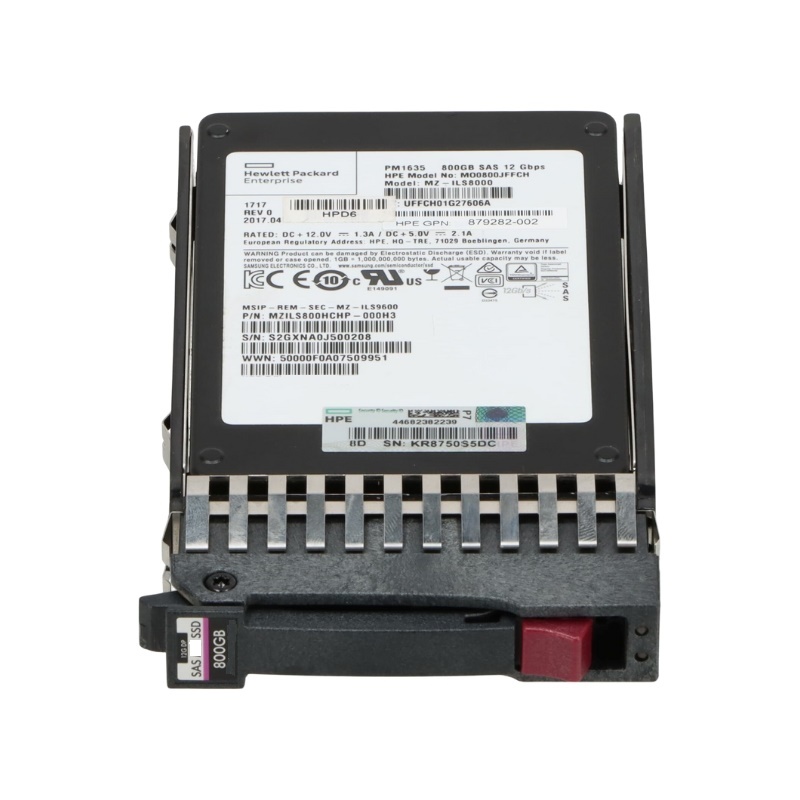


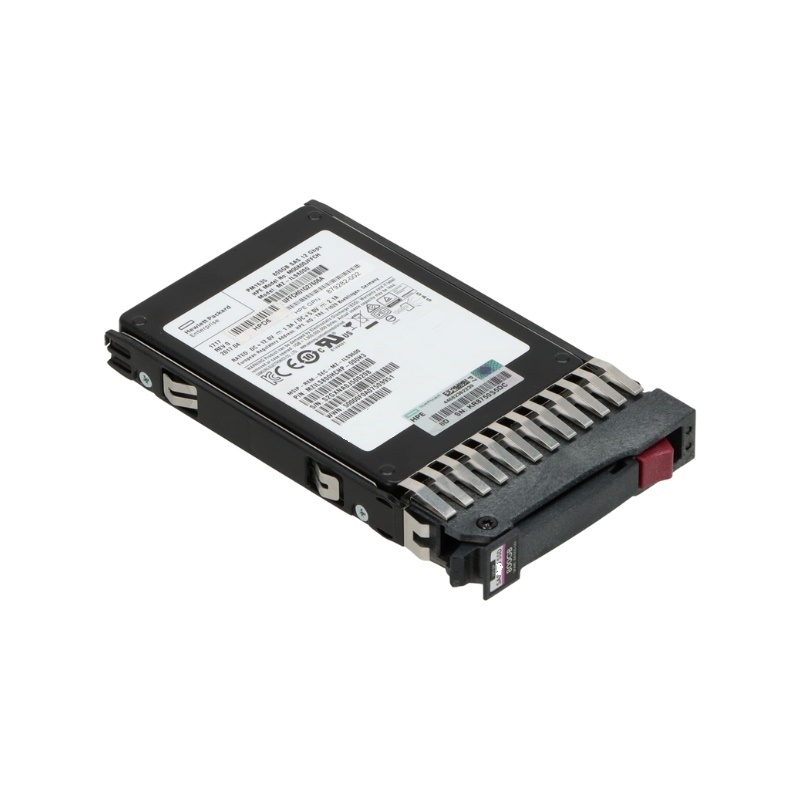
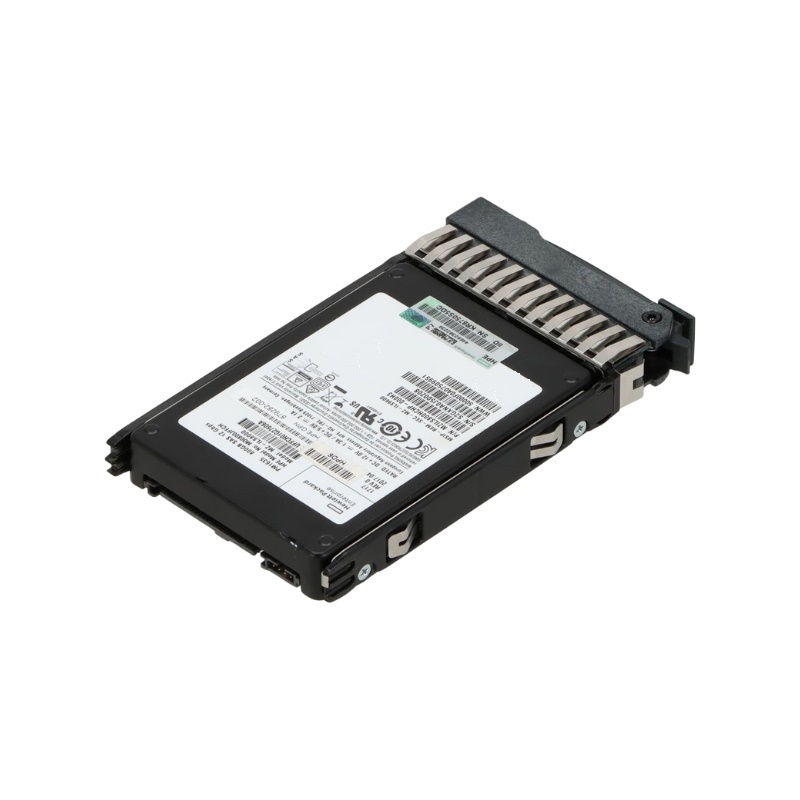
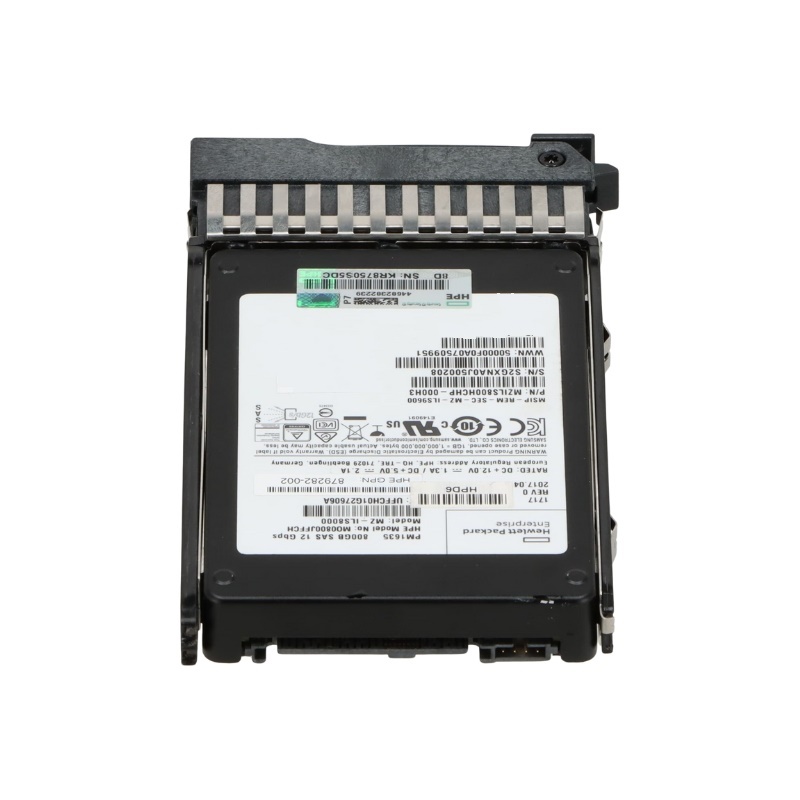
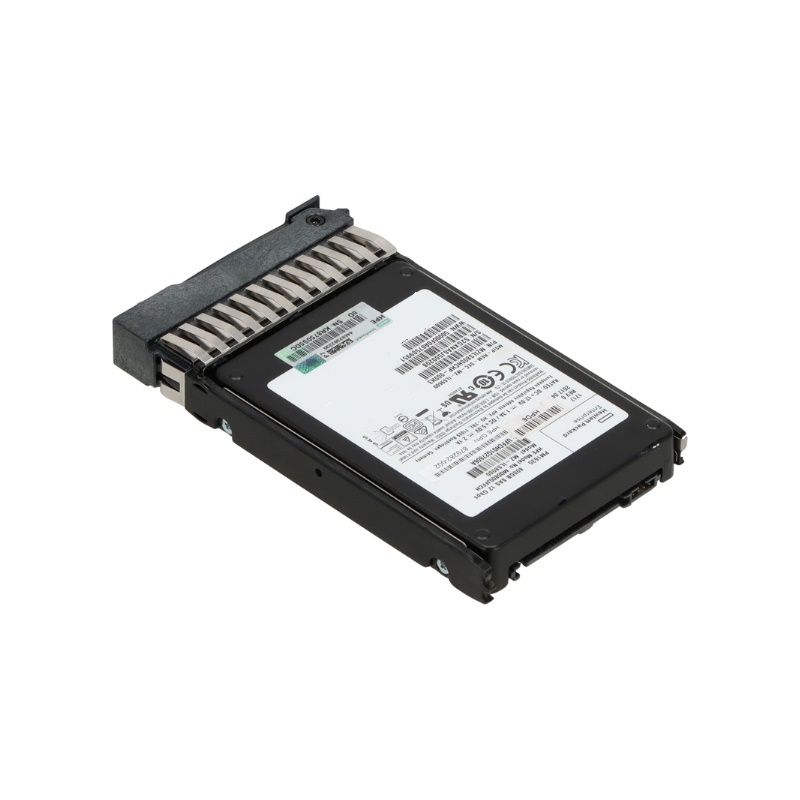
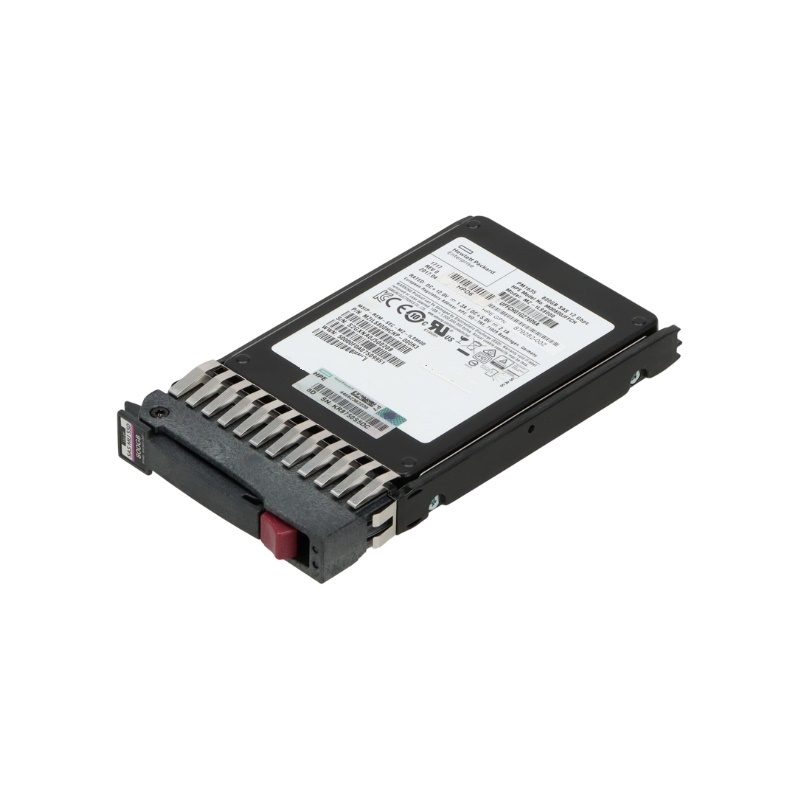
HPE 873572-001 800GB SAS-12GBPS Write Intensive MLC SFF SC Digitally Signed Firmware Solid State Drive. Excellent Refurbished with 1 year replacement warranty
The HPE 873572-001 800GB SAS-12GBPS Write Intensive MLC SFF SC Solid State Drive represents a focused enterprise storage solution designed for mission-critical write-heavy workloads. Engineered to the exacting standards expected from HPE-branded drives, this 800GB SAS drive leverages 12Gb/s SAS interface throughput, an SFF (2.5-inch) small form factor for dense server and array deployments, and write-intensive Multi-Level Cell (MLC) flash to balance endurance and capacity. The designation “Digitally Signed Firmware” indicates an additional layer of firmware integrity control that helps ensure only authenticated firmware images run on the drive, reducing the risk of firmware tampering and improving long-term platform reliability. The product sits firmly in the enterprise SSD class and is optimized to deliver predictable low-latency responses under heavy sustained write patterns typical of database commit logs, virtual machine swap or pagefile activity, high-frequency transactional systems, and latency-sensitive write caches.
The SAS-12.0Gb/s interface provides a bi-directional high-bandwidth transport layer between the drive and host controller, supporting full-duplex communications and allowing solid-state performance to be realized in large-scale deployments. The 2.5-inch SFF mechanical envelope reduces rack space consumption and enables higher drive counts in modern storage arrays and servers. This form factor also eases replacement and field servicing by adhering to established enterprise hot-swap carrier and tray standards, enabling rapid serviceability and lower mean time to repair. With a Serial Attached SCSI protocol stack, compatibility with mainstream HPE servers, storage enclosures, and many third-party arrays is straightforward, and the SAS architecture supports dual-port topologies for redundant / multipath connectivity when used in enterprise-class controllers and HBAs.
MLC flash used in this model is tuned for write-intensive workloads, delivering higher program/erase cycle endurance compared to consumer-grade or read-optimized enterprise flash. The drive’s internal firmware, wear-leveling algorithms, and over-provisioning strategies are calibrated to maximize usable life under consistent high-write conditions. Applications that benefit most include database transaction logging, online transaction processing (OLTP) systems, high-write virtual machine hosts, and write cache tiers in hybrid storage architectures. Whereas general-purpose SSDs may prioritize capacity and cost, the write-intensive MLC architecture of the HPE 873572-001 balances durability with performance, making it a sensible choice for environments that require sustained write throughput without frequent drive replacement cycles.
Performance expectations for an enterprise SAS-12GBPS write-intensive SSD encompass sequential and random I/O characteristics. Sequential write throughput at the SAS-12Gb/s physical layer can deliver high sustained transfer rates, but real-world performance is often governed by the controller architecture, flash parallelism, queue depth, and firmware optimizations. Random IOPS for mixed read/write workloads are a critical metric for database and virtualization use cases; low and predictable latency under high queue depths is the differentiator between a high-performing drive and one that introduces application jitter. The drive’s internal cache strategies, such as power-loss protection mechanisms and write coalescing, reduce write amplification and help keep tail latencies low. For architects designing a storage tier around this drive, tuning host-side IO patterns and leveraging multipath I/O will further secure consistent latency performance for the most demanding enterprise applications.
HPE-branded SSDs, including this model, are typically validated against HPE server families and storage controllers. The firmware is often tailored to complement HPE system management tools, enabling drive telemetry and health reporting to surface through HPE management frameworks. The digitally signed firmware augmentation strengthens the integrity chain in managed environments and can integrate with HPE system lifecycle utilities for seamless firmware updates and compatibility checks. In heterogeneous data center environments, SAS compatibility ensures broad interoperability with many SAN controllers and SAS HBAs, but administrators should confirm controller firmware support and multipath driver readiness when mixing vendor components. When used in HPE arrays or HPE ProLiant servers, administrators can expect more complete support and streamlined diagnostics compared to unbranded commodity SSDs.
Adoption of an 800GB write-intensive SAS SSD typically follows patterns where consistent high-write activity is a defining attribute of the workload. In database clusters designed for high commit rates, journaling and logging devices can be separately provisioned on write-intensive SSDs to accelerate persistence operations while reducing latency for transactional applications. Virtualization hosts with many small, write-heavy VMs often benefit from a tier built on MLC write-optimized drives, where swap, paging, and ephemeral disk activity can be isolated from bulk storage tiers. High-performance caching layers in hybrid arrays may use write-intensive SSDs for the write-back cache to absorb spikes in workload without sacrificing endurance. Additionally, edge data processing nodes that perform continuous ingestion and local persistence for telemetry or IoT scenarios can rely on these drives to handle sustained write streams with reduced maintenance frequency compared to consumer-grade alternatives.
In RAID configurations, the drive’s characteristics should guide RAID level selection and rebuild planning. Write-intensive SSDs excel in RAID configurations intended to tolerate high write rates, but rebuild times and the impact of rebuild-induced write amplification must be considered. Using controllers with advanced SSD-aware rebuild algorithms and fast background parity recalculation mitigates rebuild stress. Hybrid arrays that combine HDD capacity tiers with an SSD write tier will place HPE 873572-001 drives in the hot data or write-accelerator layer, leveraging their endurance where it has the most system-level impact. When designing redundancy, administrators should adjust spare pool sizes and consider hot spares to match the expected failure and replacement windows inherent to dense enterprise deployments.
Although the nominal capacity is 800GB, effective usable capacity in production is influenced by factors such as over-provisioning, reserved space for wear leveling, and space used by system metadata. Many administrators intentionally leave additional host-level reserve or configure logical volumes to account for anticipated wear leveling and firmware-managed spare areas to prolong media life. For storage architects building capacity plans, it is prudent to model effective usable capacity rather than raw capacity, incorporating expected RAID overhead, deduplication or compression ratios where present, and the operational reserve needed to maintain performance through the device’s lifespan. Additionally, when drives are used in mixed-capacity arrays, capacity balancing strategies and stripe size decisions can maximize the usable performance and storage efficiency of the deployment.
Enterprise SSDs often include features that protect in-flight data in the event of unexpected power interruptions. While implementations vary between vendors and models, drives in this class typically incorporate capacitive or firmware-managed mechanisms to flush volatile cache to non-volatile media, reducing the risk of data corruption. Data integrity features also extend to internal ECC algorithms, end-to-end data protection across the controller and NAND channels, and strong CRC checks on host commands. For systems where transactional integrity is essential, deploying drives with robust power-loss mitigation and integrity verification is a foundational element of storage architecture design. It is recommended that system-level UPS and redundant power paths complement drive-level protections to provide comprehensive resilience against power anomalies.
Compared to TLC or QLC flash alternatives, write-intensive MLC typically provides superior endurance but at a somewhat higher cost per gigabyte. Read-optimized or mixed-use SSDs might offer better price-per-terabyte for workloads dominated by reads, but their lower endurance makes them less suitable for sustained write-heavy environments. NVMe drives provide higher raw throughput and lower latency in PCIe-based ecosystems, but in SAS-centric infrastructures the SAS-12Gb/s form factor preserves broad compatibility and multipath resilience. The selection between SAS write-intensive MLC and other technologies should be driven by workload characterization, existing infrastructure investments, and desired lifecycle economics.


 Contact Us
 Information
 Catalog
 Solid State Drives (SSD)
 Network Switches
 Hard Disk Drives
 HBA & Controllers
 PC & Servers
 PC & Server Memory
 CPU & Processors
 Network Routers
 Power Supplies
 Tape Drives & Libraries
 Network Devices
 Computer & Network Cables