(7% discount is applied at checkout)
Cart is empty
Your go-to destination for cutting-edge server products
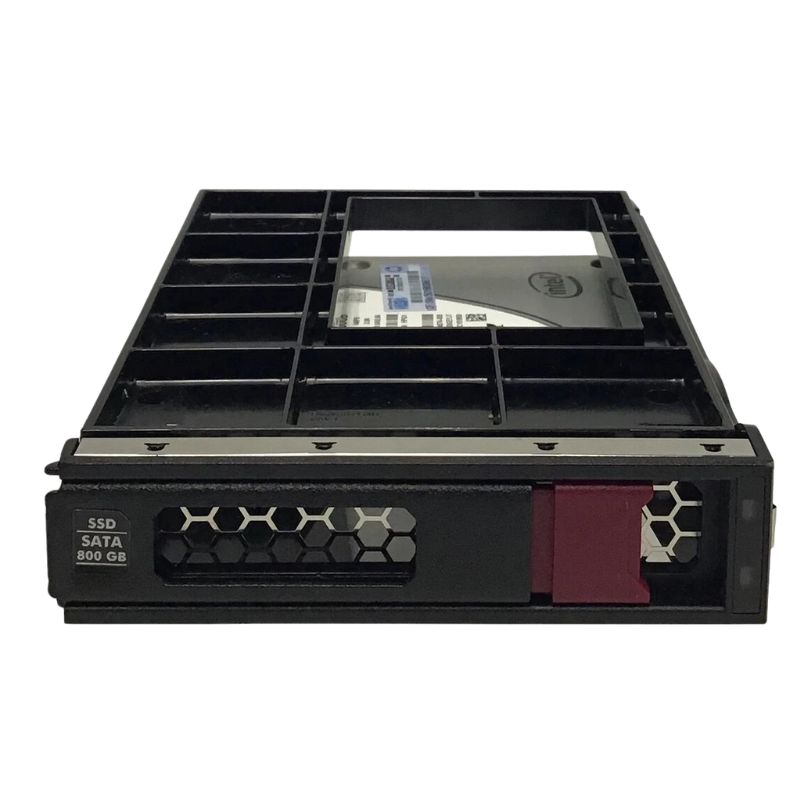


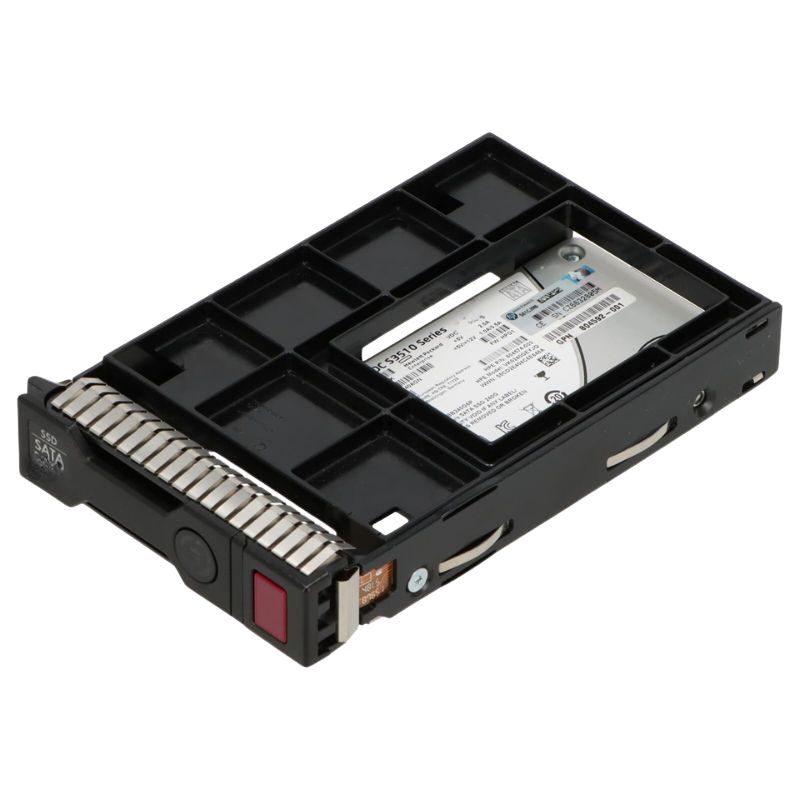
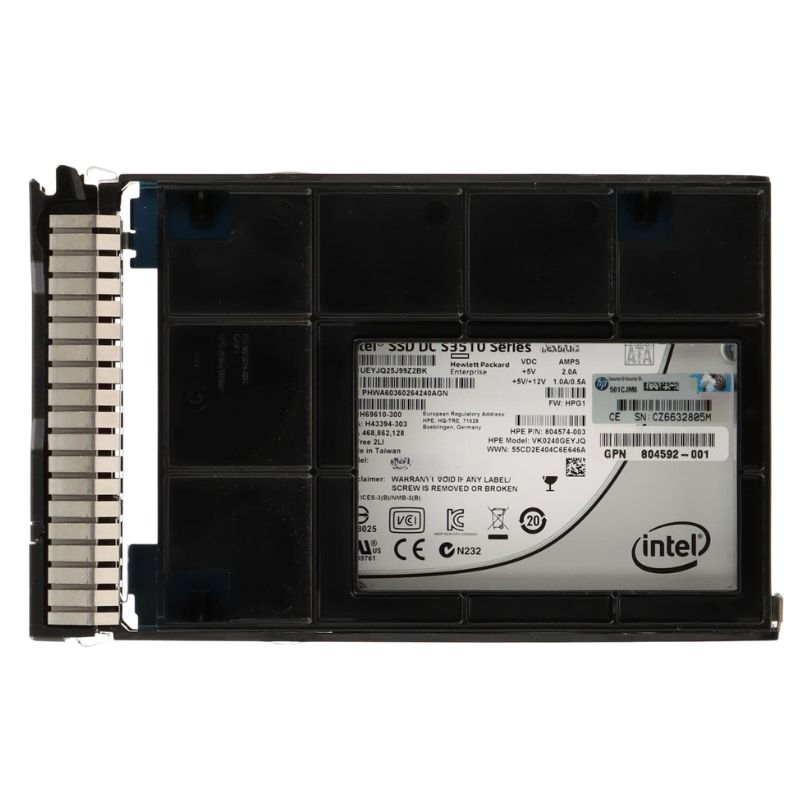
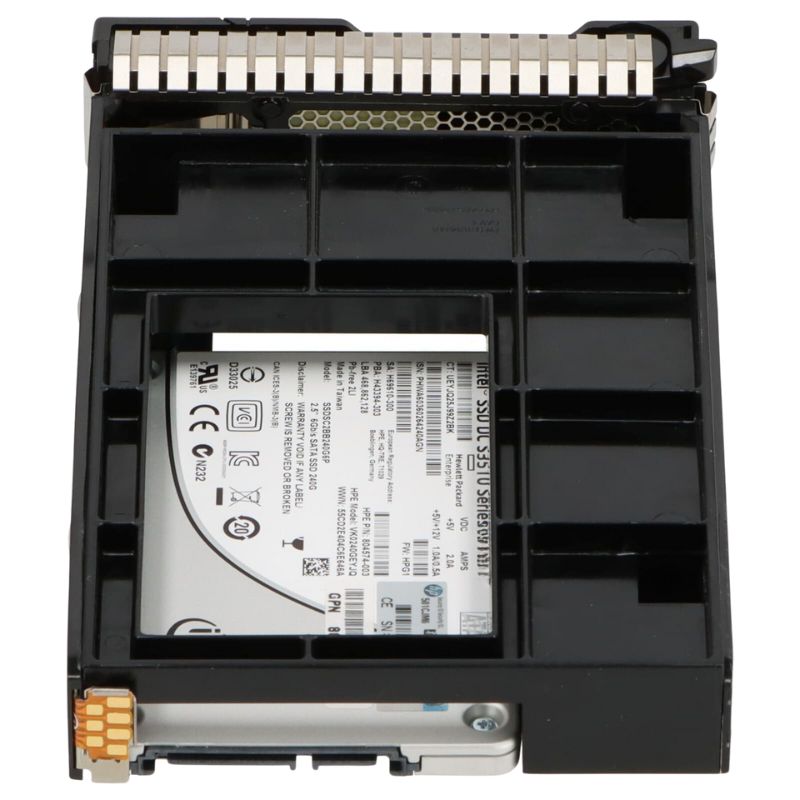
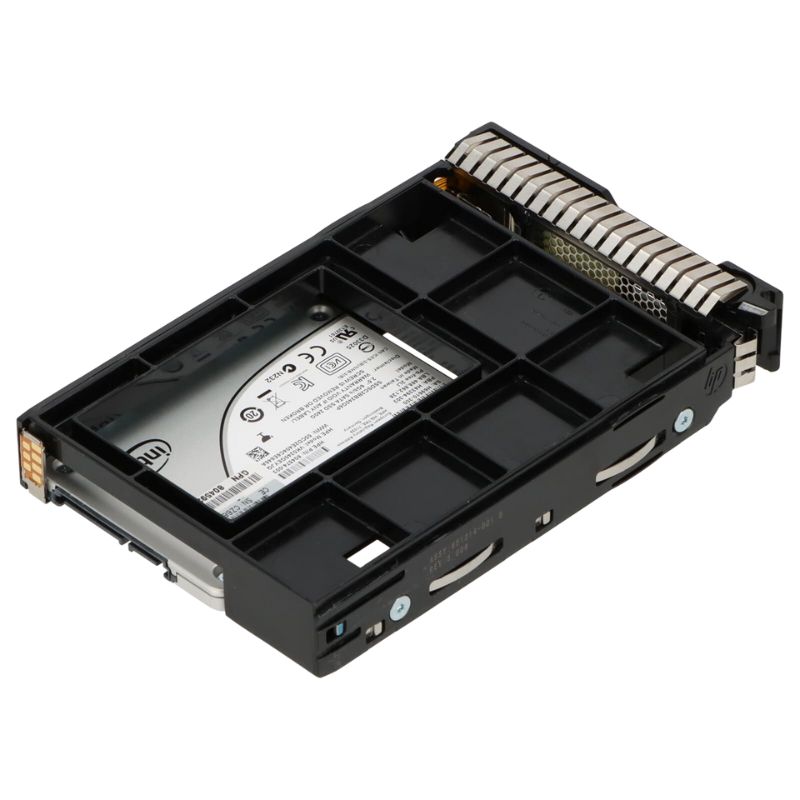
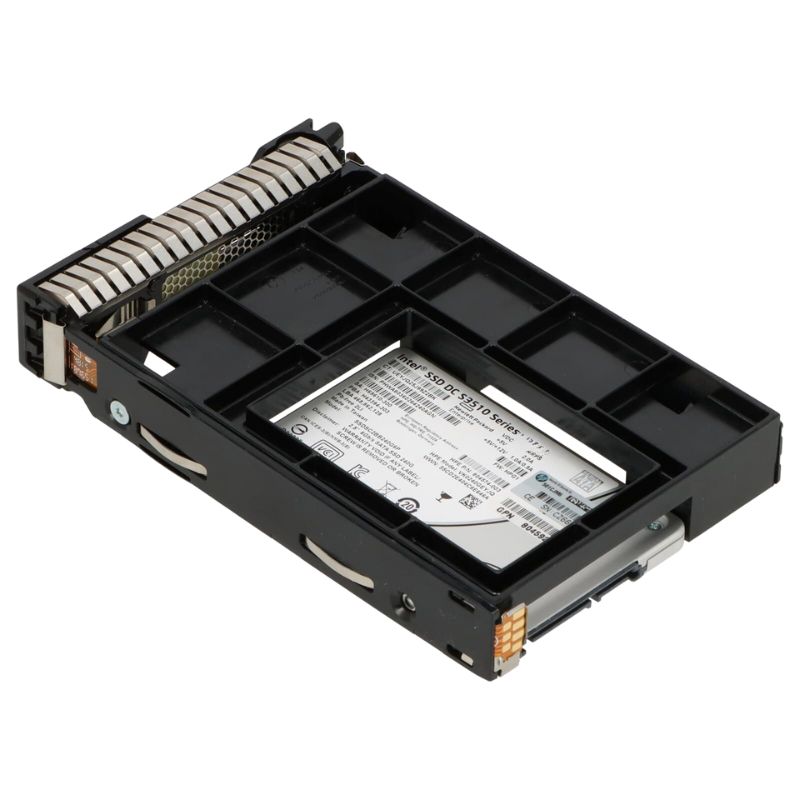
HPE 804628-X21 800GB 3.5inch SATA 6GBPS Mixed Use SSD. New (System) Pull with 1 year replacement warranty
The HPE 804628-X21 800GB Large Form Factor (LFF) Solid State Drive occupies a specific niche in enterprise storage categories where density, compatibility with legacy and current HPE ProLiant platforms, and a balance of endurance and cost are critical. This family of mixed-use SATA 6Gb/s drives is positioned for workloads that demand strong read performance combined with a reliable write endurance profile, and it is frequently listed alongside related HPE part numbers and SmartCarrier variants that provide hot-swap, carrier-aware deployment in ProLiant Gen9 and Gen10 server environments. The LFF 3.5-inch format, combined with the SATA-6G interface and HPE’s signature digitally signed firmware, makes this category attractive for system integrators and IT teams who need the predictable behavior of genuine HPE firmware and the fit-and-finish of factory SmartDrive carriers for easy servicing and inventory management.
The 3.5-inch large form factor used by the HPE 804628-X21 enables straightforward physical replacement in server bays that were originally designed for spinning media, providing a mechanical and electrical fit for chassis with 3.5-inch trays. The larger casing compared with small form factor drives allows for integrated SmartDrive carrier attachments and makes the device compatible with existing hot-swap bays without additional adapters in many ProLiant systems. Because many server fleets were built with LFF bays for higher per-bay capacity, offering an 800GB SSD in the LFF enclosure helps administrators preserve their chassis density planning while modernizing performance characteristics. The presence of SmartDrive or SmartCarrier assemblies also simplifies LED status reading and extraction ergonomics during maintenance operations, reducing human error and service time.
Using the SATA 6Gb/s external interface, the HPE 804628-X21 aligns with an interface standard that is widely supported across server motherboards and RAID controllers. SATA-6G provides a stable, well-understood protocol layer with broad driver and firmware maturity. For many mixed-use enterprise workloads — such as virtualization hosts with balanced read/write patterns, file serving, or tiered cache layers — SATA-based SSDs present a compelling cost-to-performance ratio when compared with higher-cost NVMe drives. The SATA 6Gb/s connection also makes it easier to reuse existing backplanes and cabling, avoiding the need for PCIe or specialized NVMe front end reconfiguration. This makes the category particularly suitable for organizations seeking straightforward upgrades from HDD to SSD without complex redesign of server I/O subsystems.
Performance in this category is defined by a combination of sequential throughput metrics and random IOPS figures. Typical 800GB mixed-use LFF SATA SSDs in the HPE family are tuned to deliver strong sequential read and write throughput for sustained transfers while offering competitive 4KB random read and write IOPS for transactional workloads. Realistic, out-of-box performance can be influenced by firmware optimizations such as HPE’s digitally signed firmware which helps maintain steady behavior under long-running workloads and reduces the variability that might otherwise degrade service level objectives for latency-sensitive applications. Specific published numbers for similar HPE mixed-use 800GB models report internal read throughput in the multiple hundreds of megabytes per second and random read IOPS in the tens of thousands range, which places these drives squarely in the “value enterprise SSD” tier for mixed application use.
Mixed-use SSDs are engineered to handle a balance of read and write operations with higher endurance ratings than client-grade consumer drives while remaining more cost effective than pure write-intensive enterprise parts. The endurance characteristics are typically expressed as drive writes per day (DWPD) or total terabytes written (TBW) over a warranty period. For ProLiant deployments where the workload combines virtualization overhead, database index reads, small file writes, and filesystem metadata churn, the mixed-use profile of the HPE 804628-series allows administrators to achieve a favorable tradeoff between lifespan and acquisition cost. Firmware features such as power-loss protection and controlled garbage collection further stabilize write performance and protect user data integrity in the event of unexpected power conditions, attributes often highlighted for enterprise SSD categories.
In practical deployments, the HPE 804628-X21 class of 800GB LFF SATA mixed-use drives excels in roles such as OS or application boot volumes for virtualization hosts, mid-tier database caching layers, and storage tiers for general purpose VMs where predictable latency and reasonable write endurance are required. They are also commonly used in high-density archival nodes that require faster access than spinning media but do not justify the expense of NVMe. Because these SSDs can be hot-swapped and are recognized by HPE management tools, they integrate neatly into established backup, monitoring, and firmware update workflows, enabling IT teams to standardize on a drive family for operational simplicity.
The product family is often referenced by a variety of HPE part numbers and equivalent manufacturer model codes. Market listings show the 804628-X21 alongside sibling SKUs such as 804628-B21 and 804628-K21, and OEM model references like LK0800GEYMU-SCC appear in reseller catalogs. These related part numbers typically denote packaging differences, carrier variants, or regional SKU distinctions while representing the same underlying SSD die, firmware family, and performance class. For procurement and lifecycle management it is essential to verify the exact spare and assembly part numbers — such as spare part 805382-001 or assembly part 804612-003 — to ensure compatibility with asset tracking and warranty claim processes.
When planning a deployment that uses 3.5-inch LFF SSDs, data center architects must reconcile the tradeoffs between raw capacity per bay and IOPS per chassis. Replacing HDDs with LFF SSDs in a chassis preserves the same bay count while drastically improving performance for workloads constrained by mechanical latency. However, the per-bay capacity advantages of LFF SSDs are typically less than those achieved by combining many small form factor NVMe devices in a 2.5-inch or direct-attach PCIe layout. Consequently, the HPE 804628-series is a well suited choice where administrators want to modernize performance in place without reworking enclosure density or thermal budgets. Additionally, because these drives draw modest power relative to high-performance NVMe AICs, they generally fit into existing power and cooling plans with minimal revalidation.
Published specifications for HPE 800GB mixed-use LFF SATA drives in this family emphasize a blend of throughput and IOPS. Representative figures reported by resellers and specification sheets include internal sequential read and write rates in the range of several hundred megabytes per second, as well as random read IOPS figures that reach into the tens of thousands, with random write IOPS scaled for mixed usage. Power consumption in active state is typically single-digit watts to low double digits depending on workload intensity, and height and weight conform to standard 3.5-inch drive parameters to fit enterprise trays. Warranty terms vary by SKU and seller but commonly include limited warranty periods; certain SKUs from resellers may be offered with shorter warranty bundles for bulk or refurbished offerings.
To extract consistent performance from LFF SATA mixed-use SSDs, administrators should confirm that RAID controller firmware is up to date and that caching policies are tuned for the intended workload. Hardware RAID controllers with battery-backed or flash-backed cache can alter the apparent write performance profile and should be configured in harmony with the SSD’s internal power-loss safeguards. When using software RAID or host-based aggregation, careful attention to filesystem alignment, stripe size, and queue depth settings reduces latency spikes and maximizes steady state throughput. Benchmarking the target workload under representative conditions is the most reliable method to validate these tuning choices before wide deployment.


 Contact Us
 Information
 Catalog
 Solid State Drives (SSD)
 Network Switches
 Hard Disk Drives
 HBA & Controllers
 PC & Servers
 PC & Server Memory
 CPU & Processors
 Network Routers
 Power Supplies
 Tape Drives & Libraries
 Network Devices
 Computer & Network Cables