(7% discount is applied at checkout)
Cart is empty
Your go-to destination for cutting-edge server products
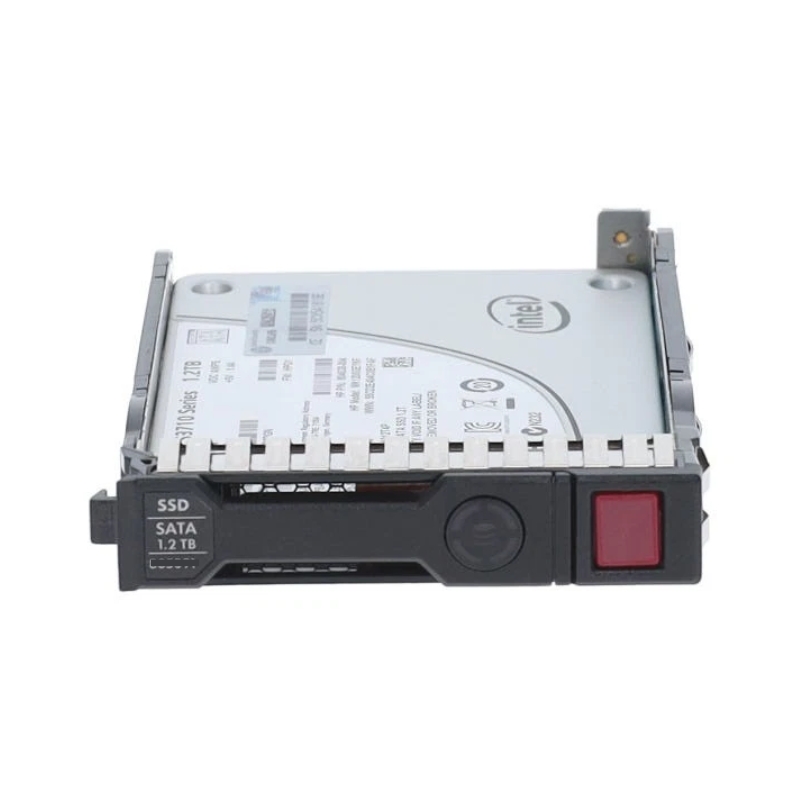


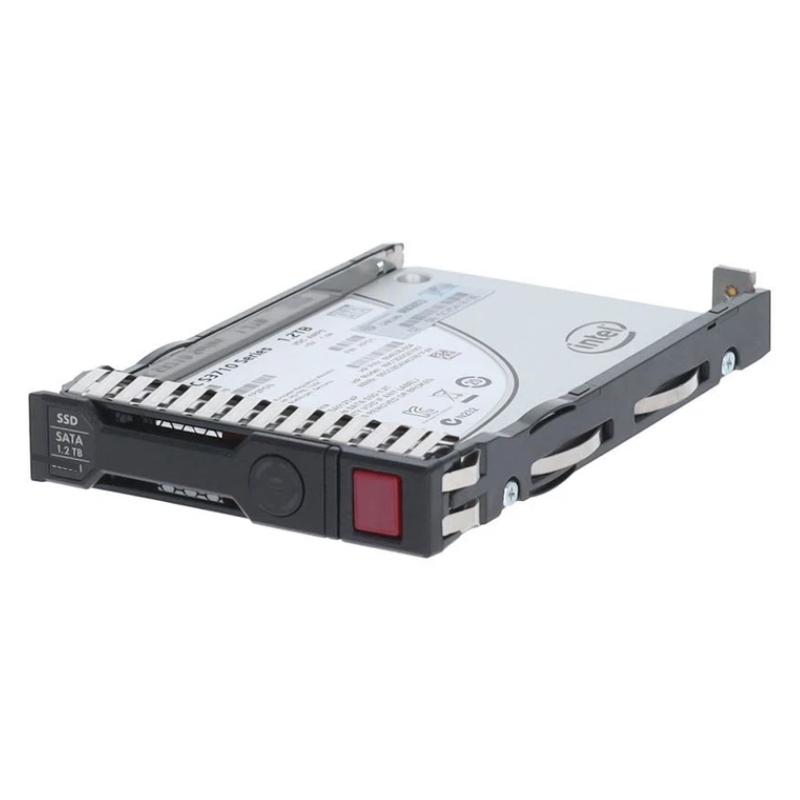
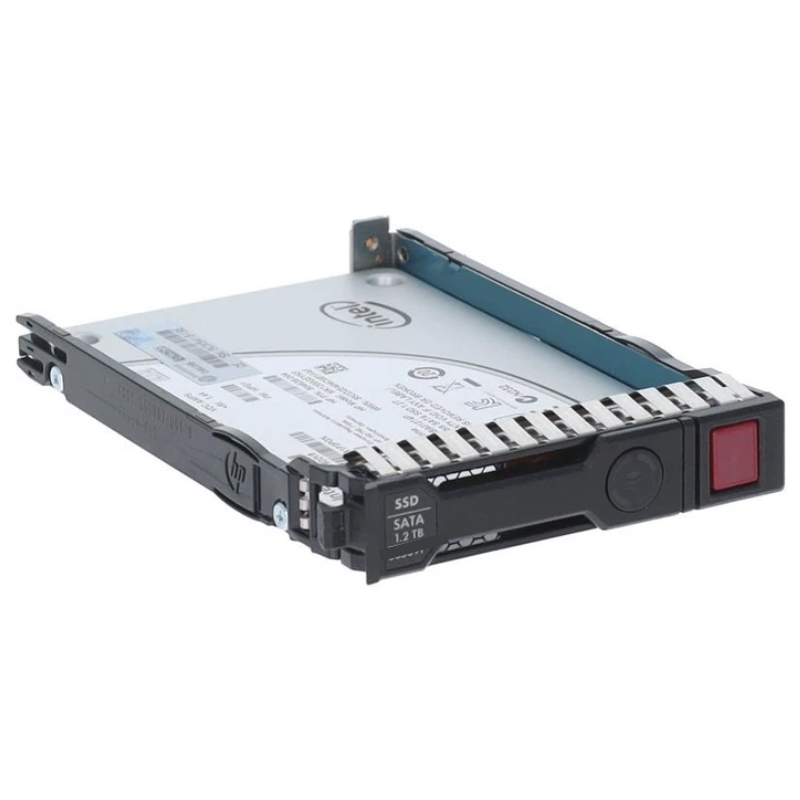
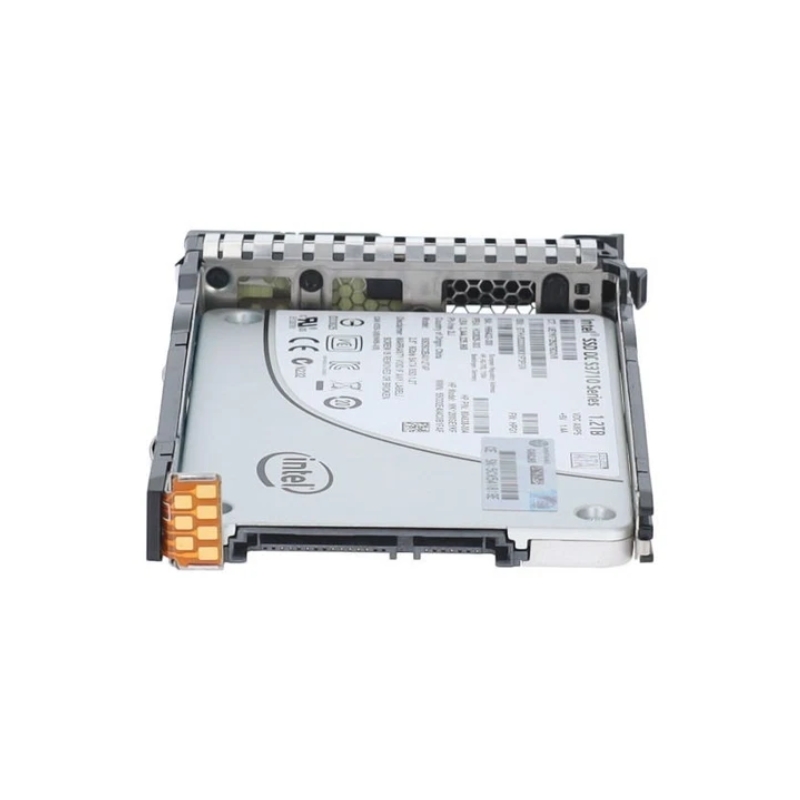
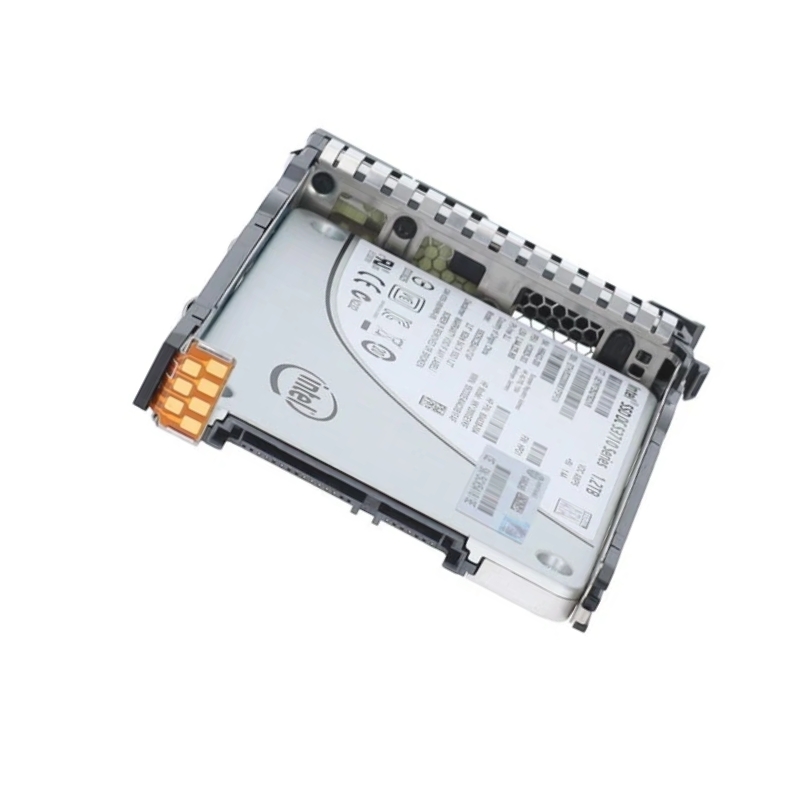
HPE 805391-001 1.2TB Solid State Drive Write Intensive 2.5 SFF SATA 6GBPS SC. Excellent Refurbished with 1 year replacement warranty.
The 805391-001 HPE 1.2TB SSD WI 2.5 SFF SATA 6GBPS SC represents a class of enterprise-focused, write-intensive solid state drives designed for HPE ProLiant server environments. This continuous category description explores the technical design, deployment scenarios, compatibility notes, performance characteristics, endurance metrics, and operational benefits of the 1.2TB write-intensive (WI) 2.5-inch SFF SATA 6Gbps SSD in the HPE SmartCarrier (SC) form. Use this content as the category description section on a product or parts page to help buyers, IT architects, and procurement teams confidently evaluate and select the right HPE SSD for database, virtualization, and mixed workload environments.
The core identity of this category is a server-oriented SATA SSD engineered to meet the demands of write-heavy workloads. The 805391-001 SKU maps to a 1.2TB capacity drive that combines a compact 2.5-inch small form factor (SFF) with a SATA 6Gbps interface, enterprise-class firmware, and an HPE SmartCarrier for hot-plug, tray-based server bays. Drives in this category are offered as HPE-certified spare parts and model assemblies, often supplied with vendor-signed firmware, power-loss protection mechanisms, and operating characteristics tuned for predictable performance in multitenant or heavily transactional data centers.
The 2.5-inch SFF form factor minimizes space within rack servers and enables higher drive density compared with 3.5-inch designs. The SATA 6Gbps interface provides broad compatibility with legacy and contemporary HPE server backplanes while delivering deterministic throughput for SATA-based RAID controllers and HBA configurations. This makes drives in the category straightforward drop-in upgrades for ProLiant systems where NVMe retrofit is either unnecessary or constrained by controller compatibility.
Labelled as WI (Write Intensive) or WI-2, drives in this category are optimized for workloads that perform frequent writes, such as logging, database transaction logs, caching layers, and virtual machine pagefile activity. Firmware tuning and NAND management algorithms prioritize consistent write throughput and endurance over peak read IOPS, which helps extend drive life under sustained write pressure. For environments with heavy sequential or sustained random writes, selecting a WI-class SSD ensures predictable service levels and reduced replacement cycles.
The SmartCarrier (SC) tray integrates the SSD with HPE server hot-plug trays, supporting tool-less insertion and removal and enabling rapid field replacement. The SC presentation ensures that carriers align with drive bay indicators, interlocks, and the server management stack, simplifying inventory control and spare management for data center technicians. SC-equipped drives also make it possible to leverage server-level monitoring and identify genuine HPE parts by serial number and digitally signed firmware identifiers.
Enterprise drives in this category commonly include power-loss protection (PLP) circuitry and capacitive energy reservoirs to flush in-flight data to non-volatile media if abrupt power events occur. PLP is critical for preserving metadata integrity and preventing write amplification or file-system corruption during unexpected outages. The combination of vendor-signed firmware and PLP delivers a level of trust required for mission-critical workloads where data integrity is non-negotiable.
SATA 6Gbps provides a theoretical peak bandwidth that is sufficient for many enterprise application profiles. While NVMe drives achieve markedly lower latencies, SATA-based 1.2TB WI SSDs deliver consistently low latency relative to spinning disks and predictable throughput for sustained writes. The category is engineered to reduce variance in response times under load—an essential attribute for databases, virtualization hosts, and I/O-bound middleware.
Endurance is expressed through drive-specific workload ratings and TBW (terabytes written) guarantees. WI-class drives are built on NAND configurations and over-provisioning strategies that increase write cycle availability for enterprise use. Endurance planning should factor in workload profile, write amplification from the filesystem and applications, and seasonal capacity needs. For example, logging systems with very high daily write volumes will exhaust endurance faster than largely read-mostly VM images.
HPE-certified parts frequently ship with digitally signed firmware that ensures the drive’s firmware image is recognized by HPE management tools and is less susceptible to unauthorized modification. This improves security posture and simplifies lifecycle management through vendor-provided firmware updates and compatibility matrices. When integrating drives into production fleets, verifying firmware versions against HPE’s support matrices reduces the risk of unexpected behavior following server firmware changes or controller upgrades.
This product category is broadly compatible with HPE ProLiant servers equipped with SATA backplanes designed for 2.5-inch SmartCarrier drives. Compatibility lists typically include Gen8, Gen9, Gen10 and later ProLiant models where SATA drives are supported; however, administrators should consult server-specific spares documentation to confirm exact fit and supported assembly part numbers. The drives are often listed as genuine HPE spare part numbers and can be referenced by multiple HPE option and assembly numbers for ordering and maintenance planning.
When deploying these SATA SSDs behind RAID controllers, ensure that the controller firmware supports the drive’s features and recognizes PLP and smart carrier attributes. Some hardware RAID controllers may present drive-specific optimizations or require drive firmware updates to fully utilize enterprise features. For mixed HDD/SSD arrays, consider RAID level selection carefully; RAID configurations that demand frequent parity updates can increase write amplification, affecting the drive’s effective endurance.
Because the category often contains drives with vendor-signed firmware, administrators should coordinate firmware updates for drives and server firmware together. HPE provides part and firmware listings in its support portals, enabling an orderly update path that preserves compatibility and minimizes downtime. Regular maintenance windows are the appropriate time to apply firmware updates, especially in clustered or replicated environments where drive behavior can influence application availability.
Write-intensive SSDs are well suited to database transaction logs, commit logs, and other append-heavy datasets that require fast, consistent write performance. By placing log volumes on WI-class drives, administrators can accelerate commit latency and shorten transaction response times without moving the entire database to higher-cost NVMe tiers.
Virtualized environments benefit from the reduced latency and improved random write throughput of write-optimized SSDs. When used for virtual machine swap files, temporary files, or high-turnover OS images, WI SSDs reduce guest idle latency and improve density by enabling more VMs per host without the performance penalty associated with spinning media.
These SSDs can serve as a cache or tier within hybrid storage architectures, accelerating hot datasets while keeping capacity cost-effective. In caching deployments, administrators should monitor write amplification and cache hit ratios to ensure that the chosen WI SSDs are delivering the expected performance improvements without rapidly consuming endurance budgets.
The 805391-001 SKU is typically referenced as an HPE spare part number and may map to alternate option numbers such as 804677-B21 or SmartBuy SKUs used for bulk procurement. Procurement teams should track both the vendor spare number and the manufacturer assembly number to ensure compatibility with warranty and support contracts. Including a small buffer of spare drives within the inventory can reduce mean time to repair (MTTR) for servers experiencing drive faults.
Modern server management software and drive SMART telemetry enable predictive failure detection. Monitoring write endurance, reallocated sectors, and other SMART attributes supports proactive replacement before service-impacting failure. Incorporating SMART alerts into the monitoring stack allows operations teams to automate spare ordering and schedule non-disruptive replacements during maintenance windows.
Enterprise SATA SSDs in this category frequently support digitally signed firmware and may include features for secure erase or cryptographic sanitization. While some SSDs support hardware encryption, the category description here focuses on the drive’s role as a reliable, enterprise-grade storage medium; if encryption is a requirement, validate hardware encryption support and key management workflows for your server platform. Drive-level secure erase functions should be used in conjunction with organizational policies to ensure proper data sanitization before decommissioning or repurposing hardware.
For organizations subject to regulatory frameworks, integrating drive-level features with system-level encryption and access controls provides layered protection. When deploying SSDs across multi-tenant systems, ensure that virtual machines and containers are isolated and that snapshot and backup policies align with recovery time objectives to avoid accidental data exposure.
To maximize the operational value of 1.2TB WI SATA SSDs in HPE servers, follow a few proven practices. First, align drive selection with workload characteristics: use WI-class SSDs for write-heavy roles and consider read-optimized drives where reads dominate. Second, manage over-provisioning and alignment at the filesystem level to reduce write amplification. Third, maintain updated firmware and coordinate updates with HPE server firmware. Fourth, implement monitoring that tracks endurance and SMART metrics and uses alerts to proactively replace drives before failures occur.
SSD temperature and thermal throttling influence performance and lifetime. When populating dense server bays, ensure adequate airflow and adhere to HPE’s thermal guidelines. Continuous high temperatures shorten NAND life and can trigger firmware-level throttling that reduces throughput. Similarly, maintain reliable power and consider server-level UPS and graceful shutdown policies to work with the drive’s power-loss protection features.
Compared to spinning disks, the 805391-001 class of SSDs offers dramatic gains in latency, throughput for random I/O, and lower operating power. Against NVMe, SATA SSDs present a lower acquisition cost per gigabyte and broad compatibility with legacy controller architectures, making them a pragmatic choice for organizations that want improved performance without a full architectural shift to NVMe fabrics. A value analysis should weigh acquisition cost, expected lifespan based on TBW, and the operational benefits of reduced latency and higher VM density.


 Contact Us
 Information
 Catalog
 Solid State Drives (SSD)
 Network Switches
 Hard Disk Drives
 HBA & Controllers
 PC & Servers
 PC & Server Memory
 CPU & Processors
 Network Routers
 Power Supplies
 Tape Drives & Libraries
 Network Devices
 Computer & Network Cables