(7% discount is applied at checkout)
Cart is empty
Your go-to destination for cutting-edge server products
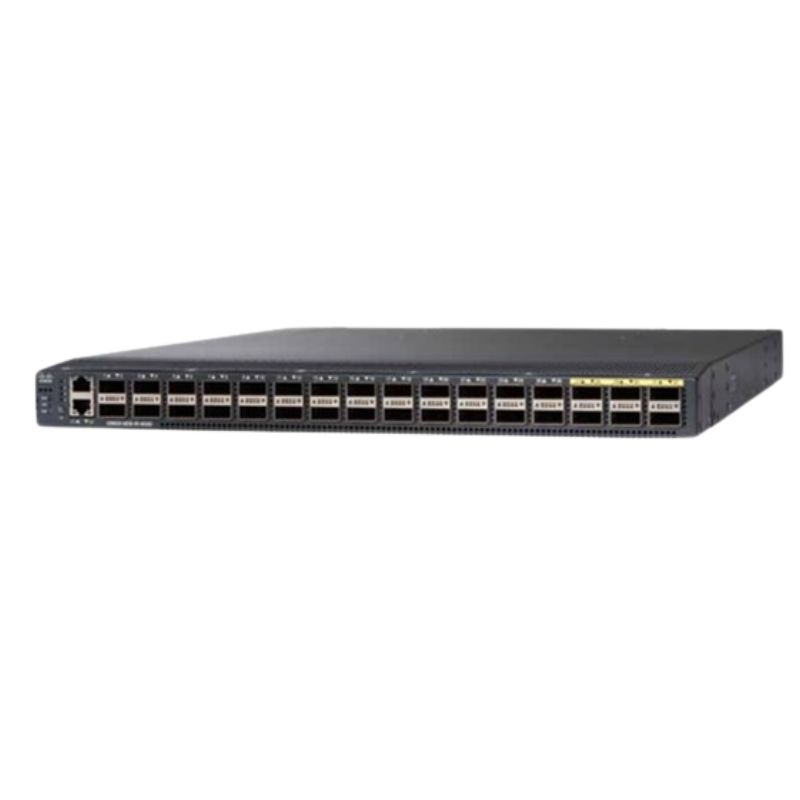


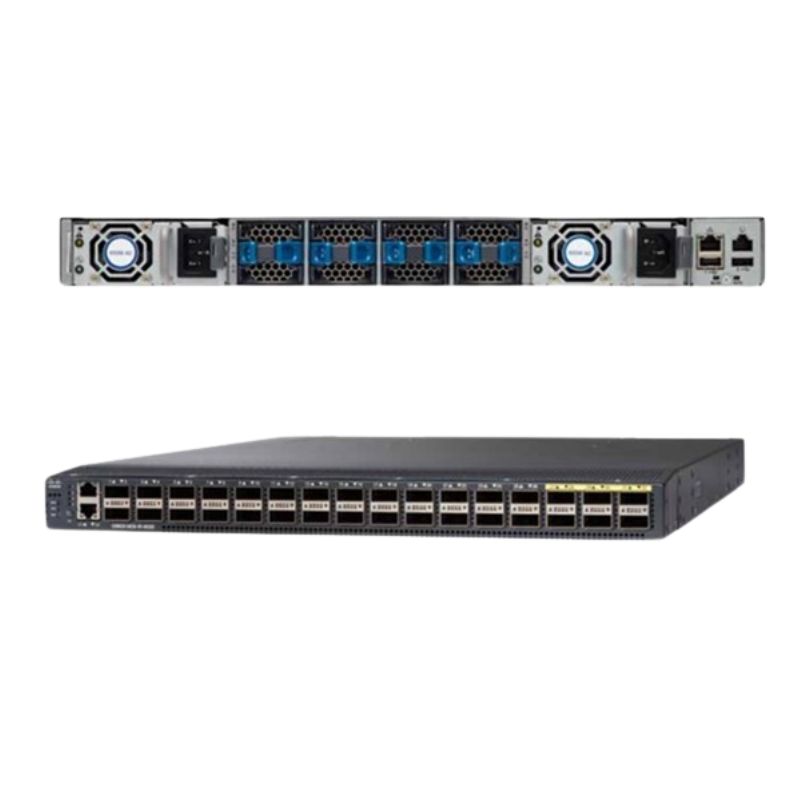
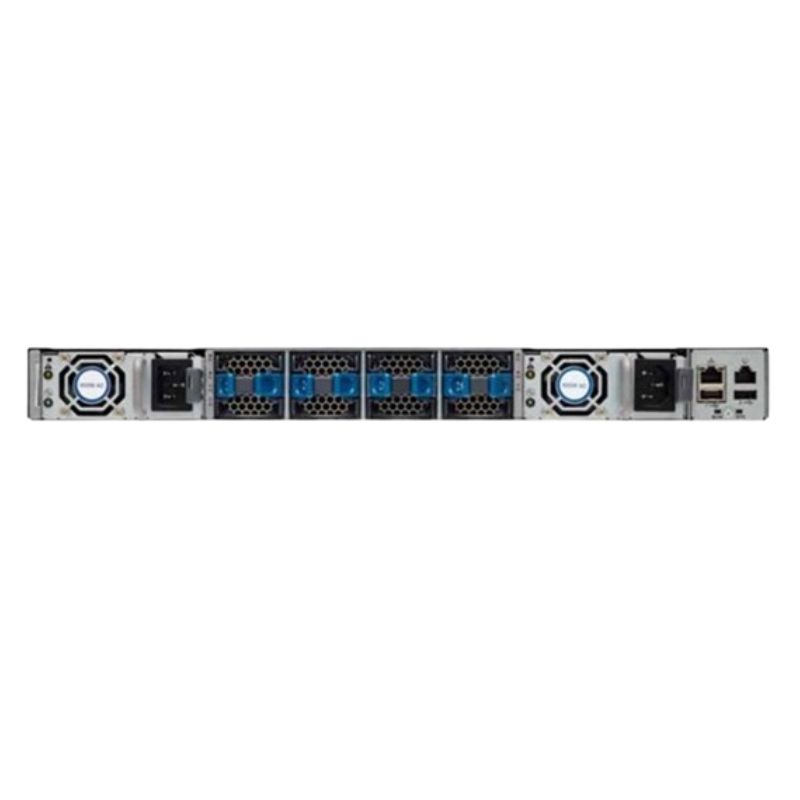
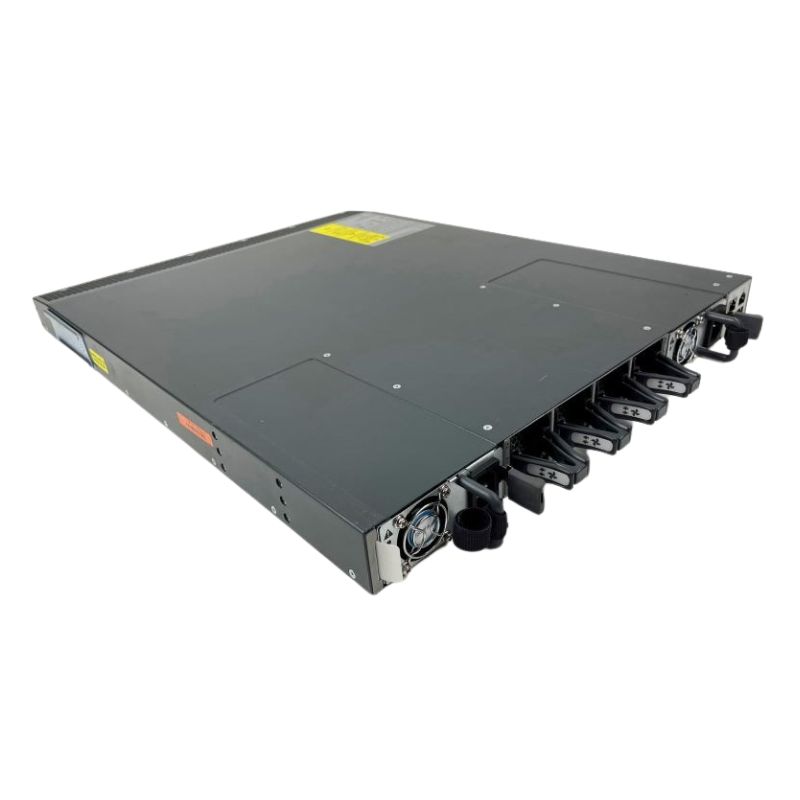
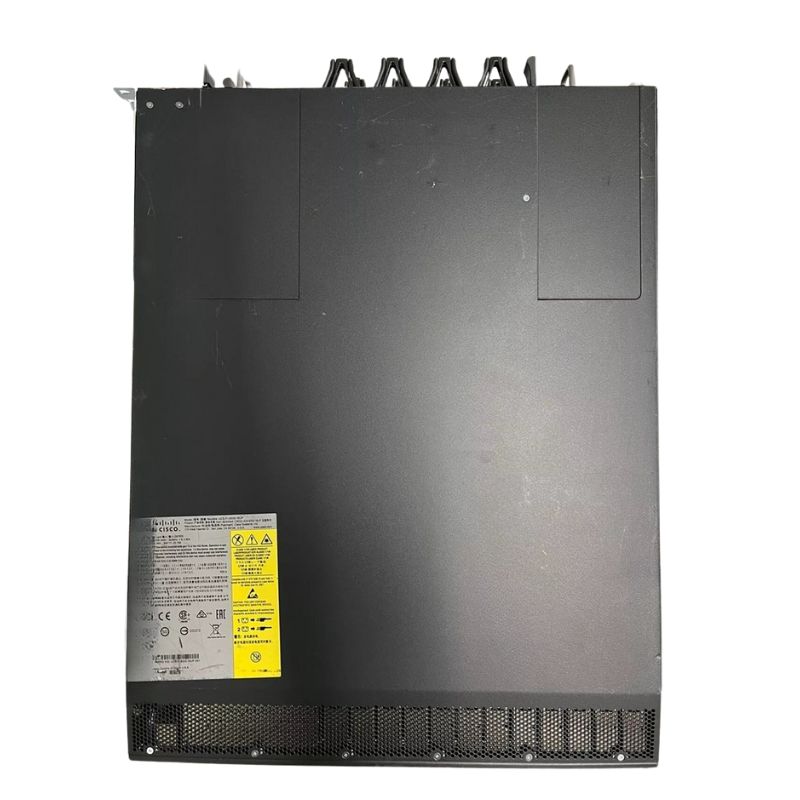
Cisco UCS-FI-6332-16UP 40 Ports Switch Fabric Interconnect. Factory-Sealed New in Original Box (FSB) with 1 year replacement warranty
| SKU/MPN | Warranty | Price | Condition | You save |
|---|---|---|---|---|
| UCS-FI-6332-16UP | 1 Year Warranty | $228.00 | Excellent Refurbished | You save: $79.80 (26%) |
| UCS-FI-6332-16UP | 1 Year Warranty | $2,690.00 | Factory-Sealed New Retail in Original Box (FSB) | You save: $941.50 (26%) |
The Cisco UCS-FI-6332-16UP Fabric Interconnect is a high-performance 40-port data center switch engineered for unified computing environments. Designed for scalability, reliability, and low-latency networking, this rack-mountable fabric interconnect delivers seamless connectivity for modern enterprise and cloud infrastructures.
The UCS 6332-16UP is built on a non-blocking, low-latency switching architecture, ensuring consistent performance across all connected devices. Its design is focused on eliminating bottlenecks and providing a deterministic network environment for both virtualized and bare-metal workloads.
The "40-Port" designation encompasses a versatile array of connectivity options, strategically allocated to serve distinct purposes within the UCS domain.
16 x Unified Ports (16UP): These are the hallmark of flexibility. Each of these 16 ports can be individually configured as either 10 Gigabit Ethernet (FCoE-capable) or 8/16/32 Gigabit Fibre Channel. This unified fabric capability allows administrators to dynamically allocate network and SAN resources without physical rewiring, adapting to changing workload requirements.
8 x 10/25 Gigabit Ethernet Ports: Dedicated high-bandwidth ports for server-facing (southbound) connectivity, typically used for connecting to UCS I/O Modules (IOMs) in blade chassis or directly to C-Series rack servers via fabric extenders.
6 x 1/10 Gigabit Ethernet Ports: Provide flexible connectivity for management, appliance ports, or additional server links.
2 x 40/100 Gigabit Ethernet QSFP28 Uplink Ports: High-density northbound connectivity for aggregation-layer switches, core network, or storage networks, supporting breakout options for additional 10/25 GbE connections.
8 x 1/10 Gigabit Ethernet Uplink Ports: Additional northbound ports for connecting to existing LAN/SAN core switches.
The FI-6332 delivers a massive aggregate switching capacity of over 2 Tbps, with a packet forwarding rate in the range of billions of packets per second (Bpps). This ensures that even under full load across all ports, the fabric interconnect operates without contention, maintaining low latency for sensitive applications.
Cisco has engineered the 6332 with carrier-grade reliability. Key features include hot-swappable, redundant, and field-replaceable power supplies and fans to ensure continuous operation. The fabric interconnect operates in an active-active redundant pair configuration, providing hitless failover for all managed servers and maintaining stateful connections during a hardware or software fault.
A fundamental differentiator of the UCS Fabric Interconnect is its dual-mode operational capability, allowing it to adapt to different network design philosophies.
This is the default and most commonly deployed mode. In End-Host mode, the Fabric Interconnect presents itself as a set of virtual interface cards (vNICs and vHBAs) to the upstream network switches. It behaves like a sophisticated NIC, not a switch, from the perspective of the core network.
Eliminates Spanning Tree Protocol (STP): By using a pinning matrix to upstream switches, it removes loop-related issues and enables full utilization of all uplinks.
Enhanced Security and Stability: Servers within the UCS domain are isolated from external network changes, broadcast storms, or misconfigurations. MAC address learning occurs only on the server-facing ports.
Simplified Management: The upstream network sees only the Fabric Interconnect's uplink MAC addresses, drastically reducing the number of MAC addresses exposed to the core.
In this mode, the Fabric Interconnect operates as a traditional Layer 2 switch, participating in spanning tree and learning MAC addresses on all ports. This mode is typically used for specific use cases like migrating legacy equipment into UCS or when integrating with certain storage arrays, but it forgoes some of the isolation and simplification benefits of End-Host mode.
The unified ports are perhaps the most powerful feature of the UCS 6332-16UP, enabling true convergence of LAN and SAN traffic over a single set of cables and adapters.
The Fabric Interconnect acts as a Fibre Channel Forwarder (FCF), a critical node in an FCoE network. It terminates the FCoE encapsulation from servers, stripping off the Ethernet headers and injecting native Fibre Channel frames into the SAN via its Fibre Channel uplinks (or unified ports configured for FC). This allows servers with converged network adapters (CNAs) to access both IP networks and Fibre Channel storage over a single 10 GbE link, reducing adapter count, cabling, and switch ports by up to 50%.
When unified ports are configured in FC mode, the UCS 6332 functions as a full-featured, standards-compliant Fibre Channel switch. It can connect directly to FC storage arrays or to an enterprise SAN fabric, supporting key features like NPIV, VSANs, and trunking. This flexibility makes it an ideal platform for consolidating server-side FC connectivity.
For security and traffic isolation, the FC switching functionality supports VSANs. This allows a single physical FC infrastructure to be partitioned into multiple logical SANs, isolating traffic between different application tiers or tenant groups, all managed from within UCS Manager.
The hardware capabilities of the UCS 6332 are fully orchestrated by Cisco UCS Manager (UCSM), embedded management software that runs on the fabric interconnects themselves. UCSM provides a single pane of glass for the entire UCS domain.
This is the transformative concept enabled by the Fabric Interconnect. A service profile is a software container that defines everything about a server: its identity (UUID, MAC addresses, WWNs), firmware versions, BIOS settings, boot policy, and network connectivity (vNICs and vHBAs with specific QoS and VLAN settings).
Rapid Deployment & Repurposing: A service profile can be associated with any physical server in the domain in minutes, making it operational. Moving it to another server is as simple as disassociating and reassociating, enabling maintenance, upgrades, or workload balancing with zero manual reconfiguration.
Consistency and Compliance: Ensures every server is configured identically according to policy, eliminating configuration drift and human error.
Service profiles are typically created from templates—initial, updating, or expert—further accelerating the rollout of dozens or hundreds of servers with consistent, repeatable configurations. Changes to a template can be pushed to all servers derived from it, ensuring fleet-wide policy updates.
UCS Manager exposes XML API for integration with higher-level orchestration and cloud management platforms.
The UCS 6332 can be managed through Cisco's SaaS-based Intersight platform, which provides cloud-based analytics, proactive support, and simplified lifecycle management across distributed UCS domains, reducing the need for on-premises management infrastructure.
Through its open APIs, UCS Manager integrates with platforms like VMware vCenter, Microsoft System Center, Red Hat Ansible, and OpenStack, allowing compute provisioning to be part of automated workflow and infrastructure-as-code practices.
The versatility of the UCS 6332-16UP makes it suitable for a wide range of data center applications.
The most common deployment is as the foundation for a large, virtualized private cloud. A pair of 6332s unifies connectivity for a pool of UCS B-Series blades and/or C-Series rack servers, providing a consistent, policy-driven network and storage fabric for hundreds of VMware vSphere, Microsoft Hyper-V, or Linux KVM hosts.
For bare-metal or low-latency virtualized workloads like Oracle RAC, SAP HANA, or Microsoft SQL Server, the deterministic performance, low latency, and high-bandwidth options (25/40/100 GbE) of the 6332 provide the necessary infrastructure. The ability to dedicate unified ports for high-speed Fibre Channel storage access is critical for these I/O-intensive applications.
UCS Manager with the 6332 supports extended clusters and multi-site configurations. Storage replication coupled with network and service profile portability enables sophisticated active-active or active-standby disaster recovery solutions, allowing entire server personalities to be moved between geographically separate data centers managed by the same UCS Manager instance.
The UCS 6332-16UP sits in a balanced position. It offers more unified port density and higher-speed uplinks (100GbE) compared to the 6324, making it suitable for larger, more storage-intensive deployments. Compared to the higher-end 6454, the 6332 provides a cost-optimized solution for environments that may not require the absolute maximum port count or the additional 40/100 GbE server-facing ports of the 6454.


 Contact Us
 Information
 Catalog
 Solid State Drives (SSD)
 Network Switches
 Hard Disk Drives
 HBA & Controllers
 PC & Servers
 PC & Server Memory
 CPU & Processors
 Network Routers
 Power Supplies
 Tape Drives & Libraries
 Network Devices
 Computer & Network Cables