(7% discount is applied at checkout)
Cart is empty
Your go-to destination for cutting-edge server products
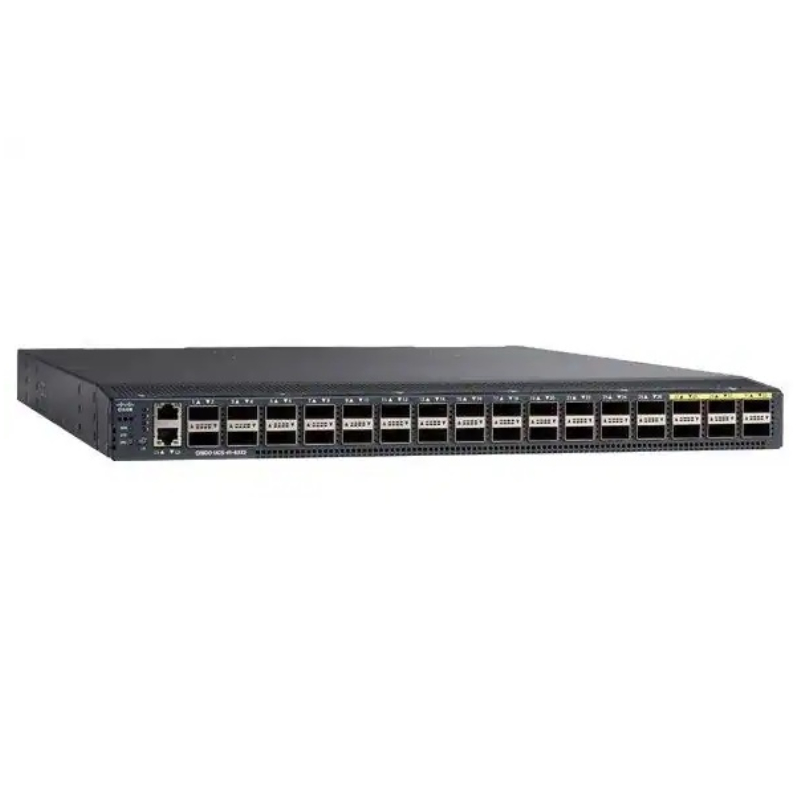


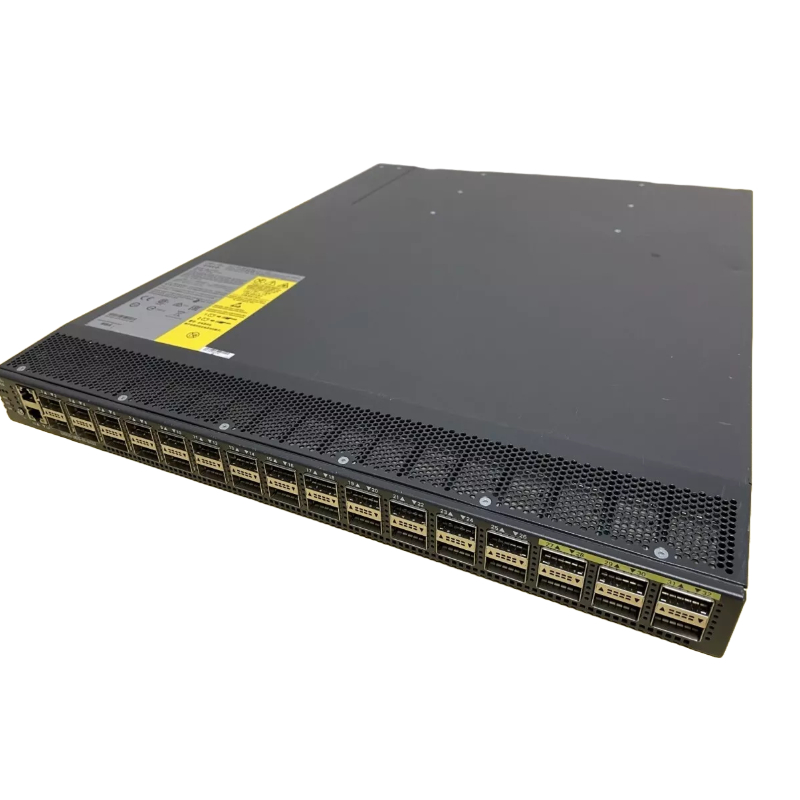
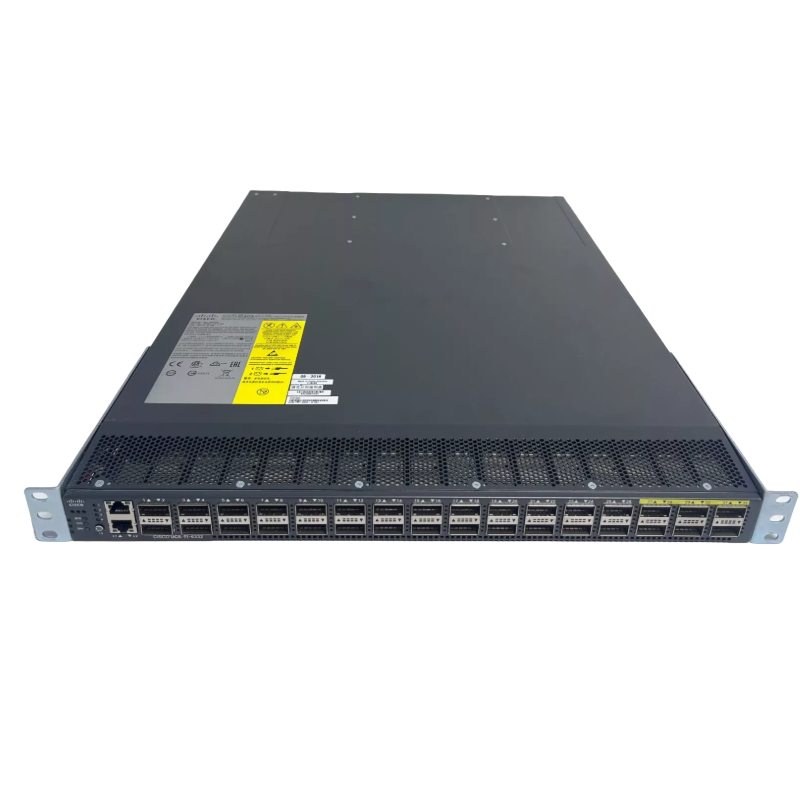
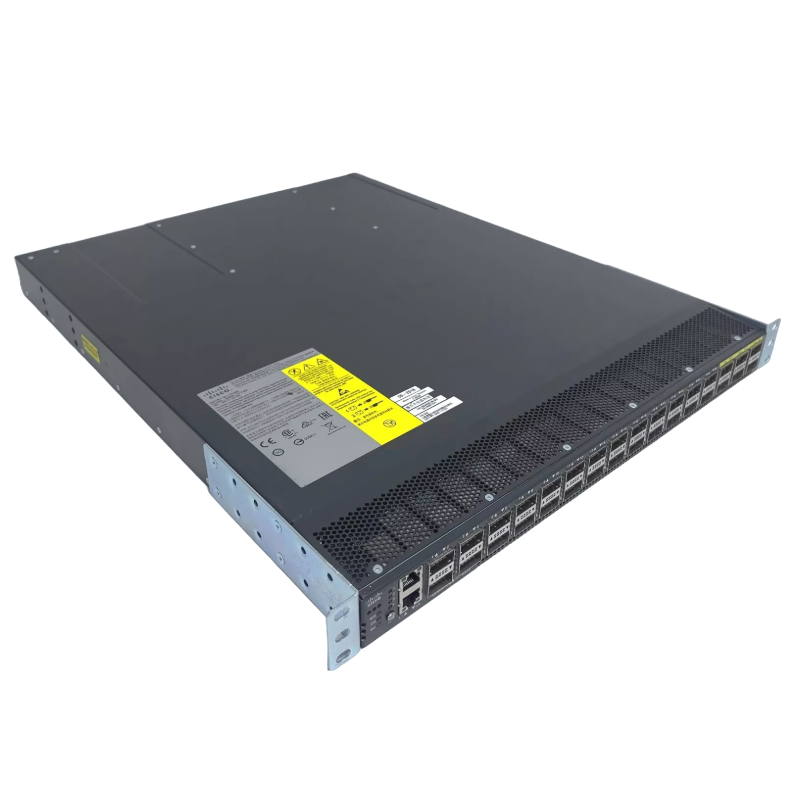
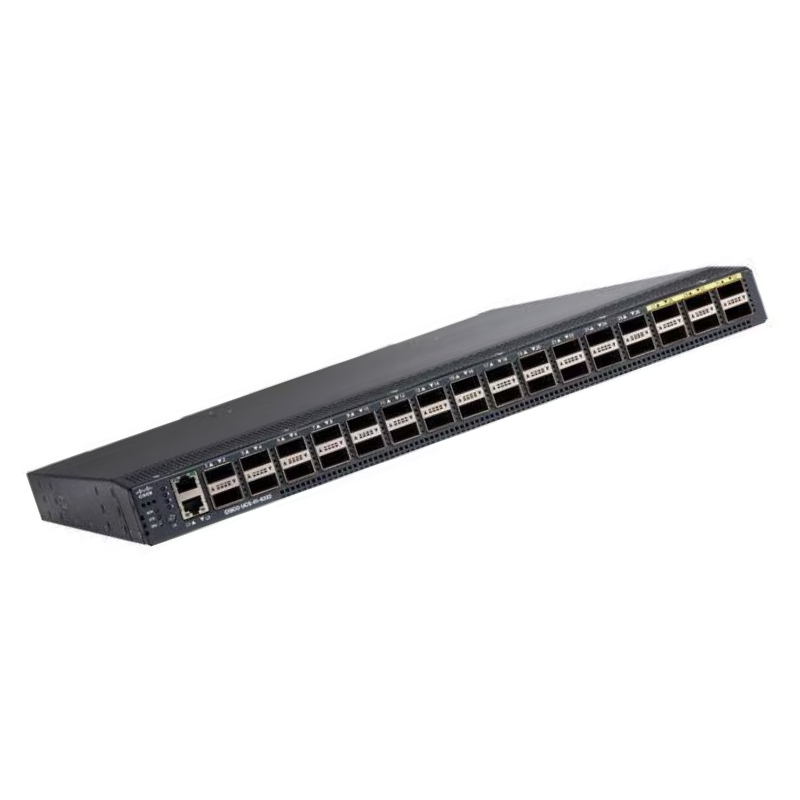
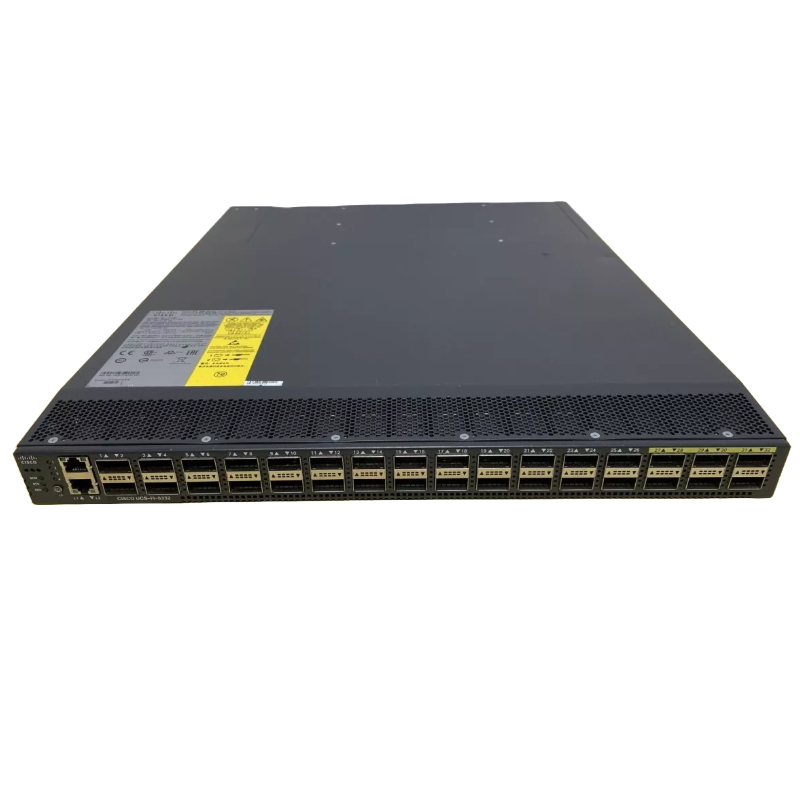
Cisco UCS-FI-6332 16 Ports Fabric Interconnect Switch. Excellent Refurbished with 1 year replacement warranty
The Cisco UCS-FI-6332 Fabric Interconnect Switch is a powerful and dependable networking solution engineered to support modern IT environments. With optimized performance and flexible connectivity, this switch helps organizations build a resilient and scalable network backbone.
Featuring a total of 16 high-performance ports, this fabric interconnect enables efficient data flow and seamless integration across multiple network components.
The Cisco UCS-FI-6332 is designed to deliver fast and reliable data transmission, ensuring smooth communication between servers, storage, and network devices.
This switch includes advanced Layer 2 and Layer 3 functionalities, enabling efficient traffic management and intelligent routing across the network.
Built-in security mechanisms help safeguard network infrastructure by protecting data integrity and preventing unauthorized access.
The scalable architecture allows organizations to grow their network seamlessly as business requirements evolve.
The Cisco UCS-FI-6332 16-Port Fabric Interconnect Switch is well-suited for a wide range of professional environments, including:
Unlike traditional standalone switches, a Fabric Interconnect is a converged system controller. It serves a dual, critical purpose: as a high-bandwidth, low-latency Fibre Channel over Ethernet (FCoE) and IP network switch, and as the central point of management for all connected UCS B-Series Blade Servers and C-Series Rack Servers. This unification eliminates the need for separate management modules for servers, networking, and storage access, collapsing multiple layers of infrastructure into a coherent, policy-driven system.
The UCS-FI-6332-16UP supports Unified Fabric, allowing LAN and SAN traffic to traverse a single set of cables and adapters. This is achieved through standards-based technologies like Data Center Bridging (DCB) for lossless Ethernet and FCoE. By consolidating network and storage I/O, organizations drastically reduce interface card counts, cable sprawl, and switch port requirements, leading to lower capital expenditure (CapEx), power consumption, and complexity.
This is the cornerstone of UCS innovation. The Fabric Interconnect's embedded UCS Manager software abstracts server identity (UUID, MAC addresses, WWNs) and configuration (firmware, BIOS settings) from the physical hardware. These abstracted identities are encapsulated into Service Profiles—portable software definitions that can be applied to any compatible server in the fabric. This enables rapid, error-free provisioning, reprovisioning for workload shifts, and consistent compliance across the data center.
Every UCS 6300 Series Fabric Interconnect, including the 6332, runs Cisco UCS Manager. This embedded, device-based management software provides a single pane of glass for the entire UCS domain—spanning multiple chassis and hundreds of servers. Management can be performed via GUI, CLI, or a robust XML API for integration with third-party tools and orchestration platforms like Cisco Intersight, VMware vCenter, or Microsoft System Center.
The UCS-FI-6332-16UP is a 2-Rack-Unit (2RU) appliance with 16 fixed 10/25-Gbps Enhanced Small Form-Factor Pluggable (SFP28) ports and one 10/100/1000 management port. It is designed to be deployed in redundant pairs for high availability. Its specifications define its capabilities and ideal use cases.
The 16 fixed SFP28 ports provide a total of 400 Gbps of full-duplex bandwidth per interconnect. These ports are universally configurable, meaning any port can carry Ethernet, FCoE, or native Fibre Channel traffic (with appropriate SFPs and licensing). This universality offers unparalleled flexibility in connecting to LAN switches (via Ethernet/FCoE) and SAN switches (via FCoE or FC uplinks). For scalability, server-facing ports connect directly to UCS Blade Server Chassis I/O Modules (IOMs) or to rack servers via Virtual Interface Cards (VICs).
With a switching capacity of 1.44 Tbps and a forwarding rate of over 1 billion packets per second (bps), the 6332 is built for high-performance workloads. Its cut-through switching architecture ensures consistently low latency, which is critical for clustered applications, high-frequency trading, and virtualized environments. The hardware is also designed for wire-speed performance regardless of whether traffic is switched at Layer 2, Layer 3, or as FCoE.
A critical best practice is deploying Fabric Interconnects in an active/active redundant pair. The two interconnects operate as a single, fault-tolerant management domain.
Connected servers, typically equipped with dual-port Cisco VICs, have active-active paths to both fabric interconnects. In the event of a link, port, or entire fabric interconnect failure, traffic and server connectivity automatically fail over to the surviving path with minimal disruption. This extends to storage connectivity, ensuring multipathed SAN access remains intact.
UCS Manager automatically synchronizes all configuration and operational state between the paired fabric interconnects. This means any change made to one is instantly replicated to its peer. This stateful synchronization simplifies operations and guarantees that the standby fabric interconnect is always ready to assume full responsibilities without configuration drift.
The Cisco UCS 6332 Fabric Interconnect is versatile, supporting multiple deployment models to align with different organizational needs, from private cloud infrastructure to specific application hosting.
The most common deployment involves connecting one or more UCS 5108 Blade Server Chassis to the fabric interconnects. Each chassis uses 2200 Series I/O Modules (IOMs) that uplink to designated ports on the 6332. In this model, all blade servers within the chassis become part of the UCS domain, managed entirely through UCS Manager on the Fabric Interconnects. This is ideal for consolidating virtualized workloads, running private clouds, or hosting large-scale databases.
In a Unified Rack deployment, standalone UCS C-Series Rack Servers are equipped with Cisco VICs and connected directly to the Fabric Interconnect ports. Once connected, these rack servers are "fabric integrated," coming under the same centralized management and gaining the benefits of service profiles and unified fabric. This model offers the blade-like management benefits while leveraging the density and flexibility of rack-mounted hardware, perfect for mixed workloads or high-performance computing (HPC) clusters.
The UCS-FI-6332 provides flexible storage access, a key consideration for infrastructure design.
By converging SAN traffic onto the Unified Fabric, FCoE simplifies cabling and adapter infrastructure. The 6332 acts as an FCoE Forwarder (FCF), bridging FCoE traffic from servers to native Fibre Channel SANs via dedicated FC uplink ports.
While less common, the Fabric Interconnect can also facilitate high-speed connectivity to directly attached scalable all-flash storage solutions designed for the UCS platform, though this typically involves specific integrated solutions.
UCS Manager provides granular QoS controls to prioritize critical traffic (like vMotion, storage, or voice) over standard data traffic. This ensures predictable performance in consolidated I/O environments.
The Fabric Interconnect supports VLANs, PVLANs, and VSANs for logical segmentation of LAN and SAN traffic. It integrates seamlessly with VMware vSphere Distributed Switch (vDS) policies, allowing network definitions in UCS Manager to be automatically applied to virtual switches.
Comprehensive security features include ACLs, fabric port security, and integration with LDAP, RADIUS, and TACACS+ for authentication. Fine-grained RBAC allows different IT teams (server, network, storage) to have controlled access to only their relevant portions of the UCS configuration.


 Contact Us
 Information
 Catalog
 Solid State Drives (SSD)
 Network Switches
 Hard Disk Drives
 HBA & Controllers
 PC & Servers
 PC & Server Memory
 CPU & Processors
 Network Routers
 Power Supplies
 Tape Drives & Libraries
 Network Devices
 Computer & Network Cables