
(7% discount is applied at checkout)
Cart is empty
Your go-to destination for cutting-edge server products
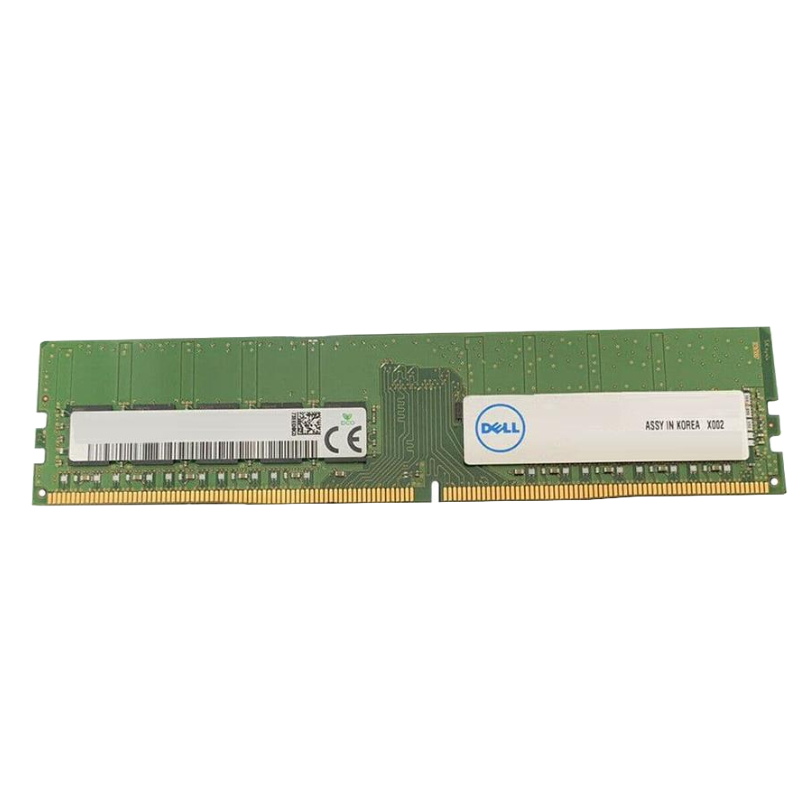
Dell AB883075 32GB PC5-38400 4800MHz ECC DDR5 SDRAM 288-Pin RAM. New Sealed in Box (NIB) - Samsung Version
High-performance 32GB DDR5 SDRAM memory module engineered for advanced computing needs Designed with dual-rank X8 architecture for optimized multitasking and responsiveness Reliable Dell component ensuring seamless compatibility with enterprise and consumer systems
The Dell AB883075 is a specific memory part designed for integration into compatible desktop computers and workstations. Understanding its core identity is the first step in evaluating its suitability for your system. The part number Dell AB883075 is the primary identifier for this memory module. This alphanumeric code is used by Dell and its partners for inventory, ordering, and compatibility verification. It signifies that this is a genuine Dell part, engineered and tested to meet the company's stringent quality and reliability standards. Using authentic Dell memory ensures optimal performance and system stability, reducing the risk of compatibility issues that can sometimes arise with third-party modules.
This module features a substantial 32GB (Gigabytes) of memory capacity on a single stick. This high-density design is ideal for modern computing tasks that are memory-intensive, such as high-resolution photo editing, video production, software development, virtual machine operation, and handling large datasets. The configuration is specified as 1x32GB, meaning it is a single module. This allows for flexible system configurations; a user can install one module to achieve 32GB of total system RAM or install multiple modules in parallel to reach 64GB, 96GB, or 128GB, depending on the motherboard's capabilities.
The Dell AB883075 utilizes DDR5 SDRAM (Double Data Rate 5 Synchronous Dynamic Random-Access Memory), the fifth generation of DDR memory technology. DDR5 introduces a architectural leap over its predecessor, DDR4, offering fundamental improvements in performance, power efficiency, and reliability. Key to this is a redesigned architecture that allows for higher data rates while maintaining system stability.
This module is built with a Dual Rank design. In memory architecture, a "rank" is a set of DRAM chips that are accessed simultaneously by the memory controller. A dual-rank module has two of these sets. This configuration can improve performance in many scenarios by allowing the memory controller to access one rank while the other is being prepared for the next access, effectively hiding some of the inherent latency of the memory chips. Compared to a single-rank module of the same capacity, a dual-rank module can offer better performance under multi-threaded workloads, making it well-suited for professional and productivity applications.
Delving into the performance metrics of the Dell AB883075 module reveals the tangible benefits of the DDR5 standard. These specifications directly impact the speed at which your processor can access data, influencing overall system responsiveness and application performance.
The module operates at a data rate of 4800 Megatransfers per second (MT/s). This metric indicates the number of data transfer operations the module can perform per second on each of its data pins. In the context of DDR (Double Data Rate) memory, data is transferred on both the rising and falling edges of the clock cycle, meaning the actual clock frequency is half of the MT/s value. Therefore, a 4800MT/s module has a 2400MHz clock speed, but because of the double data rate, it achieves 4800 million transfers per second. This high transfer rate allows for rapid movement of data between the RAM and the CPU, reducing bottlenecks in data-intensive tasks.
The designation PC5-38400 is the module's classification under the JEDEC standard. The "PC5" prefix indicates that it is a DDR5 module. The number "38400" refers to the theoretical peak bandwidth of the module in megabytes per second (MB/s). This bandwidth is calculated by multiplying the data transfer rate by the module's data width (64 bits, or 8 bytes). Thus, 4800 MT/s * 8 bytes = 38,400 MB/s. This bandwidth represents the maximum amount of data that can be transferred to and from the module under ideal conditions, a key factor for applications like gaming, scientific computing, and content creation that demand high memory throughput.
While the specific CAS Latency (CL) timings for the Dell AB883075 are defined by its JEDEC standard profile, DDR5 memory typically operates at different latencies compared to DDR4. Latency refers to the delay between a command being issued to the memory and the data being available. DDR5's higher data rates are achieved through architectural changes that can result in higher nanosecond (ns) latencies at the same clock speed, but the massive increase in bandwidth often more than compensates for this in real-world performance. The memory controller and motherboard BIOS will automatically configure the module to run at its certified JEDEC timings, ensuring stable operation out-of-the-box without manual configuration.
The physical design of the Dell AB883075 module is as critical as its logical specifications. Its form factor and electrical properties determine its compatibility with specific computer systems.
This module uses the standard 288-pin UDIMM form factor. The "288-pin" refers to the number of electrical contacts on the bottom edge of the module. UDIMM stands for "Unbuffered DIMM." Unbuffered memory modules are the most common type for consumer desktop computers and workstations. They provide a direct electrical connection between the memory controller and the DRAM chips, offering low latency and a straightforward design. This contrasts with Registered (RDIMM) or Load-Reduced (LRDIMM) modules, which use a register between the controller and DRAM to buffer the command and address signals, allowing for higher capacities at the cost of slightly increased latency—a trade-off typically reserved for servers.
The specification Non-ECC Unbuffered is a crucial detail. Non-ECC means the module does not support Error-Correcting Code. ECC is a feature that can detect and correct single-bit memory errors, which is essential for mission-critical servers and workstations where data integrity is paramount. The absence of ECC in this module makes it targeted at standard consumer and prosumer desktops where the slight cost savings and simplicity are preferred. Combined with its Unbuffered nature, this confirms its placement in the mainstream desktop and performance workstation market segment.
Determining whether the Dell AB883075 is compatible with your system is the most critical step before purchase. This module is not a universal component and is designed for specific platforms.
The Dell AB883075 32GB DDR5 UDIMM is engineered for compatibility with Dell desktop and workstation systems that feature a DDR5-compatible motherboard and a CPU with a integrated memory controller that supports DDR5. This typically includes systems built on Intel's 12th Generation (Alder Lake) and later, or AMD Ryzen 7000 series and later platforms. It is imperative to consult your system's owner's manual, service tag lookup on Dell's support website, or BIOS documentation to verify that your specific model supports this exact part number, its 32GB density, its 4800MT/s speed, and its dual-rank, unbuffered, non-ECC configuration.
As a single module (1x32GB), the Dell AB883075 will operate in single-channel mode. In this mode, the memory controller has a single 64-bit data path to the memory. For significantly enhanced performance, it is highly recommended to install memory in matching pairs. When two identical modules are installed in the correct motherboard slots, they can operate in dual-channel mode. This effectively doubles the available memory bandwidth to 76.8 GB/s (for 4800MT/s modules) by creating a 128-bit wide data path, dramatically improving performance in applications sensitive to memory bandwidth. For a system with four slots, installing four of these modules would enable a dual-channel configuration across two slots per channel, still leveraging the dual-channel architecture.
The combination of high capacity and modern DDR5 bandwidth makes the Dell AB883075 an excellent choice for a wide range of demanding applications. It is ideally suited for:
Professional Workloads: Video editors, 3D animators, and graphic designers will benefit from the 32GB capacity when working with large project files and high-resolution assets, while the high bandwidth accelerates rendering, encoding, and effects processing times.
Advanced Gaming and Streaming: Modern AAA games and streaming software are increasingly memory-hungry. A 32GB capacity helps prevent stuttering and frame rate drops, and the high bandwidth of DDR5 can improve game loading times and in-game performance, especially on CPUs that are sensitive to memory speed.
Scientific and Data Analysis: Working with large datasets in memory (in-memory processing) for statistical analysis or financial modeling is vastly faster than reading from a storage drive. The 32GB capacity and high throughput are critical for these compute-intensive tasks.
It is important to understand that DDR5 is not backward compatible with DDR4. The modules have a different pin count and a different keying notch position, preventing physical installation in an incorrect slot. The key advancements of DDR5 over DDR4 include:
Higher Bandwidth: DDR5 starts at data rates where DDR4 typically ends, with 4800MT/s being a common base speed for DDR5 compared to 3200MT/s for DDR4.
On-Die ECC: While the Dell AB883075 is a Non-ECC module at the system level, DDR5 chips incorporate a feature called On-Die ECC. This is a separate, internal error-correction mechanism that helps improve the reliability and yield of the individual DRAM chips themselves, leading to a more robust product, even in non-ECC configurations.
Burst Length and Prefetch: DDR5 doubles the burst length and prefetch architecture to 16, compared to 8 in DDR4. This allows the module to fetch more data in a single operation, improving efficiency and effective bandwidth.
Dual 32-bit: Each DDR5 DIMM is organized as two independent 32-bit data channels, as opposed to a single 64-bit channel in DDR4. This allows for more efficient handling of multiple, smaller memory access requests, reducing contention and improving overall efficiency.


 Contact Us
 Information
 Catalog
 Solid State Drives (SSD)
 Network Switches
 Hard Disk Drives
 HBA & Controllers
 PC & Servers
 PC & Server Memory
 CPU & Processors
 Network Routers
 Power Supplies
 Tape Drives & Libraries
 Network Devices
 Computer & Network Cables