(7% discount is applied at checkout)
Cart is empty
Your go-to destination for cutting-edge server products
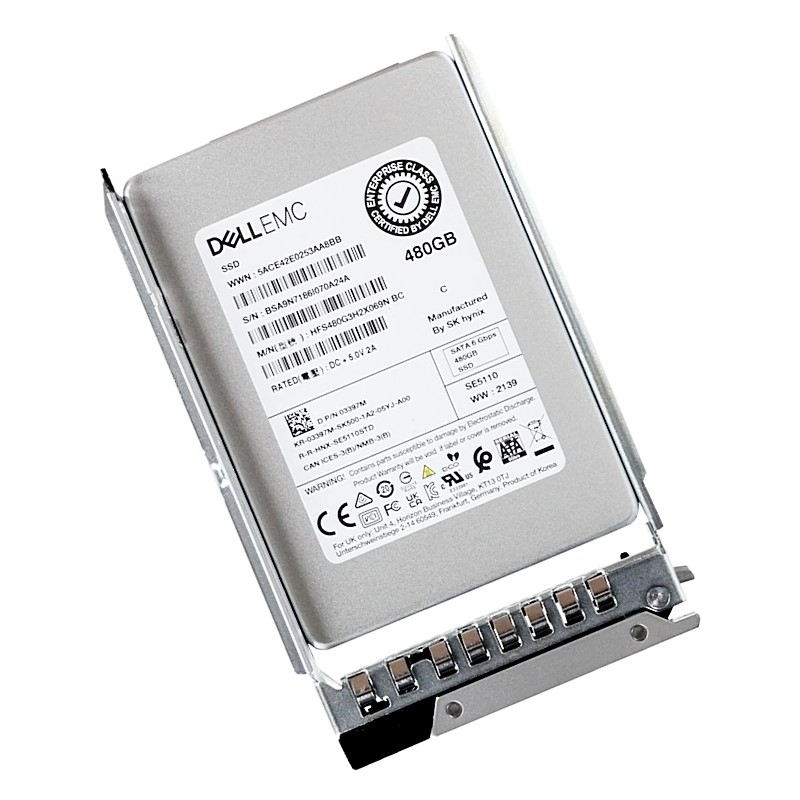


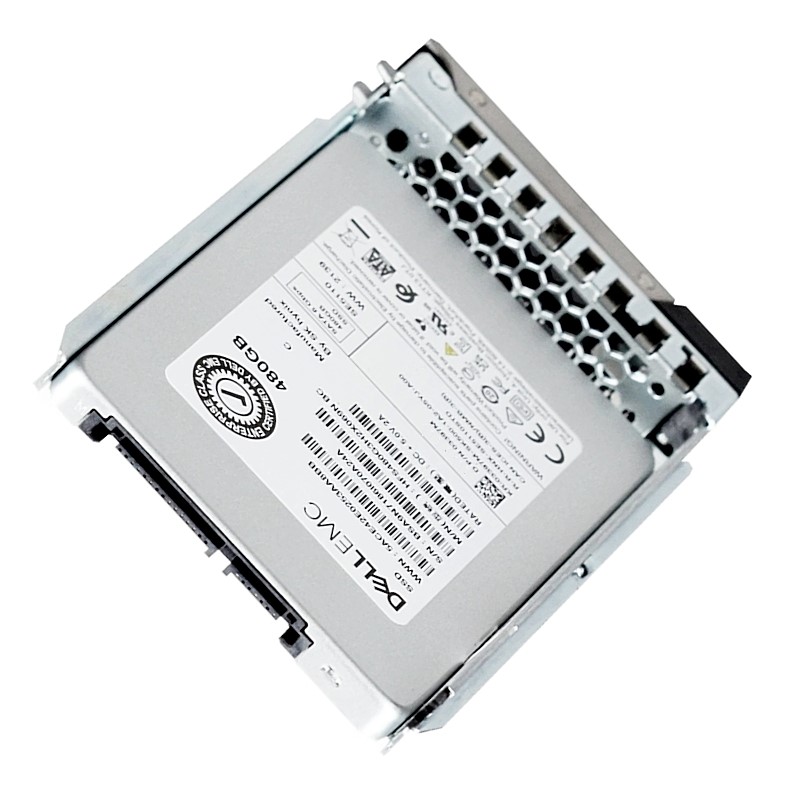
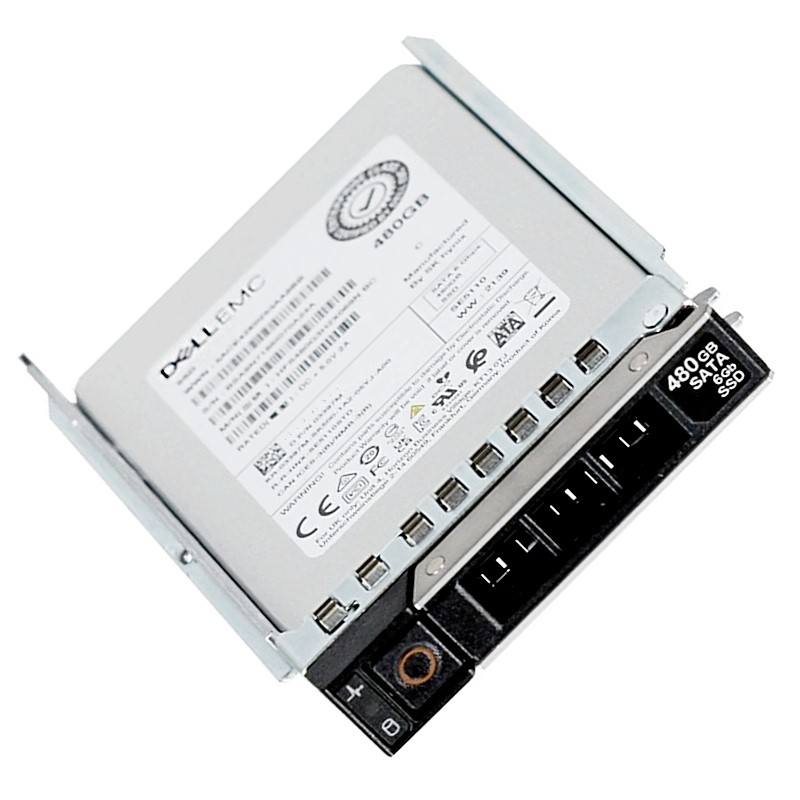
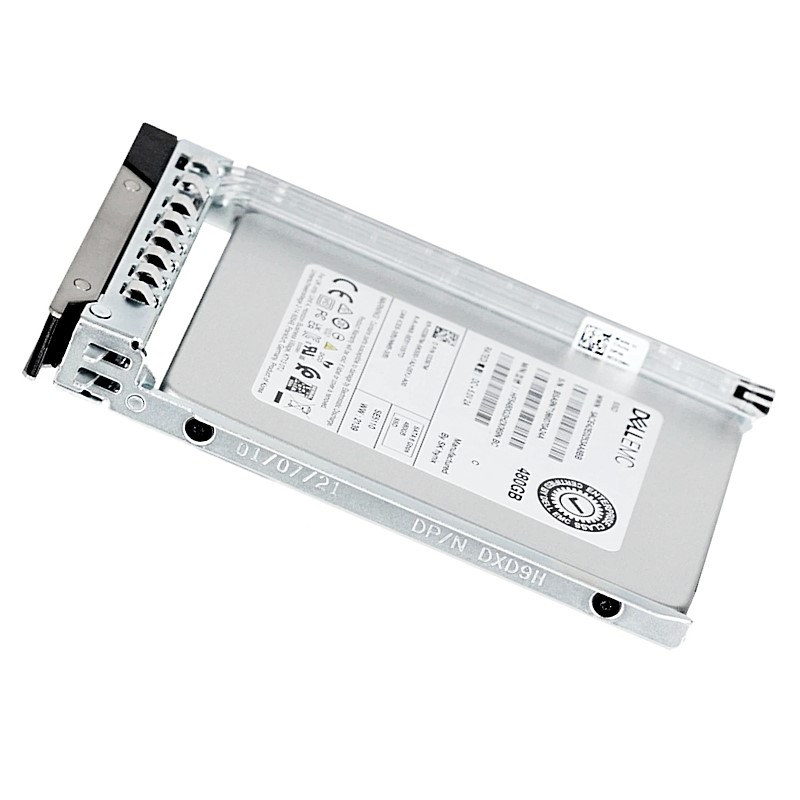
Dell 400-AXTM 480GB SATA-6GBPS Read Intensive TLC Hot Plug SSD. New Sealed in Box (NIB) with 1 Year Warranty
The Dell 400-AXTM 480GB Read Intensive TLC SATA 6Gbps 2.5-inch Hot-Swap Solid State Drive is designed to enhance server performance, reliability, and scalability. Built with advanced NAND flash technology and optimized for enterprise workloads, this SSD ensures smooth operations for data-driven environments while maintaining efficiency and longevity.
The Dell 400-AXTM SSD is validated for a wide range of Dell PowerEdge systems, ensuring seamless integration, stability, and optimized data throughput in enterprise applications.
In the demanding landscape of modern enterprise storage, the Dell 400-AXTM 480GB SATA 6Gbps Read Intensive SSD represents a pivotal advancement in balancing performance, endurance, and total cost of ownership. This 2.5-inch, hot-pluggable Solid State Drive is engineered specifically for read-centric workloads where reliability and consistent low-latency response are non-negotiable. Built with Triple-Level Cell (TLC) NAND flash and interfaced through the ubiquitous SATA 6Gbps protocol, it serves as a perfect upgrade from traditional hard disk drives (HDDs) in servers and storage arrays, offering a significant leap in I/O operations per second (IOPS) and energy efficiency without requiring a complete infrastructure overhaul.
Before delving into the architectural nuances, understanding the fundamental specifications of the Dell 400-AXTM provides a clear picture of its capabilities.
The drive offers a usable capacity of 480GB, presented in a standard 2.5-inch, 7mm height form factor. This makes it compatible with a vast array of existing server bays and storage enclosures designed for 2.5-inch drives.
Utilizing the SATA Revision 3.0 interface (often referred to as SATA 6Gbps), it provides a maximum theoretical bandwidth of 600 MB/s. This interface ensures broad compatibility with server generations, from older systems being refreshed to current platforms where SATA remains a cost-effective storage tier.
At its heart lies TLC (Triple-Level Cell) NAND. Each memory cell stores three bits of data, enabling higher storage densities and a lower cost per gigabyte compared to SLC (Single-Level Cell) and MLC (Multi-Level Cell) alternatives. Advanced wear-leveling, over-provisioning, and error correction algorithms are employed to ensure the reliability and endurance required for enterprise use.
Classified as a "Read Intensive" drive, it is optimized for workloads where write operations are less frequent. Its endurance is typically measured in Drive Writes Per Day (DWPD) over its warranty period. For this model, this translates to a specification that supports a lower daily write volume compared to Mixed Use or Write Intensive drives, perfectly aligning with its target applications.
The "Hot Plug" feature is critical for enterprise environments requiring high availability. It allows for the safe removal and insertion of the drive into a live system without powering down the server or storage array, facilitating seamless maintenance, replacement, or capacity expansion with zero downtime.
The choice of TLC NAND for the Dell 400-AXTM is a strategic one, reflecting a mature understanding of workload profiles. While early TLC technology was primarily consumer-focused, enterprise-grade TLC, as used here, is a different class. It is coupled with robust controllers, significant DRAM cache (to buffer and manage data writes), and sophisticated firmware. This combination allows it to deliver high read performance and sufficient write performance for its intended duties, all while maintaining a compelling price point that makes large-scale SSD deployment financially viable.
Despite the rise of NVMe and PCIe interfaces offering higher bandwidth, the SATA interface remains a workhorse in data centers. Its key advantages are simplicity, stability, and universal compatibility. Deploying the 400-AXTM does not require special HBAs, specific motherboard slots, or complex driver configurations. It is a drop-in performance upgrade, making it an ideal solution for tiered storage architectures where the highest-performance tier might be NVMe, and a high-capacity, performant tier is filled with reliable SATA SSDs like this one.
To maximize the lifespan and consistency of the TLC NAND, the drive employs a suite of advanced flash management techniques.
This technique ensures that write and erase cycles are distributed evenly across all the memory blocks in the drive. By preventing specific blocks from wearing out prematurely, wear leveling significantly extends the overall lifespan of the SSD.
A portion of the NAND flash's total physical capacity is reserved and is not accessible to the user. This over-provisioned space is used by the SSD controller for garbage collection, wear leveling, and bad block management. It improves write amplification factor (WAF), enhances write performance consistency, and directly contributes to the drive's endurance.
Powerful ECC algorithms, such as Low-Density Parity-Check (LDPC) codes, are used to detect and correct bit errors that can naturally occur in NAND flash. This ensures data integrity and is a cornerstone of enterprise-grade reliability.
The "Read Intensive" classification is not a limitation but a specialization. The Dell 400-AXTM 480GB SSD excels in a variety of scenarios where the workload pattern is skewed towards read operations.
Using this SSD as a boot drive for hypervisors (like VMware ESXi, Microsoft Hyper-V) or the host operating system dramatically reduces server boot times and improves the responsiveness of the management layer. The read-intensive nature is perfect for this task, as the OS is primarily read from the drive after the initial boot sequence.
In HCI platforms such as Dell VxRail or VMware vSAN, storage is distributed across nodes. This drive can serve as a capacity tier in a hybrid configuration (alongside NVMe cache drives) or as the primary storage tier in all-flash configurations for smaller deployments, providing excellent performance for virtual machines and applications.
Web servers, streaming media servers, and content delivery network (CDN) edge caches are inherently read-heavy. They serve static and dynamic content to a large number of users. The high read IOPS and low latency of the 400-AXTM ensure fast content delivery and a smooth user experience.
While the initial data load (write) can be substantial, many analytics and BI workloads involve repeatedly querying and reading large datasets. Storing these datasets on read-intensive SSDs accelerates query response times, enabling faster business insights and decision-making.
In database architectures, read replicas are used to offload query traffic from the primary database server. These replicas are almost exclusively read from, making them an ideal use case. Additionally, while the primary database file might benefit from a mixed-use SSD, transaction logs, which are sequential writes, can also be well-served, but the workload profile should be carefully assessed against the drive's DWPD.
Understanding where the 400-AXTM fits requires a clear differentiation between enterprise SSD classes.
These drives are built with endurance as the top priority, often using more durable NAND like eMLC or featuring very high over-provisioning. They are designed for workloads with a constant, heavy stream of writes, such as high-frequency transaction processing, write-logging, or video editing. They come at a premium cost.
As the name implies, these drives strike a balance between read and write performance and endurance. They are suitable for applications with a more balanced 50/50 or 70/30 read/write mix, like general-purpose virtualization, email servers, and collaborative applications. Their cost is mid-range.
This category prioritizes cost-effectiveness and high read performance for workloads with a high read-to-write ratio (e.g., 80/20 or 90/10). By optimizing for this pattern, Dell can deliver the performance benefits of all-flash storage at a significantly lower total cost of ownership (TCO) compared to the other two classes, making it the most economical entry point for server-side flash.
The 400-AXTM is not just a generic SSD; it is a Dell-branded and qualified component. This ensures seamless integration and optimal performance within Dell's extensive server and storage portfolio, including PowerEdge servers (e.g., R-series, T-series, MX7000 modular infrastructure) and PowerVault storage arrays. It is validated for firmware compatibility and can be managed through integrated tools like iDRAC (Integrated Dell Remote Access Controller) and OpenManage.
Like all enterprise-grade drives, the 400-AXTM supports the S.M.A.R.T. (Self-Monitoring, Analysis, and Reporting Technology) protocol. It tracks a wide array of health parameters, including media wearout, host write counts, power-on hours, and available spare blocks. This data is accessible through system management tools, allowing administrators to monitor drive health proactively and receive alerts for predictive failure analysis, enabling replacement before a catastrophic failure occurs.
Dell provides regular firmware updates for its drives to address security vulnerabilities, improve performance, and enhance reliability. Furthermore, the drive likely supports instant secure erase (or crypto erase) capabilities. This allows for the rapid and cryptographically secure sanitization of all data on the drive, which is crucial for decommissioning, repurposing, or returning hardware, ensuring compliance with data protection regulations.


 Contact Us
 Information
 Catalog
 Solid State Drives (SSD)
 Network Switches
 Hard Disk Drives
 HBA & Controllers
 PC & Servers
 PC & Server Memory
 CPU & Processors
 Network Routers
 Power Supplies
 Tape Drives & Libraries
 Network Devices
 Computer & Network Cables