(7% discount is applied at checkout)
Cart is empty
Your go-to destination for cutting-edge server products
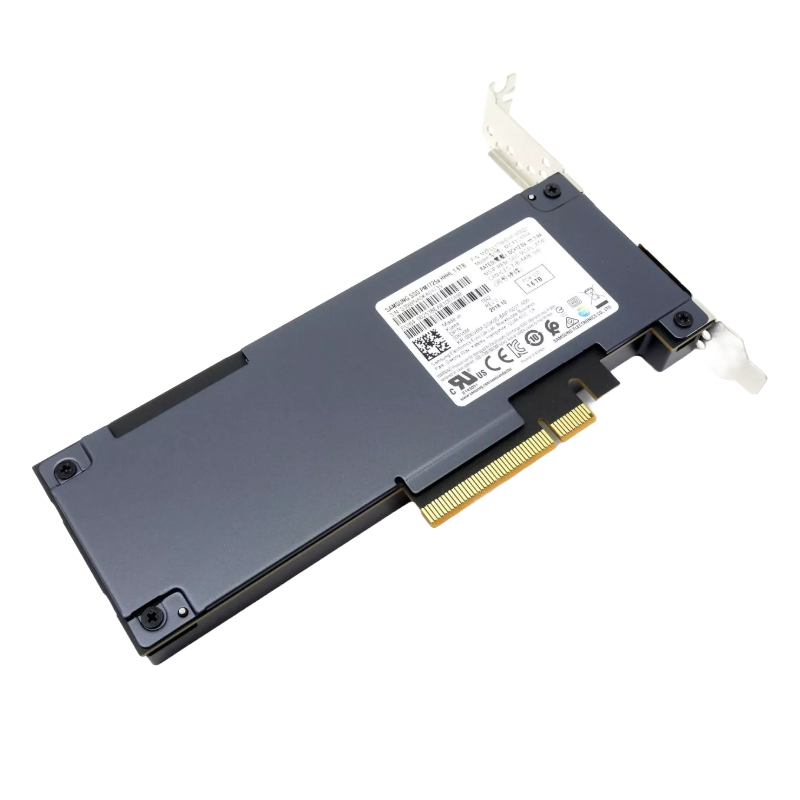


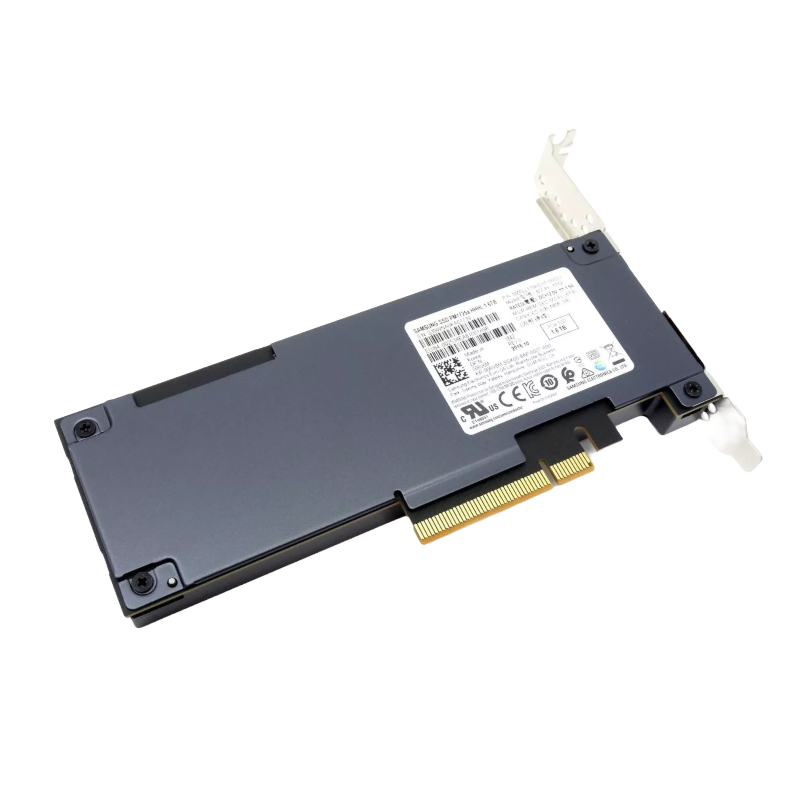
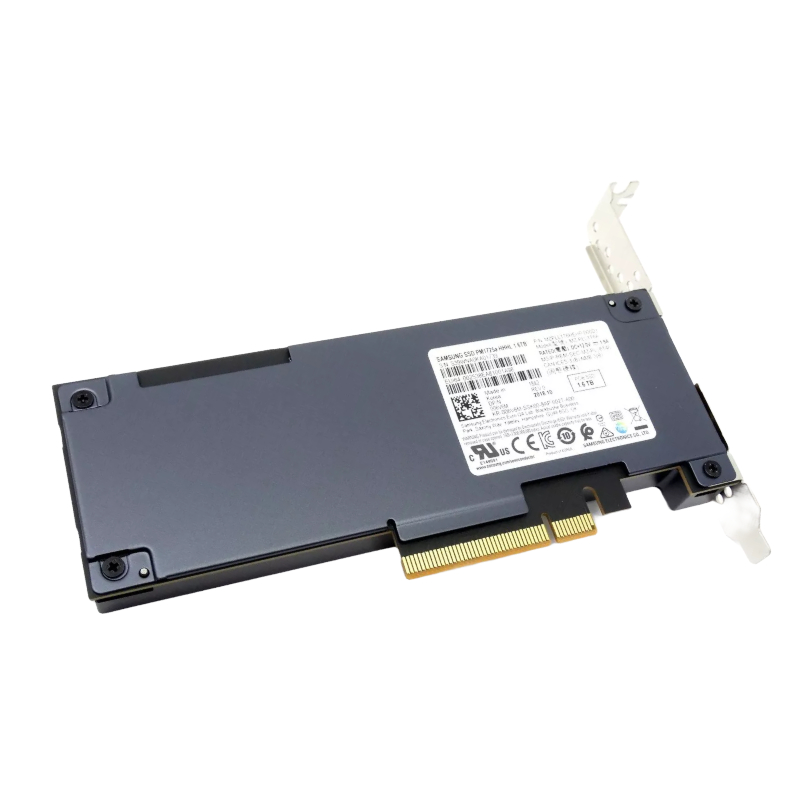
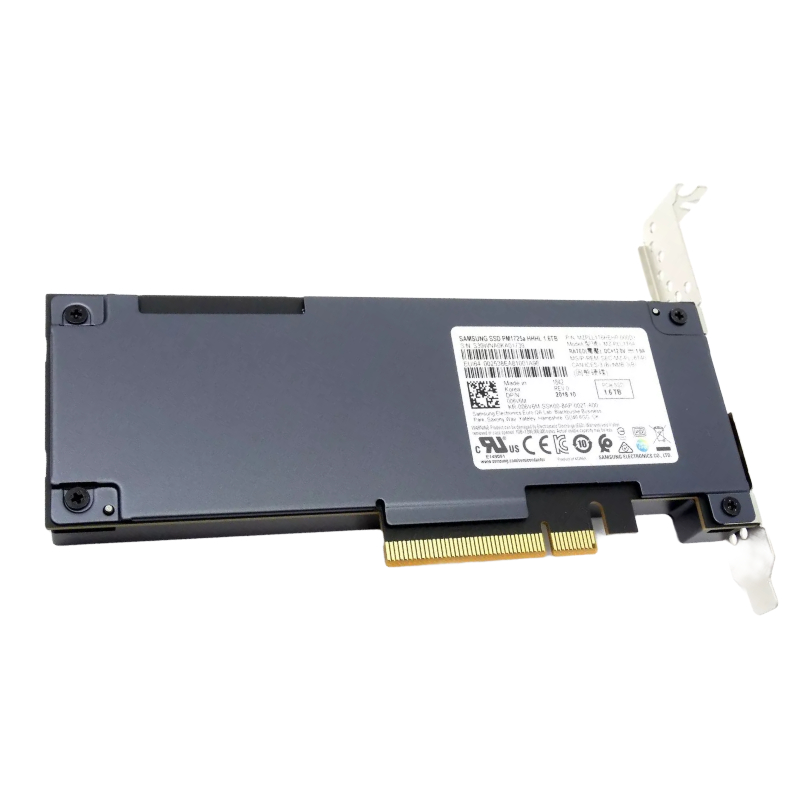
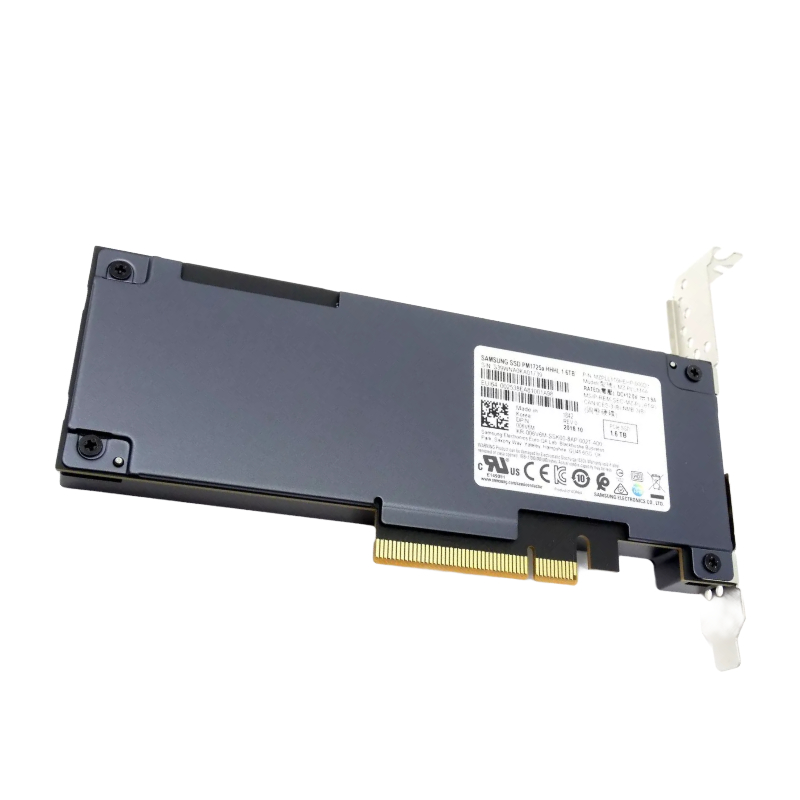
Dell TWFTD 1.6TB PCI-Express (HHHL) 3.0 X8 NVMe Enterprise Mixed-Use TLC Solid State Drive. Excellent Refurbished with 1 year replacement warranty
The Dell TWFTD 1.6TB PCI-Express (HHHL) 3.0 x8 NVMe Enterprise Mixed-Use TLC Solid State Drive represents a high-performance storage solution engineered for data center workloads and enterprise-class applications that demand consistent low latency, high throughput, and robust endurance. Designed in the half-height half-length (HHHL) PCIe form factor, this NVMe drive leverages the PCI-Express 3.0 x8 interface to deliver a balance of sequential and random performance characteristics ideal for mixed-use read/write patterns. As an enterprise-grade mixed-use drive that uses triple-level cell (TLC) NAND, the Dell TWFTD targets environments where a blend of capacity, endurance, and cost-efficiency matters — from virtualization and database acceleration to caching and tiered storage roles.
The HHHL (half-height, half-length) PCIe form factor used by the Dell TWFTD 1.6TB NVMe SSD provides a compact, server-friendly footprint that fits into standard PCIe slots while offering improved cooling and mechanical stability compared with smaller packaged designs. Utilizing PCI-Express 3.0 with eight lanes (x8) unlocks significantly higher raw bandwidth than single-lane alternatives, enabling the drive to push sustained sequential throughput while maintaining low queue depth latency for random I/O. The NVMe protocol, purpose-built for non-volatile memory on PCIe, eliminates many legacy overheads and enables deep I/O queueing and multi-core parallelism — benefits that enterprise applications exploit to achieve higher IOPS and better CPU utilization. The combination of HHHL mechanical form factor and PCIe 3.0 x8 connectivity makes the drive a flexible option for retrofitting existing server platforms, upgrading storage tiers, or deploying in new systems where throughput and density need to be balanced.
At the heart of the Dell TWFTD 1.6TB is triple-level cell (TLC) NAND flash, selected and tuned for mixed-use enterprise workloads that include a mix of read-heavy and write-heavy operations. TLC technology stores three bits per cell, allowing for higher storage density at a reduced cost per gigabyte compared to single-level or multi-level cell variants used in other product tiers. For enterprise mixed-use drives, controller firmware and NAND management are optimized to deliver improved write amplification control, adaptive over-provisioning, and sophisticated error correction. This ensures that the drive sustains predictable performance across diverse workload patterns while still offering competitive capacity. The 1.6TB capacity is particularly useful for consolidating working sets, reducing the number of drives necessary in a RAID or array configuration, and simplifying capacity planning for application architects concerned about both performance and floor-space efficiency.
When evaluating the Dell TWFTD NVMe SSD for enterprise deployments, three performance vectors dominate decision-making: IOPS (input/output operations per second), sustained sequential throughput, and latency under mixed workloads. The device is engineered to deliver high random read IOPS to accelerate transaction-oriented services such as databases, metadata lookups, and virtual machine boot storms. It also sustains strong sequential read and write throughput for streaming and bulk transfer use cases. Crucially, the drive’s firmware queuing and garbage collection strategies are tuned for mixed-use patterns to minimize performance degradation during sustained writes. Latency is a critical metric for user-facing services, and NVMe over PCIe 3.0 x8 gives the Dell TWFTD the headroom needed to maintain low tail-latencies even under high concurrency. These combined performance characteristics make the drive appropriate for tiered storage applications where persistence, speed, and consistency are required.
Because the Dell TWFTD drive uses the NVMe standard on PCIe, it integrates with a wide range of modern server motherboards, host bus adapters, and storage platforms that support NVMe devices in HHHL format. Compatibility considerations include BIOS/UEFI firmware support for NVMe boot if the drive is used as a boot device, OS-level NVMe driver availability, and platform power and thermal management settings. Administrators should validate firmware revision compatibility and consult platform vendor guidelines for optimal performance tuning, such as configuring PCIe bifurcation, ensuring appropriate lane negotiation to x8, and confirming server slot airflow for thermal stability. Firmware updates for the drive itself can improve performance, fix corner-case bugs, and add features; therefore, change control processes should include validation and rollback plans for SSD firmware updates. Integration with storage management suites and remote monitoring tools enables automated health checks and supports enterprise lifecycle management workflows.
Because the Dell TWFTD 1.6TB operates as a PCIe HHHL card, thermal management is a design consideration that directly impacts sustained performance and longevity. Adequate server airflow, strategic placement to avoid thermal hotspots, and the use of system-level airflow baffles or dedicated cooling channels help keep the drive within its optimal operating temperature range. Many enterprise systems include temperature-based throttling mechanisms in firmware that reduce performance when thermals exceed safe thresholds to protect the NAND and controller logic. For performance-sensitive installations, administrators should evaluate chassis airflow and, if necessary, deploy supplemental cooling or select adjacent components to minimize heat accumulation. Proper thermal planning prevents unnecessary performance throttling, extends usable drive life, and maintains predictable latency under heavy sustained workloads.
Virtual desktop infrastructure (VDI) and virtualized server workloads are particularly sensitive to random I/O latency and boot storms when many virtual machines start simultaneously. The Dell TWFTD 1.6TB NVMe drive reduces I/O bottlenecks for hypervisor hosts by offering rapid random reads and consistent IOPS under mixed workloads. In VDI environments, this translates to faster user login times, improved application responsiveness, and better concurrency handling during peak periods. The drive’s capacity enables larger per-node storage for local ephemeral or persistent VDI disks, potentially reducing the need for network-attached storage for some tiers and simplifying architecture. For hyperconverged or scale-out hypervisor clusters, using high-performance NVMe drives such as the Dell TWFTD as a local cache tier improves application-level SLAs and reduces network traffic to remote storage tiers during high I/O demand windows.
Mixed-Use NVMe drives like the Dell TWFTD provide a compromise between high-capacity archive-oriented SSDs and ultra-high-endurance, low-capacity data center class devices. Compared to consumer or client SSDs, enterprise mixed-use NVMe offers superior endurance, predictable performance under sustained workloads, and enterprise-class data protection features. Versus more expensive SLC or enterprise MLC drives, mixed-use TLC provides greater capacity per dollar while retaining many enterprise-grade characteristics through controller firmware and over-provisioning.


 Contact Us
 Information
 Catalog
 Solid State Drives (SSD)
 Network Switches
 Hard Disk Drives
 HBA & Controllers
 PC & Servers
 PC & Server Memory
 CPU & Processors
 Network Routers
 Power Supplies
 Tape Drives & Libraries
 Network Devices
 Computer & Network Cables