(7% discount is applied at checkout)
Cart is empty
Your go-to destination for cutting-edge server products
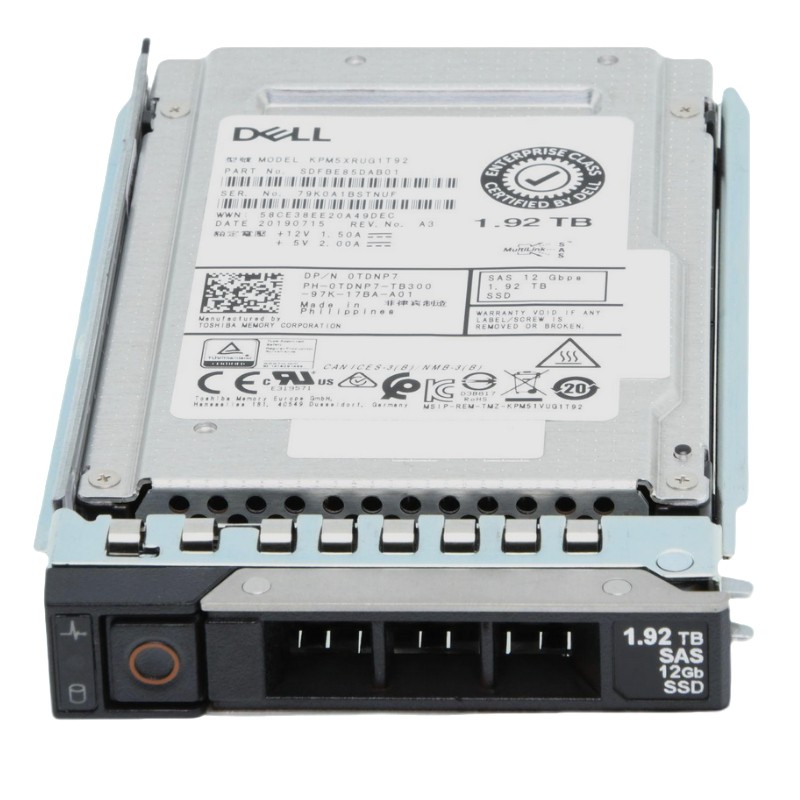


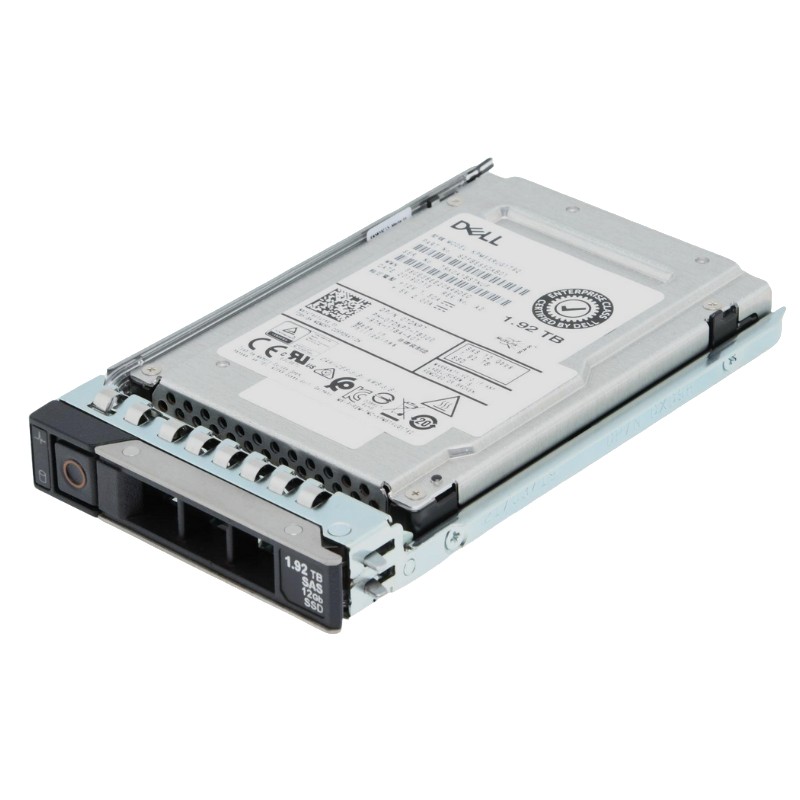
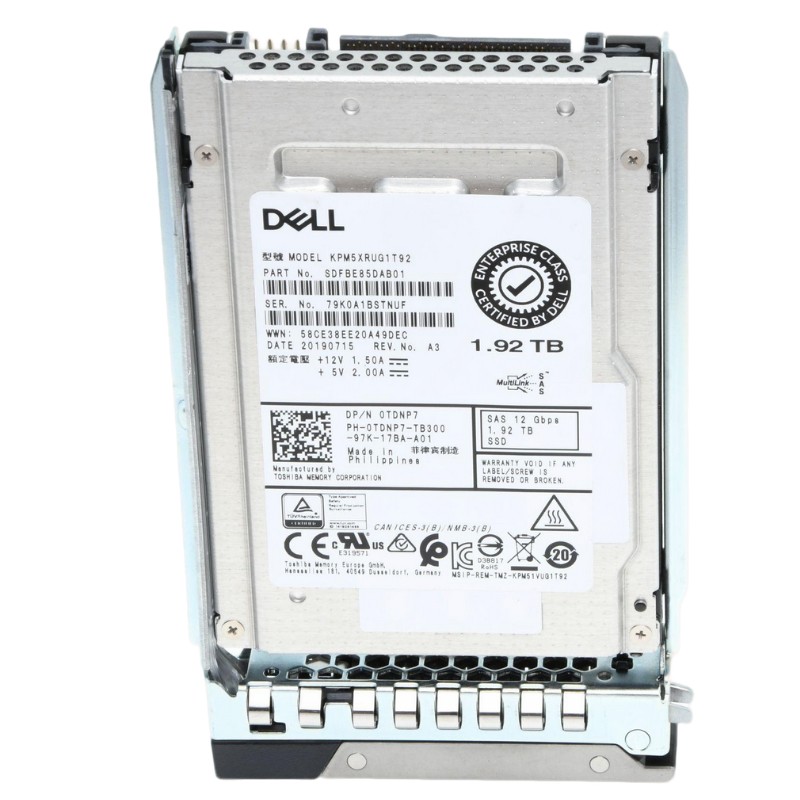
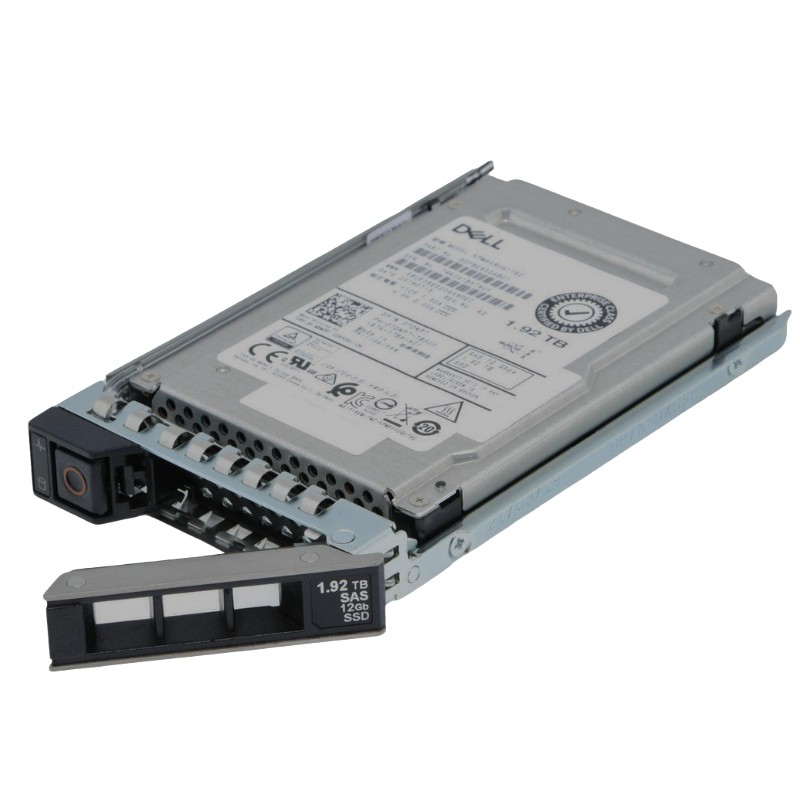
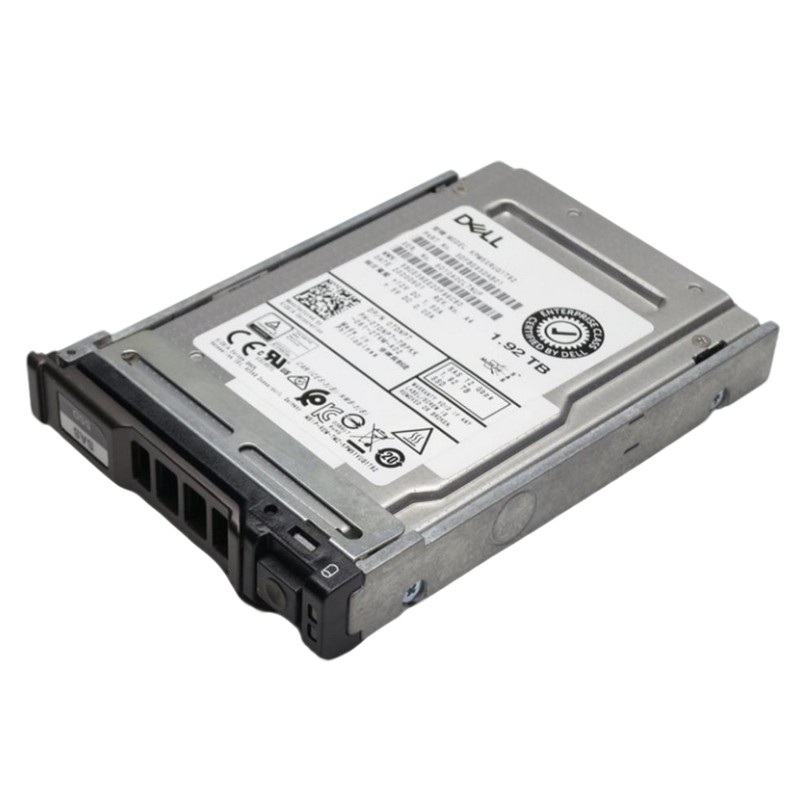
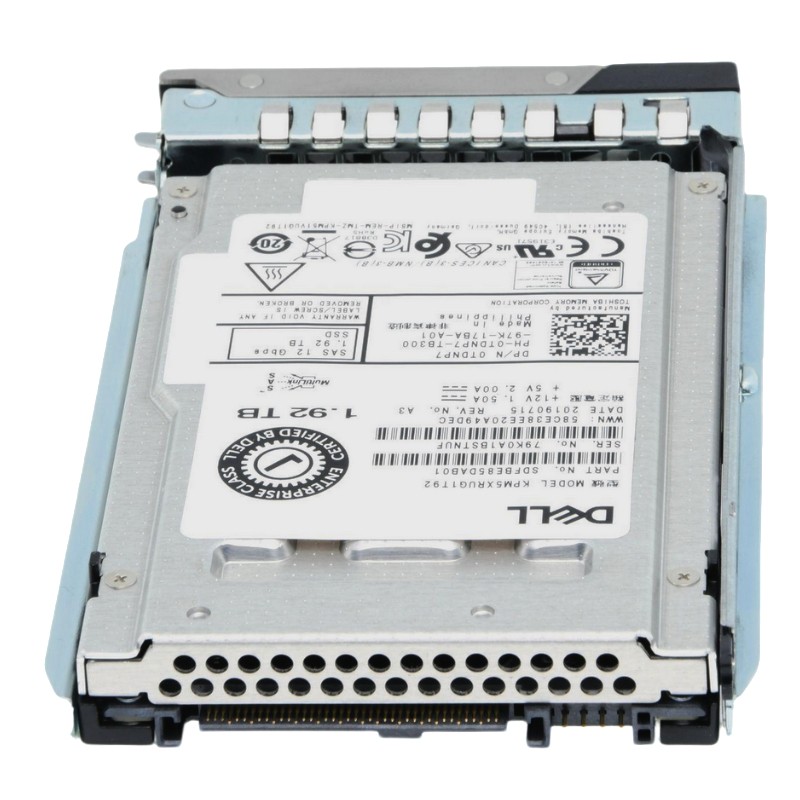
Dell 400-ANMU 1.92TB SAS-12GBPS Read Intensive MLC SSD. Excellent Refurbished with 1 Year Replacement Warranty
The Dell 400-ANMU 1.92TB Mixed-Use MLC SAS-12Gbps SFF hot-plug solid state drive is positioned squarely in the enterprise storage category where predictable performance, rugged reliability, and full-stack compatibility matter. As a 2.5-inch SFF SAS drive that supports the 12 gigabits-per-second SAS interface and leverages multi-level cell (MLC) NAND optimized for mixed-use workloads, this model is designed to fit directly into Dell PowerEdge 14G class servers and other enterprise platforms that accept SAS SFF form factors. The category spans high-performance boot and cache tiers, accelerating transactional databases, virtualization hosts, mail and collaboration servers, and mixed OLTP/OLAP workloads where a balance of throughput, latency, and endurance is required.
The category emphasizes the small form factor 2.5-inch SFF mechanical envelope that enables dense server configurations in modern rack systems. The SFF 2.5-inch size lets organizations populate more drive bays per chassis compared with larger 3.5-inch devices, making it an ideal choice for high-density PowerEdge chassis. The SAS 12Gbps interface provides a robust, enterprise-focused communication channel featuring dual-port capabilities on many SAS drives, backplane compatibility, and the enterprise-class signaling and link resiliency expected in modern data centers. The hot-plug design means drives in this category are intended to be installed or removed while the host remains online, enabling rapid replacement and minimizing downtime during maintenance or failure recovery operations.
Drives in this category use MLC NAND configured and firmware-optimized for mixed-use workloads. Mixed-use MLC is engineered for a balance of read and write performance, delivering greater endurance than read-optimized consumer-grade flash while avoiding the cost and over-provisioning associated with high-end single-level cell or enterprise-grade SLC solutions. For many datacenter applications — including virtualization, small-to-medium databases, and mixed read/write caches — mixed-use MLC delivers the sweet spot between cost-per-gigabyte and sustained operation under continuous load. The Dell 400-ANMU and its peers are tuned at the firmware level to manage wear-leveling, garbage collection, and error-correction in ways that preserve predictable latency under sustained transactional stress.
These SAS-12Gbps SFF mixed-use SSDs are engineered with enterprise performance targets in mind: low latency under sustained random I/O, consistent quality of service, strong small-block write responsiveness, and reliable throughput for sequential transfers. The category is often chosen for transactional workloads that penalize high IO latency — for example, database commit operations, virtualization platform storage for many small VMs, and metadata storage for large-scale object stores. Organizations deploying these drives see improved server response times and reduced queuing on storage controllers when replacing spinning media or read-optimized flash with a balanced mixed-use SKU.
One of the main selling points of a category like the Dell 400-ANMU is out-of-the-box fit with Dell PowerEdge 14G servers. Compatibility with OEM backplanes, sleds, and firmware ecosystems simplifies procurement and operations. Drives in this category are routinely verified by the server OEM for mechanical fit, firmware interactions with RAID controllers and HBAs, and system management reporting through tools such as Dell OpenManage Server Administrator. Broader compatibility with standard SAS controllers from established vendors means these SSDs also drop into heterogeneous datacenter environments where mixing Dell servers with storage enclosures and non-Dell components is common.
Within storage architectures, this class of SSD commonly serves as a performance tier in a tiered storage strategy. It can be used as a primary tier in all-flash configurations for mixed workloads, or as an acceleration tier in hybrid arrays where SSDs act as a cache or write buffer ahead of high-capacity spinning media. In virtualized clusters and hyperconverged infrastructures, these SSDs frequently host the most active VM images, metadata, or index stores to maximize cluster responsiveness.
Virtual desktop infrastructure and dense VM consolidation are classic use cases. The category’s low-latency characteristics provide snappy boot storms, steady interactive session responsiveness, and consistent swap/pagefile behavior under peak user concurrency. Where many small random writes dominate, mixed-use MLC SSDs help reduce the storage-related performance variability that otherwise impacts end-user experience.
Databases with mixed read/write patterns — online transaction processing, mixed analytics workloads, and application transaction logs — benefit from the predictable write performance of this category. Keeping commit logs or redo logs on these SSDs reduces commit latency and speeds transaction throughput. Database administrators commonly pair these drives with RAID controllers or NVMe caching layers to tune for durability and latency while balancing capacity requirements.
When these SSDs are used in RAID arrays, careful selection of RAID level is essential to achieve both performance and resilience. RAID controllers that support enterprise features such as battery- or flash-backed write caches, variable stripe sizes, and per-drive error reporting maximize the value of mixing these SSDs into array configurations. RAID rebuild time and degraded-mode performance are important design variables; SSD-specific rebuild strategies and spare pool management reduce the risk that a single drive rebuild will impact cluster performance.
Operationally, the category emphasizes field-replaceable units, clear hot-swap indicators, and predictable mechanical behavior. Installation is typically straightforward: slide the SFF drive into a compatible sled or backplane until the connector seats, and verify that system management reports the new device. During live replacement, follow the vendor-specific hot-swap procedure to off-line the logical disk, migrate I/O if necessary, and then remove and replace the physical device. After insertion, allow the RAID subsystem time to recognize the replacement, initialize the drive if required, and begin rebuild or replication operations as dictated by the storage topology.
Choosing the right drive from the mixed-use enterprise SSD category requires balancing capacity, endurance, interface, and total cost of ownership. Compared to read-optimized or write-optimized alternatives, mixed-use MLC offers balanced economics for environments with both substantial reads and sustained writes. Compared to NVMe devices, SAS 12Gbps SSDs provide established ecosystem compatibility and a straightforward upgrade path for systems built around SAS backplanes rather than PCIe-based NVMe slots. Selection guidance should consider expected workload mix, RAID topology, hot-spare strategy, and long-term lifecycle costs.


 Contact Us
 Information
 Catalog
 Solid State Drives (SSD)
 Network Switches
 Hard Disk Drives
 HBA & Controllers
 PC & Servers
 PC & Server Memory
 CPU & Processors
 Network Routers
 Power Supplies
 Tape Drives & Libraries
 Network Devices
 Computer & Network Cables