Your go-to destination for cutting-edge server products
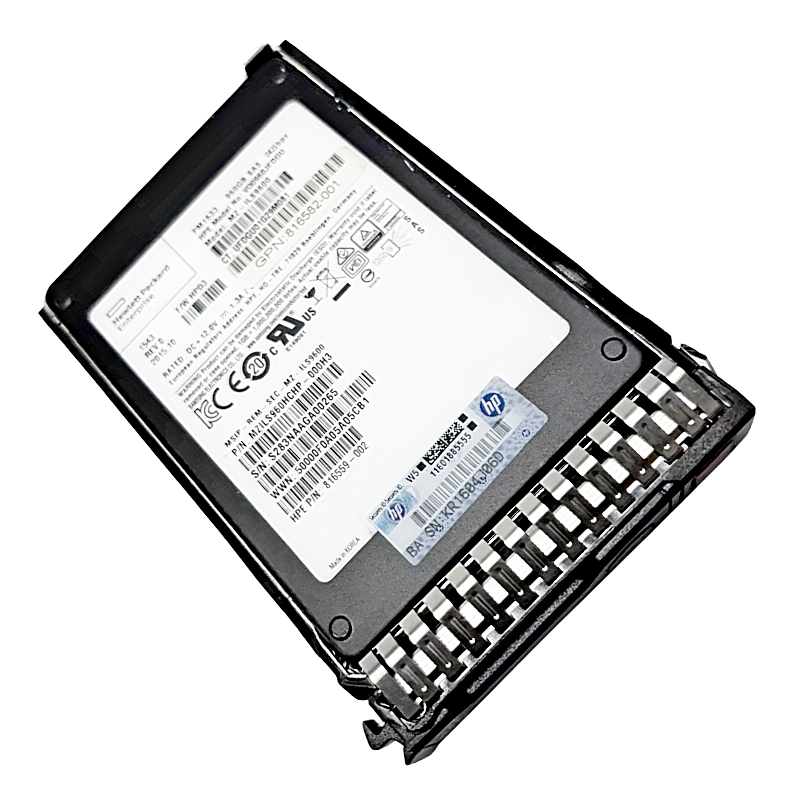
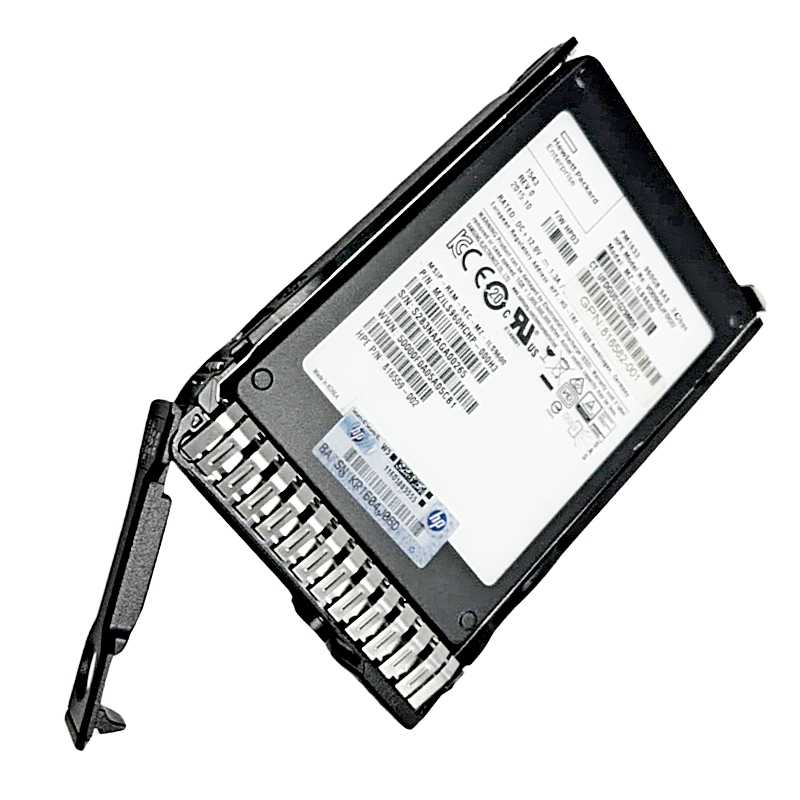
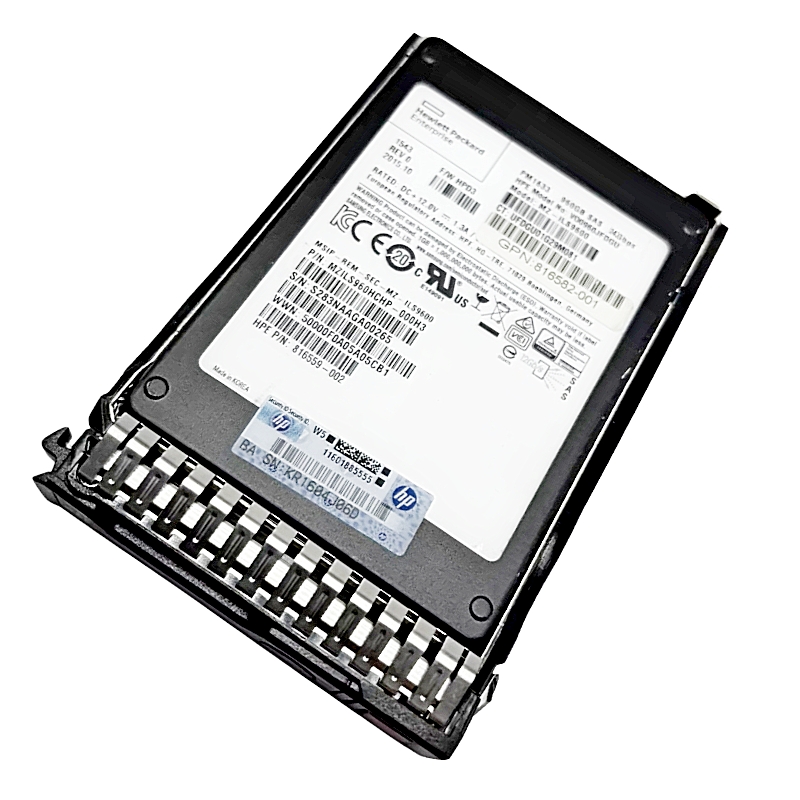
P49733-001 HPE SAS-24GBPS SSD 960GB Server DS SFF BC Read Intensive

P49733-001
* Product may have slight variations vs. image
Hover on image to enlarge

Brief Overview of P49733-001

HPE P49733-001 SAS-24GBPS SSD 960GB DS SFF BC Read Intensive. New Sealed in Box (NIB) with 3 Years Warranty

$769.50
$570.00
You save: $199.50 (26%)
Ask a question
+
Quote

Additional 7% discount at checkout

SKU/MPNP49733-001Availability✅ In StockProcessing TimeUsually ships same day ManufacturerHPE Manufacturer Warranty3 Years Warranty from Original Brand Product/Item ConditionNew Sealed in Box (NIB) ServerOrbit Replacement Warranty1 Year Warranty
Google Top Quality Store Customer Reviews
Our Advantages
Payment Options
  • — Visa, MasterCard, Discover, and Amex
  • — JCB, Diners Club, UnionPay
  • — PayPal, ACH/Bank Transfer (11% Off)
  • — Apple Pay, Amazon Pay, Google Pay
  • — Buy Now, Pay Later - Affirm, Afterpay
  • — GOV/EDU/Institutions PO's Accepted 
  • — Invoices
Delivery
  • — Deliver Anywhere
  • — Express Delivery in the USA and Worldwide
  • — Ship to -APO -FPO
  • For USA - Free Ground Shipping
  • — Worldwide - from $30
Description

 Overview of HPE P49733-001 960GB SAS Read Intensive SSD

The HPE P49733-001 960GB SAS 24G Read Intensive Solid State Drive is engineered to deliver exceptional performance, high endurance, and reliability for modern data-driven enterprises. Designed for HPE Gen10 Plus servers, this drive utilizes the cutting-edge SAS 24G interface to ensure superior data throughput and seamless scalability for evolving workloads.

General Information HPE P49733-001 960GB SAS SSD

  • Manufacturer: HPE
  • Manufacturer Part Number: P49733-001 
  • Product Type: 960GB Solid State Drive
  • Interface: SAS 24G dual port
  • Flash Memory Type: TLC (Triple-Level Cell)
  • Form Factor: 2.5-inch SFF
  • Hot Plug Support: Yes
  • Carrier Type: BC tray
  • Height: 15mm

Enhanced Storage Design and Compatibility

As part of HPE’s enterprise-grade storage lineup, this small form factor (SFF) SSD is optimized for dense server environments requiring a balance of performance, efficiency, and space utilization. Built with Multi Vendor Compatibility, it guarantees broad support across multiple configurations, making integration into existing systems effortless.

Powerful Data Transfer and Speed Capabilities

Engineered for read-intensive environments, the HPE 960GB SAS 24G SSD leverages next-generation technology to maximize system performance and reliability. With impressive read and write speeds, it supports mission-critical applications that require quick access to frequently used data.

Performance Metrics

  • Sequential Read Speed: Up to 2030 MiB/s
  • Sequential Write Speed: Up to 1280 MiB/s
  • Random Read IOPS: Up to 155,000
  • Random Write IOPS: Up to 65,000

Enterprise-Grade Reliability and Data Integrity

This read-intensive SAS SSD is built with enterprise-class endurance and fault tolerance, reducing the risk of data loss during demanding workloads. Its digitally signed firmware enhances system security by preventing unauthorized modifications, ensuring compatibility and trust across HPE Gen10 Plus infrastructures.

Key Reliability Features

  • Digitally signed firmware for improved data protection
  • Enhanced wear leveling and error correction algorithms
  • Power loss protection to secure data in transit
  • Consistent performance under sustained workloads
  • Optimized thermal management for durability

Optimized for Read-Intensive Applications

The HPE P49733-001 excels in read-intensive tasks such as database queries, virtualization, and online transaction processing (OLTP). This SSD provides a perfect balance between capacity, speed, and reliability—offering exceptional value for systems requiring rapid data retrieval and consistent uptime.

Common Use Cases

  • Data analytics and reporting platforms
  • Virtualized server environments
  • Content delivery networks
  • Enterprise backup and recovery systems
  • Cloud storage and web hosting infrastructures

Advanced Engineering and Build Quality

The drive’s TLC NAND flash architecture enables high density and low latency, while the dual-port SAS 24G interface ensures improved fault tolerance and link redundancy. This means faster, uninterrupted access to data even during maintenance or failover conditions.

Technical Advantages

  • High-bandwidth SAS 24G interface for superior throughput
  • Dual-port design for active-active connectivity
  • Durable TLC NAND for read-optimized workloads
  • Compact 2.5-inch design suitable for dense data centers
  • Supports hot-swap for uninterrupted serviceability

Energy Efficiency and Sustainability

Energy efficiency is a hallmark of the HPE 960GB SAS Read Intensive SSD. Its design reduces power consumption while maintaining excellent I/O performance. This contributes to lower operational costs and improved energy efficiency for environmentally conscious data centers.

Efficiency Highlights

  • Low active power draw for 24/7 operation
  • Reduced cooling requirements
  • Optimized for sustainable server infrastructure
  • Compliant with modern green data center standards

HPE P49733-001 960GB SAS 24G SSD Product category overview

HPE P49733-001 960GB SAS 24G read-intensive SFF (2.5") multi-vendor solid state drives represent a focused enterprise storage category tailored for mixed workload servers and read-dominant applications. Engineered for HPE Gen10 Plus platforms and compatible multi-vendor infrastructures, this family of 24 gigabit SAS SSDs combines high sustained read throughput with low latency, consistent QoS, and enterprise durability characteristics. This category targets data centers, virtualization hosts, database front-ends, caching layers, content delivery nodes, and other read-heavy environments where predictable performance and compatibility are priorities.

Key technical profile and value proposition

These SSDs are defined by a balanced specification set that emphasizes read performance while maintaining adequate endurance for read-intensive workloads. Typical characteristics customers look for in this category include:

  • Form factor: SFF 2.5-inch, suitable for dense server drive bays and blade enclosures.
  • Interface: 24Gb/s SAS (dual-port SAS often available) for enterprise reliability and multipath I/O support.
  • Capacity point: 960GB—a practical capacity that fits many cache and database index use cases while balancing cost per GB and performance.
  • Workload optimization: Read-intensive firmware and NAND management tuned to favor read throughput and stable latency.
  • Compatibility: Digitally signed/multi-vendor firmware ecosystems designed for HPE Gen10 Plus servers and validated server ecosystems.

Endurance and reliability considerations

While endurance ratings for read-intensive drives are lower than mixed-use or write-intensive classes, these drives still include enterprise-grade features:

  • TBW (terabytes written) and DWPD (drive writes per day) specified for read-optimized duty cycles.
  • Power loss protection (onboard capacitors or equivalent) to protect in-flight data and metadata structures.
  • Advanced error correction and background media management to extend device longevity and data integrity.
  • SMART monitoring, predictive failure analysis, and compatibility with HPE system management utilities for proactive maintenance.

Common use cases and workload patterns

The HPE P49733-001 960GB SAS 24G category is ideal for many read-centric enterprise scenarios. Typical deployments include:

Read-heavy databases and index stores

Databases where read queries dominate—such as OLAP systems, reporting engines, and search indexes—benefit from the high random and sequential read throughput. Using these SSDs for hot-tier storage of frequently accessed tables or index structures reduces query latency and improves overall user experience.

Caching and tiered storage layers

As a cache or front tier paired with higher-capacity HDDs or lower-cost tiers, these 960GB SAS SSDs accelerate metadata lookups and hotspot data access. They are frequently used in hybrid storage arrays, hyperconverged nodes, and storage controller caches to decrease overall read amplification on backend disks.

Virtual desktop infrastructure (VDI) and virtualization hosts

VDI read patterns—especially during boot storms and login peaks—are an excellent match for read-optimized drives. The consistent low latency and high read IOPS improve VM boot times and responsiveness for virtualized applications hosted on HPE Gen10 Plus servers.

Content delivery and media streaming

Content servers that must serve static or cached multimedia files see direct benefit from the sustained read throughput of this SSD category. Using SAS 24G links provides robust connectivity and multipath resilience for high-availability content nodes.

Compatibility and integration with HPE Gen10 Plus servers

Compatibility with HPE Gen10 Plus systems is a primary selling point for this product family. Integration details to consider:

  • Drive firmware and digital signatures that meet HPE server validation rules, ensuring the drives are recognized and supported by HPE storage controllers and management tools.
  • Support for HPE System Management and iLO monitoring for health telemetry and firmware updates.
  • Multipath SAS topology and dual-port connectivity enabling high availability when used with redundant controllers or multipath software.
  • Hot-swap capability to support in-server serviceability and minimize downtime during replacements.

Firmware management and multi-vendor considerations

Multi-vendor firmware models enable data centers that prefer heterogeneous supply chains. Important aspects:

  • Digitally signed firmware verifies authenticity and prevents tampering, which is essential in production environments.
  • Multi-vendor compatibility reduces vendor lock-in, simplifies procurement, and offers cost leverage.
  • Consistent firmware behavior across vendors reduces unpredictability in performance tuning and monitoring.

Form factor and physical integration

The SFF 2.5-inch form factor is widely used in enterprise servers and chassis. Benefits and considerations:

  • Higher drive density per chassis compared to 3.5" drives—ideal for blade and rack servers.
  • Standardized sleds and trays allow easy swapping in HPE drive bays and enclosures.
  • Thermal design: ensure adequate airflow and proper drive bay cooling to maintain performance and longevity.

Power and thermal profile

When deploying multiple 24Gb/s SAS SSDs, plan for cumulative power draw and heat output. Recommended actions:

  • Consult server thermal guidelines and populate drive bays in recommended patterns to maintain airflow.
  • Use chassis fans and ambient cooling strategies suited for high-density SSD populations.
  • Monitor SMART telemetry to detect thermal throttling or anomalies that could signal cooling issues.

Firmware features and enterprise functionality

Enterprise SAS SSDs in this category commonly include a suite of firmware features to enhance reliability, manageability, and data protection:

  • Power-loss protection to safeguard volatile write caches and metadata structures.
  • End-to-end data path protection and strong ECC schemes to maintain data integrity.
  • Drive health reporting and SMART attributes accessible through HPE management frameworks.
  • Background media refresh and garbage collection tuned for read-intensive cycles.

Security capabilities

Security functions that matter for enterprise adoption:

  • ATA/SCSI security and optional hardware encryption to protect data at rest.
  • Secure firmware signing and update channels to prevent unauthorized code execution.
  • Integration points with host security tools and server management stacks for centralized controls.

Deployment strategies and best practices

To extract maximum value from the HPE P49733-001 960GB SAS 24G drive category, apply these deployment strategies:

Right-sizing storage tiers

Position read-intensive SSDs as frontline storage for hot datasets. Use policy-driven tiering to move cold data to HDD or lower-cost SSD tiers. Right-sizing reduces CAPEX while maintaining high performance where it matters.

Mixing with mixed-use or write-intensive drives

In hybrid arrays, pair these read-optimized drives with higher-endurance mixed-use or write-intensive SSDs for write-heavy staging areas. This arrangement protects the read-optimized pool from unnecessary write wear while preserving fast reads.

RAID and redundancy choices

Selecting the appropriate RAID level balances capacity, performance, and protection:

  • RAID 10 is a common choice for combining performance and redundancy for random I/O patterns.
  • RAID 6 provides higher capacity efficiency with double-parity protection for larger arrays at a cost of additional rebuild time.
  • Consider erasure coding or software-defined data protection in scale-out storage to optimize rebuild times and data durability.

Procurement and total cost of ownership  

Purchasing drives in this category requires balancing purchase price, expected endurance, and operational savings:

Upfront cost vs. operational savings

Although enterprise SAS SSDs command a premium over consumer drives, their manageability, support agreements, and compatibility with HPE systems reduce administrative overhead and increase uptime. Consider:

  • Contractual support and warranty terms from suppliers that align with data center SLAs.
  • Bulk procurement discounts and multi-vendor sourcing to optimize pricing.
  • Energy savings and rack density benefits that lower long-term operating costs.

Warranty and support considerations

Evaluate the warranty, RMA terms, and cross-vendor service options. Drives sold for enterprise use typically include:

  • Limited-time warranties (often several years) with defined TBW coverage.
  • Advance replacement options and depot repair services when purchased through authorized channels.
  • Firmware and compatibility support for HPE server platforms when sourced from validated suppliers.

Comparisons with similar drive classes

Understanding how read-intensive SAS 24G SSDs compare to other classes informs purchasing and architectural choices:

Read-intensive vs. mixed-use SSDs

Mixed-use SSDs offer higher write endurance and are suitable where write IO is significant. Read-intensive drives are optimized for throughput and latency on read paths and deliver better price/performance for read-dominant workloads.

SAS 24G vs. NVMe

NVMe drives can deliver superior raw performance and lower latency, but SAS 24G retains advantages:

  • SAS supports proven enterprise features like dual-porting and mature multipath setups with broad host bus adapter support.
  • SAS may be preferred where existing infrastructure, controllers, or software stacks are SAS-centric or where NVMe over Fabrics is not implemented.
  • NVMe is attractive for ultra-low latency, but SAS 24G provides a cost-effective path to increased throughput in many legacy and mixed environments.

Security, compliance, and data governance

When deploying enterprise storage, ensure compliance with organizational and regulatory policies:

  • Use hardware or controller-level encryption to meet data-at-rest encryption mandates.
  • Maintain secure chain-of-custody and tamper-evidence processes for drive disposals.
  • Document drive firmware provenance and validation steps to satisfy audits.

Data sanitization and end-of-life procedures

Drives that leave service should follow rigorous sanitization protocols:

  • Logical secure erase methods approved for SSDs to avoid retention of residual data.
  • Physical destruction when required by policy or regulation for drives that cannot be reliably sanitized.
  • Audit logs for disposal and replacement actions to support compliance needs.

Migration and upgrade pathways

Plan migration strategies when upgrading from older SAS generations or HDD tiers:

Phased rollouts

Phased migration minimizes disruption—start with non-critical workloads, validate performance, then expand. Validate RAID rebuild impacts, controller queue depth, and thermal profiles as more drives are introduced.

Controller and firmware compatibility checks

Ensure host controller firmware and OS multipath drivers support 24Gb/s SAS devices and their advanced features. Validate with vendor compatibility matrices and run pre-deployment tests.

Checklist for choosing an HPE P49733-001 960GB SAS 24G SSD

Use this checklist to evaluate candidates in this category:

  • Does the drive carry a digital signature or firmware validation for HPE Gen10 Plus compatibility?
  • Are endurance (TBW/DWPD) metrics aligned with the projected workload profile?
  • Does the vendor provide adequate warranty, RMA, and support options for production use?
  • Is power loss protection and enterprise data path protection present?
  • Has the drive been tested in representative workloads (VDI, database read queries, caching) with acceptable latency and throughput?
  • Are thermal and power characteristics acceptable for the target chassis and density?
  • Does the procurement strategy allow for multi-vendor sourcing to reduce risk and cost?

Practical deployment templates and sample architectures

Below are concise architecture suggestions showing where these SSDs make most impact:

1. Database acceleration node (small cluster)

  • Role: Hot tier for indexes and frequently read tables.
  • Hardware: HPE Gen10 Plus servers with dual-port SAS controllers and HPE P49733-001 960GB SSDs in RAID 10.
  • Benefits: Faster query response, reduced backend IOPS on HDD tier, and predictable read latency.

2. VDI boot and persistent cache pool

  • Role: Accelerate VM boot storms and session responsiveness.
  • Hardware: High-density server nodes with SFF 2.5 bays populated by read-intensive SSDs, integrated with hypervisor storage caching.
  • Benefits: Shorter login times, smoother user experience during peaks.

3. Edge content node

  • Role: Local cache for frequently accessed multimedia and static assets.
  • Hardware: Rackmount servers in edge POPs with SAS backplanes for redundant connectivity.
  • Benefits: Improved content delivery latency and resilient local caches with multipath SAS.


Features
Manufacturer Warranty:
3 Years Warranty from Original Brand
Product/Item Condition:
New Sealed in Box (NIB)
ServerOrbit Replacement Warranty:
1 Year Warranty