(7% discount is applied at checkout)
Cart is empty
Your go-to destination for cutting-edge server products
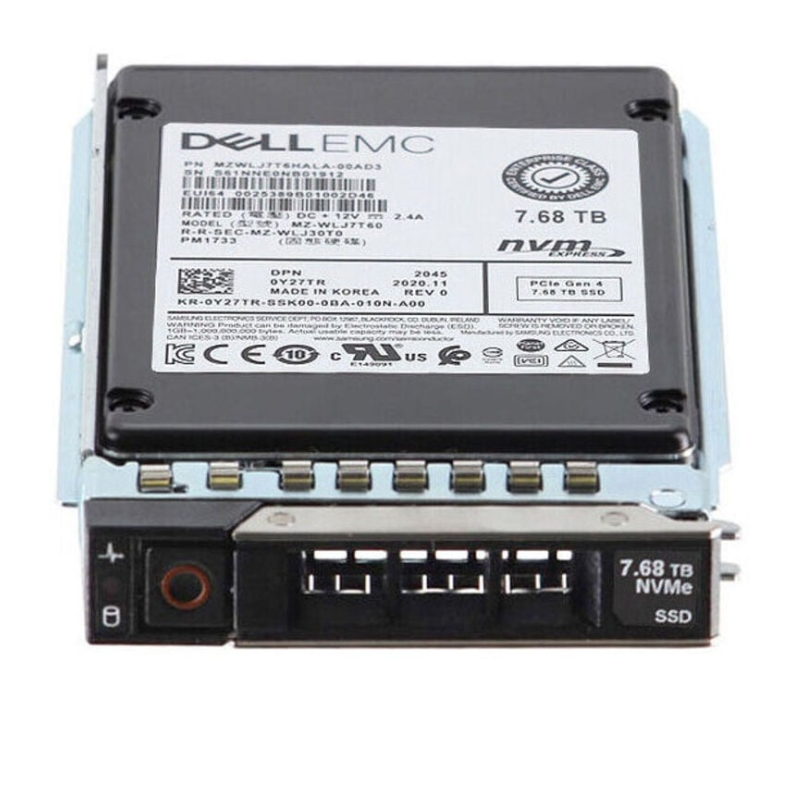


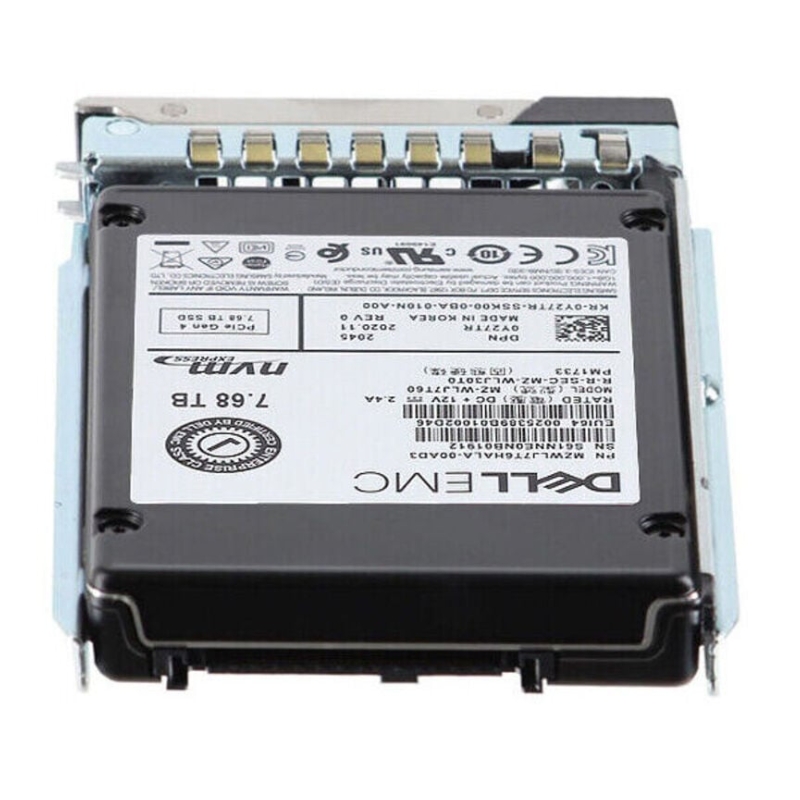
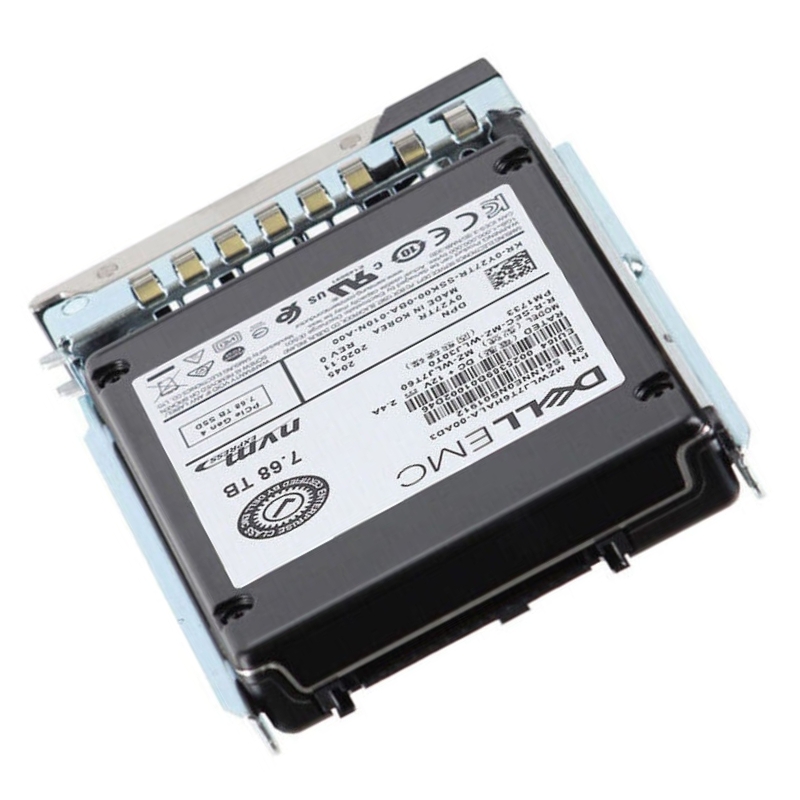
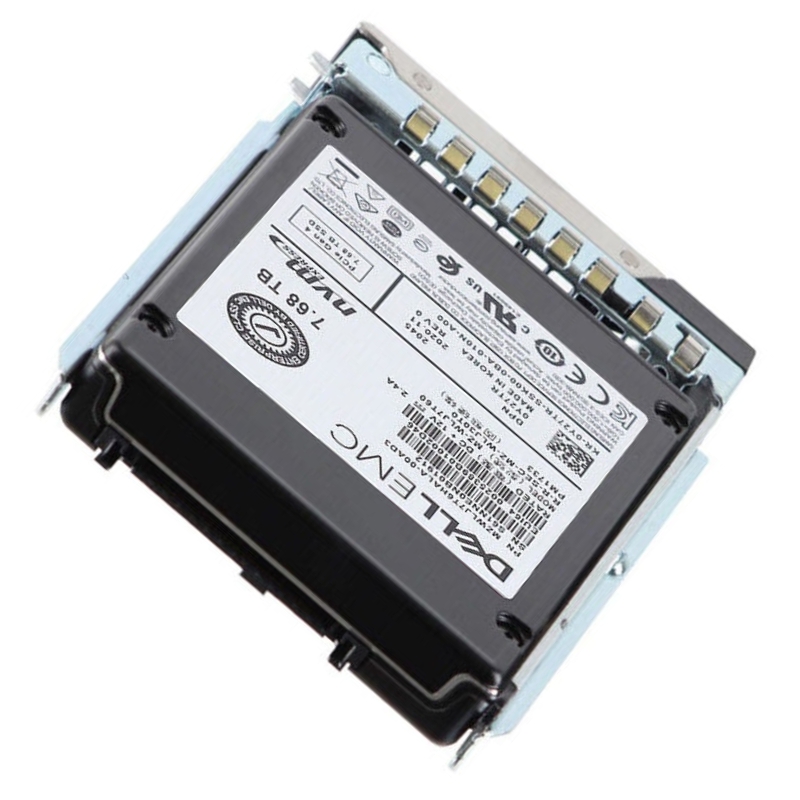
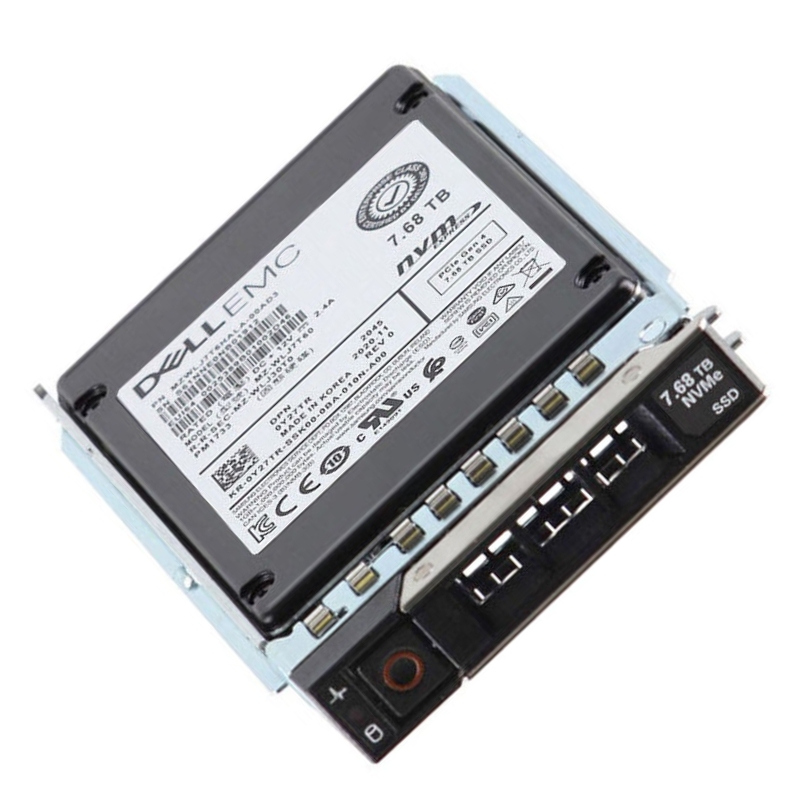
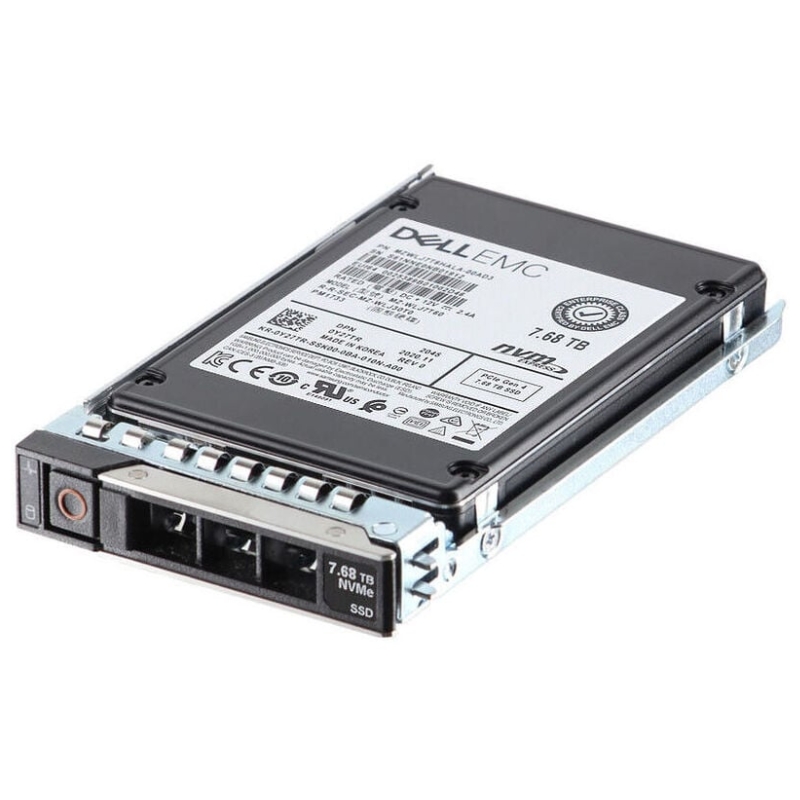
Dell 2R5N5 7.68TB PCI Express 4.0 X4 NVMe TLC SFF Read Intensive SSD. New Sealed in Box (NIB) with 1 year Replacement Warranty
Discover the exceptional performance of the Dell 2R5N5 Solid State Drive, engineered to enhance your computing experience. This internal drive combines speed, efficiency, and reliability for demanding applications.
This SSD is designed to be compatible with:
Welcome to the heart of high‑performance enterprise storage: the Dell 2R5N5 7.68TB PCIe 4.0 x4 NVMe TLC SFF Read Intensive SSD category page description section. In this detailed exploration you will discover the capabilities, architecture, use cases, and selection considerations surrounding this class of ultra‑fast solid state drives and its subcategories. The emphasis here is on delivering rich, keyword‑friendly content tailored to search engines and technical readers alike, without relying on introductory exposition or simplistic bulleted enumerations.
At the core of the Dell 2R5N5 SSD architecture lies PCIe 4.0 x4 interface support. This configuration enables four full lanes of PCI Express version 4.0, effectively doubling the throughput available in PCIe 3.0 equivalents. Because NVMe (Non‑Volatile Memory Express) protocol is inherently optimized for low latency and parallel I/O using multiple submission and completion queues, this drive is able to deliver substantially higher IOPS and bandwidth in enterprise scenarios.
The internal controller in a Dell 2R5N5 SSD is engineered to efficiently schedule commands, manage wear leveling, detect and correct errors, and interface with the PCIe 4.0 host bus. The controller often employs multiple cores or hardware engines dedicated to tasks such as garbage collection, background read scanning, and metadata maintenance. The PCIe 4.0 x4 interface logic ensures signal integrity, link training, and error recovery consistent with NVMe standards.
This SSD employs TLC (Triple-Level Cell) NAND flash memory, meaning each memory cell stores three bits of information (eight voltage states). TLC strikes a balance between cost, endurance, and performance, making it a popular choice for enterprise “read intensive” workloads. Because read operations are more frequent and wear from writes is relatively limited in read-intensive use, the trade‑off of TLC yields strong value for applications that demand high read throughput rather than write endurance.
The form factor for this SSD is SFF, or Small Form Factor, which typically refers to compact SSD dimensions suitable for blade servers, dense storage servers, or modular arrays. The small footprint allows deployment in space‑constrained infrastructures while maintaining mechanical robustness. These SFF drives are often hot‑swappable and integrate seamlessly with server trays or drive sleds.
The Dell 2R5N5 7.68TB model is engineered for high read throughput, low latency, and consistent performance under enterprise load. Typical performance numbers include sequential read speeds in the upper gigabytes per second, sustained random read IOPS in the hundreds of thousands or more, and dependable QoS (quality of service) even under mixed access patterns. Because write operations are less frequent in its intended usage class, write throughput is tuned but not maximized compared to write‑optimum SSDs.
In enterprise benchmarks, sequential read throughput may approach or exceed 7–8 GB/s in optimal systems, benefiting from the full four PCIe 4.0 lanes. Write throughput in read‑intensive SSDs is more conservative but still capable of several gigabytes per second depending on host tuning, overprovisioning, and firmware optimization.
Random read performance is a critical metric for databases, caching layers, and content repositories. The Dell 2R5N5 class SSD is typically capable of delivering high IOPS in the hundreds of thousands to millions, with sustained low read latency under microsecond ranges. This ensures rapid response times for small block accesses, essential for transactional systems, search indices, or virtual machines boot storms.
While the drive is optimized for read operations, its firmware and overprovisioning ensure that occasional write bursts or background maintenance tasks do not severely degrade performance. Under mixed workload (read/write ratio), the SSD maintains predictable behavior by throttling background writes, staging metadata updates, and prioritizing read traffic.
Although classified as read‑intensive, the Dell 2R5N5 series employs robust reliability features to ensure long service life in demanding environments. Endurance ratings, error correction codes (ECC), spare area allocation, and resilient metadata protections all contribute to dependable operation over time.
Because this class of SSD is targeted to read‑heavy use, endurance is rated more conservatively compared to mixed‑use or write‑intensive drives. Endurance is often expressed in drive writes per day (DWPD) or terabytes written (TBW) over warranty period. For example, a configuration might guarantee 0.3–0.5 DWPD over a five‑year warranty period, or a TBW in the low thousands for the full capacity. These figures account for internal overprovisioning, which reserves spare blocks to prolong effective life.
To protect data integrity, the SSD’s controller sustains multi‑bit ECC (often LDPC – Low Density Parity Check), internal scrubbing of bit errors, automatic refresh cycles, and background data scanning. Metadata paths, DRAM caches or pseudo‑DRAM logic, and host interface error checking (such as CRC) complement the base flash reliability. The firmware includes wear leveling, bad block management, and power loss protection features in many enterprise designs.
The Dell 2R5N5 7.68TB NVMe SSD is ideal for workloads dominated by read operations, where latency, bandwidth, and predictable performance are more important than massive write endurance. Below are common deployment scenarios where this drive category excels.
In large content delivery networks, streaming clusters, or edge caching systems, read performance is paramount. High‑throughput serving of static files, video segments, images, or asset libraries benefits from the SSD’s ability to sustain many concurrent reads at low latency. In such environments, writes are relatively sparse (cache warm, invalidation, refreshes), making read‑intensive SSDs a cost‑effective choice.
Systems with database read replicas, reporting nodes, or analytics caches often require fast random reads across large datasets. The Dell 2R5N5 SSDs can support high query rates, repeated index scans, and analytic reads while reducing I/O wait times. Because writes are often batched or offloaded to other write‑optimized storage, a read‑intensive SSD is a judicious fit.
In VDI environments, many desktop images boot or resume concurrently, causing “boot storms.” These events produce intense read bursts from a central storage tier. Deploying Dell 2R5N5 SSDs as a front cache or acceleration tier can absorb the read load, reducing latency and improving user experience. Occasional write traffic (profile persistence, OS updates) is manageable within read‑intensive classifications.
File servers that serve web assets, code repositories, or document storage can benefit from read‑fast SSDs when the majority of access is read. The fast responsiveness and parallelism of NVMe over PCIe make these drives especially effective when hosting large numbers of small files, web pages, or application assets that require low latency access.
Enterprise SSDs are often segmented by workload profile: read‑intensive, mixed‑use, and write‑intensive. Read‑intensive models, like the 2R5N5 series, are optimized for heavy read workloads with modest write budgets. Mixed‑use SSDs aim to balance read and write performance, and write‑intensive drives are designed for sustained constant write operations such as logging, journaling, or scratch workloads. Understanding where your use case lies on that spectrum is crucial when selecting a subcategory.
Within the read‑intensive niche, multiple capacity tiers exist: for example 1.92 TB, 3.84 TB, 7.68 TB, or 15.36 TB (and beyond). The 7.68 TB tier is often seen as a high‑end balanced point, offering substantial usable capacity with performance scaling and cost per GB advantages. Some users may opt for lower tiers in smaller deployments, while hyperscale environments might adopt even larger models.
Though this category focuses on PCIe 4.0 x4 NVMe, subcategories include PCIe 3.0 NVMe, SATA SSDs, and legacy SAS/NVMe hybrids. Even within NVMe drives, key differences such as PCIe 4.0 vs 3.0 support, motherboard and controller compatibility, and firmware feature sets differentiate subfamilies. Users must ensure compatibility across host platforms, BIOS support, and firmware upgrade paths when selecting among subcategories.
Some subcategories of Dell 2R5N5 read‑intensive SSDs include enhanced enterprise features: hardware encryption (e.g. TCG Opal, AES‑256), instantaneous secure erase, and enhanced power loss protection (PLP) capacitors or backup designs. Drives with those capabilities typically command a premium, but deliver greater data security, rapid decommissioning, and robustness in critical systems.
Choosing the optimal Dell 2R5N5 SSD within this category (or among its subcategories) requires consideration of multiple factors. Here are the principal comparison dimensions when evaluating options.
Evaluate the sequential and random performance specifications under typical and worst‑case scenarios. Compare published read/write throughput, high queue depth IOPS, and latency statistics under mixed and sustained load. Manufacturers may provide both peak and steady‑state values; steady‑state behavior is often more relevant in enterprise contexts.
Examine the drive’s endurance rating (DWPD, TBW) and match it to expected write volumes over time. Check the warranty period (commonly three to five years) and how it relates to endurance guarantees. For critical systems, choosing a drive whose endurance significantly exceeds expected write demands offers safety margin.
Ensure that the SSD’s physical dimensions (SFF or otherwise) match your server trays, drive bays, or sleds. Confirm that host controllers, backplanes, and BIOS/firmware accept PCIe 4.0 (or fallback to PCIe 3.0 if necessary) and support NVMe commands. Validate that firmware updates and platform integration are feasible within your existing infrastructure.
Assess how the drive handles temperature under continuous load and whether it includes heat spreaders or integrated cooling aids. Confirm that your server chassis or blade enclosure provides sufficient airflow, heat dissipation, and thermal headroom to prevent performance throttling or reliability issues.
If your use case demands encryption, secure erase, or power loss protection, select drives that support your required security standards. Be mindful of firmware upgrade policies, interoperability with host encryption frameworks, and any performance overhead introduced by encryption engines.


 Contact Us
 Information
 Catalog
 Solid State Drives (SSD)
 Network Switches
 Hard Disk Drives
 HBA & Controllers
 PC & Servers
 PC & Server Memory
 CPU & Processors
 Network Routers
 Power Supplies
 Tape Drives & Libraries
 Network Devices
 Computer & Network Cables