(7% discount is applied at checkout)
Cart is empty
Your go-to destination for cutting-edge server products
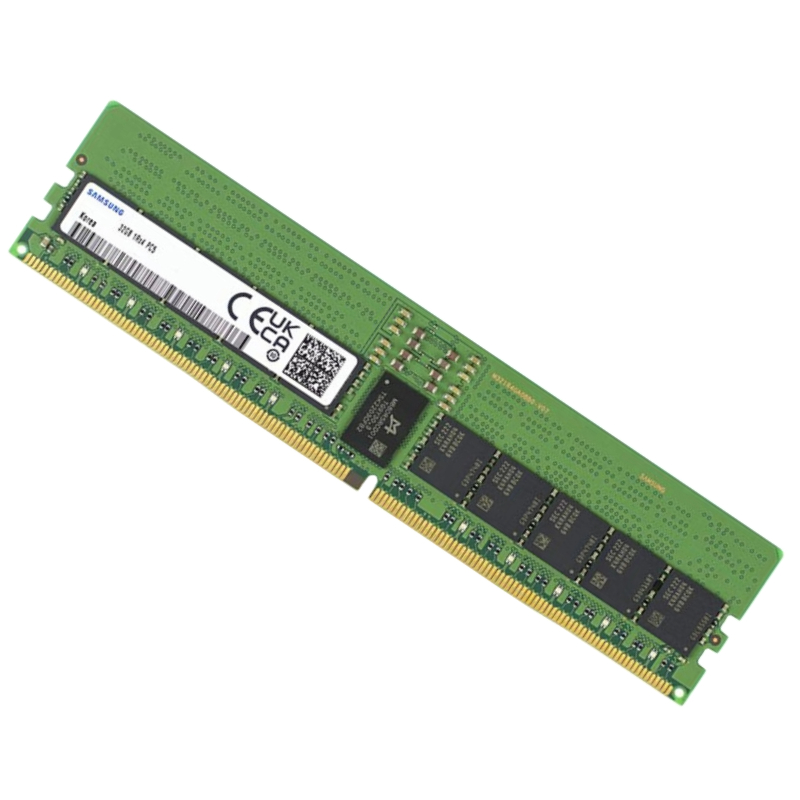


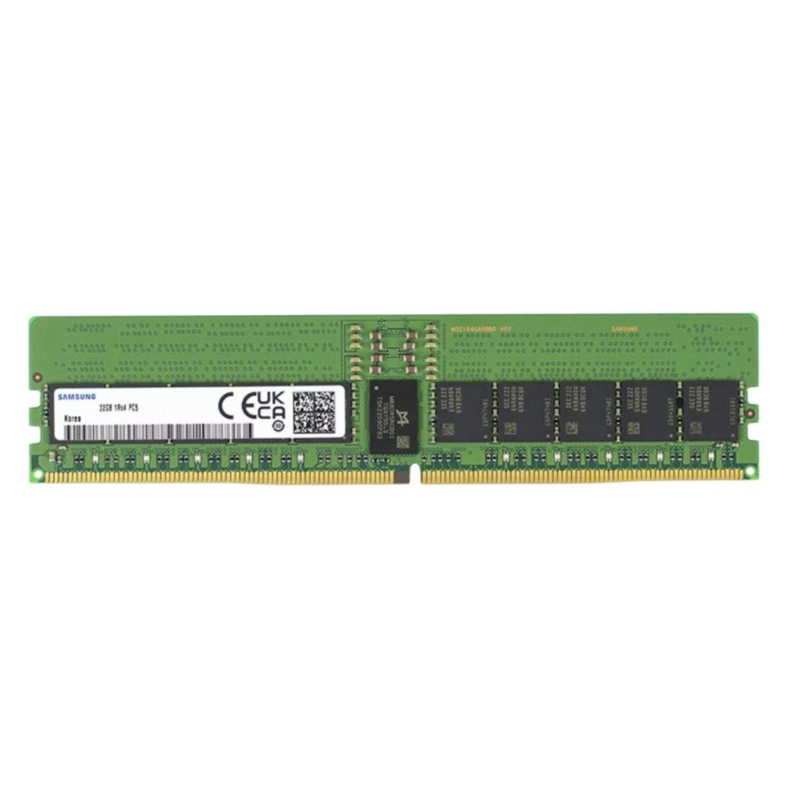
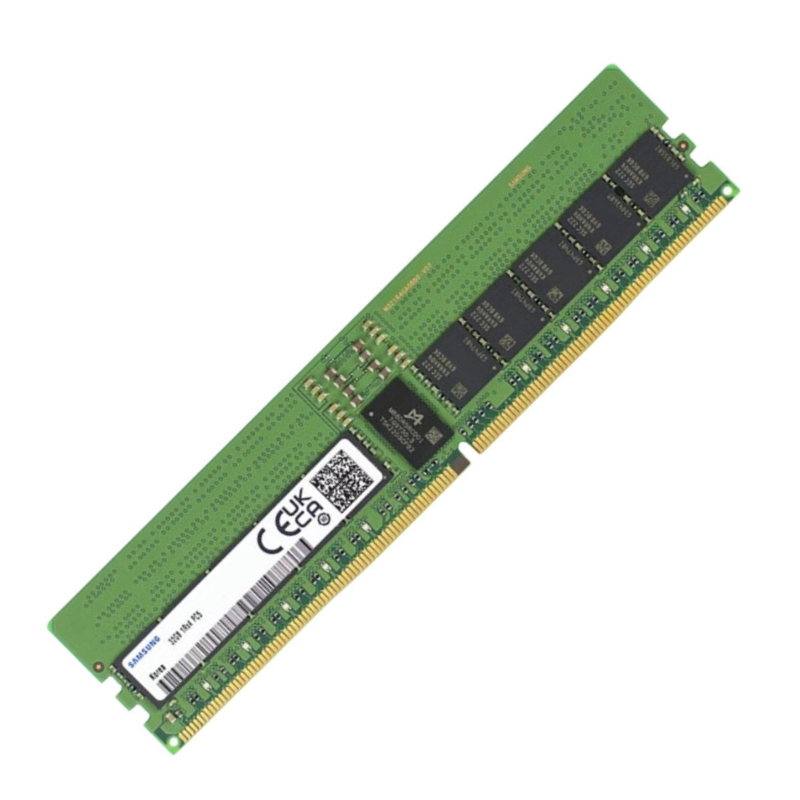
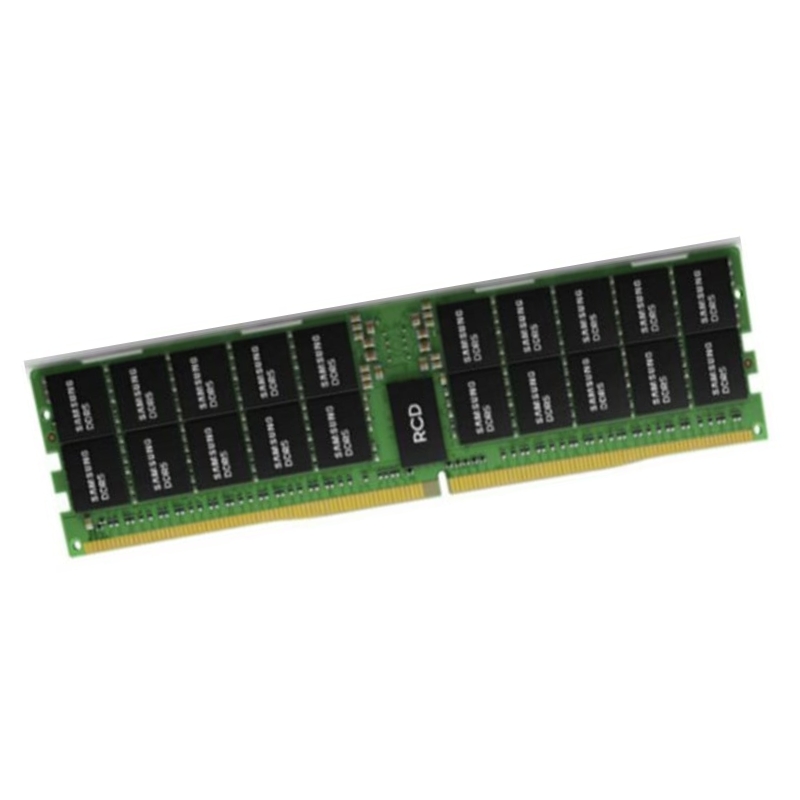
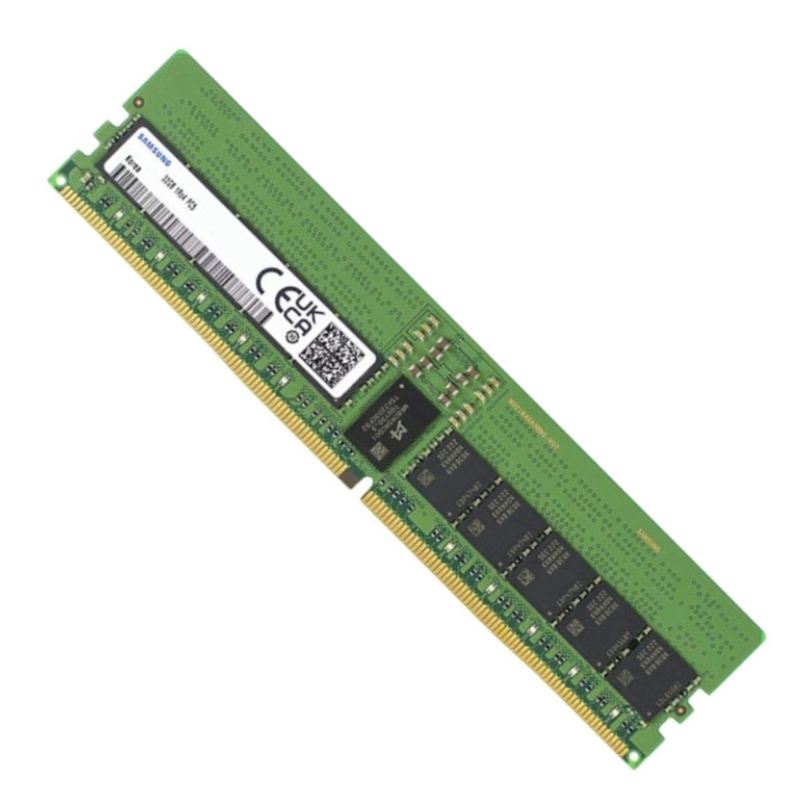
Samsung M321R4GA0BB0-CQKVG 32GB 4800mhz PC5-38400 ECC Reg DDR5 SDRAM 288-Pin RAM. New Sealed in Box (NIB) with 3 Years Warranty
| SKU/MPN | Warranty | Price | Condition | You save |
|---|---|---|---|---|
| M321R4GA0BB0-CQKVG | 1 Year Warranty | $715.00 | New (System) Pull | You save: $250.25 (26%) |
| M321R4GA0BB0-CQKVG | 1 Year Warranty | $799.00 | New Sealed in Box (NIB) | You save: $279.65 (26%) |
The Samsung M321R4GA0BB0-CQKVG is a high-performance DDR5 server memory module engineered for demanding enterprise and data center environments. This 32GB module is built to the latest JEDEC standards, offering significant advancements in speed, capacity, reliability, and power efficiency over previous DDR4 generations. It is specifically designed for servers requiring registered memory with error correction to ensure data integrity and system stability under continuous operational loads.
At the forefront of enterprise-grade memory technology stands the Samsung M321R4GA0BB0-CQKVG, a 32GB DDR5 RDIMM engineered to deliver exceptional performance, unwavering reliability, and advanced error management for modern data center servers, high-performance computing (HPC) clusters, and demanding workstation applications.
The Samsung M321R4GA0BB0-CQKVG is defined by a precise set of technical parameters that dictate its compatibility and performance envelope. These specifications form the foundational blueprint of the module.
This module provides a substantial 32 gigabytes (GB) of memory capacity. It is configured as a single 32GB module (1x32GB), utilizing a 1Rank x4 (1Rx4) organization. The x4 DRAM configuration is critical for server environments as it optimizes memory bus utilization and enhances signal integrity, especially when populating multiple channels per CPU.
The module operates at a blazing-fast data rate of 4800 Megatransfers per second (MT/s), often marketed as 4800Mbps. This is classified under the PC5-38400 standard (PC5-38400 = 4800 MT/s * 8 bytes = 38400 MB/s theoretical bandwidth per channel). This high-speed data transfer is a cornerstone of DDR5's performance improvement, enabling faster processing of data-intensive workloads.
The module adheres to a CAS Latency (CL) timing of CL40. While this numerical value is higher than typical DDR4 CL values, it is assessed within the context of the significantly faster clock speed of DDR5. The effective access time is a function of both clock cycle time and CAS latency, resulting in a balanced performance profile suitable for server applications where throughput and stability are prioritized.
Operating at a reduced voltage of 1.1 volts (V), this DDR5 module achieves a notable improvement in power efficiency compared to DDR4's standard 1.2V. This Power Management Integrated Circuit (PMIC) is a key DDR5 innovation, migrating from the motherboard to the memory module itself. This allows for more granular and stable power delivery, improving signal integrity and enabling better power consumption management at the DIMM level.
Beyond the core specifications, the module incorporates specific physical and logical features that define its role in an enterprise ecosystem.
The module uses the standard 288-pin Dual In-line Memory Module (DIMM) form factor for DDR5. Crucially, it is a Registered DIMM (RDIMM). The "Registered" designation indicates the presence of a register (or buffer) between the memory controller and the DRAM chips. This register buffers the command and address signals, reducing the electrical load on the memory controller. This allows servers to support a much greater number of memory modules per channel (commonly 2 DIMMs per channel with DDR5) without degrading signal integrity, which is essential for maximizing total system memory capacity.
The module features Error-Correcting Code (ECC). ECC is a non-negotiable requirement for server and data center memory. It can detect and correct single-bit memory errors on-the-fly and detect (though not necessarily correct) multi-bit errors. This hardware-level error correction dramatically increases system reliability, minimizes silent data corruption, and reduces the risk of system crashes caused by memory errors, ensuring data integrity for critical applications.
Building upon traditional module-level ECC, DDR5 architecture from leading manufacturers like Samsung often incorporates On-Die ECC (ODECC). This is an additional layer of error correction that operates internally within each individual DRAM chip. ODECC scrubs and corrects minor bit errors before they can accumulate or propagate to the module-level ECC engine, effectively providing a two-tiered defense against data corruption and further enhancing chip longevity and reliability.
The technical profile of the Samsung M321R4GA0BB0-CQKVG makes it an ideal solution for a wide spectrum of demanding computing environments where scalability, reliability, and performance are paramount.
In general-purpose enterprise servers handling virtualization, database management (SQL, NoSQL), enterprise resource planning (ERP), and customer relationship management (CRM) applications, this module provides the optimal balance of capacity, speed, and rock-solid stability. The RDIMM design with ECC ensures consistent performance in 24/7/365 operation, even under heavy multi-user loads.
For computational workloads such as scientific simulations, financial modeling, genomic sequencing, and the training phases of artificial intelligence and machine learning, memory bandwidth is often a critical bottleneck. The 4800 MT/s speed of this module, combined with DDR5's improved channel architecture, delivers the high-throughput data access necessary to keep CPUs and adjacent accelerators fed with data, reducing compute idle time.
In cloud service provider environments and dense virtualization hosts (using VMware, Hyper-V, KVM), high memory density and reliability are key. Populating server blades with these 32GB RDIMMs allows for a high total memory footprint, enabling the hosting of a greater number of virtual machines or containers per physical server. ECC safeguards the integrity of disparate workloads running on a single host.
Professional workstations used for computer-aided design (CAD), 3D rendering, video editing, and software development can leverage server-grade memory for enhanced stability when dealing with large, complex projects. The ECC feature is particularly valuable for these mission-critical creative and engineering tasks where a single memory error could corrupt hours of work.
Ensuring proper compatibility is essential for system stability and optimal performance. This module is designed for specific server platforms.
The Samsung M321R4GA0BB0-CQKVG is engineered for servers and workstations based on modern CPU platforms that natively support DDR5 memory technology. This primarily includes: Intel Xeon Scalable Processors (codename Sapphire Rapids, Emerald Rapids, and later generations) and AMD EPYC Processors (codename Genoa, Bergamo, and later generations). It is imperative to verify compatibility with the specific server motherboard or system OEM (e.g., Dell, HPE, Lenovo, Supermicro) via their official Qualified Vendor List (QVL) or memory compatibility tools.
Modern server CPUs feature multiple memory channels (typically 8 or 12 channels). For optimal performance, modules should be installed in a balanced, multi-channel configuration as prescribed by the server manufacturer's manual. Populating channels symmetrically (e.g., same number of DIMMs per channel) unlocks the full bandwidth potential of the CPU's integrated memory controller.
Understanding where this module fits in the broader memory hierarchy clarifies its value proposition.
DDR5 represents a fundamental architectural shift from DDR4. Key advantages include: higher base data rates (4800 MT/s vs. 3200 MT/s common for DDR4), lower operating voltage (1.1V vs. 1.2V), onboard PMIC for better power management, and a burst length doubled to BL16 for more efficient data transfers. The module-level ECC in DDR5 is also more robust. The Samsung M321R4GA0BB0-CQKVG offers a clear path to greater performance and efficiency for upgrading server infrastructure.
UDIMMs lack the register/buffer found on RDIMMs. They are primarily used in consumer desktops and some entry-level workstations. UDIMMs have lower latency but impose a much higher electrical load on the memory controller, severely limiting the number of modules that can be installed per channel (usually 1). For servers requiring large memory capacities, RDIMMs (and their Load-Reduced DIMM/LRDIMM cousins for maximum capacity) are the only viable option, making the registered design of this Samsung module essential for scalable systems.
LRDIMMs (Load-Reduced DIMMs) use a memory buffer (iSMI) that buffers both data and command/address signals, reducing the load even further than an RDIMM. This allows for the highest possible memory capacities per channel (e.g., 3+ DIMMs). However, LRDIMMs typically have slightly higher latency and cost. The Samsung M321R4GA0BB0-CQKVG RDIMM offers the ideal balance of capacity, performance, latency, and cost for the majority of server deployments targeting 1-2 DIMMs per channel configurations.
The performance of this module is driven by underlying DDR5 architectural improvements.
Each DDR5 DIMM channel is divided into two independent 32-bit sub-channels. While the Samsung module is a 1Rx4 (single rank) part, this dual sub-channel design increases efficiency by allowing two simultaneous, smaller data accesses within the same module. This reduces latency for random access patterns common in server workloads, improving overall effective bandwidth.
The integration of the PMIC onto the DIMM, as featured on this Samsung module, is a landmark change. It provides more stable and cleaner power to the DRAM chips by regulating voltage locally. This improves signal integrity at high data rates, reduces noise, and supports advanced power-saving states, contributing directly to the module's 1.1V operation and overall system energy efficiency.
The DDR5 interface includes support for Decision Feedback Equalization, an advanced signal integrity technique. DFE allows the receiver to better compensate for channel distortion and inter-symbol interference (ISI) at very high speeds (like 4800 MT/s). This technology enables reliable communication at the module's rated speed, even in electrically challenging server environments with long motherboard traces.


 Contact Us
 Information
 Catalog
 Solid State Drives (SSD)
 Network Switches
 Hard Disk Drives
 HBA & Controllers
 PC & Servers
 PC & Server Memory
 CPU & Processors
 Network Routers
 Power Supplies
 Tape Drives & Libraries
 Network Devices
 Computer & Network Cables