(7% discount is applied at checkout)
Cart is empty
Your go-to destination for cutting-edge server products
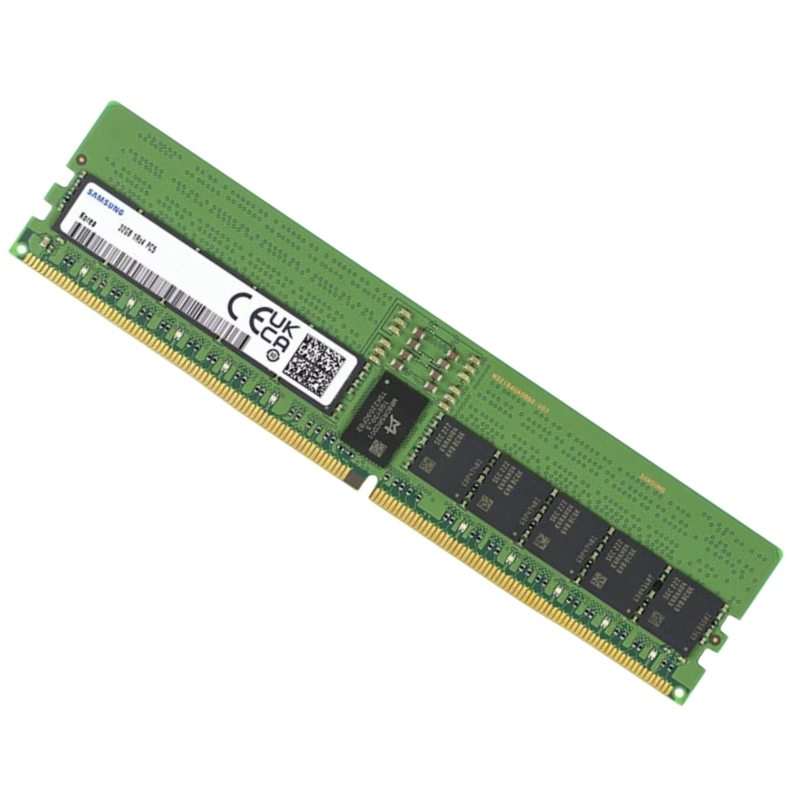


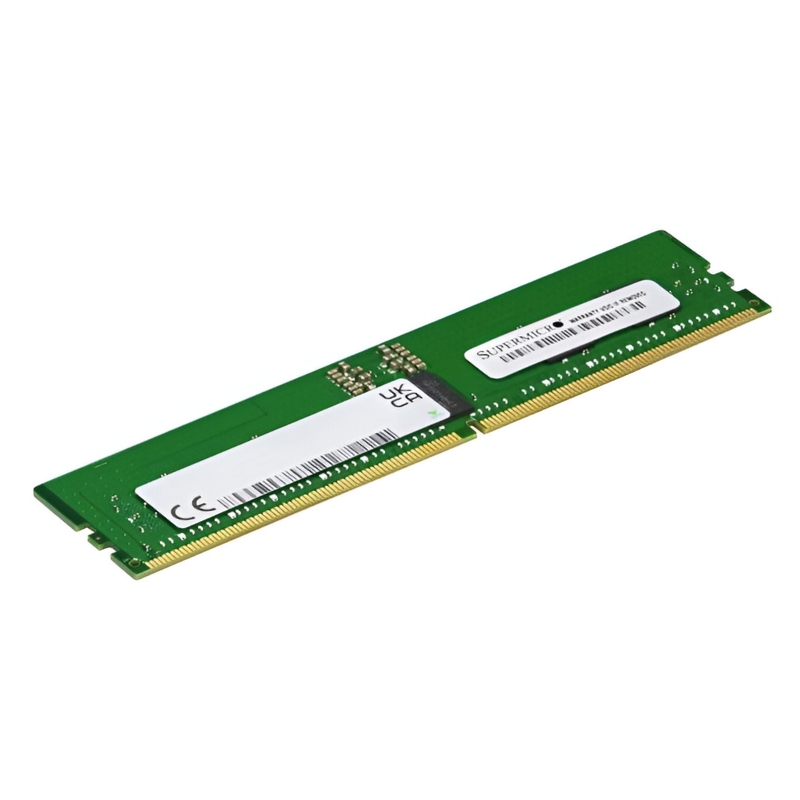
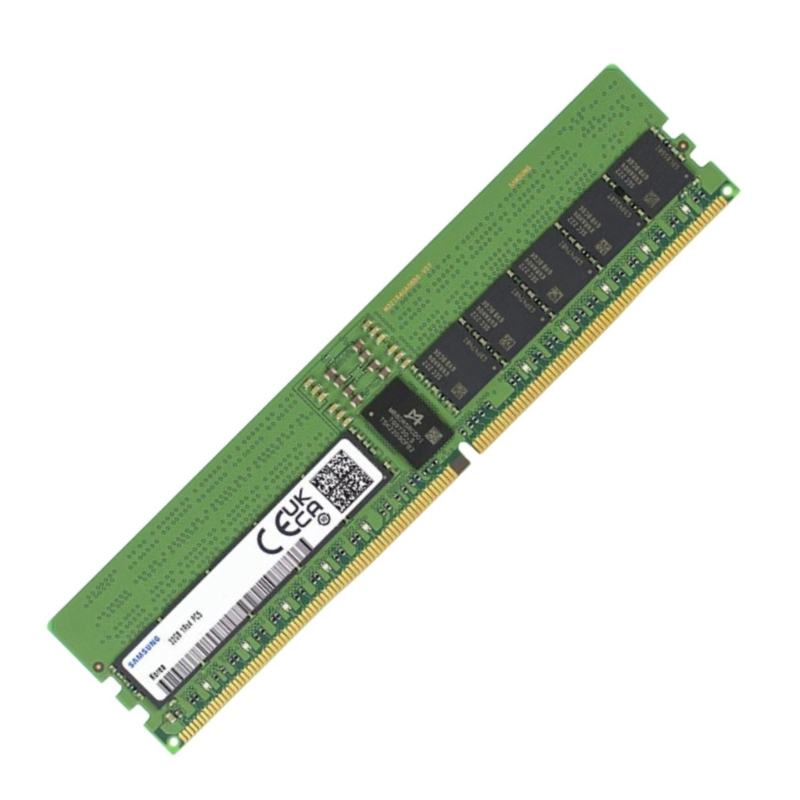
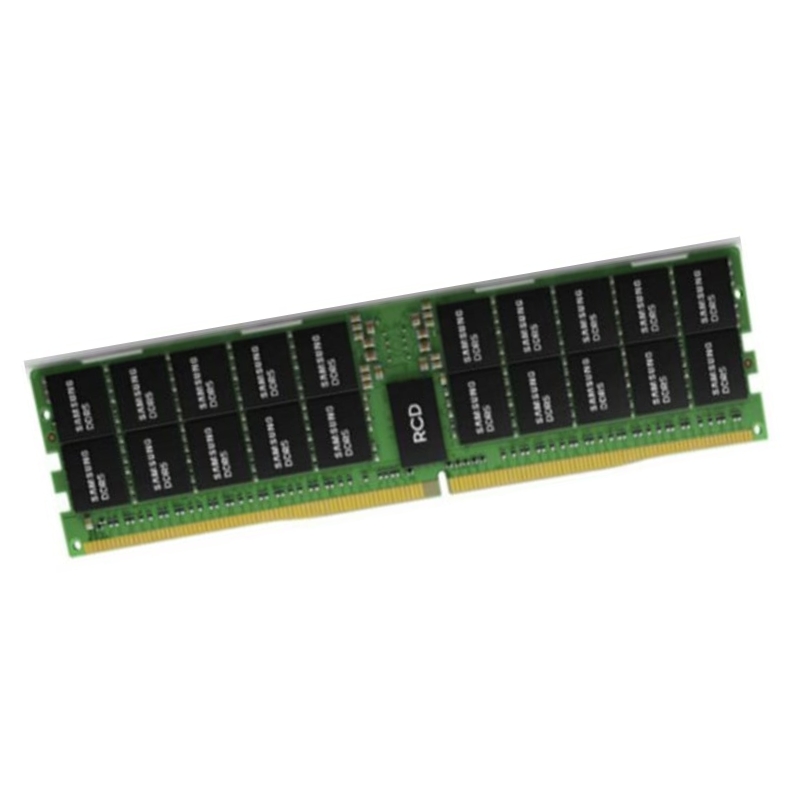
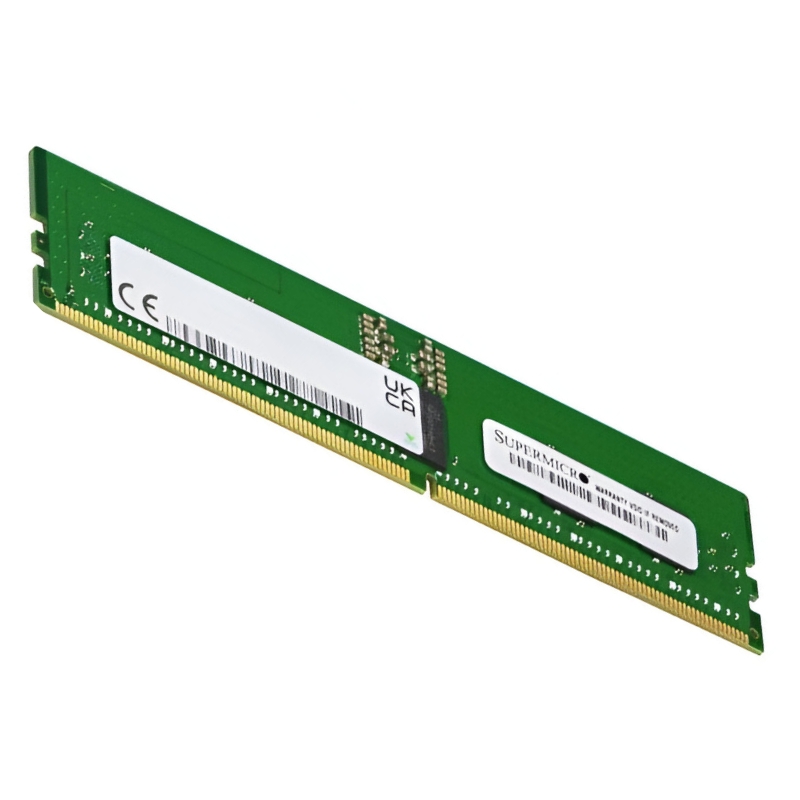
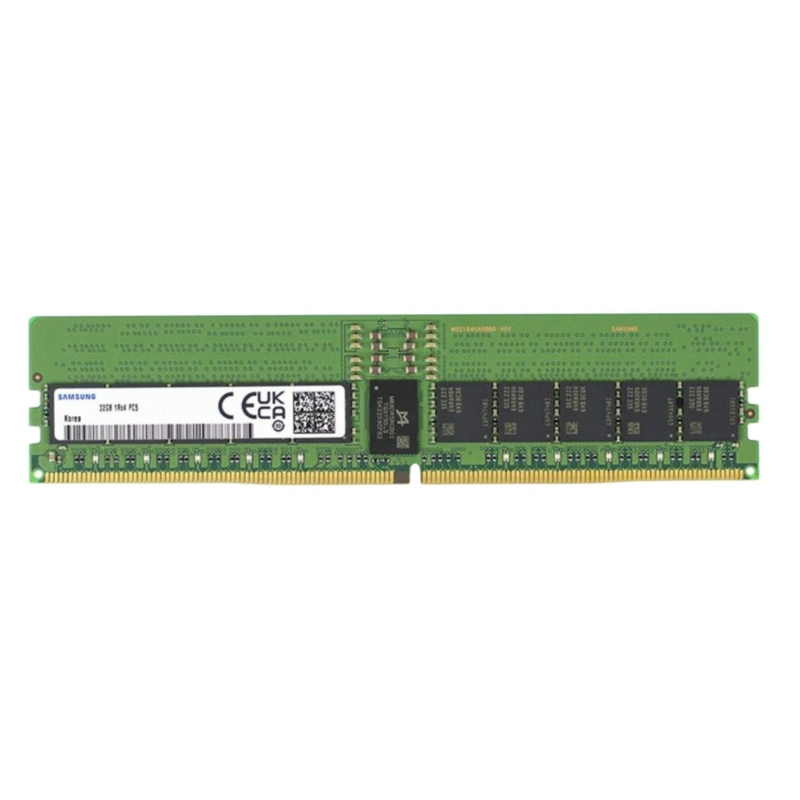
Samsung M321R4GA0BB0-CQKVG 32GB 4800mhz PC5-38400 ECC Reg DDR5 SDRAM 288-Pin RAM. New (System) Pull with 1 year replacement warranty
| SKU/MPN | Warranty | Price | Condition | You save |
|---|---|---|---|---|
| M321R4GA0BB0-CQKVG | 1 Year Warranty | $715.00 | New (System) Pull | You save: $250.25 (26%) |
| M321R4GA0BB0-CQKVG | 1 Year Warranty | $799.00 | New Sealed in Box (NIB) | You save: $279.65 (26%) |
The Samsung M321R4GA0BB0-CQKVG RAM is equipped with a massive capacity of 32GB, making it an excellent choice for users who require high-performance memory for their systems. Whether you are a professional gamer, content creator, or simply a power user, this RAM module's large capacity ensures that your system can handle demanding tasks with ease.
The transition to DDR5 SDRAM marks a pivotal leap in server memory architecture, delivering unprecedented bandwidth, efficiency, and reliability for modern data centers, cloud infrastructure, and enterprise servers. At the heart of this evolution are modules like the Samsung M321R4GA0BB0-CQKVG, engineered to meet the escalating demands of computational workloads. Unlike consumer-grade memory, server memory prioritizes data integrity and sustained performance under continuous operation. This category encompasses Registered ECC RDIMMs (RDIMMs), which are the industry standard for mission-critical systems. The "Registered" component incorporates a register on the module to reduce electrical load on the memory controller, enabling higher capacities and more modules per channel. ECC (Error-Correcting Code) is non-negotiable for server environments, as it detects and corrects single-bit data corruption on-the-fly, preventing silent data errors that could lead to system crashes or corrupted calculations.
DDR5 introduces a fundamental redesign over its DDR4 predecessor. The key innovation is the decoupling of the voltage regulator. While DDR4 relied on the motherboard's power delivery, DDR5 modules like this Samsung model incorporate an integrated PMIC (Power Management Integrated Circuit) directly on the module. This allows for finer-grained, more stable power delivery, improving signal integrity and power efficiency. Furthermore, DDR5 doubles the burst length and prefetch architecture, allowing for larger chunks of data to be moved with each operation. The channel architecture is also split internally, effectively functioning as two sub-channels, which increases parallelism and improves overall efficiency for the memory controller.
This specific module is a testament to Samsung's leadership in memory semiconductor technology. It is a purpose-built component for servers requiring robust performance and unwavering reliability. Let's dissect its part number and technical specifications to understand its precise role within a server ecosystem.
The module offers a substantial 32GB capacity as a single module. The "1x32GB" notation indicates this is a single module kit, typically used for populating servers in multiples to achieve the total desired system memory. The "1Rx4" designation is crucial. "1R" means Single Rank, indicating the module has one set of memory chips that the memory controller can access at a time. "x4" refers to the physical organization of the memory chips; they have a 4-bit data interface per chip. This x4 configuration is essential for achieving optimal memory population and capacity scaling on modern server platforms, often allowing for the highest possible total memory per CPU socket when all channels are populated.
A Single Rank (1R) module like this provides a balance of performance and compatibility. It presents less electrical load to the memory controller compared to dual-rank (2R) modules, which can sometimes allow for higher achievable data rates in densely populated systems. The x4 chip organization interacts with the server's memory controller to enable advanced reliability features like SDDC (Single Device Data Correction), which can survive the complete failure of a single memory chip.
The module operates at a data rate of 4800 Megatransfers per second (MT/s), often referred to as 4800 Mbps. This is the base speed for first-generation DDR5 server platforms. In terms of classification, it adheres to the PC5-38400 standard. The "PC5" denotes DDR5, and the number "38400" refers to the theoretical peak bandwidth in megabytes per second (MB/s) for the module. You can calculate this by taking the data rate (4800 MT/s), multiplying by the module's data width (64 bits = 8 bytes), which results in 38,400 MB/s of bandwidth. This significant bandwidth uplift from DDR4's common 3200 MT/s (PC4-25600) directly accelerates data-intensive applications like in-memory databases, virtualization, and scientific simulation.
While bandwidth skyrockets, latency, measured in clock cycles, also evolves. This module has a CAS Latency (CL) timing of 40 cycles. At first glance, this is higher than typical DDR4 CL values (e.g., CL22). However, due to the much faster clock speed of DDR5, the actual time in nanoseconds (ns) is comparable or better. The absolute latency is a function of CL and the clock period. For 4800 MT/s, the clock period is approximately 0.417 ns. Therefore, CL40 translates to a CAS latency of roughly 16.68 nanoseconds, providing a strong balance of high bandwidth and responsive access times for server workloads.
This is an ECC Registered RDIMM, the definitive choice for server stability. The ECC functionality requires extra bits (typically 8 bits for every 64 bits of data) to store error-correcting code. The memory controller uses these bits to verify data accuracy and correct single-bit errors instantly. The "Registered" aspect involves an address buffer register (or registers) that sits between the memory controller and the DRAM chips. This register handles all addressing and command signals, refreshing the electrical signal and reducing the capacitive load on the controller. This enables a server motherboard to support a much larger number of memory modules—essential for scaling to terabytes of memory in multi-socket systems.
It is vital to distinguish this RDIMM from other form factors. UDIMMs (Unbuffered DIMMs) are common in desktops and lack a register; they are limited in capacity and scalability. Load-Reduced DIMMs (LRDIMMs) use an additional data buffer (iBuffer) for the data lines as well, allowing for even greater capacity and population density but typically at a slight latency and cost premium. The Samsung M321R4GA0BB0-CQKVG, as an RDIMM, offers the ideal blend of performance, capacity, and cost-effectiveness for the vast majority of general enterprise and cloud server applications.
DDR5 operates at a lower standard voltage of 1.1V compared to DDR4's typical 1.2V. This 8% reduction in voltage contributes significantly to lower power consumption at the system level, a critical factor for large-scale data centers where operational expenditure (OPEX) and power density are paramount concerns. The integrated PMIC on the module ensures this low voltage is delivered cleanly and efficiently to the DRAM chips, even during high-load scenarios.
This memory module is not compatible with consumer PCs or workstations. It is designed explicitly for server platforms that support DDR5 Registered ECC RDIMM memory. This includes next-generation server processors from Intel (Xeon Scalable "Sapphire Rapids" and beyond) and AMD (EPYC "Genoa" and beyond). Always consult the server manufacturer's qualified vendor list (QVL) to ensure compatibility for specific motherboard or system models.
The Samsung 32GB DDR5-4800 RDIMM is engineered for a broad spectrum of server-side applications. Its reliability and performance make it suitable for:
Hypervisors like VMware vSphere, Microsoft Hyper-V, and KVM require ample, reliable memory to host numerous virtual machines. The high bandwidth of DDR5 improves VM density and responsiveness, while ECC ensures the integrity of data across all VMs, preventing host crashes due to memory errors.
Platforms such as SAP HANA, Oracle Database In-Memory, and Redis thrive on fast, large-capacity memory pools. The 38.4 GB/s bandwidth per module accelerates data querying and real-time analytics, allowing businesses to gain insights from massive datasets instantaneously.
Computational fluid dynamics, financial modeling, and genomic sequencing applications are often memory-bound. The combination of high bandwidth, large 32GB capacity per module, and ECC protection ensures accurate, timely results for complex simulations that can run for days or weeks.
The memory chips on this module are built using Samsung's advanced process node, which enables the high density (32GB on a single-rank module), low power consumption (1.1V), and stable operation at 4800 MT/s. The chips feature robust silicon design to minimize bit errors and ensure long-term data retention.
The 288-pin PCB is engineered with enhanced trace layouts to maintain signal integrity at high speeds. Server modules often include a thermal sensor (as per JEDEC specifications for DDR5) to monitor module temperature and, in conjunction with the system BMC (Baseboard Management Controller), can help optimize fan profiles or trigger alerts to prevent thermal throttling and ensure consistent performance in demanding, always-on server environments.


 Contact Us
 Information
 Catalog
 Solid State Drives (SSD)
 Network Switches
 Hard Disk Drives
 HBA & Controllers
 PC & Servers
 PC & Server Memory
 CPU & Processors
 Network Routers
 Power Supplies
 Tape Drives & Libraries
 Network Devices
 Computer & Network Cables