(7% discount is applied at checkout)
Cart is empty
Your go-to destination for cutting-edge server products
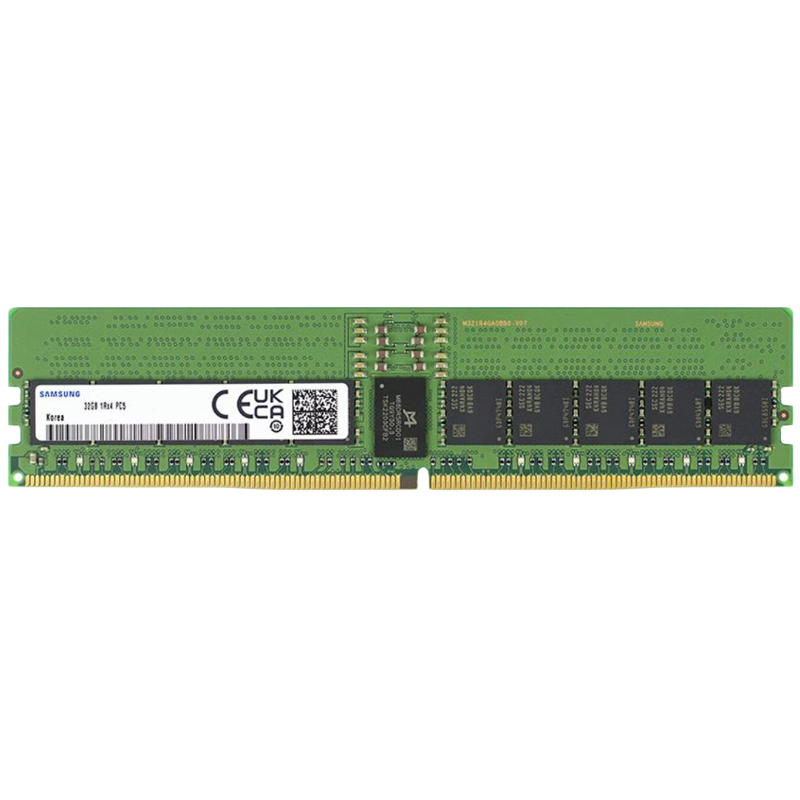


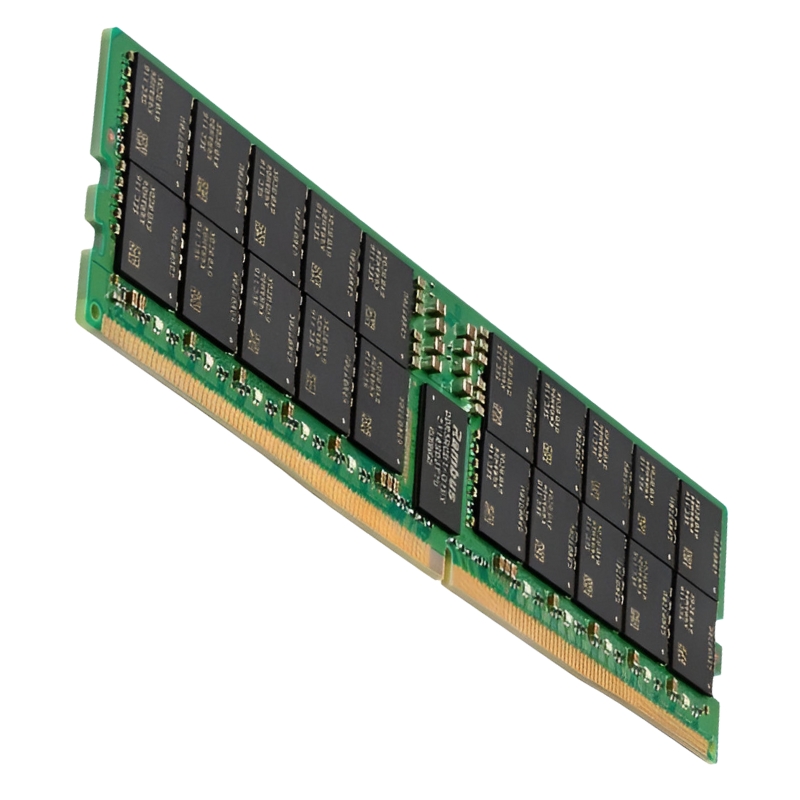
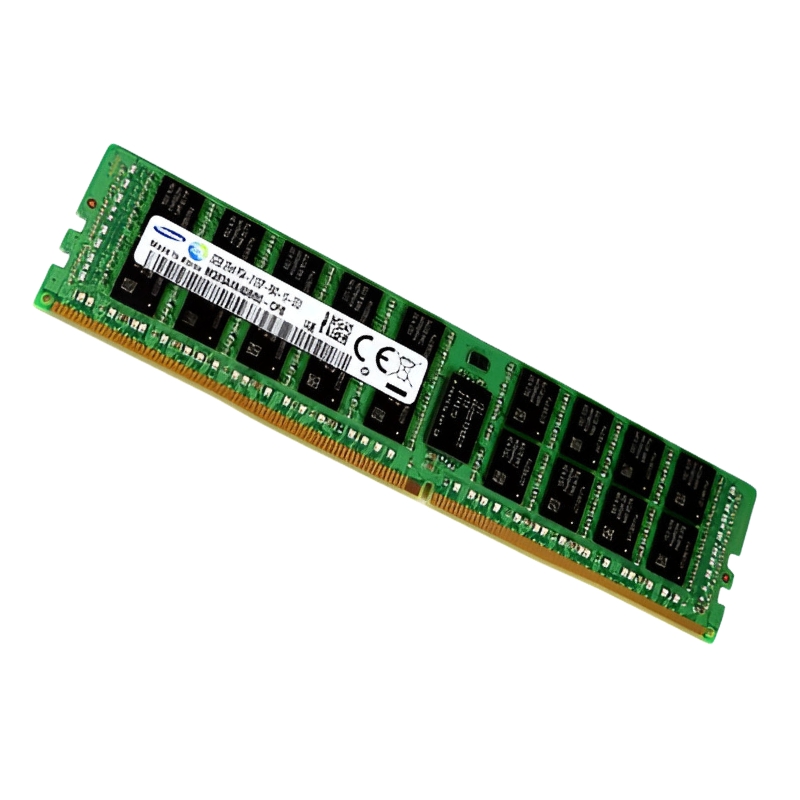
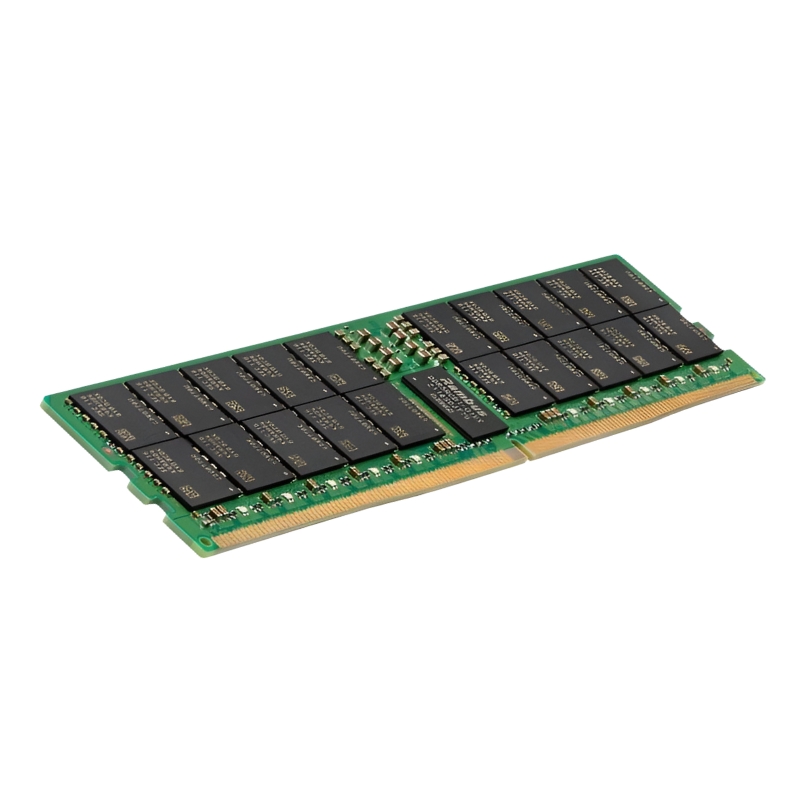
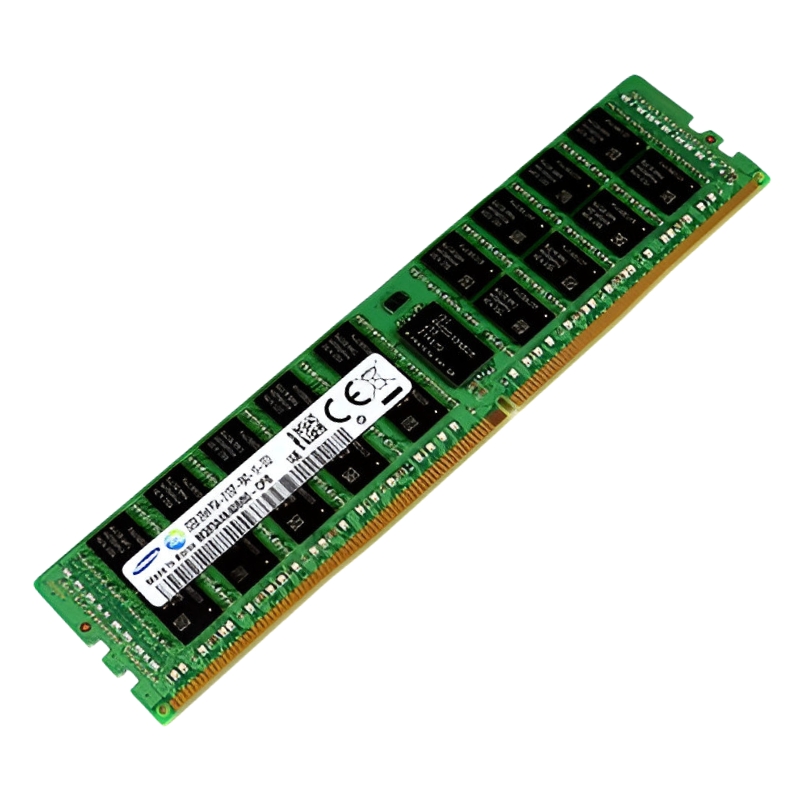
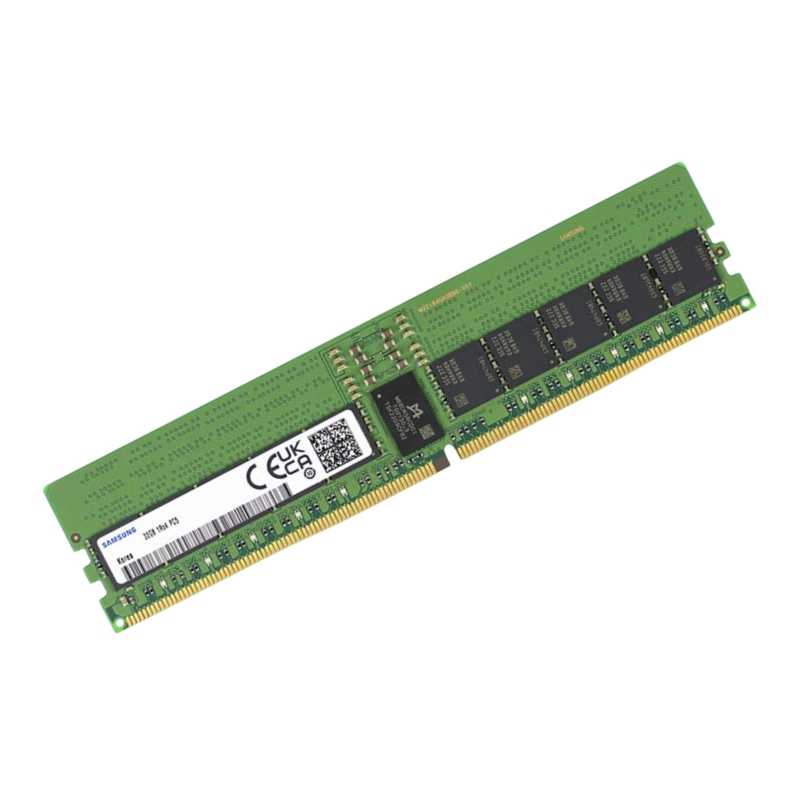
Samsung M321R4GA0BB0-CQKDG 32GB 4800Mhz PC5-38400 Cl40 DDR5 1.1v SDRAM Ecc Reg RAM. New Sealed in Box (NIB) with 3 Years Warranty
The Samsung M321R4GA0BB0-CQKDG represents a significant leap forward in server memory technology, embodying the cutting-edge standards of DDR5 SDRAM. This 32GB Registered ECC RDIMM is engineered specifically for modern server platforms demanding uncompromising data integrity, enhanced bandwidth, and robust reliability.
In the realm of enterprise computing, where data integrity and system stability are non-negotiable, the Samsung M321R4GA0BB0-CQKDG stands as a critical component. This specific 32GB DDR5 memory module is engineered for server and high-performance computing environments that demand unwavering reliability and advanced error correction. Moving beyond the consumer-grade DDR4 technology, this module embodies the next generation of server memory with its enhanced speed, superior efficiency, and robust Registered ECC design. It is a foundational building block for data centers, cloud servers, virtualization hosts, and mission-critical workstations that cannot afford downtime or data corruption. Every specification, from its PC5-38400 designation to its 1Rx4 configuration, is meticulously crafted to serve in multi-channel, memory-intensive applications where throughput and accuracy are paramount.
Understanding the model number is key to unlocking the module's capabilities. The Samsung M321R4GA0BB0-CQKDG follows an industry-standard naming convention that reveals its core attributes. Breaking it down: 'M' indicates a memory module, '32' denotes 32GB capacity, '1R' specifies a 1 Rank design, '4G' references the memory density, and 'A0BB0-CQKDG' points to the specific revision, composition, and speed grade. This alphanumeric code is a direct map to the module's technical identity, ensuring precise compatibility and configuration within complex server ecosystems.
The 32GB capacity of this module represents a strategic balance between density and performance. In modern servers, which often feature 8, 16, or more memory slots, utilizing 32GB modules allows system architects to achieve substantial total memory configurations (e.g., 256GB, 512GB, or even terabytes of RAM) without overpopulating the memory channels. This capacity is ideal for handling large in-memory databases, high-volume virtual machines, complex scientific simulations, and enterprise resource planning (ERP) systems. The high-density 32GB per module is achieved through advanced semiconductor manufacturing processes, packing billions of memory cells into a compact form factor.
While a single M321R4GA0BB0-CQKDG module provides a solid 32GB, its true potential is realized in multi-module configurations. Server platforms leverage dual, quad, or even octa-channel architectures. Installing matched modules in pairs or sets of four unlocks dramatically increased memory bandwidth, as data can be read from and written to multiple modules simultaneously. For optimal performance, it is strongly recommended to populate channels symmetrically with identical modules, ensuring the system can operate in its highest-performing memory mode.
The "4800Mbps" specification refers to the module's data transfer rate, meaning it can transfer 4.8 billion bits per second per pin. This is a significant leap over mainstream DDR4 speeds. The "PC5-38400" is the industry's designation for this speed within the DDR5 standard; the "38400" represents the theoretical peak bandwidth in megabytes per second (MB/s) for a single module. Calculated as (4800 Mbps * 8 bytes per transfer) / 8 bits per byte, it yields approximately 38,400 MB/s of bandwidth. This increased speed reduces latency for data access and accelerates all memory-sensitive operations, from serving web pages to processing complex financial transactions.
The high 4800Mbps data rate directly translates to faster application response times and improved throughput for CPU-bound tasks. For servers running database applications like SQL Server or Oracle, higher memory speed can reduce query execution times. In virtualization environments, it allows hypervisors to manage guest VM memory operations more swiftly. For content delivery networks and in-memory caching systems, it means lower latency for end-users and more transactions processed per second.
The M321R4GA0BB0-CQKDG is not merely a faster version of DDR4; it incorporates fundamental architectural changes defined by the DDR5 standard. These innovations are designed to improve system stability, increase efficiency, and manage power more intelligently at both the module and system level.
A cornerstone of DDR5 technology is the inclusion of On-Die ECC. This is a secondary, independent error-correcting mechanism that operates within the memory chip itself. It corrects minor bit errors that can occur during cell refresh operations or due to inherent silicon variability before the data ever leaves the DRAM chip. This proactive correction enhances the reliability of the data sent to the module's main ECC logic, providing an additional layer of data integrity that was not present in DDR4.
DDR5 modules shift the voltage regulation from the motherboard to the memory module itself. The M321R4GA0BB0-CQKDG features an onboard PMIC. This allows for more stable and cleaner power delivery to the memory chips, reducing signal noise and improving overall signal integrity. The PMIC enables finer-grained power management, which can lead to improved power efficiency, especially in systems that utilize advanced power-saving states. It also simplifies motherboard design and ensures the memory receives power precisely tailored to its needs.
The "ECC Registered" descriptor is the most critical differentiator between server memory and consumer memory. The Samsung M321R4GA0BB0-CQKDG is a Registered DIMM (RDIMM), which incorporates two specialized components: a Register and an Error-Correcting Code (ECC) chip.
The ECC chip is responsible for detecting and correcting the most common types of data corruption. It adds extra bits (e.g., 8 bits for every 64-bit word) to the data stored in memory. When data is read back, the ECC logic checks these bits. It can automatically correct single-bit errors (Single Error Correction, or SEC) and detect multi-bit errors (Double Error Detection, or DED). This prevents silent data corruption—where incorrect data is processed without the system's knowledge—which is catastrophic for financial, scientific, and database servers.
In a server running 24/7 for months, cosmic rays or electrical interference can flip a memory bit. Without ECC, this could change a critical number in a database, corrupt a file being written, or crash an application. With ECC, the error is corrected in real-time, transparently to the operating system. This functionality is often logged by the server's management controller, allowing IT staff to be alerted to failing modules before they cause uncorrectable errors.
The Register (or buffer) on an RDIMM acts as a traffic controller for the electrical signals between the server's memory controller and the DRAM chips. It buffers the command and address signals, reducing the electrical load on the memory controller. This allows a server motherboard to support a much higher number of memory modules per channel (commonly two RDIMMs vs. one unbuffered DIMM) and significantly larger total memory capacities. While it adds a minimal latency of one clock cycle, this is a necessary trade-off for the scalability and signal integrity required in multi-socket, high-capacity server platforms.
Operating at a nominal voltage of just 1.1 volts, this DDR5 module is significantly more power-efficient than its DDR4 predecessors, which typically ran at 1.2v. This reduction in voltage directly lowers the power consumption (P = V^2/R) of the memory subsystem, a critical factor in large-scale data centers where energy costs are a major operational expense. The lower voltage also contributes to reduced heat generation, improving overall system thermal management.
The CAS Latency (CL), specified as CL40, is a measure of the delay time between the memory controller requesting data and the moment the data is available. In cycles, it is 40 clock cycles. While this number appears high compared to DDR4 (e.g., CL18), it is evaluated in the context of the much faster clock speed. The actual time in nanoseconds is calculated as (CL / Clock Frequency). At 4800Mbps (2400 MHz clock), CL40 equates to approximately 16.67 nanoseconds, which is competitive with or better than many DDR4 latencies when measured in real-time. This balance of high speed and managed latency is optimal for server workloads.
The module utilizes the standard 288-pin Dual In-Line Memory Module (DIMM) form factor defined for DDR5. The pin layout and the single notch keying position are physically different from DDR4, preventing accidental insertion into an incompatible motherboard slot. The "RDIMM" designation confirms the physical presence of the register and ECC components on the PCB. The module is designed to be installed vertically into server-grade memory slots that often feature robust latching mechanisms to ensure a secure connection in environments subject to vibration.
The Samsung M321R4GA0BB0-CQKDG is not designed for consumer desktop PCs. Its compatibility is specifically targeted at modern server platforms that support DDR5 Registered ECC memory.
This module is designed for use with server-class processors from Intel (Xeon Scalable Processors from the Sapphire Rapids, Emerald Rapids, and later generations) and AMD (EPYC 7004 "Genoa" and later series). These CPUs integrate memory controllers specifically designed to work with DDR5 RDIMMs, supporting the necessary protocols for ECC and registered commands. It is essential to consult the server or motherboard manufacturer's Qualified Vendor List (QVL) to confirm that this specific Samsung module part number has been tested and validated for a given system model.
The ideal deployment scenarios for this memory module are diverse and critical to modern IT infrastructure. It is perfectly suited for: Enterprise Servers powering databases, email systems, and file/print services; Virtualization Hosts running VMware vSphere, Microsoft Hyper-V, or KVM, where high memory capacity and reliability are key to hosting numerous virtual machines; Cloud Infrastructure serving as the backbone for public and private cloud compute instances; High-Performance Computing (HPC) clusters performing scientific modeling, financial analysis, and AI/ML training; and Mission-Critical Workstations for engineering, 3D rendering, and media creation where ECC protection ensures the accuracy of prolonged computations.


 Contact Us
 Information
 Catalog
 Solid State Drives (SSD)
 Network Switches
 Hard Disk Drives
 HBA & Controllers
 PC & Servers
 PC & Server Memory
 CPU & Processors
 Network Routers
 Power Supplies
 Tape Drives & Libraries
 Network Devices
 Computer & Network Cables