
(7% discount is applied at checkout)
Cart is empty
Your go-to destination for cutting-edge server products
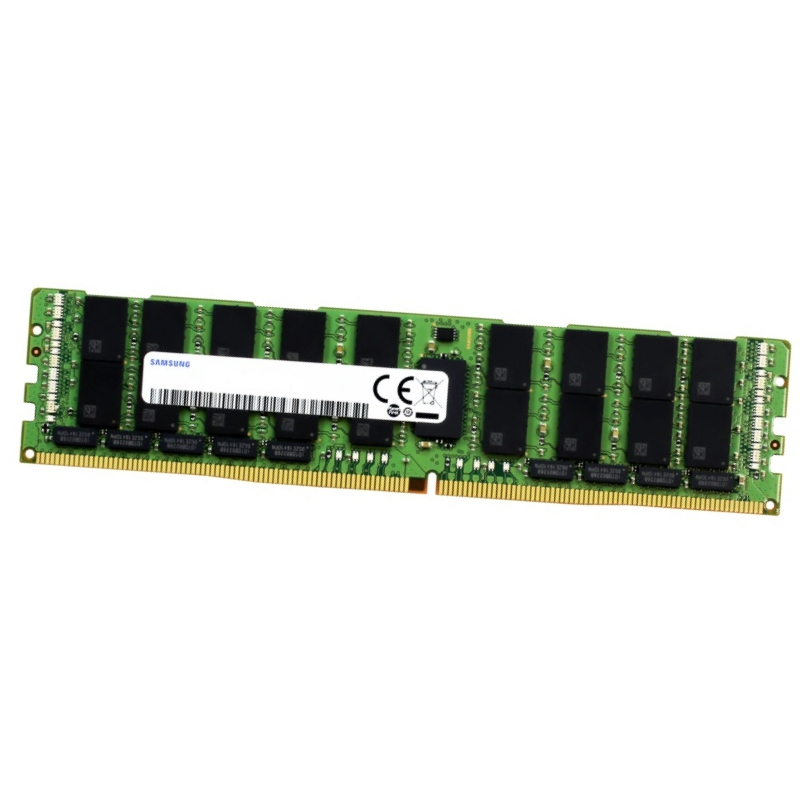
Samsung M386A8K40DM2-CVFBY 64GB DDR4 2933MBPS PC4-23400 2rX8 ECC SDRAM 288-Pin LRDIMM Memory Module. New Sealed in Box (NIB) with 3 Years Warranty
The Samsung M386A8K40DM2-CVFBY is a high-capacity 64GB DDR4 memory module built for enterprise servers and performance-driven data center environments. With advanced ECC protection and registered signal buffering, this LRDIMM module delivers stable performance, improved reliability, and efficient data handling for mission-critical workloads.
The Samsung M386A8K40DM2-CVFBY represents this category by delivering a balance of high frequency, large capacity, and enterprise-grade reliability. This category encompasses DDR4 Load-Reduced DIMM memory modules that comply with JEDEC server memory standards and are optimized for large-scale enterprise deployments. LRDIMM technology extends beyond traditional Registered DIMM architectures by incorporating memory buffer components that isolate the memory controller from the electrical load of individual DRAM chips.
Load-Reduced DIMMs utilize a memory buffer that handles both command and data signals, reducing the electrical burden placed on the CPU’s integrated memory controller. This design enables servers to scale memory far beyond the limits of unbuffered or standard registered memory. Within this category, the Samsung M386A8K40DM2-CVFBY allows full DIMM slot population at higher capacities while preserving signal integrity and operational stability. LRDIMM technology is particularly valuable in multi-socket servers where memory density and channel balance are critical for performance optimization.
Error Correction Code technology is a foundational requirement in this memory category. ECC ensures that single-bit memory errors are automatically detected and corrected, while multi-bit errors are flagged to prevent data corruption. In enterprise and cloud environments, where memory errors can propagate across virtual machines or databases, ECC significantly enhances system reliability. The Samsung M386A8K40DM2-CVFBY integrates ECC at the hardware level, making it suitable for workloads that demand absolute data accuracy and fault tolerance.
This category emphasizes ultra-high-density memory modules that enable servers to achieve massive total memory capacities without requiring excessive DIMM counts. A single 64GB LRDIMM provides substantial memory density, allowing enterprise platforms to scale into multi-terabyte configurations when fully populated. High-capacity modules are essential for modern workloads that rely heavily on in-memory data processing, virtualization, and real-time analytics.
Servers equipped with high-density memory modules can support a greater number of concurrent processes, users, or virtual machines without encountering memory bottlenecks. The category represented by the Samsung M386A8K40DM2-CVFBY enables higher consolidation ratios, reducing the number of physical servers required to support growing workloads. This approach improves hardware utilization, lowers power consumption per workload, and simplifies infrastructure management.
By reducing the total number of DIMMs needed to reach target memory capacities, this category improves internal airflow and thermal efficiency. Fewer populated slots reduce heat concentration within the memory subsystem, contributing to overall system stability. This advantage is especially important in dense rack-mounted servers where cooling efficiency directly impacts operational costs and reliability.
The DDR4 2933MBPS operating speed places this memory category among the higher-performance tiers of enterprise DDR4 solutions. PC4-23400 denotes a theoretical maximum bandwidth of approximately 23.4 GB/s per module, delivering enhanced throughput for data-intensive workloads. This speed tier is commonly supported by later-generation Intel Xeon Scalable and AMD EPYC processors, making it suitable for modern server platforms that demand higher memory bandwidth.
Higher memory frequency enables faster data access and improved performance for applications that rely on rapid memory transactions. This category supports workloads such as real-time analytics, high-frequency trading platforms, and large-scale simulations where memory bandwidth is a key performance factor. The Samsung M386A8K40DM2-CVFBY delivers consistent throughput within JEDEC specifications, ensuring predictable behavior under sustained load.
Latency characteristics in enterprise memory are carefully balanced against stability and compatibility. This category prioritizes consistent latency behavior rather than aggressive tuning, ensuring reliable performance across diverse workloads. Standardized timings help maintain compatibility with server firmware and BIOS configurations, reducing the risk of instability in complex deployments.
The 2Rx8 configuration indicates a dual-rank memory layout with x8 DRAM chips. This organization is common in high-capacity enterprise modules, offering a balance between performance, density, and power efficiency. Dual-rank designs can improve memory interleaving, potentially enhancing throughput in multi-channel architectures.
Rank interleaving allows the memory controller to alternate access between ranks, reducing idle cycles and improving overall efficiency. This category leverages dual-rank architecture to optimize performance in multi-core server processors. The Samsung M386A8K40DM2-CVFBY fits seamlessly into platforms designed to take advantage of rank-level parallelism.
Dual-rank memory modules balance power consumption and heat generation effectively, making them suitable for dense server configurations. This category is engineered to operate within strict power envelopes while maintaining stable thermal characteristics, supporting continuous enterprise workloads.
This category adheres to the 288-pin DDR4 DIMM physical standard, ensuring compatibility with enterprise server motherboards that support LRDIMM technology. The form factor prevents incorrect installation in incompatible systems and supports robust electrical signaling required for high-speed operation.
DDR4 LRDIMM modules operate at a nominal voltage of 1.2V, contributing to improved energy efficiency compared to earlier memory generations. This category supports data center initiatives focused on reducing power consumption and operational costs. The Samsung M386A8K40DM2-CVFBY is designed to maintain stable operation within tight voltage tolerances, even under sustained load.
Enterprise memory must withstand prolonged thermal stress without performance degradation. This category undergoes rigorous thermal validation to ensure reliable operation in high-density server environments. Samsung’s manufacturing standards ensure consistent quality and long-term durability.
Samsung is globally recognized for its leadership in semiconductor manufacturing, and this category reflects that expertise. The Samsung M386A8K40DM2-CVFBY utilizes Samsung-produced DRAM components, ensuring tight quality control and consistent performance. Vertical integration allows Samsung to oversee every stage of production, from wafer fabrication to final module testing.
This category strictly follows JEDEC standards, ensuring broad compatibility across enterprise server platforms. JEDEC compliance guarantees standardized electrical characteristics, timings, and mechanical specifications, simplifying deployment and reducing integration risks for system builders and IT administrators.
Memory modules in this category undergo extensive validation processes, including stress testing, compatibility testing with major server platforms, and verification of ECC functionality. These rigorous procedures ensure that the Samsung M386A8K40DM2-CVFBY meets the reliability expectations of enterprise environments.
This category is designed to support a wide range of enterprise and data center workloads. High-capacity LRDIMM memory is a foundational component of modern IT infrastructure, enabling scalability, reliability, and performance across diverse applications. Virtualization environments rely heavily on memory capacity and bandwidth to allocate resources efficiently across multiple virtual machines. This category enables higher VM density per host while maintaining stable performance. ECC and load-reduction features ensure that virtualized workloads operate reliably without data corruption.
In-memory databases benefit significantly from large, fast, and reliable memory pools. This category supports real-time analytics and transactional processing by enabling more data to reside in memory, reducing latency and improving query performance. ERP and mission-critical business applications depend on consistent memory performance and data integrity. This category ensures stable operation under continuous load, supporting complex workflows and large user bases.
Scientific research and high-performance computing workloads often require massive memory capacity and sustained bandwidth. This category supports simulations, modeling, and data analysis tasks that process large datasets in memory. The reliability of ECC memory reduces the risk of computational errors that could compromise results.
Engineering applications such as finite element analysis and computational fluid dynamics demand large contiguous memory spaces. This category enables such workloads by providing high-density, stable memory configurations. Research institutions require memory solutions that can operate reliably over extended periods. This category supports long-running computational tasks with minimal risk of memory-related failures.
This category is intended for server platforms that explicitly support DDR4 LRDIMM memory. Compatibility depends on processor memory controller capabilities and motherboard design. The Samsung M386A8K40DM2-CVFBY is commonly deployed in enterprise servers from major OEMs and in custom-built systems that meet LRDIMM requirements.
Modern enterprise servers utilize multi-socket and multi-channel memory architectures to maximize throughput. This category is optimized for such configurations, ensuring balanced memory population and consistent performance across channels. High-capacity LRDIMM memory allows organizations to scale their infrastructure incrementally as workloads grow. This category supports phased upgrades, enabling additional modules to be added without disrupting existing configurations.
Consistency and long-term availability are essential in enterprise deployments. This category offers standardized specifications and stable production lifecycles, enabling organizations to deploy, maintain, and expand their systems with confidence using the Samsung M386A8K40DM2-CVFBY as a core memory component.


 Contact Us
 Information
 Catalog
 Solid State Drives (SSD)
 Network Switches
 Hard Disk Drives
 HBA & Controllers
 PC & Servers
 PC & Server Memory
 CPU & Processors
 Network Routers
 Power Supplies
 Tape Drives & Libraries
 Network Devices
 Computer & Network Cables