(7% discount is applied at checkout)
Cart is empty
Your go-to destination for cutting-edge server products
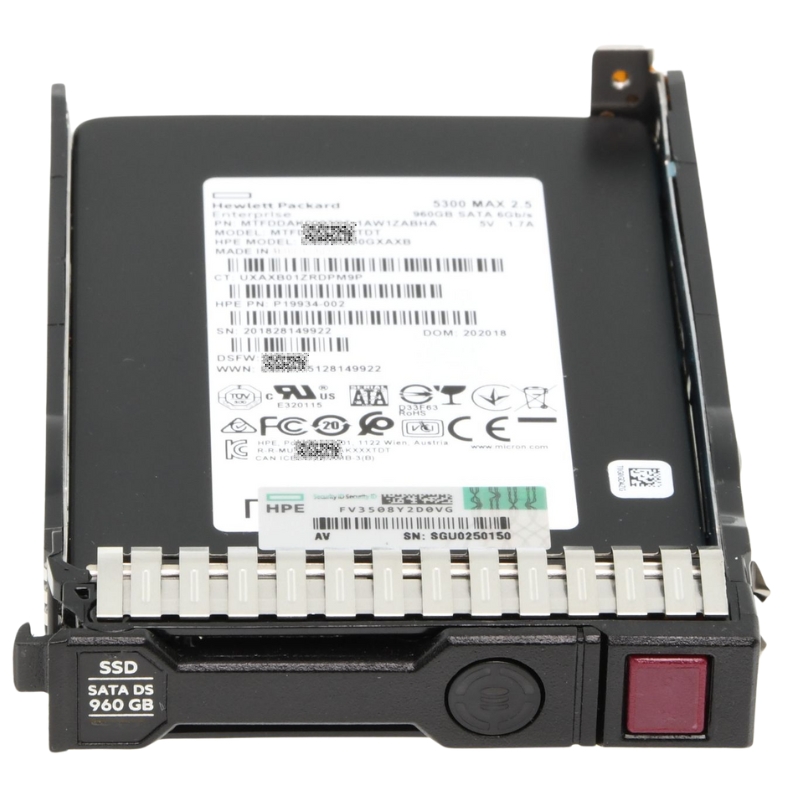


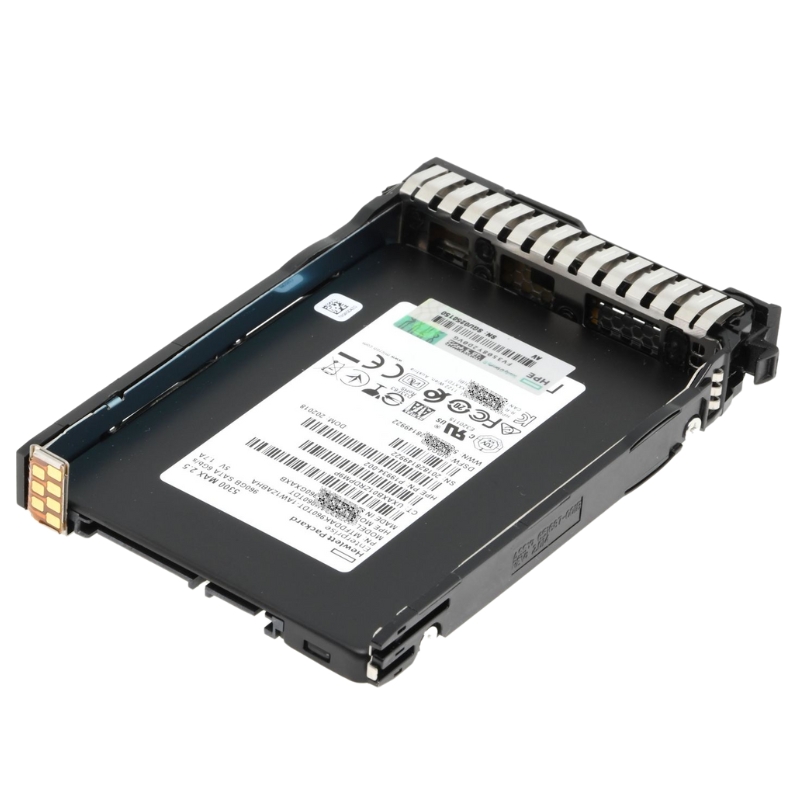
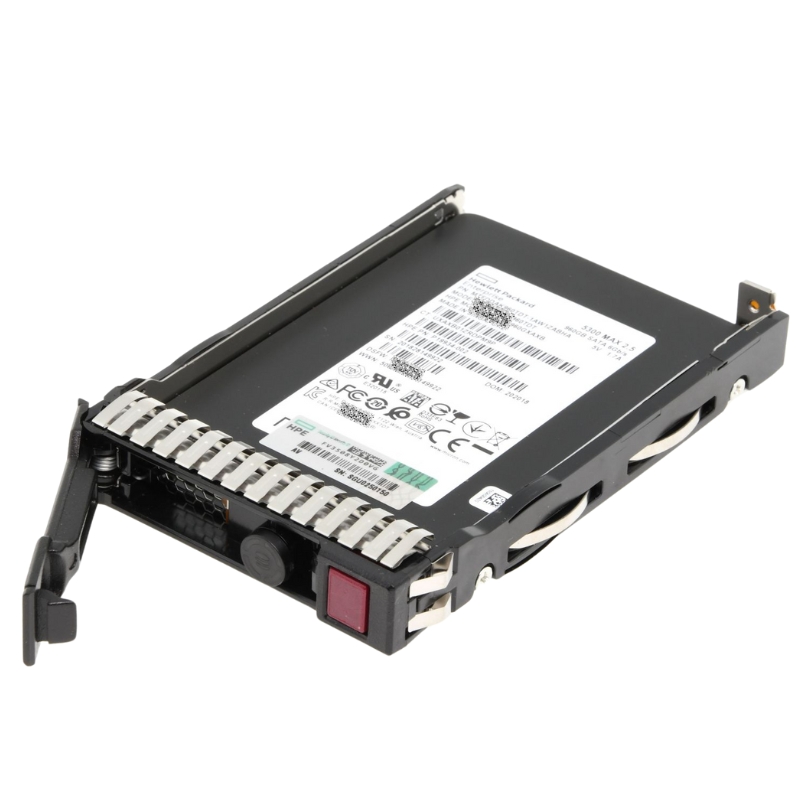
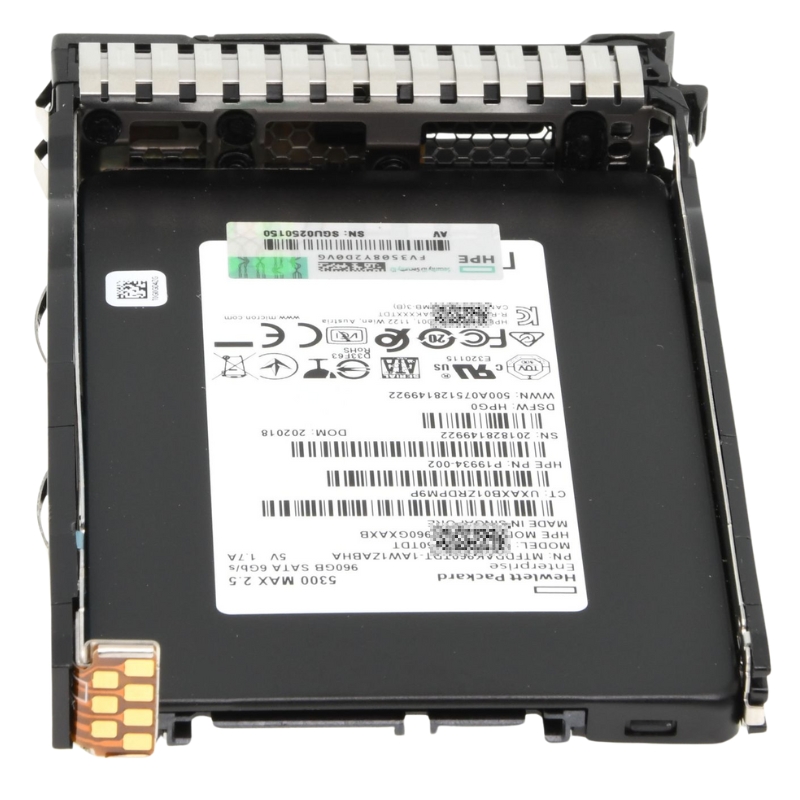
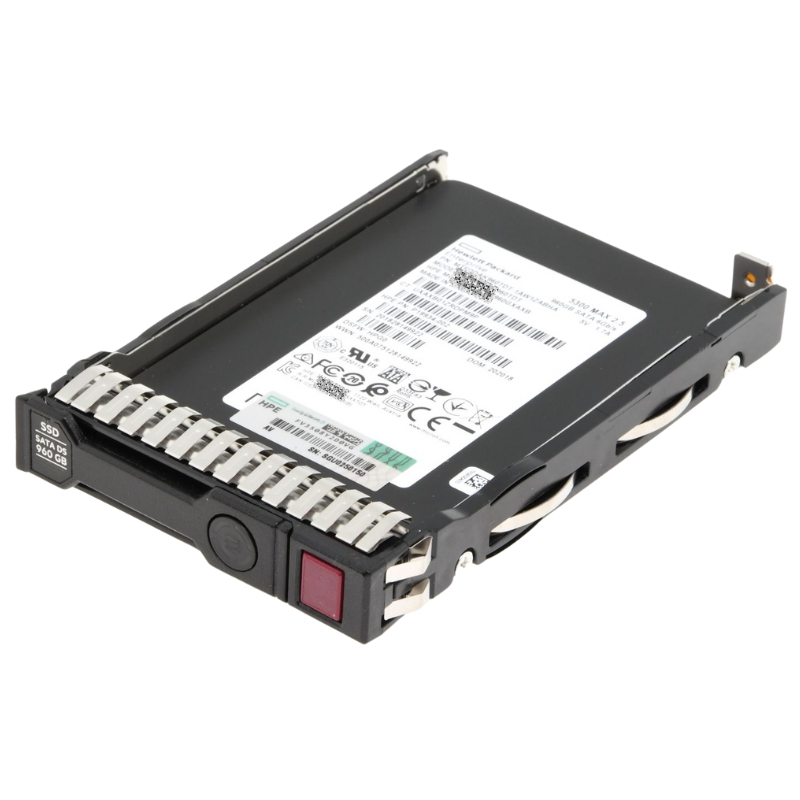
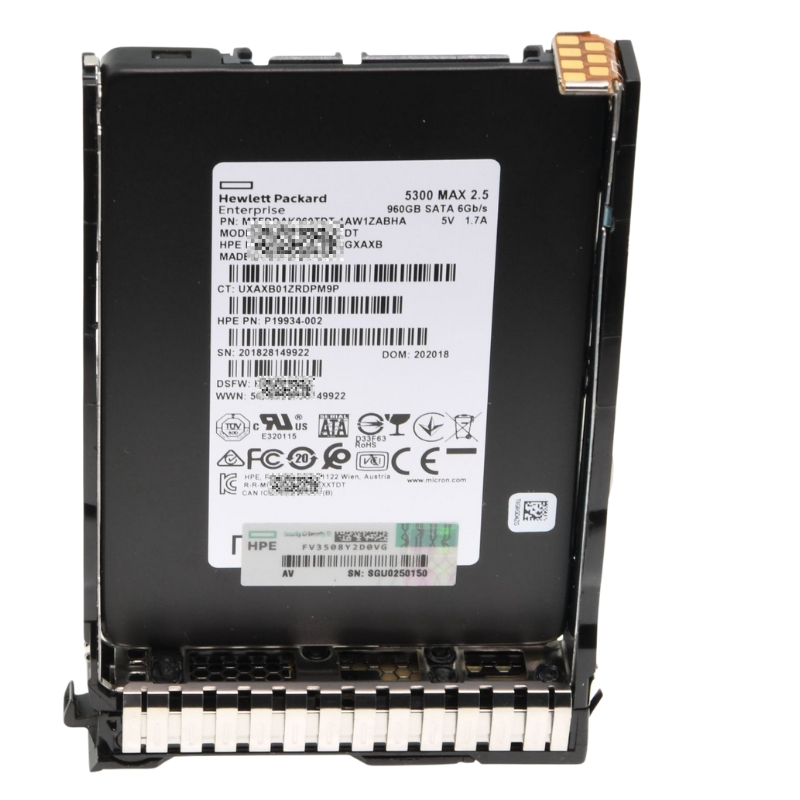
HPE P44008-B21 960GB SATA 6GBPS DS Basic Carrier SFF Read Intensive SSD. New (System) Pull with 1 Year Replacement Warranty
The HPE P44008-B21 960GB SATA 6GBPS DS Basic Carrier SFF Read Intensive SSD is designed as a high-value storage option for data centers and enterprise servers where read-dominant workloads are the priority. This category encompasses single-drive solutions and compatible drive carriers built to HPE form-factor specifications. These components deliver dependable performance for database querying, virtualization read caches, content delivery, and archival access patterns. The focus of this category is to balance sustained read throughput, predictable latencies, and long-term reliability while offering competitive cost-per-gigabyte for large-scale deployments.
These SSDs conform to the SFF (Small Form Factor) size commonly used in rack servers and HPE blade systems. The drive uses a SATA 6 Gb/s interface to ensure broad compatibility across generations of server controllers and storage backplanes. The "DS Basic Carrier" designation indicates compatibility with HPE's drive carrier architecture, enabling hot-swap operation, carrier-level health reporting, and proper mechanical fit within drive bays. This makes the category easy to integrate into existing HPE chassis without specialized adapters, streamlining deployment and maintenance.
The 960GB capacity is optimized to provide large storage pools for frequently accessed data while maximizing read performance. Typical real-world advantages include faster application response times for read-heavy queries, improved boot and application startup times, and superior random read IOPS compared with traditional HDDs. The controller firmware and NAND selection used in this class are tuned to prioritize predictable read latency over peak sequential write throughput, which aligns with the typical usage scenarios of caching layers, content repositories, and analytical read queries.
Read intensive SSDs are designed with endurance ratings appropriate for workloads with a high ratio of reads to writes. This category commonly carries endurance metrics expressed in terabytes written (TBW) or drive writes per day (DWPD) tuned for read-dominant environments. Manufacturers pair this endurance profile with robust error-correcting code (ECC), wear-leveling algorithms, and power-loss protection strategies to reduce the likelihood of data corruption. For enterprise deployments, carriers frequently support HPE iLO or management interfaces to report SMART data, drive health, and predictive failure indicators, allowing administrators to plan replacements before failures occur.
Before deployment, confirm the server chassis and RAID or HBA controller firmware support the specific P44008-B21 model and the SATA 6 Gb/s interface. Applying vendor-recommended firmware updates to both the drive and the server controller ensures optimal interoperability and prevents performance anomalies caused by mismatched command queuing or power management features. System integrators should maintain an inventory of firmware versions and run compatibility checks during planned maintenance windows to reduce risk.
The basic carrier design supports hot-swap operations in compatible HPE arrays and servers, allowing for quick replacement without powering down systems. Administrators should familiarize themselves with the chassis' drive bay identification lights and carrier latches to minimize handling errors. When replacing drives, adhere to the manufacturer-recommended procedures for offline rebuilds, background scrubs, and the resynchronization process to reduce performance impact during maintenance.
In heterogeneous arrays, combining read-intensive SATA SSDs with write-optimized NVMe or mixed-use drives is a strategic approach to tiered storage. Use read-intensive SSDs for caching layers and frequently accessed datasets, while placing write-heavy transactional logs on drives rated for higher write endurance. Ensure that RAID policies and caching strategies account for the endurance differences to prevent premature wear on drives not intended for heavy write cycles.
The P44008-B21 category commonly employs multi-level cell (MLC) or triple-level cell (TLC) NAND depending on the sub-model and production date. The controller's firmware is a critical differentiator, responsible for managing background garbage collection, wear-leveling, and read path optimization. Drives in this class are engineered to reduce read amplification and prioritize deterministic read response times. For procurement decisions, evaluate published datasheet parameters such as random read IOPS, sustained sequential read throughput, and host-to-device latency figures to match expected workload patterns.
Although the focus is read-intensive performance, many drives in this category offer security features such as TCG Opal or hardware-based encryption options. Self-encrypting drive (SED) capabilities reduce the administrative overhead of full-disk encryption and accelerate compliance with data protection regulations. In environments requiring secure decommissioning, drives with crypto-erase features enable rapid data sanitization while meeting standard compliance benchmarks
To maximize the value of the 960GB capacity, plan datasets and cache policies that avoid unnecessary write amplification. Use monitoring tools to track read/write ratios and adjust application-level caching to place the most frequently accessed objects on the SSD tier. Incorporating compression-aware file systems and application-level deduplication can expand logical capacity and improve effective utilization for certain workloads where redundancy patterns allow it.
Maintain a spares policy aligned to your service-level objectives. For large fleets, keep a small pool of identical carrier-equipped drives for rapid in-place replacement. For smaller environments, a minimal spares pool combined with expedited vendor support can be cost-effective. Record serial numbers and warranty status in an asset management system for quick RMA processing when manufacturer support is required.
When integrating P44008-B21 drives into RAID arrays, choose stripe sizes that align with application block sizes to reduce read-modify-write penalties. For database workloads, smaller stripe units can improve random read performance. Configure read cache policies to favor SSD-resident objects; modern RAID controllers allow for tiered caching policies where SSDs act as a read accelerator for slower tiers, transparently improving application-level response times without requiring changes to the application code.
Implement I/O shaping at the hypervisor or SAN layer to prevent transient spikes from overwhelming a small pool of SSDs. Smoothening I/O distribution across multiple drives reduces latency variance and improves overall application predictability. For multi-tenant environments, enforce per-tenant or per-VM IOPS limits where necessary to preserve fairness and avoid noisy neighbor conditions.


 Contact Us
 Information
 Catalog
 Solid State Drives (SSD)
 Network Switches
 Hard Disk Drives
 HBA & Controllers
 PC & Servers
 PC & Server Memory
 CPU & Processors
 Network Routers
 Power Supplies
 Tape Drives & Libraries
 Network Devices
 Computer & Network Cables