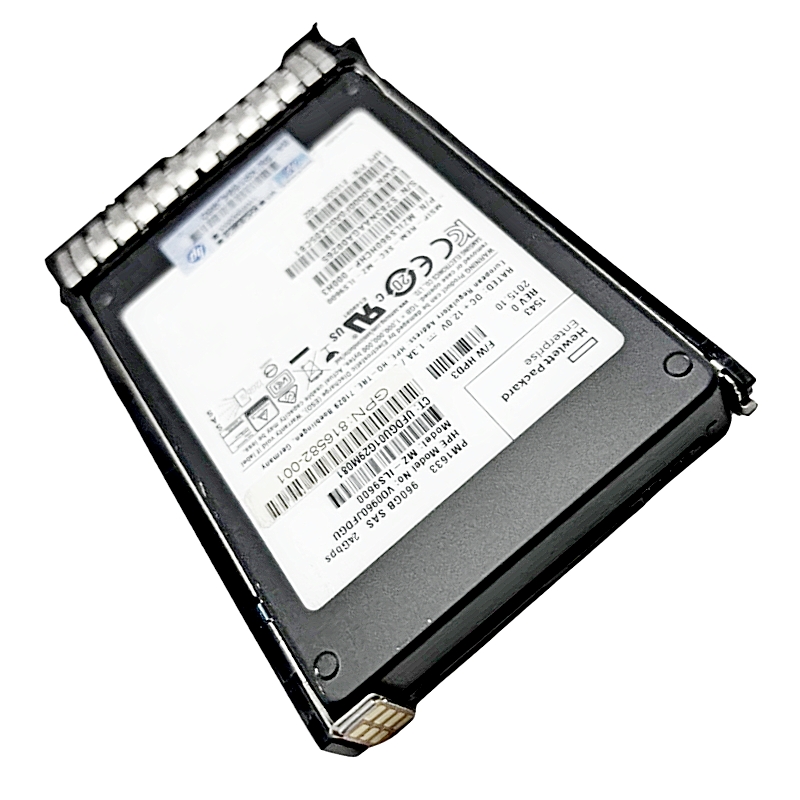
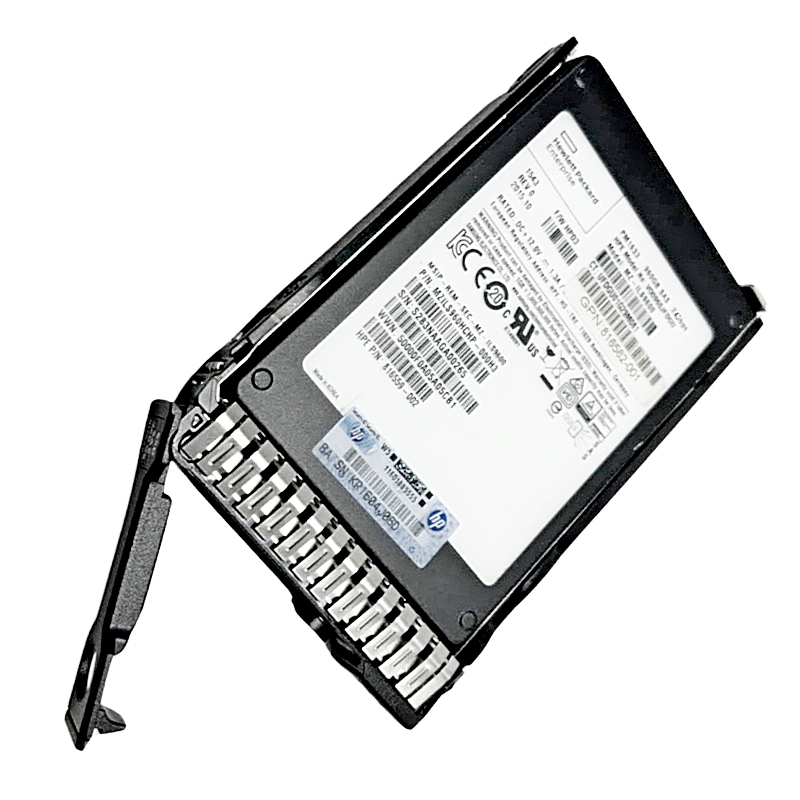
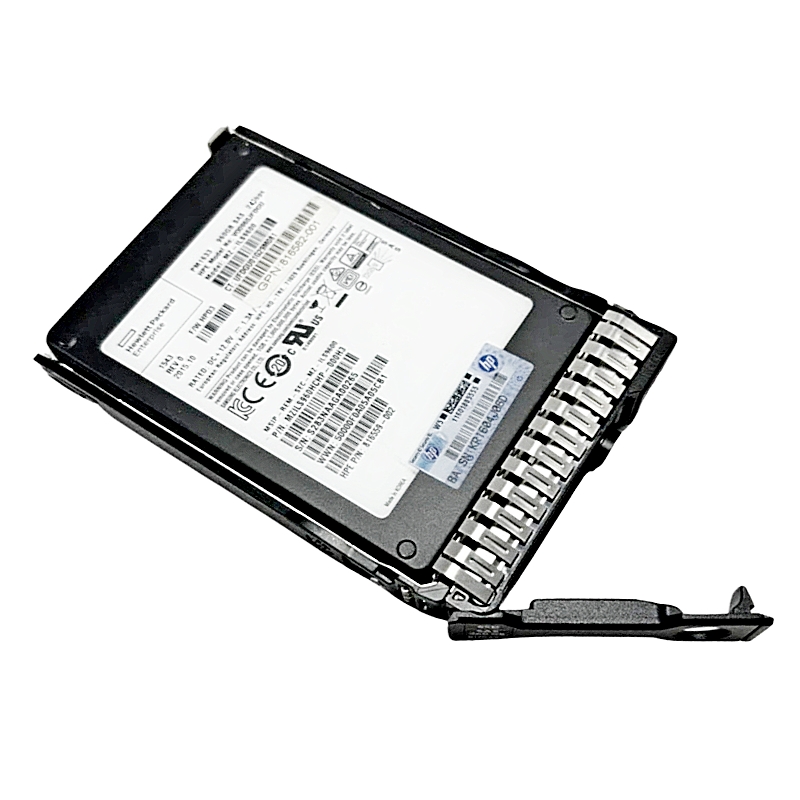
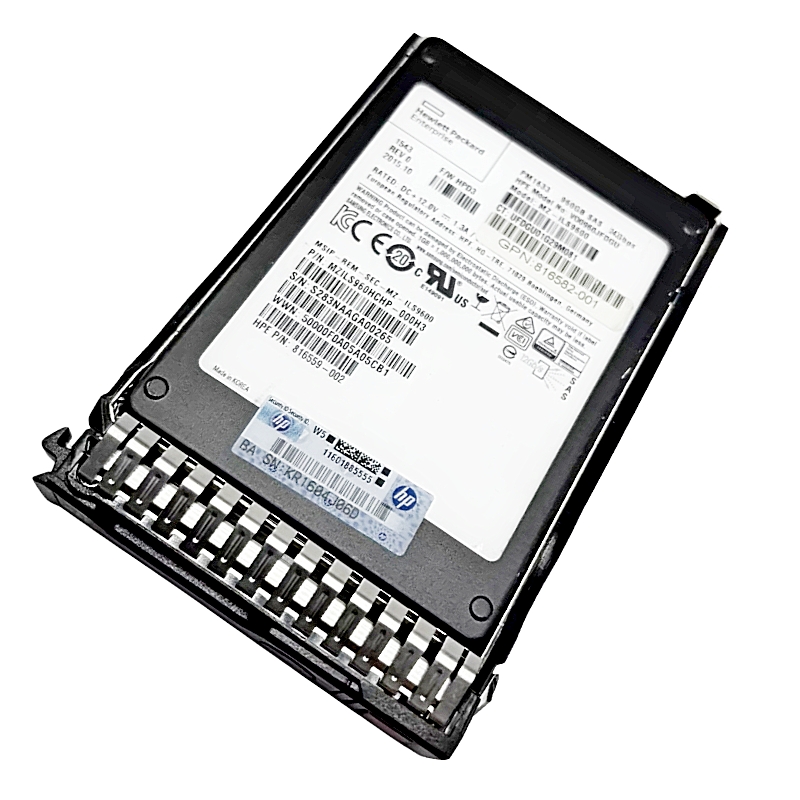
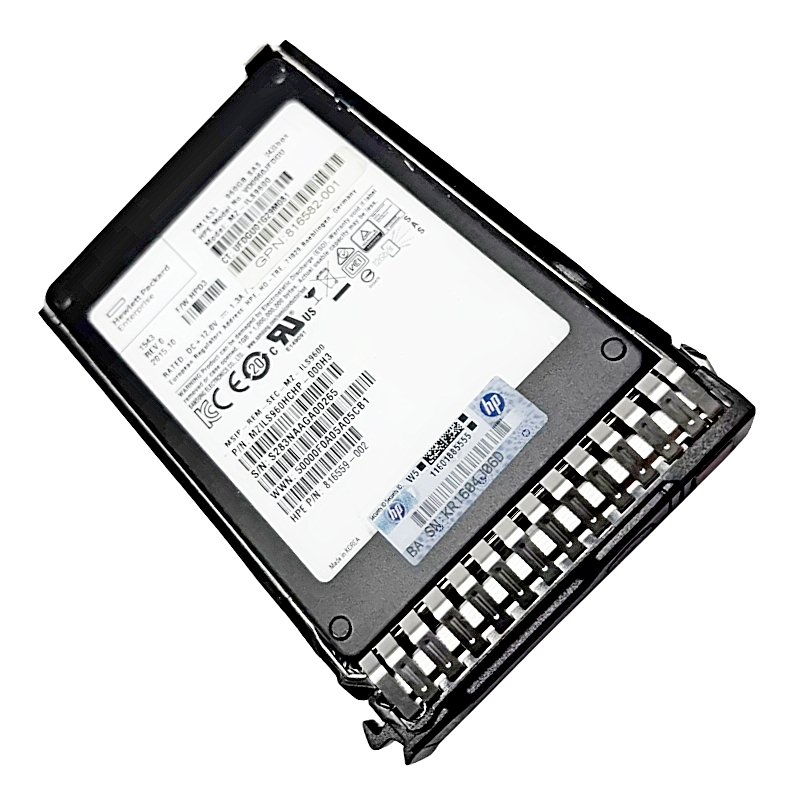
HPE P49732-001 960GB SAS 12Gbps SFF Read Intensive SSD
The HPE P49732-001 960GB SAS 12Gbps 2.5-Inch Read Intensive Solid State Drive is a robust, enterprise-grade storage device engineered for efficiency, reliability, and performance. Designed specifically for HPE ProLiant Gen10 and Gen10 Plus servers, this SSD ensures fast data access, dependable uptime, and seamless scalability for modern data-driven environments.
General Information
- Brand: HPE
- Part Number: P49732-001
- Category: Enterprise Read Intensive Solid State Drive
Key Attributes and Design Excellence
Built with Triple-Level Cell (TLC) NAND flash and enhanced with digitally signed firmware, the HPE P49732-001 delivers both performance and security. This combination makes it a preferred solution for enterprise workloads that prioritize read-intensive operations.
- Interface: SAS 12Gbps for exceptional bandwidth and reliability
- Form Factor: Compact 2.5-inch SFF design, fitting seamlessly into modern servers
- Hot-Swap Support: Enables quick replacement and reduced downtime
- Firmware Security: Digitally signed firmware ensures data integrity and protection from unauthorized modifications
- Flash Type: TLC NAND for optimal endurance and capacity balance
Technical Highlights for Enterprise-Level Applications
The HPE P49732-001 960GB SSD provides a compelling blend of low latency, high throughput, and consistent performance for mission-critical applications. It’s tailored for virtualized workloads, analytics systems, and database operations that demand read-centric storage solutions.
Performance Specifications
- Storage Capacity: 960GB
- Random Read IOPS: Up to 115,000
- Random Write IOPS: Up to 46,000
- Sequential Read Speed: Up to 1050 MiB/s
- Sequential Write Speed: Up to 1000 MiB/s
- Average Latency (Read): 180 µs
- Average Latency (Write): 96 µs
Optimized for Read-Intensive Workloads
This read-intensive SSD is specifically developed to support workloads that predominantly involve data retrieval. Ideal use cases include media streaming, web hosting, database querying, and virtual machine booting.
- Highly efficient read operation design for fast data access
- Minimized latency ensures smooth user experience and server responsiveness
- Optimized energy consumption for data centers seeking performance-per-watt efficiency
Reliable Engineering and Robust Construction
HPE designs its enterprise storage with precision, ensuring every drive meets stringent quality standards. The P49732-001 960GB SSD follows that legacy with dependable hot-swappable architecture, long operational life, and superior data handling under demanding workloads.
Durability and Endurance
- Engineered with advanced wear-leveling algorithms for prolonged drive health
- Error correction and data path protection enhance reliability
- Firmware-level safeguards prevent corruption and data loss
- Thermal and power management capabilities extend device lifespan
Seamless Compatibility with HPE ProLiant Servers
The HPE P49732-001 SSD is fully validated for use in HPE ProLiant Gen10 and Gen10 Plus systems. This ensures seamless plug-and-play functionality, automatic firmware recognition, and optimized integration within HPE’s storage ecosystem.
Certified Compatibility
- Optimized for HPE ProLiant Gen10 Plus Servers
- Ideal for high-availability computing and virtualization platforms
- Designed to fit perfectly in HPE server drive trays with secure locking mechanism
- Supports HPE Smart Carrier and Smart Array RAID controllers
Enterprise Security and Firmware Integrity
One of the standout attributes of the HPE P49732-001 is its digitally signed firmware. This feature verifies firmware authenticity, ensuring that the drive runs only trusted code authorized by HPE. Such measures greatly enhance data center security and safeguard against tampering or malware threats.
Advanced Firmware Protection
- Authenticated firmware prevents unauthorized updates
- Maintains compliance with enterprise security standards
- Guarantees data protection throughout operational lifecycle
- Reduces risk of firmware corruption or malicious injection
Energy Efficiency and Performance Balance
Energy efficiency remains a critical factor for data centers, and this drive achieves an excellent performance-per-watt ratio. By combining low latency with optimized power usage, the HPE P49732-001 minimizes operational costs while maintaining rapid response times.
- Low idle power consumption contributes to energy savings
- Improved cooling efficiency through reduced heat output
- Ideal for scalable infrastructure and virtualized environments
- Consistent throughput under varying workload conditions
Comprehensive Benefits for Modern IT Infrastructure
The HPE 960GB SAS SSD provides a future-ready storage platform designed for high-volume read scenarios, ensuring dependable performance even during intensive data access sessions. It’s a critical asset for enterprises optimizing their server storage hierarchy for reliability and responsiveness.
Core Advantages
- Accelerates data retrieval times in enterprise environments
- Maintains performance consistency for database and virtualization tasks
- Integrates seamlessly with HPE system management tools
- Supports RAID configurations for redundancy and resilience
Ideal Applications
- Cloud infrastructure and virtualization hosts
- High-performance web servers and e-commerce platforms
- Enterprise databases and analytic workloads
- Boot drive solutions for HPE ProLiant servers
Precision Engineering for Long-Term Value
With 15mm height and solid 2.5-inch form factor, the P49732-001 SSD fits perfectly within standard server chassis configurations. Its optimized balance of speed, reliability, and durability makes it an intelligent investment for enterprises seeking stable long-term performance.
Build and Design Features
- Durable construction designed for 24/7 operational environments
- Hot-pluggable design simplifies maintenance and upgrades
- Advanced thermal controls maintain consistent operating temperatures
- Tested under rigorous enterprise workload simulations
Why Choose HPE Enterprise Drives
- Rigorous testing and validation ensure enterprise reliability
- Optimized for integration with HPE infrastructure management tools
- Industry-leading security and digital firmware signing
- Global support and warranty coverage from HPE
HPE P49732-001 960GB SAS Product category overview
The HPE P49732-001 960GB SAS 12Gb/s SFF (2.5") Read-Intensive, SC (read-scoped) Solid State Drive (SSD) with hot-swap tray is built for mixed and read-heavy enterprise workloads in HPE Gen10 and Gen10 Plus server platforms. This category covers enterprise-grade SAS SSDs designed to deliver consistent low-latency I/O, high sustained throughput at 12 Gbit/s SAS interface speeds, and firmware that is digitally signed for multi-vendor compatibility and secure firmware validation. These drives are suitable for database read caches, virtualization read-heavy tiers, content distribution nodes, and other mission-critical applications where predictable read performance, endurance, and enterprise-level management features are required.
Key technical characteristics
- Form factor: SFF 2.5-inch (SAS SFF tray compatible)
- Interface: 12 Gbit/s SAS (Serial Attached SCSI)
- Capacity: 960 GB (usable capacity varies by vendor formatting and over-provisioning)
- Workload optimization: Read-intensive class (engineered for high read-to-write ratios)
- Hot-swap: Tray-enabled, hot-pluggable for minimal downtime in server environments
- Firmware: Digitally signed, multi-vendor compatible firmware for secure updates and vendor interoperability
- Compatibility: Designed and validated for HPE Gen10 and Gen10 Plus servers; also usable in multi-vendor SAS storage infrastructures with appropriate firmware and backplane support
Why enterprises choose 12Gb/s SAS SSDs
12Gb/s SAS remains a preferred interface in enterprise server and storage arrays because it provides a balance of performance, reliability, and broad ecosystem compatibility. Compared to SATA, SAS offers higher availability features (dual-port capability on many enterprise drives), better error recovery controls, and advanced command sets suited for enterprise storage management. The HPE P49732-001 class of 12Gb/s SAS SSDs is particularly relevant where predictable read throughput, low latency, and secure firmware management are priorities.
Firmware digitally signed & multi-vendor considerations
What “digitally signed firmware” means
Digitally signed firmware uses cryptographic signatures to ensure firmware authenticity and integrity before installation. For enterprises this provides:
- Security: Protection against tampered or malicious firmware that could compromise data integrity or server behavior.
- Trust: Assurance that firmware comes from a trusted source (drive vendor or validated third-party signer).
- Compatibility: Signed firmware helps with cross-vendor acceptance in server ecosystems that enforce firmware validation policies.
Multi-vendor firmware interoperability
“Multi-vendor digitally signed firmware” indicates that the drive’s firmware is signed in a manner acceptable across a range of certified server vendors or certified components. This is particularly important when drives are deployed in mixed-brand racks or when third-party parts are used. Important points:
- Always verify that your HPE server firmware and controller firmware accept the drive’s signature format.
- HPE validated part numbers (like P49732-001) are intended to work cleanly with HPE management tools (iLO, SPP updates) and RAID/HBA firmware checks.
- When mixing multi-vendor parts, keep an inventory and firmware baseline to ensure firmware updates are applied consistently and securely.
Firmware update best practices
- Backup critical data and ensure snapshots or replicas are current.
- Check server vendor (HPE) advisories for firmware compatibility notes specific to Gen10 and Gen10 Plus platforms.
- Apply updates during a maintenance window; use hot-swap trays to replace or stage upgrades without extended downtime.
- Test firmware updates on representative systems before wide roll-out to production clusters.
Compatibility & validated platforms
Designed for HPE Gen10 and Gen10 Plus
The P49732-001 class is validated for HPE ProLiant Gen10 and Gen10 Plus servers, meaning it is tested to interoperate with HPE controllers, backplanes, and server management tools. When purchasing for HPE servers:
- Confirm server model compatibility and supported firmware revisions in HPE’s compatibility matrix.
- Leverage HPE iLO and Intelligent Provisioning to monitor drive health, perform firmware updates, and view SMART attributes.
- Use HPE Service Pack for ProLiant (SPP) when possible for consolidated firmware updates aligned with HPE recommendations.
Using the drive in non-HPE systems
Although designed for HPE systems, 12Gb/s SAS drives with digitally signed firmware often function in third-party enclosures and controllers. Considerations include:
- Controller acceptance of vendor signatures — some OEM controllers enforce signature checks.
- Drive TRIM/PR support variations across controllers; check if your RAID controller passes passthrough TRIM or supports SDS features.
- Warranty and support differences when used outside of OEM-certified configurations.
Physical & mechanical features
SFF 2.5-inch form factor and tray compatibility
The SFF 2.5-inch format provides a compact footprint allowing higher drive density per chassis bay. The hot-swap tray included (or tray-compatible drive) makes it simple to replace or add drives without powering down the server, preserving high availability.
Hot-swap & serviceability
Hot-swap capability is essential in enterprise deployments to:
- Minimize downtime during drive replacement or upgrades
- Enable rapid service in RAID rebuilds or degraded array recovery
- Allow live migration of workloads prior to replacement in clustered environments
Best practices for hot-swap operations
- Follow the server vendor’s indicated LED and management panel for safe removal indicators.
- Perform a graceful offline of the logical volume or evacuate virtual machines if necessary before removal in critical arrays.
- Allow queues and caches to flush after marking the drive offline and before physical removal.
Endurance, reliability
Endurance class and expected life
Read-intensive SSDs are provisioned with endurance levels tailored for workloads dominated by reads. Expected endurance is typically expressed as Drive Writes Per Day (DWPD) over a warranty period. While specific DWPD values vary by model and firmware, a read-intensive drive prioritizes lower DWPD relative to mixed-use or write-intensive classes but still includes enterprise-grade endurance metrics suited for many server workloads.
SMART attributes and predictive failure analysis
Enterprise SSDs expose SMART attributes that administrators can monitor via server management software. Key SMART metrics to track:
- Power-on hours and start/stop cycles
- Percentage used or NAND life depletion
- Uncorrectable error counts and media errors
- Temperature and power cycle counts
Proactive monitoring of these metrics enables preemptive replacement and reduces unexpected downtime.
Security features
Firmware integrity and signed updates
Digitally signed firmware enforces update integrity, preventing unauthorized firmware from being applied. This reduces risk from supply-chain tampering or rogue updates.
Data-at-rest and encryption options
Some enterprise SAS SSD models support Self-Encrypting Drive (SED) features (not all drives in the category are SED). When encryption is needed:
- Verify SED support (TCG/Opal or other standards) on the specific SKU.
- Integrate with key management solutions for enterprise-grade key lifecycle control.
- Confirm controller and server firmware support hardware encryption and key management APIs.
Deployment and architecture guidance
RAID and array design considerations
When using 960GB read-intensive SAS SSDs in RAID arrays, consider:
- RAID level: For read-focused workloads, RAID5 or RAID6 provides space efficiency and read performance benefits, but assess rebuild times and rebuild impact on sustained performance.
- Spare provisioning: Keep hot spares in the array or in dedicated spare slots for fast automated rebuilds.
- Over-provisioning: Use firmware or controller-level over-provisioning settings to balance write amplification and endurance.
Cache tiers and hybrid storage
Read-intensive SSDs are ideal for implementing a cache or read-tier in hybrid storage systems. Common architectures include:
- SSD read cache in front of large-capacity HDD pools to accelerate random reads
- Tiered storage with automated hot/cold data movement to optimize cost vs performance
- Use of SSDs as read-only replicas for distributed read scaling across nodes
Compatibility checklist before deployment
- Confirm HPE Gen10/Gen10 Plus server model compatibility and firmware baseline.
- Validate controller (HBA/RAID) support for 12Gb/s SAS and drive signatures.
- Ensure chassis backplane supports SFF 2.5-inch hot-swap trays and drive carrier alignment.
- Check that management software (iLO, SPP) can monitor and report SMART attributes for SSDs.
- Review firmware update policies and prepare a tested update plan before mass deployment.
Common troubleshooting & maintenance
Initial drive recognition issues
If a newly installed drive is not recognized:
- Check drive seating and backplane connectors; reseat the tray firmly into the bay.
- Verify controller firmware and driver compatibility; update HBA/RAID firmware if needed.
- Use server management tools (iLO System Event Log) to check for drive error codes.
Degraded array or rebuild slowdowns
Causes of slow rebuilds and degraded performance may include:
- Controller overload or heavy host I/O during rebuilds
- Mismatch between drive performance and array load
- Thermal throttling when ambient temperature is high in dense chassis
Comparisons & alternatives
Read-intensive SAS SSDs vs mixed-use & write-intensive SSDs
Read-intensive SSDs are optimized for high read throughput and cost-effective endurance. If your application performs regular heavy writes (large-scale logging, heavy transactional workloads), consider mixed-use or write-intensive SSDs with higher DWPD ratings. Conversely, for archival or cold data, high-capacity HDDs or archival SSDs may be more cost-effective.
12Gb/s SAS vs NVMe
NVMe drives provide much higher raw bandwidth and lower protocol overhead, but SAS SSDs offer advantages in traditional SAS infrastructure environments:
- SAS: Easier integration into existing server backplanes and RAID ecosystems, dual-port options, broad vendor support.
- NVMe: Higher performance per device and lower latency—best when servers and storage stacks are NVMe-native.
Choose SAS if your environment is SAS-centric and you need compatibility with existing controllers, or choose NVMe when designing for maximum per-device performance with NVMe fabric or direct PCIe connectivity.
Use cases & deployment patterns
Typical deployment scenarios
- Read caching for large HDD pools: SSDs act as a caching layer to accelerate random reads.
- Database read replicas: Host read replicas on SSD tiers to offload primary nodes and speed query response.
- Virtual machine boot storms: Use read-optimized SSDs to reduce login/boot latency in VDI farms.
- High-performance web delivery: Serve static content and media from SSD-backed nodes for consistent low-latency delivery.
Case study pattern (illustrative)
An enterprise running HPE Gen10 servers employed a drive tier composed of 960GB read-intensive SAS SSDs for database read replicas. The architecture improved query response times by reducing seek-related latency on HDD-based primary store while keeping capacity costs manageable. The digitally signed firmware ensured smooth maintenance cycles via centralized firmware management and minimized unexpected compatibility problems during rolling updates.
Detailed specification checklist (for product snippets)
Suggested spec fields to include on the product category page
- Model / SKU: HPE P49732-001 (or vendor-equivalent SKU)
- Capacity: 960 GB
- Interface: 12 Gb/s SAS
- Form factor: 2.5" SFF, hot-swap
- Endurance class: Read-Intensive (specify DWPD if available)
- Firmware: Digitally signed, multi-vendor
- Compatibility: HPE Gen10 / Gen10 Plus validated
- Security: Firmware signature; list SED support if applicable
- Warranty: Manufacturer limited warranty (years and terms)
- MTBF / AFR: Manufacturer-rated MTBF or AFR if published
- Operating temp: Specify operating and non-operating temperature ranges





 Contact Us
 Information
 Catalog
 Solid State Drives (SSD)
 Network Switches
 Hard Disk Drives
 HBA & Controllers
 PC & Servers
 PC & Server Memory
 CPU & Processors
 Network Routers
 Power Supplies
 Tape Drives & Libraries
 Network Devices
 Computer & Network Cables