(7% discount is applied at checkout)
Cart is empty
Your go-to destination for cutting-edge server products
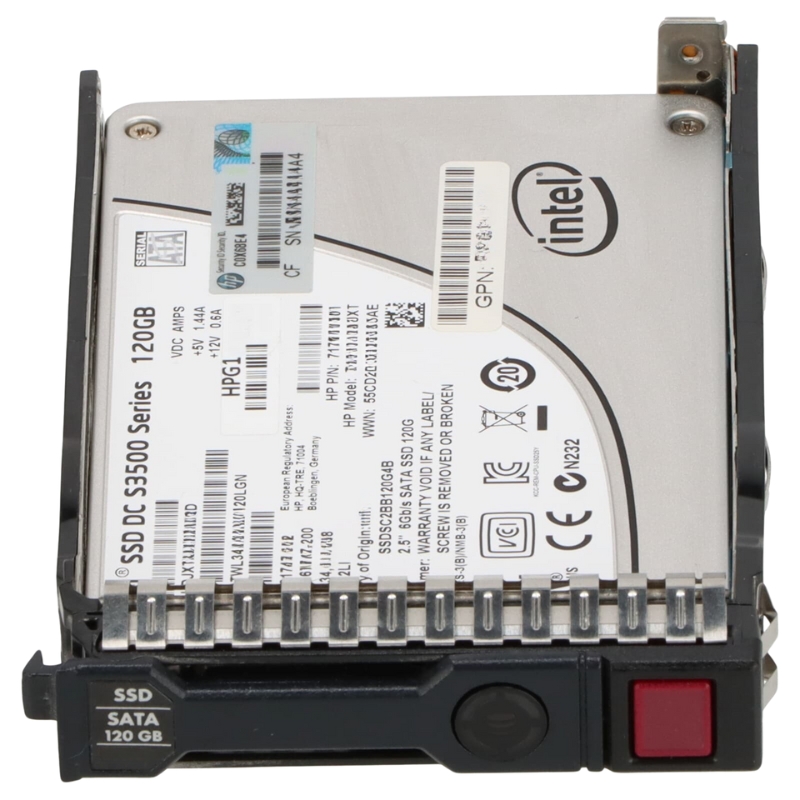


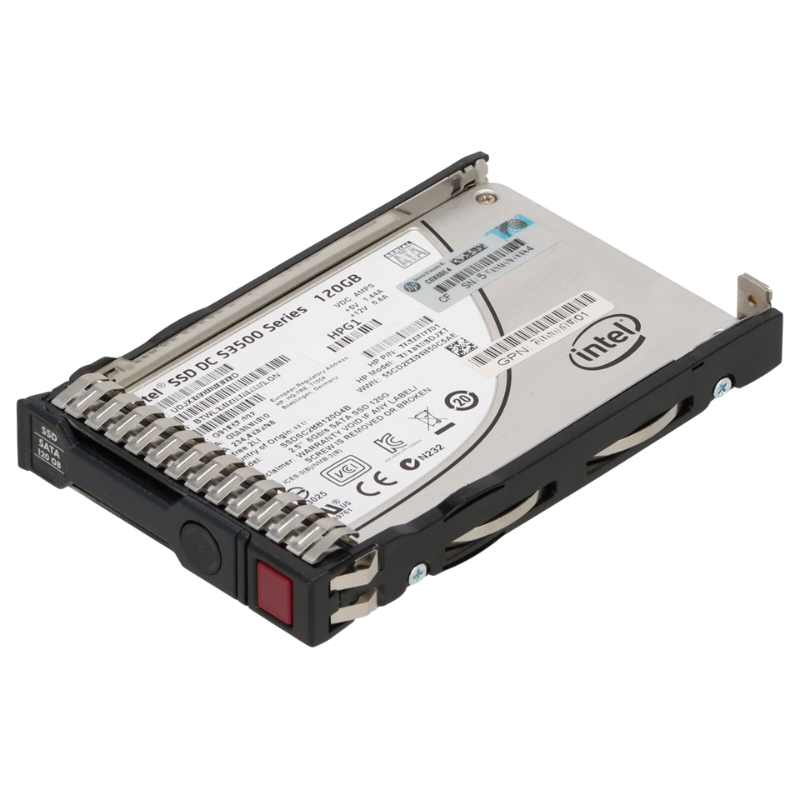
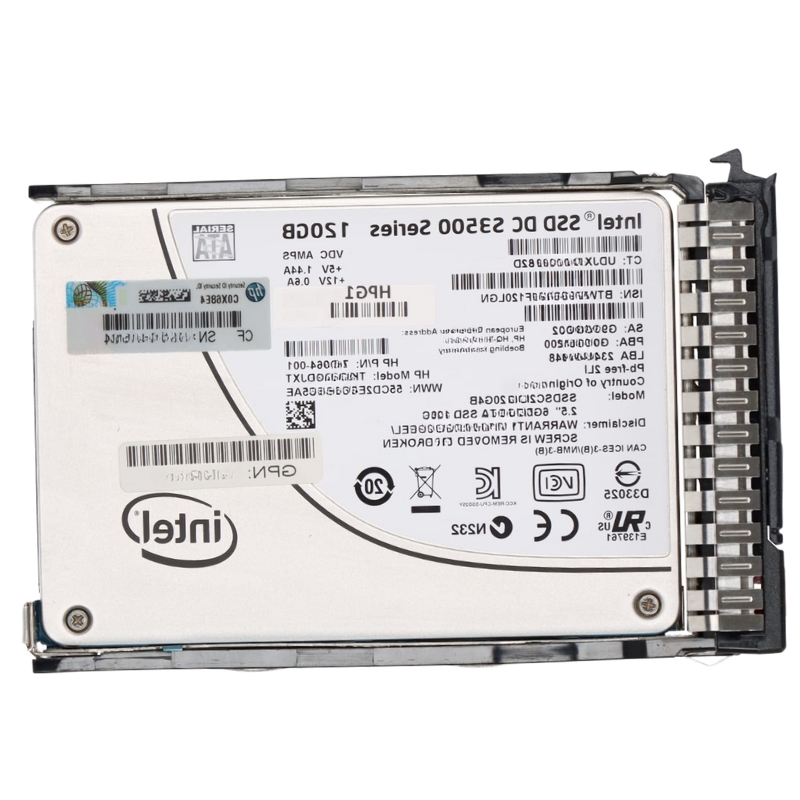
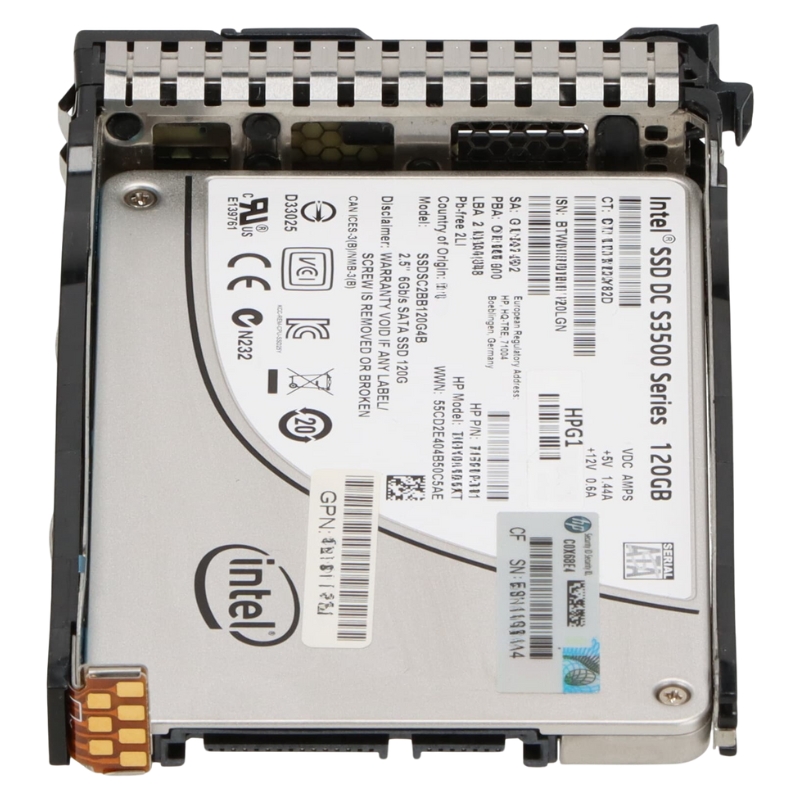
HPE 718136-001 Enterprise Boot Proliant G8 120GB SSD SATA 6GBPS Value. Excellent Refurbished with 1 year replacement warranty
The HPE 718136-001 120GB 2.5-inch Solid State Drive offers exceptional reliability, compact form, and optimized boot performance for enterprise-level systems. Designed to deliver efficient and stable data access, this drive supports multiple HPE platforms while ensuring value endurance and consistent workload management.
The HPE 718136-001 SATA SSD is built with advanced NAND flash memory and engineered for robust boot and startup applications. Its Smart Carrier design simplifies installation and enhances reliability for enterprise systems that demand uninterrupted uptime.
The HPE 718136-001 SSD integrates seamlessly with a wide range of HPE servers and storage platforms, ensuring flexibility and broad system support.
The HPE 718136-001 120GB 2.5-inch Small Form Factor (SFF) Value Endurance SATA-6Gbps Smart Carrier Enterprise Boot Solid State Drive represents a specialized category of Hewlett Packard Enterprise (HPE) storage devices engineered specifically for boot operations and lightweight enterprise applications. This family of drives provides exceptional reliability, endurance, and consistent performance for system startup, hypervisor hosting, and application caching in enterprise server environments. In data centers, virtualization clusters, and dedicated hosting servers, boot drives such as the HPE 718136-001 offer compact, efficient storage solutions that prioritize stability and longevity over raw capacity. These drives are a vital subcategory within HPE’s enterprise SSD lineup, delivering cost-efficient and dependable performance for IT infrastructures seeking predictable operation and reduced downtime.
The HPE 718136-001 falls under the enterprise boot drive category—an essential component class designed to host operating systems, hypervisors, and critical system utilities rather than large datasets. Unlike high-capacity mixed-use or write-intensive SSDs, this Value Endurance model balances endurance and cost to provide stable system boots across thousands of cycles without degradation. Boot SSDs like this model are optimized for consistent read performance and sufficient write durability to handle frequent reboots, updates, and patching cycles. They help maintain server uptime and efficiency by ensuring fast initialization and reliable access to the OS kernel and management software, forming the backbone of server management operations in environments such as HPE ProLiant and Apollo systems.
The 2.5-inch Small Form Factor (SFF) design of the HPE 718136-001 is a crucial aspect of its category appeal. Compact form factors enable high-density configurations in rack-mounted or blade server chassis. Enterprise data centers benefit from the ability to install multiple boot drives or cache devices within limited physical space. This efficient footprint supports modular configurations, RAID arrays, or mirrored boot partitions without compromising airflow or system thermal efficiency. The SFF category ensures compatibility across a wide range of HPE Smart Carrier enclosures, simplifying integration for administrators deploying uniform drive infrastructures across multiple server generations.
The SATA 6Gbps interface defines the connectivity class for this product line. Although SAS interfaces dominate enterprise storage arrays, SATA drives continue to play a critical role in boot and archival applications where cost efficiency and broad compatibility are key. The SATA-6Gbps standard delivers a balance of transfer speed, reliability, and energy efficiency, enabling up to 6 gigabits per second of throughput in ideal conditions. Within the HPE server ecosystem, SATA drives such as the 718136-001 are recognized natively by Smart Array controllers, enabling seamless configuration, RAID mirroring, or BIOS-level boot setups. This broad interface compatibility ensures cross-platform utility in hybrid infrastructures that include both legacy and next-generation systems.
The inclusion of HPE’s Smart Carrier technology distinguishes this SSD category from basic consumer-grade drives. The Smart Carrier provides integrated status indicators, advanced diagnostics, and management metadata embedded directly into the drive’s carrier module. These features allow system administrators to assess drive health, identify predictive failures, and perform non-disruptive maintenance without removing the drive from service unnecessarily. The Smart Carrier interface aligns with HPE’s Integrated Lights-Out (iLO) and Smart Storage Administrator tools, supporting LED indicators that display activity, fault, and locate signals. This design reduces downtime and enhances the drive’s operational transparency in large-scale environments where hundreds or thousands of drives operate simultaneously.
Value Endurance SSDs, such as the HPE 718136-001, occupy a balanced position between read-intensive and mixed-use categories. Their endurance ratings are optimized for light to moderate write workloads while guaranteeing predictable read performance and operational stability. For boot applications, endurance is critical: the drive must handle system updates, patches, and swap file operations over years of service. HPE validates these drives through extensive burn-in and qualification processes to ensure compatibility with server firmware and storage controllers. In real-world deployment, this endurance translates to consistent performance over time, minimizing risks of early wear-out and preserving long-term reliability—vital characteristics for enterprises running 24/7 workloads or remote server deployments.
Although the HPE 718136-001 120GB SSD is not designed for heavy transactional workloads, its SATA-based architecture provides exceptional latency characteristics for boot and system-level operations. Boot SSDs deliver rapid initialization, allowing servers to start and recover from downtime quickly. Average latency often remains well below that of mechanical HDDs, ensuring smoother system responsiveness even under load. Sequential read performance supports fast image loading, while random read capability enhances hypervisor and OS responsiveness. This consistent low-latency behavior contributes directly to improved uptime metrics, especially in environments requiring frequent maintenance or reboot cycles, such as virtualized clusters or test/dev environments.
The enterprise boot drive category, exemplified by the HPE 718136-001, finds its strongest use cases in virtualization infrastructure, hyper-converged setups, and blade server configurations. In VMware ESXi, Microsoft Hyper-V, or Citrix environments, these drives are ideal for installing hypervisors and management consoles. Their stability allows predictable boot behavior across clusters, while their compact form and low power draw make them suitable for dense server farms. Additional applications include system recovery partitions, firmware repositories, and system monitoring toolkits. Many IT teams deploy these SSDs in mirrored configurations (RAID 1) to ensure redundancy for critical startup volumes.
Power efficiency is another defining feature of this SSD category. The HPE 718136-001 consumes significantly less energy compared to spinning drives, contributing to overall data center sustainability and lower operating costs. Reduced power consumption also translates to less heat generation, improving thermal profiles and extending component life. The Smart Carrier chassis further supports optimized airflow, ensuring consistent cooling across dense rack environments. Efficient operation allows system integrators to deploy larger numbers of boot drives without exceeding rack power budgets, aligning with enterprise green initiatives and energy compliance standards.
Firmware within the HPE 718136-001 is tuned specifically for HPE platforms, ensuring maximum compatibility with ProLiant servers, Smart Array controllers, and HPE’s Intelligent Provisioning utilities. The integration between drive firmware and HPE’s management ecosystem allows automated error correction, predictive analytics, and lifecycle tracking. Through HPE’s management stack, administrators can monitor performance attributes such as reallocated sectors, wear levels, and total bytes written (TBW) metrics. This holistic integration distinguishes the enterprise category from consumer SSDs, where such detailed telemetry and cross-platform synchronization are rare.
Data integrity mechanisms embedded in the HPE 718136-001 further emphasize its enterprise-grade positioning. The drive incorporates error correction codes (ECC), wear-leveling algorithms, and bad block management to maintain data consistency even under continuous read/write cycles. Power-loss protection helps safeguard in-flight data during unexpected outages, while firmware-level error recovery ensures that corrupted sectors do not propagate across the file system. HPE’s manufacturing standards subject each drive to stringent validation, guaranteeing compliance with enterprise data protection expectations and ISO quality metrics. This reliability ensures that even as the drive operates in boot or light data workloads, data loss risks remain minimal.
Using dedicated boot drives like the HPE 718136-001 provides several architectural advantages over partitioning larger data drives. Segregating boot volumes prevents operating system failures from affecting application data and simplifies OS reinstallation or upgrade processes. This separation improves server manageability and reduces potential downtime. Boot SSDs also facilitate faster firmware upgrades and patch rollouts since their read latency and throughput ensure smooth reboots. In high-availability environments, the ability to mirror boot drives enhances fault tolerance, ensuring that even if one drive fails, the system can continue running seamlessly.
This SSD category is tightly aligned with HPE’s ProLiant Gen8, Gen9, and Gen10 server architectures. These servers rely on boot SSDs to host system partitions, intelligent provisioning tools, and virtual machine managers. The HPE 718136-001 integrates effortlessly with SmartDrive trays and backplanes designed for hot-swap functionality. It also supports RAID configurations managed through HPE Smart Array controllers, which provide caching, parity, and redundancy management. This integration makes deployment, replacement, and upgrade operations simple while maintaining data integrity and minimizing downtime.
Lifecycle management capabilities are enhanced in this product category due to built-in monitoring tools and analytics. Administrators can track the remaining useful life of each SSD based on write cycle consumption and predictive failure analysis. HPE’s ecosystem leverages SMART diagnostics and proprietary monitoring utilities to issue alerts well before failure conditions occur. This predictive maintenance approach supports proactive replacement scheduling, ensuring that critical systems remain continuously operational. Such lifecycle control is particularly valuable in regulated industries, where uptime and data integrity are audited for compliance purposes.
Enterprise boot drives like the HPE 718136-001 deliver cost efficiency by focusing on specific workloads rather than attempting to replace high-capacity storage arrays. Their smaller capacity reduces upfront costs, while their optimized endurance lowers the frequency of replacements. The total cost of ownership (TCO) is reduced through lower power usage, easier management, and predictable lifespan planning. For enterprises deploying hundreds of servers, these operational savings accumulate significantly over time, contributing to long-term budget predictability and improved return on investment (ROI).
The flexibility of deploying the HPE 718136-001 extends across various configurations. It can operate as a standalone boot drive, within mirrored RAID setups, or even as a lightweight caching tier for read-heavy workloads. In clustered environments, these SSDs can serve as primary OS drives while higher-capacity NVMe or SAS drives handle bulk storage. The 2.5-inch form factor ensures compatibility with existing server slots, while the SATA interface provides plug-and-play integration without additional controllers. This adaptability enables seamless scalability, whether for small businesses or hyperscale enterprises.
Within the broader HPE SSD ecosystem, the Value Endurance category sits between Read Intensive and Mixed Use segments. While Read Intensive models prioritize minimal write durability and maximum capacity, and Mixed Use drives target higher write tolerance, the Value Endurance class balances both. The HPE 718136-001 offers moderate write endurance suitable for boot tasks and moderate logging operations, without incurring the higher costs associated with write-intensive enterprise SSDs. For IT managers comparing drive options, this balance offers the most practical choice for server startup and firmware hosting roles where sustained write workloads are infrequent but reliability is paramount.
When deployed at scale, multiple HPE 718136-001 drives contribute to faster cluster-wide initialization and reduced maintenance windows. Parallel boot capabilities in virtualized environments enable dozens of servers to start simultaneously without bandwidth saturation or queue delays. The SATA-6Gbps interface provides predictable throughput across all connected drives, ensuring consistent performance scaling. As data centers evolve toward hybrid infrastructures combining SSD and NVMe technologies, Value Endurance drives remain an economical choice for nodes requiring reliable boot performance without high-performance cost overhead.
Environmental sustainability is increasingly integral to enterprise IT strategies, and this category supports such goals through energy efficiency and reduced e-waste. The lower power draw extends PSU lifespan and reduces the thermal load on cooling systems, cutting carbon footprint across data centers. HPE’s manufacturing processes for Smart Carrier SSDs adhere to RoHS and REACH environmental standards, ensuring safe material usage and recyclability. By lasting longer and consuming less energy, these drives align with green IT initiatives and corporate sustainability objectives without sacrificing operational reliability.
HPE’s quality assurance process for the 718136-001 encompasses rigorous environmental, electrical, and performance testing. Each unit undergoes qualification under multiple workloads and temperature cycles to validate long-term endurance. Firmware validation ensures cross-compatibility with different controller firmware versions and server BIOS updates. These extensive QA protocols reinforce trust in the drive’s reliability and interoperability within mixed hardware environments. In comparison to third-party SSDs, HPE-certified drives offer extended support coverage, warranty assurance, and lifecycle documentation, all vital to enterprise-grade deployment.


 Contact Us
 Information
 Catalog
 Solid State Drives (SSD)
 Network Switches
 Hard Disk Drives
 HBA & Controllers
 PC & Servers
 PC & Server Memory
 CPU & Processors
 Network Routers
 Power Supplies
 Tape Drives & Libraries
 Network Devices
 Computer & Network Cables