(7% discount is applied at checkout)
Cart is empty
Your go-to destination for cutting-edge server products
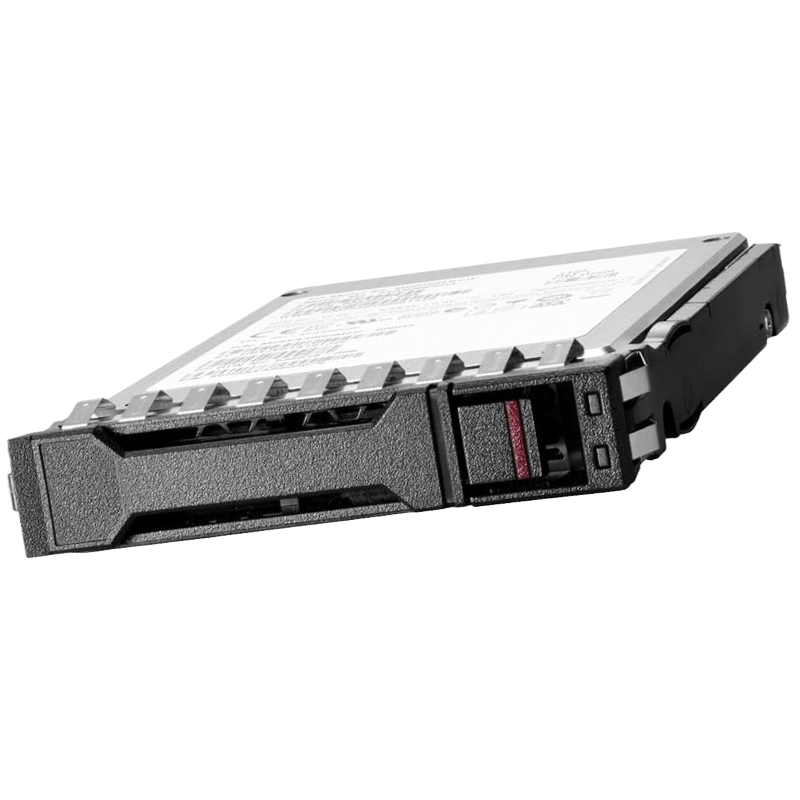


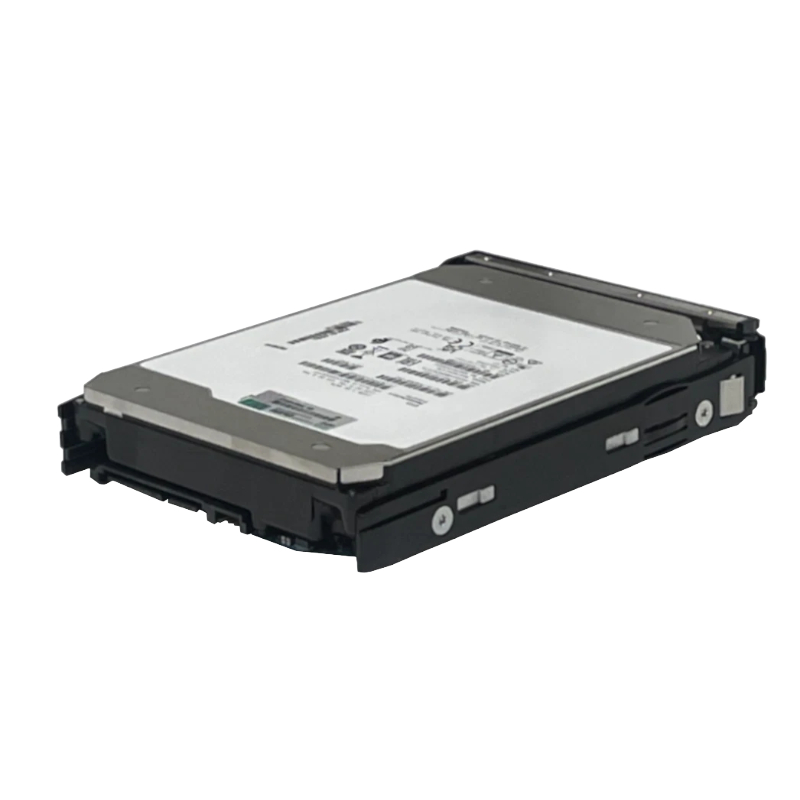
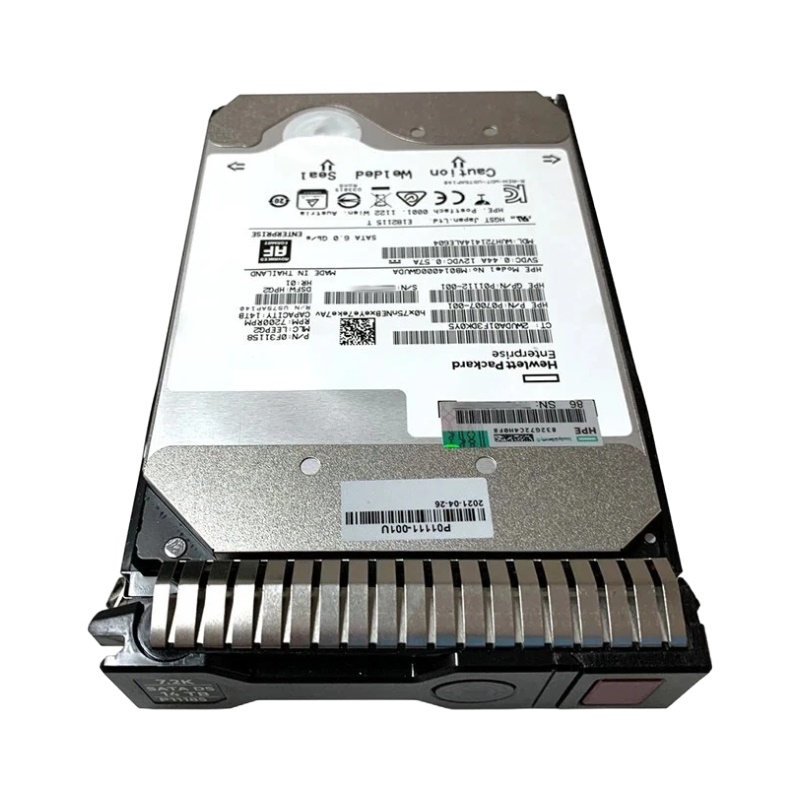
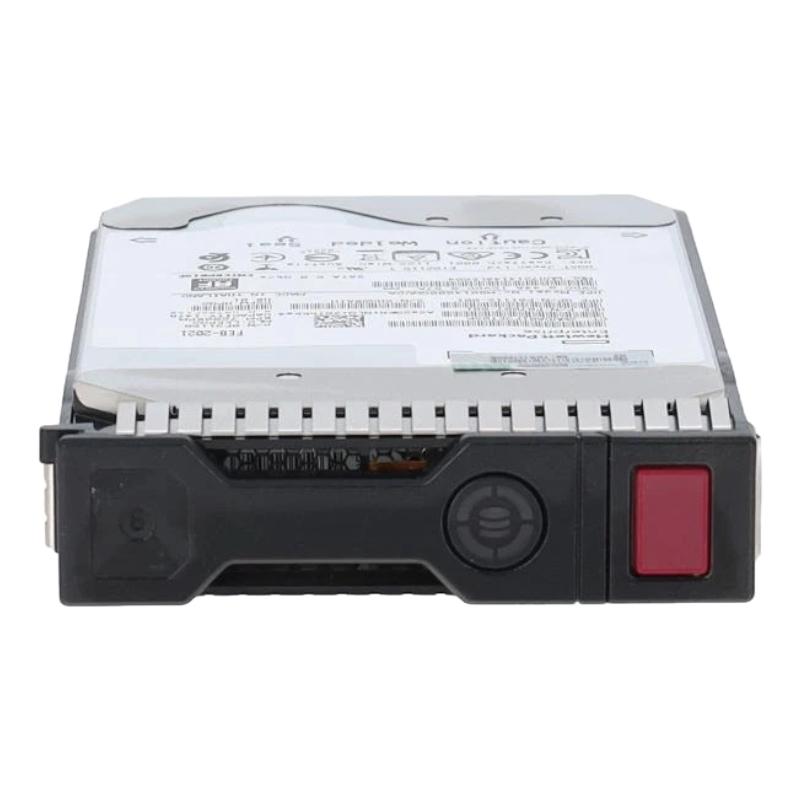
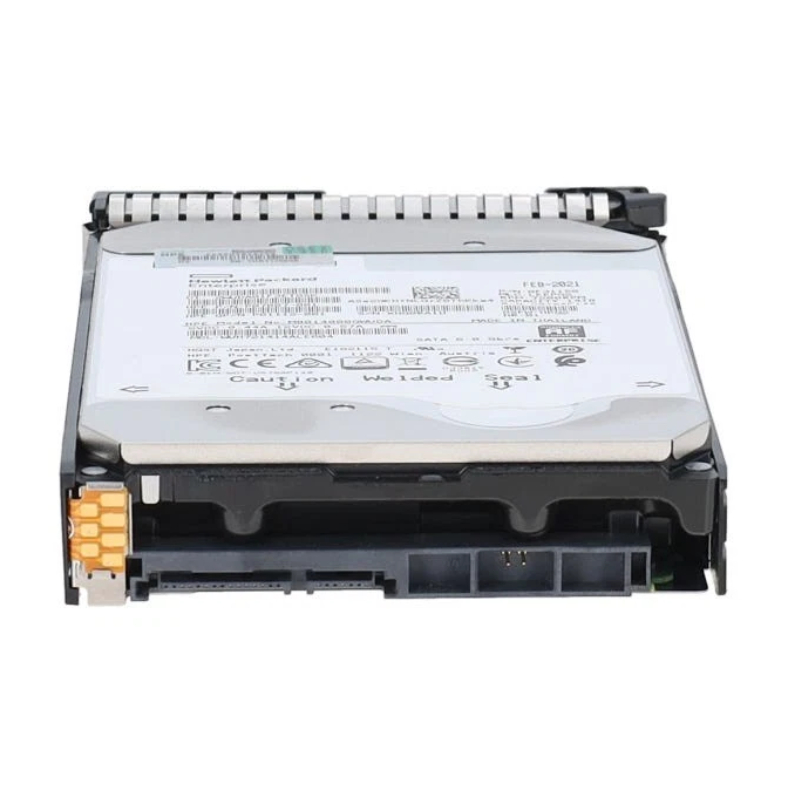
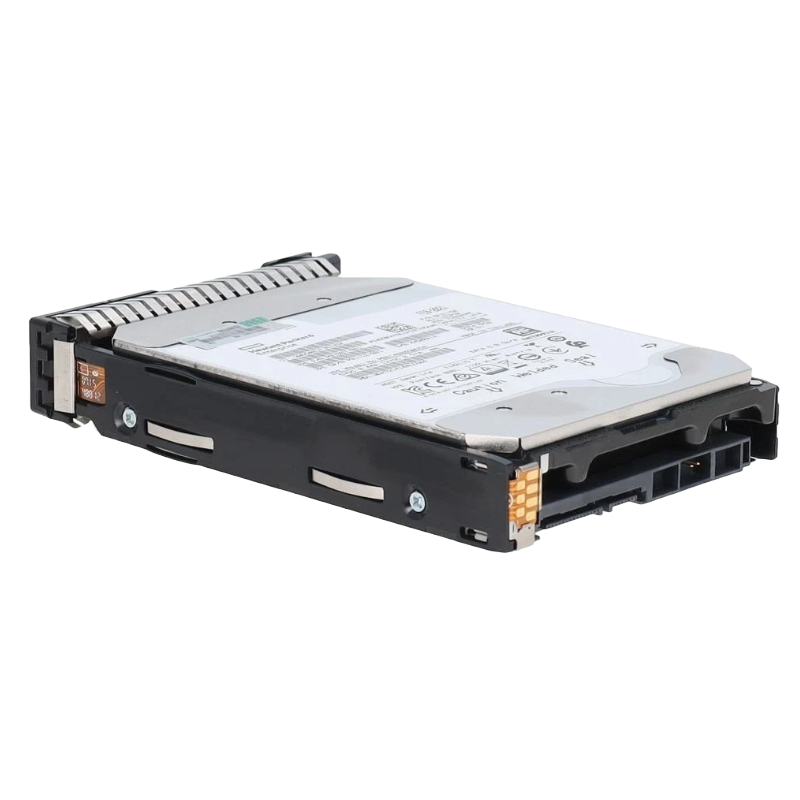
HPE P53563-B21 1TB 7200 RPM SAS 12GBPS SFF BC 512n Hot Swap Business Critical Hard Disk Drive With Tray. Factory-Sealed New in Original Box (FSB) with 3 Years Warranty
Overview of HPE 1TB SAS Business Critical Hard Drive
The HPE P53563-B21 is a high-performance 1TB enterprise-grade hard drive designed for business-critical workloads, offering reliable storage, fast SAS connectivity, and hot-swap capability for seamless server maintenance.
The enterprise storage segment continues to evolve rapidly as modern data centers demand higher reliability, greater scalability, and consistent performance under heavy workloads. Within this ecosystem, the HPE P53563-B21 1TB 7.2K SAS 12G SFF 512n BC Hard Drive stands as a critical component designed for server environments requiring balanced capacity, performance stability, and enterprise-grade endurance. This hard drive is engineered specifically for HPE ProLiant servers and storage systems, ensuring seamless integration and optimized firmware-level compatibility.
As a part of the enterprise SAS (Serial Attached SCSI) hard drive family, this model delivers a combination of rotational storage efficiency and advanced interface technology. It is positioned within the mid-capacity tier of enterprise HDD solutions, offering a reliable balance between cost-effectiveness and operational stability in read-intensive and mixed workload environments.
The HPE SAS hard drive architecture is built upon a foundation of dual-port connectivity, high signal integrity, and robust error correction capabilities. Unlike consumer-grade SATA drives, SAS drives are designed for continuous operation in multi-user environments where downtime is not acceptable. The SAS 12Gbps interface integrated into this model ensures higher data throughput and improved command queuing efficiency, making it suitable for virtualization clusters and database servers.
The drive operates at a rotational speed of 7,200 RPM, which places it in the category of balanced-performance nearline enterprise drives. This rotational speed is optimized to provide stable latency characteristics while maintaining lower power consumption compared to high-speed 10K or 15K RPM drives. The mechanical components are designed for vibration resistance and thermal stability, which are essential in rack-mounted data center environments.
The Small Form Factor (SFF) 2.5-inch design enables high-density server configurations, allowing data centers to maximize storage per rack unit. This compact form factor is particularly beneficial for blade servers and dense storage arrays where physical space optimization directly impacts infrastructure scalability and cost efficiency.
The SAS 12Gbps interface significantly enhances data transfer capabilities compared to earlier SAS generations. This increased bandwidth supports faster sequential read and write operations, improving performance in environments that handle large datasets such as analytics platforms and cloud storage systems. The full-duplex nature of SAS further enables simultaneous read and write operations without bottlenecking throughput.
One of the defining characteristics of SAS drives is dual-port connectivity, which provides redundant data paths between the storage device and controller. This feature ensures continuous availability even in the event of a path failure, making it a critical component for high-availability systems and enterprise-grade redundancy architectures.
Advanced command queuing mechanisms enable the drive to efficiently manage multiple simultaneous I/O requests. This capability is essential in virtualized environments where multiple virtual machines access shared storage resources concurrently. The drive intelligently sequences commands to reduce latency and improve throughput consistency.
The 1TB storage capacity positions this drive within the mid-range enterprise storage segment. It is particularly effective for environments that require distributed storage nodes rather than high-capacity single-drive deployments. This includes RAID arrays, backup repositories, and transactional database systems where data distribution enhances reliability and performance.
This hard drive is designed to handle a combination of read and write operations efficiently. While not intended for extreme write-intensive workloads such as high-frequency trading systems, it performs reliably in application servers, file storage systems, and general-purpose enterprise workloads.
Nearline storage architecture emphasizes a balance between cost and accessibility. This drive fits well into tiered storage strategies where frequently accessed data is stored on SSDs while less frequently accessed but still critical data resides on high-capacity SAS HDDs.
The 512n (512-byte native) sector format is a traditional storage standard that ensures maximum compatibility with legacy systems and enterprise software environments. This format simplifies data structuring and reduces overhead in certain workloads, particularly in older database systems and file management architectures.
Enterprise SAS drives incorporate advanced error correction algorithms that continuously monitor and correct data inconsistencies. The 512n format works in conjunction with these mechanisms to maintain data integrity even under high workload stress conditions.
The 512n structure ensures seamless integration with RAID controllers used in enterprise environments. Whether deployed in RAID 0, RAID 1, RAID 5, or RAID 10 configurations, the drive maintains consistent performance characteristics and predictable rebuild times.
As a Business Critical (BC) storage device, this hard drive is engineered for continuous operation in mission-critical systems. The classification indicates that the drive is suitable for environments where data availability directly impacts business operations, such as financial systems, ERP platforms, and cloud infrastructure services.
HPE integrates customized firmware into its BC-class drives to ensure compatibility with ProLiant servers. This firmware optimization improves error handling, predictive failure analysis, and workload balancing across multiple drives within a storage array.
Enterprise-grade reliability is achieved through rigorous testing cycles that simulate years of continuous operation. These drives are designed to withstand vibration, thermal fluctuations, and sustained I/O loads, ensuring long-term operational stability in demanding environments.
This hard drive is specifically designed for integration with HPE ProLiant server systems. The compatibility ensures that the drive is recognized at firmware level without additional configuration, reducing deployment complexity and minimizing system initialization time.
Hot-swap functionality allows administrators to replace or upgrade drives without shutting down the system. This feature is essential in maintaining uptime in production environments where even minimal downtime can result in significant operational losses.
In large-scale deployments, multiple units of this drive can be combined into storage arrays that scale horizontally. This approach allows enterprises to increase storage capacity incrementally without redesigning existing infrastructure.
Rotational latency is a fundamental characteristic of HDD technology. At 7,200 RPM, this drive offers predictable latency suitable for workloads that prioritize capacity over ultra-low response times. This makes it ideal for backup systems and archival storage where throughput consistency is more important than microsecond-level responsiveness.
The SAS 12G interface enables higher sustained throughput compared to SATA alternatives. This is particularly beneficial in sequential read/write operations such as large file transfers, media storage, and database backup processes.
Power consumption is a critical factor in large data centers. The 7.2K RPM architecture provides a balanced power profile, reducing energy usage while maintaining adequate performance levels. This contributes to lower operational costs over the lifecycle of the hardware.
Virtualized environments require storage devices capable of handling multiple concurrent workloads. This hard drive supports virtualization platforms by delivering stable I/O performance across multiple virtual machines running simultaneously on shared storage pools.
In backup infrastructures, capacity and reliability are more important than extreme performance. This drive is well-suited for scheduled backup operations, long-term retention storage, and disaster recovery replication systems where data integrity is paramount.
Enterprise databases benefit from predictable read/write patterns provided by SAS drives. While SSDs dominate high-performance database tiers, HDDs like this model are commonly used in secondary storage layers and logging systems.
Compared to SATA drives, SAS drives offer superior reliability, dual-port redundancy, and better command handling capabilities. This makes them more suitable for mission-critical applications where uptime is essential.
While 10K and 15K RPM drives provide lower latency, they often consume more power and generate more heat. The 7.2K RPM design of this drive prioritizes capacity efficiency and long-term stability over extreme speed.
Hybrid storage systems combine SSDs and HDDs to optimize performance and cost. This drive typically serves as a mid-tier storage layer, bridging the gap between high-speed flash storage and archival tape or cold storage systems.
Deploying this drive in RAID arrays enhances redundancy and performance. RAID configurations distribute data across multiple drives, improving fault tolerance and read/write efficiency in enterprise systems.
Proper airflow and cooling are essential in maintaining optimal drive performance. Data centers typically employ rack-level cooling strategies to ensure that SAS drives operate within recommended temperature ranges.
In dense server environments, vibration can impact drive performance. Enterprise chassis designs include vibration dampening mechanisms to ensure stable operation of mechanical drives under continuous load.


 Contact Us
 Information
 Catalog
 Solid State Drives (SSD)
 Network Switches
 Hard Disk Drives
 HBA & Controllers
 PC & Servers
 PC & Server Memory
 CPU & Processors
 Network Routers
 Power Supplies
 Tape Drives & Libraries
 Network Devices
 Computer & Network Cables