
(7% discount is applied at checkout)
Cart is empty
Your go-to destination for cutting-edge server products
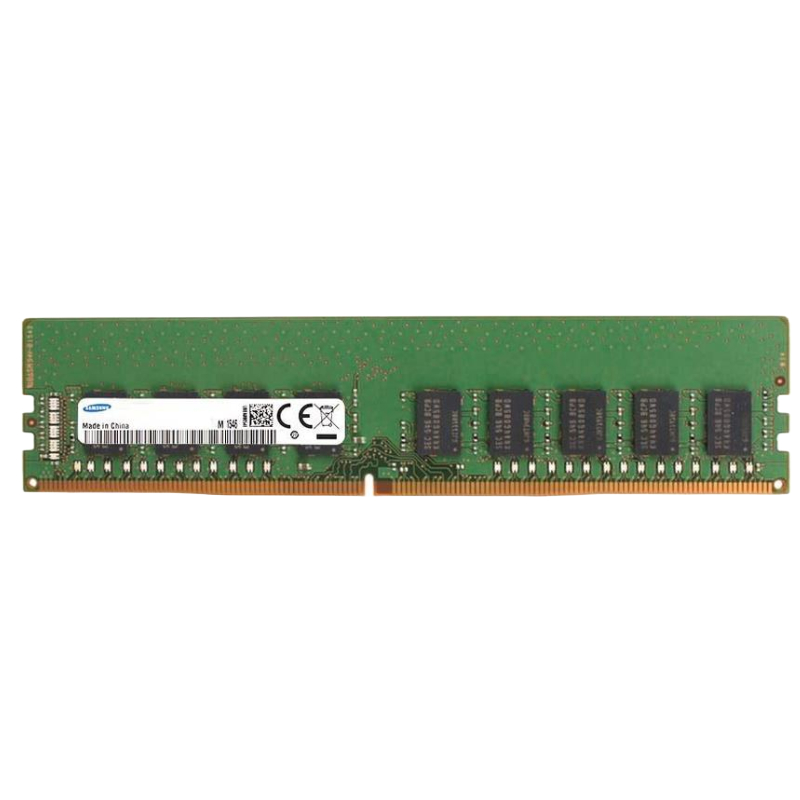
Samsung M391A1K43BB1-CRC 8GB 2400MHz PC4-19200 Single Rank X8 CAS-17 ECC Unbuffered DDR4 SDRAM 288-Pin UDIMM Memory Module. New Sealed in Box (NIB) with 3 Years Warranty
| SKU/MPN | Warranty | Price | Condition | You save |
|---|---|---|---|---|
| M391A1K43BB1-CRC | 1 Year Warranty | $58.00 | New (System) Pull | You save: $20.30 (26%) |
| M391A1K43BB1-CRC | 1 Year Warranty | $63.00 | New Sealed in Box (NIB) | You save: $22.05 (26%) |
Discover the Samsung M391A1K43BB1-CRC 8GB PC4-19200 DDR4-2400Mbps 1RX8 ECC Memory, a high-performance module designed for stability, speed, and reliability in modern computing environments.
The Samsung M391A1K43BB1-CRC 8GB 2400MHz PC4-19200 ECC Unbuffered DDR4 SDRAM 288-Pin UDIMM Memory Module represents a professional memory category designed for dependable computing environments that demand accuracy, stability, and long-term operational consistency. This memory class is widely deployed in business desktops, entry-level servers, professional workstations, and embedded systems where data integrity is a priority. By integrating Error-Correcting Code technology with unbuffered architecture, this category bridges the performance needs of modern platforms with the reliability requirements of mission-focused workloads.
DDR4 ECC UDIMM memory modules are engineered to support platforms that require enhanced data validation without the complexity or cost of registered memory. The 8GB capacity offered in this category strikes an effective balance between affordability and operational headroom, making it suitable for multitasking, virtualization at modest scale, data handling applications, and continuous business operations. Samsung’s implementation reflects advanced semiconductor design, tight quality control, and broad platform compatibility across Intel and AMD systems that support ECC UDIMM memory.
DDR4 SDRAM represents a significant evolution in memory technology, delivering improved bandwidth, lower operating voltage, and enhanced efficiency compared to previous DDR generations. The Samsung M391A1K43BB1-CRC operates at 2400MHz, classified as PC4-19200, enabling a theoretical bandwidth of up to 19.2GB per second. This performance profile supports smooth data flow between the processor and memory subsystem, reducing latency-related bottlenecks in compute-intensive tasks.
The DDR4 architecture introduces increased bank groups, improved prefetch mechanisms, and optimized signaling, all of which contribute to higher throughput and better responsiveness under load. In professional computing environments, these improvements translate into faster data processing, more responsive applications, and consistent system behavior during sustained workloads. This category is particularly valuable in environments where system uptime and predictable performance are essential.
The 2400MHz operating frequency places this memory module within a widely supported performance tier, ensuring compatibility with a broad range of chipsets and processors. PC4-19200 bandwidth enables efficient handling of transactional workloads, file services, and database operations where steady memory throughput is required. This speed grade is often preferred in enterprise and professional systems due to its balance of performance, stability, and thermal efficiency.
Systems equipped with 2400MHz DDR4 ECC UDIMM memory benefit from reduced wait times during memory access cycles. This helps processors maintain higher utilization rates, improving overall system efficiency. The consistent performance characteristics of this category also simplify system planning and scalability, as administrators can confidently deploy identical modules across multiple systems.
CAS latency plays a crucial role in determining how quickly memory responds to read commands. With a CAS latency rating of 17, this module offers optimized timing that aligns well with its frequency rating. The result is a memory solution that delivers predictable responsiveness without sacrificing stability. In professional workloads, consistent timing behavior is often more valuable than marginal gains in raw speed.
Memory timing optimization in this category ensures compatibility with platform firmware and reduces the likelihood of timing-related instability. Samsung’s strict adherence to JEDEC standards further enhances reliability, allowing systems to operate within validated parameters across a wide range of environmental conditions.
ECC memory is a defining characteristic of this category, providing automatic detection and correction of single-bit memory errors. In environments where data accuracy is critical, such as financial systems, scientific computing, and enterprise services, ECC technology helps prevent data corruption, system crashes, and unpredictable behavior. The Samsung M391A1K43BB1-CRC integrates ECC functionality directly into its memory architecture, ensuring real-time error handling without performance penalties.
ECC UDIMM memory modules are particularly valuable in systems that operate continuously or handle sensitive data. By correcting memory errors before they impact applications or operating systems, this category enhances overall system resilience. ECC capability also contributes to longer system lifespan by reducing the cumulative effects of memory-related faults.
The ECC mechanism employed in this memory category is capable of correcting single-bit errors and detecting multi-bit errors. This level of protection significantly improves system reliability, especially in environments exposed to electrical noise, temperature fluctuations, or long operational cycles. The ability to detect and report multi-bit errors also aids in proactive system maintenance and diagnostics.
For IT professionals and system integrators, ECC memory provides peace of mind by reducing the risk of silent data corruption. This is particularly important in applications where data accuracy directly affects outcomes, such as engineering simulations, accounting systems, and medical data processing.
The unbuffered UDIMM design of the Samsung M391A1K43BB1-CRC ensures direct communication between the memory module and the memory controller. This architecture offers lower latency compared to registered memory while maintaining ECC functionality. As a result, this category is well suited for entry-level servers and professional desktops that support ECC UDIMM memory but do not require registered DIMMs.
Unbuffered ECC memory is commonly supported by workstation-class motherboards and certain server platforms. This makes the category ideal for small businesses, development environments, and specialized systems that demand reliability without the complexity of enterprise-grade registered memory solutions.
The 288-pin UDIMM form factor is the standard physical interface for DDR4 desktop and workstation memory. This ensures straightforward installation and broad compatibility with modern motherboards. The physical design includes precision-engineered contacts and high-quality PCB construction, supporting stable electrical connections and long-term durability.
Samsung’s manufacturing standards ensure that each module meets stringent mechanical and electrical specifications. This attention to detail minimizes installation issues and supports consistent performance across compatible platforms.
The single rank x8 configuration of this memory module contributes to efficient memory access patterns and predictable performance. Single rank modules often provide better compatibility with a wider range of systems, particularly those with limited memory channel support. The x8 data organization aligns with ECC requirements and ensures optimal error correction functionality.
This configuration is well suited for systems that prioritize stability and compatibility over extreme memory density. It allows for straightforward memory upgrades and simplifies system validation processes for IT administrators.
Single rank memory modules typically place less electrical load on the memory controller, which can enhance signal integrity and stability. This is especially beneficial in systems with multiple memory modules installed. The result is reliable performance across all populated memory slots, even under sustained workloads.
For professional environments, this design choice supports predictable scaling and reduces the risk of compatibility issues when expanding system memory.
DDR4 memory operates at a lower voltage compared to previous generations, contributing to reduced power consumption and lower heat output. The Samsung M391A1K43BB1-CRC operates efficiently within standard DDR4 voltage specifications, supporting energy-conscious system designs. This efficiency is particularly valuable in environments with multiple systems or continuous operation.
Lower power consumption not only reduces energy costs but also contributes to improved system reliability by minimizing thermal stress on components. This category of memory supports stable operation in a wide range of ambient conditions.
Samsung’s memory modules are designed to maintain stable performance under sustained workloads. The thermal characteristics of this category ensure that memory temperatures remain within safe operating limits, even during prolonged usage. This stability is essential for systems that run around the clock, such as servers, network appliances, and monitoring systems.
Consistent thermal behavior also reduces the likelihood of performance throttling or unexpected system interruptions, supporting uninterrupted business operations.
This category of ECC UDIMM memory is widely used in professional workstations, entry-level servers, and specialized computing systems. Applications include virtualization hosts, file and print servers, development environments, and data analysis platforms. The 8GB capacity provides sufficient memory resources for multitasking and moderate workloads while maintaining cost efficiency.
In business environments, reliable memory contributes to smoother operations and reduced downtime. The Samsung M391A1K43BB1-CRC is particularly suitable for organizations seeking dependable performance without over-investing in high-density memory configurations.
Professional workstations benefit from ECC memory when running complex applications such as CAD software, content creation tools, and development environments. Small servers leverage this category for tasks such as directory services, backup management, and application hosting. The combination of ECC protection and unbuffered performance ensures responsive and reliable operation.
This memory category also supports system builders and integrators who require validated components for customized solutions.
The 8GB DDR4 ECC UDIMM category provides a flexible foundation for system scalability. Systems can be configured with multiple identical modules to increase total memory capacity while maintaining balanced performance across memory channels. This approach supports gradual upgrades as workload demands grow.
By using standardized ECC UDIMM modules, organizations can expand memory capacity without replacing existing components. This scalability reduces total cost of ownership and supports long-term system planning.
Modern processors support dual-channel or quad-channel memory configurations, and this category of memory integrates seamlessly into such architectures. Proper population of memory channels enhances bandwidth and overall system performance. The single rank design further supports stable multi-channel operation.
System builders can leverage this flexibility to optimize memory configurations for specific performance and capacity requirements.


 Contact Us
 Information
 Catalog
 Solid State Drives (SSD)
 Network Switches
 Hard Disk Drives
 HBA & Controllers
 PC & Servers
 PC & Server Memory
 CPU & Processors
 Network Routers
 Power Supplies
 Tape Drives & Libraries
 Network Devices
 Computer & Network Cables