(7% discount is applied at checkout)
Cart is empty
Your go-to destination for cutting-edge server products
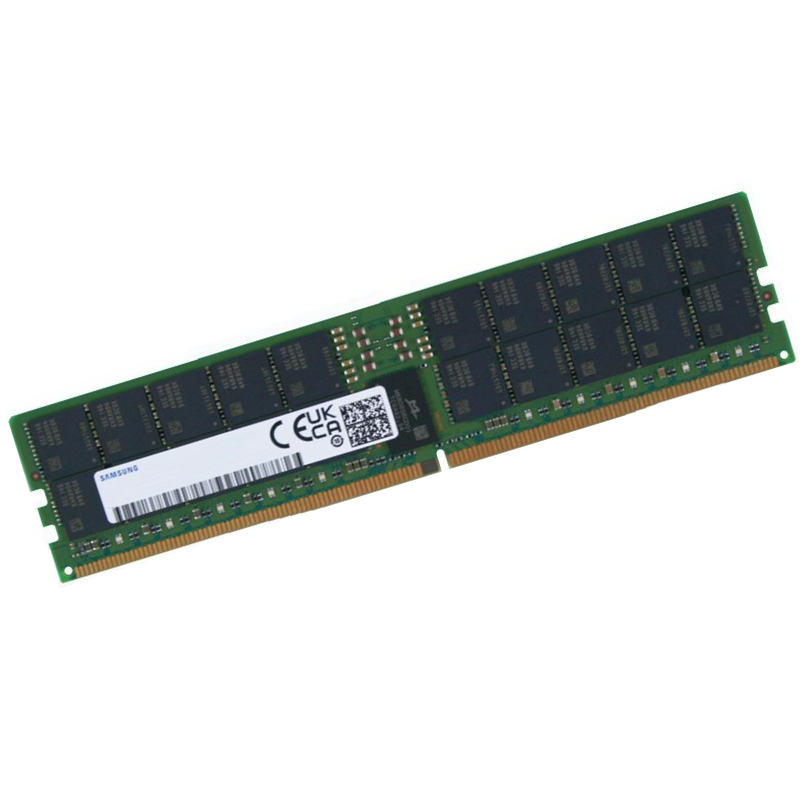


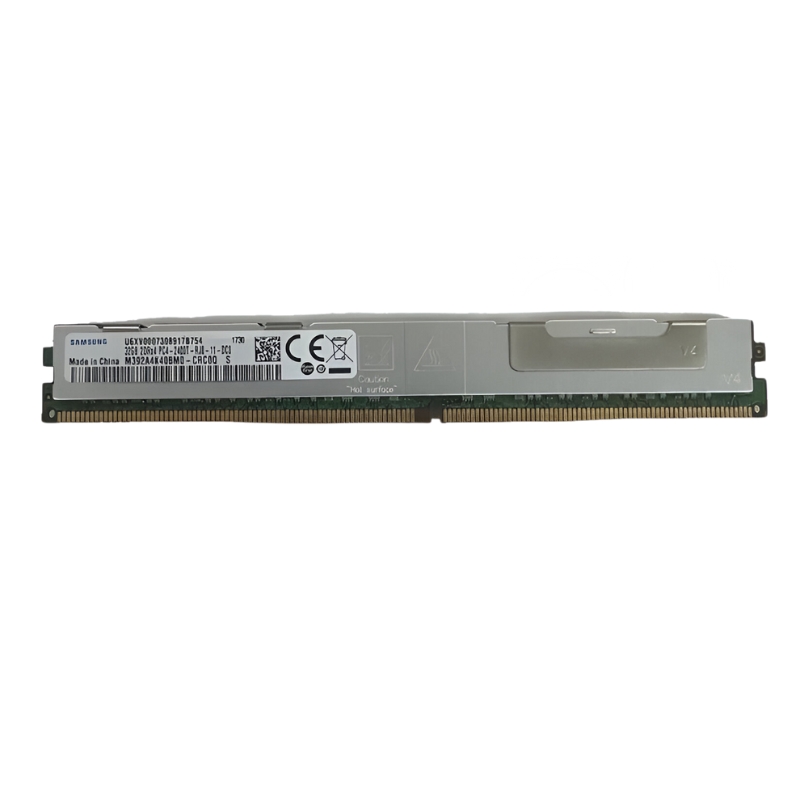
Samsung M392A4K40BM0-CRC0Y 32GB 2400Mhz Pc4-19200 Cl15 Vlp Ecc Registered Dual Rank X4 DDR4 SDRAM 288-Pin Dimm Memory for Server (1x32GB). New (System) Pull with 1 year replacement warranty
The Samsung M392A4K40BM0-CRC0Y 32GB DDR4 Registered Memory Module offers reliable performance and advanced features for enterprise-grade computing systems. Designed for speed and stability, this high-capacity RAM ensures smooth multitasking and optimized data processing.
The Samsung M392A4K40BM0-CRC0Y 32GB DDR4 Registered DIMM belongs to a specialized enterprise memory category designed for mission-critical servers, data centers, virtualization platforms, and enterprise computing infrastructures. This category focuses on high-density, error-resilient, and performance-balanced memory modules that support sustained workloads, predictable latency, and long-term reliability. DDR4 Registered memory plays a central role in modern server architectures by enabling higher memory capacities per channel while maintaining electrical stability across multiple DIMM configurations.
Within this category, 32GB DDR4 RDIMM modules operating at 2400MHz are widely adopted for balanced compute environments where memory reliability, power efficiency, and compatibility with Intel Xeon and AMD EPYC server platforms are essential. Samsung, as a leading DRAM manufacturer, engineers this class of memory with strict adherence to JEDEC standards, ensuring interoperability across a broad range of enterprise server platforms.
Registered DIMM memory introduces a register, also known as a buffer, between the memory controller and the DRAM modules. This architectural element reduces the electrical load placed on the memory controller, enabling systems to support more memory modules per channel without compromising signal integrity. The Samsung M392A4K40BM0-CRC0Y exemplifies this design by supporting stable signal transmission even in densely populated server memory configurations.
DDR4 technology improves upon earlier DDR3 standards by offering higher bandwidth, reduced operating voltage, and improved bank group architecture. Operating at 1.2 volts, DDR4 RDIMM modules contribute to lower power consumption and improved thermal characteristics, which are critical in high-density server environments. The 2400MHz data rate delivers an effective bandwidth of PC4-19200, making this category suitable for workloads that require consistent memory throughput.
Error Correcting Code functionality is a defining characteristic of enterprise-class memory. ECC memory detects and corrects single-bit memory errors while identifying multi-bit errors, significantly reducing the risk of data corruption. In enterprise servers, where memory errors can propagate into application failures, database corruption, or system instability, ECC memory provides a foundational layer of reliability.
The Samsung M392A4K40BM0-CRC0Y integrates ECC at the hardware level, enabling real-time error correction without impacting system performance. This capability is particularly valuable in environments running virtualization platforms, in-memory databases, analytics engines, and long-running computational workloads.
Registered memory differs fundamentally from unbuffered DIMMs used in consumer desktops and workstations. By buffering address and command signals, RDIMM modules allow servers to scale memory capacity more efficiently. This category is optimized for systems that prioritize capacity and uptime over raw latency reductions seen in consumer-grade memory.
The presence of a register introduces minimal latency, which is offset by the increased stability and scalability benefits. For enterprise workloads, predictable and reliable performance is more valuable than marginal latency improvements, making DDR4 Registered DIMMs the preferred choice in data center deployments.
Memory density is a critical consideration in server design, as it directly impacts virtualization density, application scalability, and total cost of ownership. A 32GB DDR4 RDIMM provides an optimal balance between capacity and cost, allowing administrators to populate systems with substantial memory without exceeding platform limitations.
The dual rank configuration of the Samsung M392A4K40BM0-CRC0Y enhances memory interleaving and improves overall throughput. Dual rank modules present two independent sets of DRAM ranks to the memory controller, enabling more efficient access patterns and better utilization of the memory bus.
Dual rank memory modules can offer performance benefits in multi-channel server architectures by allowing the memory controller to alternate access between ranks. This behavior reduces idle cycles and improves effective bandwidth, particularly in workloads that involve concurrent memory access patterns.
In enterprise environments running multiple virtual machines or containerized workloads, dual rank memory contributes to smoother performance scaling and reduced contention. The Samsung M392A4K40BM0-CRC0Y is engineered to maximize these advantages while maintaining compatibility with server BIOS and firmware configurations.
The x4 DRAM organization used in this memory category enhances fault isolation and reliability. By distributing data across more DRAM chips, x4 configurations allow ECC mechanisms to function more effectively, improving the system’s ability to detect and correct errors. This design choice aligns with enterprise reliability standards and is commonly required in mission-critical server deployments.
X4 memory layouts are particularly important in regulated industries and environments where data integrity is paramount. Financial services, healthcare systems, and government infrastructures often mandate x4 ECC memory to meet compliance and reliability requirements.
Operating at a data rate of 2400MHz, this DDR4 RDIMM category delivers consistent performance suitable for a wide range of enterprise workloads. The PC4-19200 bandwidth rating reflects the module’s ability to transfer up to 19.2 gigabytes of data per second per module under optimal conditions.
The CAS latency rating of CL15 represents a balanced latency profile for DDR4 Registered memory at this frequency. While lower latency values are available in consumer memory, CL15 at 2400MHz is optimized for stability and compatibility across diverse server platforms.
In enterprise environments, memory latency must be evaluated in the context of overall system architecture. Factors such as CPU cache hierarchy, memory channel configuration, and workload characteristics often have a greater impact on performance than raw CAS latency values. The Samsung M392A4K40BM0-CRC0Y is designed to deliver predictable latency under sustained load, which is essential for enterprise application consistency.
Database servers, virtualization hosts, and application servers benefit from memory that maintains stable latency characteristics over time. This category prioritizes reliability and consistency, ensuring that performance does not degrade under heavy or prolonged workloads.
When deployed in matched sets across multiple memory channels, DDR4 2400MHz RDIMM modules enable servers to achieve optimal bandwidth utilization. Modern server CPUs are designed to take advantage of multi-channel memory architectures, and properly configured memory populations can significantly enhance overall system throughput.
The Samsung M392A4K40BM0-CRC0Y supports these configurations by adhering to strict timing and electrical specifications, ensuring seamless operation in dual-channel, quad-channel, and higher channel-count server platforms.
The very low profile form factor of this memory module addresses the physical constraints of modern server designs. As servers become more compact and densely packed, memory modules must fit within limited vertical clearance while maintaining adequate airflow.
Very low profile DDR4 RDIMMs are especially valuable in blade servers, high-density rack systems, and platforms with large CPU heatsinks or complex cooling assemblies. The reduced height of the Samsung M392A4K40BM0-CRC0Y improves compatibility across a wide range of server chassis and motherboard layouts.
Lower profile memory modules contribute to improved thermal performance by allowing better airflow across the memory banks. Efficient cooling is essential for maintaining stable operation and prolonging component lifespan in enterprise servers.
By minimizing airflow obstruction, very low profile memory supports consistent operating temperatures even under heavy load. This design consideration aligns with data center efficiency goals and helps reduce the risk of thermal throttling or component failure.
Enterprise memory modules are designed to withstand repeated installation cycles and long-term operation. The 288-pin DIMM form factor used by DDR4 RDIMM modules ensures secure seating within server memory slots, reducing the risk of connection issues caused by vibration or thermal expansion.
The physical construction of this category emphasizes durability and precise tolerances, supporting reliable operation in enterprise environments where uptime is critical.
DDR4 Registered memory modules such as the Samsung M392A4K40BM0-CRC0Y are validated for compatibility with a broad range of server platforms. This category is commonly supported by Intel Xeon Scalable processors and AMD EPYC processors that feature integrated memory controllers designed for RDIMM configurations.
Platform compatibility extends to major server manufacturers and motherboard vendors, ensuring that this memory can be deployed in both new installations and system upgrades. Adherence to JEDEC standards ensures consistent behavior across supported systems.
Server BIOS and firmware play a crucial role in memory initialization and configuration. Enterprise memory modules are programmed with SPD data that allows systems to automatically configure timing, voltage, and operational parameters.
The Samsung M392A4K40BM0-CRC0Y includes precise SPD programming to ensure smooth system boot and stable operation. This reduces deployment complexity and minimizes the risk of configuration errors during installation.
Servers designed for large memory footprints rely on Registered DIMMs to maintain signal integrity as capacity increases. This category supports scalable memory configurations, enabling systems to expand memory capacity without sacrificing reliability.
Scalability is essential for evolving workloads, allowing organizations to adapt their infrastructure as application demands grow. DDR4 RDIMM modules provide a flexible foundation for long-term infrastructure planning.
This category of memory is optimized for a wide range of enterprise workloads that demand reliability and sustained performance. Virtualization platforms benefit from high-density memory that supports numerous virtual machines without contention. In-memory databases rely on ECC protection to maintain data integrity during continuous operation.
Analytics, cloud computing, and enterprise application hosting environments also depend on memory modules that deliver predictable performance under load. The Samsung M392A4K40BM0-CRC0Y is engineered to meet these demands, making it suitable for diverse enterprise deployments.


 Contact Us
 Information
 Catalog
 Solid State Drives (SSD)
 Network Switches
 Hard Disk Drives
 HBA & Controllers
 PC & Servers
 PC & Server Memory
 CPU & Processors
 Network Routers
 Power Supplies
 Tape Drives & Libraries
 Network Devices
 Computer & Network Cables