(7% discount is applied at checkout)
Cart is empty
Your go-to destination for cutting-edge server products
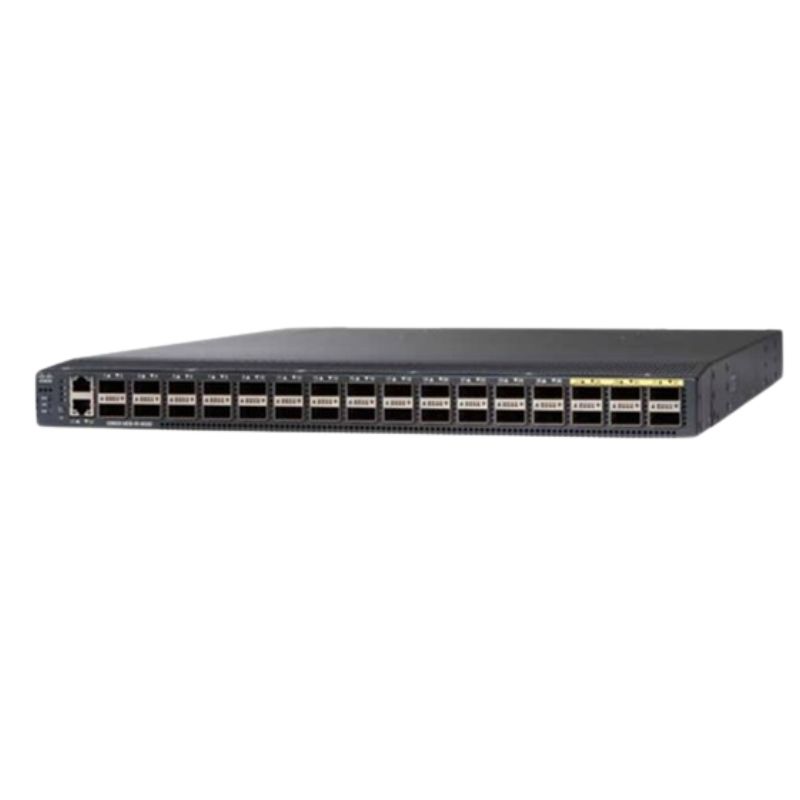


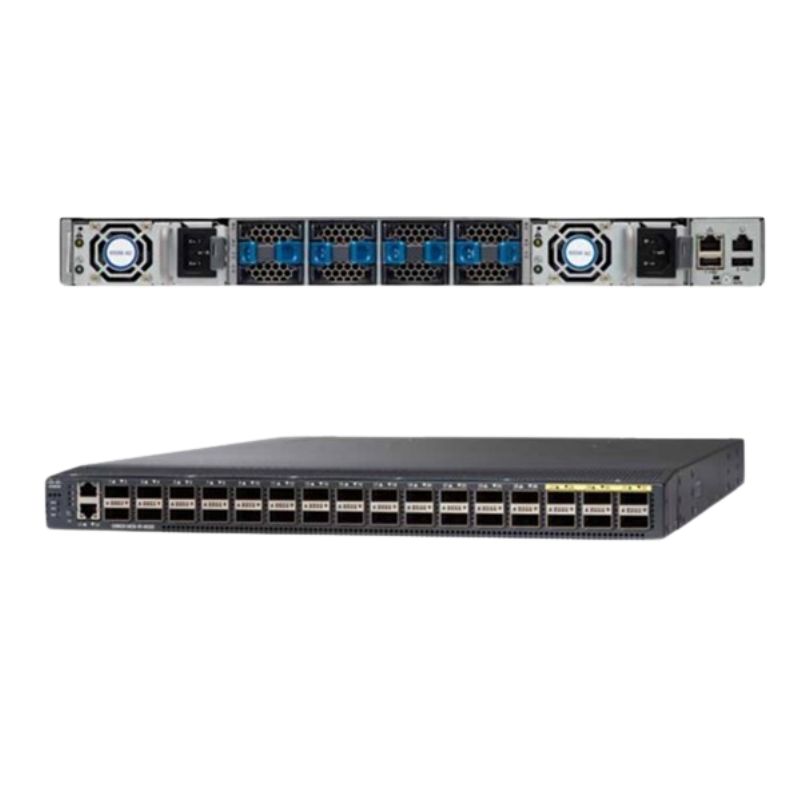
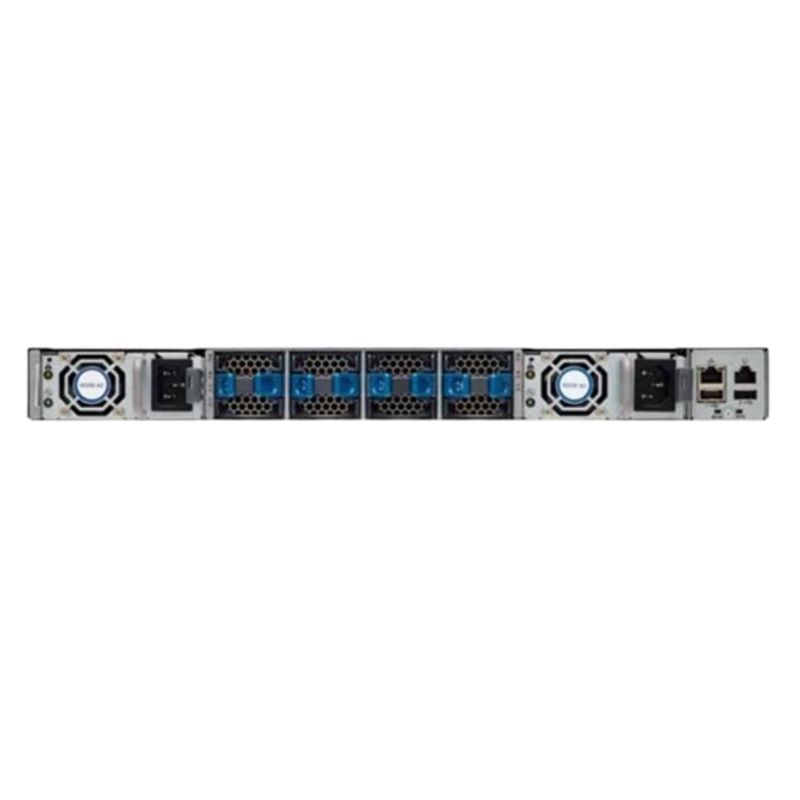
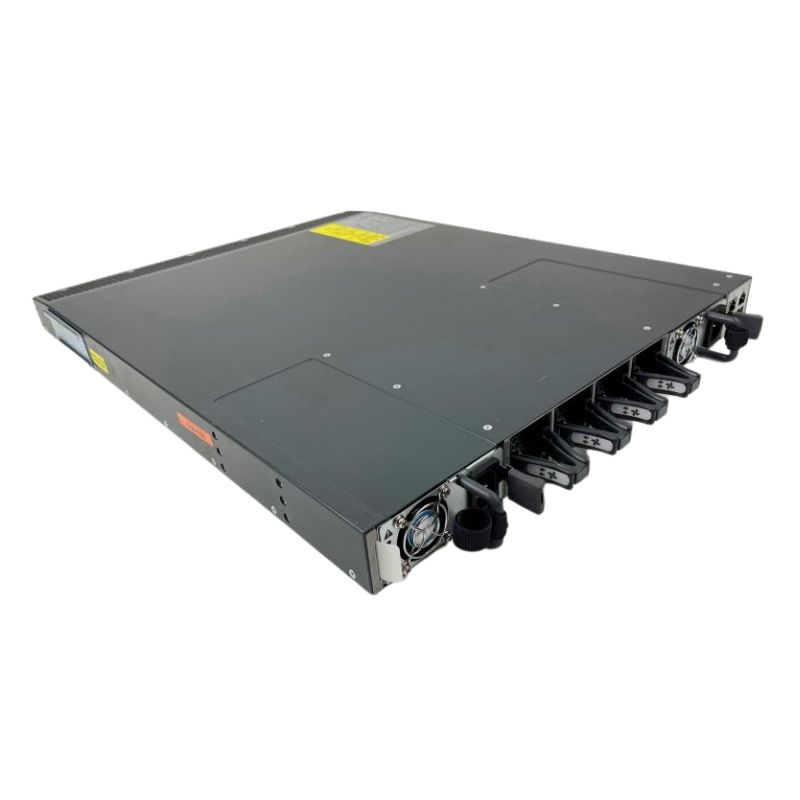
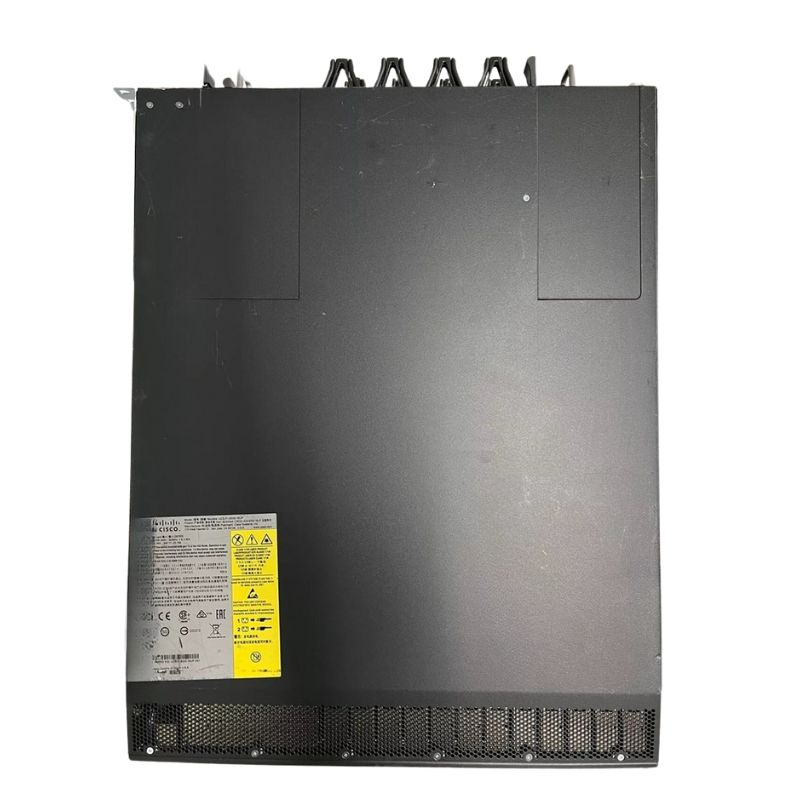
Cisco UCS-FI-6332-16UP Fabric Interconnect Switch - 40 Ports. Excellent Refurbished with 1 year replacement warranty
| SKU/MPN | Warranty | Price | Condition | You save |
|---|---|---|---|---|
| UCS-FI-6332-16UP | 1 Year Warranty | $228.00 | Excellent Refurbished | You save: $79.80 (26%) |
| UCS-FI-6332-16UP | 1 Year Warranty | $2,690.00 | Factory-Sealed New Retail in Original Box (FSB) | You save: $941.50 (26%) |
The Cisco UCS-FI-6332-16UP Fabric Interconnect is a high-performance, rack-mountable network switch designed for modern data center environments. Built to deliver flexibility, scalability, and reliability, this Cisco UCS 6332 model supports unified networking with advanced Ethernet and Fibre Channel capabilities.
The Cisco UCS 6332 16UP Fabric Interconnect is a fundamental component of the Cisco Unified Computing System (UCS), representing a pivotal evolution in data center architecture. This 1-rack unit (1RU) device transcends the traditional definition of a mere switch; it is the central nervous system and management orchestrator for a unified computing domain. By consolidating network, storage, and server management into a single, cohesive system, the UCS 6332 eliminates traditional silos, dramatically reducing complexity, operational cost, and deployment time for both virtualized and bare-metal environments.
Specifically, the UCS-FI-6332-16UP model provides 40 fixed ports: 32 downlink ports for server connectivity and 8 uplink ports for network aggregation. Its unique value lies in its unified fabric capability, carrying both Ethernet and Fibre Channel over Ethernet (FCoE) traffic over a single set of cables and adapters. This convergence simplifies cabling, reduces adapter counts in servers, and lowers overall power and cooling requirements. As a cornerstone of the Cisco UCS portfolio, this Fabric Interconnect enables stateless, policy-driven server provisioning, allowing IT teams to manage infrastructure through service profiles rather than individual hardware components.
Understanding the robust hardware foundation of the Cisco UCS 6332 Fabric Interconnect is key to appreciating its performance and reliability in mission-critical deployments.
The UCS 6332 is a compact, high-density 1RU form factor device. Its front panel houses the 40-port array that defines its connectivity model.
32 Unified Ports (Downlinks): These ports are configured as either 1/10 Gigabit Ethernet or 2/4/8 Gigabit Fibre Channel, with support for FCoE. They directly connect to Cisco UCS Fabric Extenders (FEXs), like the 2208 or 2304, installed in UCS Chassis, or via SFP+ cables to UCS rack servers' virtual interface cards (VICs).
8 Fixed Uplink Ports: Dedicated 10 Gigabit Ethernet ports for connecting to the core data center network (LAN) and, if configured for FC, to storage area network (SAN) switches.
All ports utilize SFP+ technology, providing flexibility in choosing short-range (SR), long-range (LR), or copper (Twinax) optics based on distance and cost requirements.
The switch fabric is designed for non-blocking performance, ensuring all ports can forward traffic at line rate simultaneously. With an aggregate switching capacity exceeding 1 Tbps, the UCS 6332 can handle the most demanding east-west (server-to-server) and north-south (server-to-network) traffic patterns within modern, flattened data center architectures.
Engineered for high-performance computing (HPC) and financial trading environments, the UCS 6332 employs cut-through switching where possible, minimizing latency for time-sensitive applications and improving overall application responsiveness.
Business continuity demands infrastructure with no single point of failure. The UCS 6332 is designed to be deployed in redundant, active-active pairs.
Fabric Interconnect Clustering: Two 6332 Fabric Interconnects form a single, managed logical domain. If one fails, the other seamlessly assumes the full workload with no service profile disruption.
Redundant Power & Cooling: The device includes hot-swappable, redundant power supplies and fan modules, ensuring continuous operation during a component failure.
Stateful Process Failover: Critical management processes are synchronized between the active pair, allowing for graceful failover and state preservation.
The Cisco UCS 6332's most transformative feature is its implementation of a unified fabric. This architectural shift consolidates three separate networks—data (LAN), storage (SAN), and server management (IPMI)—onto a single, high-bandwidth Ethernet network.
Traditionally, servers required multiple network interface cards (NICs) for LAN traffic, host bus adapters (HBAs) for SAN connectivity, and a separate interface for out-of-band management. The UCS 6332, in conjunction with Cisco UCS VICs, collapses these networks.
FCoE & Native FC: The Fabric Interconnect can bridge FCoE traffic from servers to a native Fibre Channel SAN via its uplinks, or it can be configured as a full Fibre Channel switch, connecting directly to storage arrays.
Centralized Management (UCS Manager): Embedded within the Fabric Interconnect pair, Cisco UCS Manager provides a single, unified point of control for all servers, storage, and networking in the domain. This eliminates the need to manage disparate tools for different technology silos.
This is the heart of UCS management. A service profile is a software template that defines a server's identity—its firmware versions, network MAC addresses, SAN WWNNs, boot policies, and connectivity requirements. Administrators apply these profiles to any physical server in the domain.
Stateless Computing: Server identity and configuration are abstracted from the hardware. A failed server can be replaced, and its service profile applied to the new hardware in minutes, restoring the exact same configuration.
Rapid Deployment & Consistency: Deploying hundreds of servers becomes a matter of applying pre-defined, validated profiles, ensuring absolute configuration consistency and eliminating manual errors.
The Cisco UCS 6332 Fabric Interconnect is versatile, supporting a wide range of deployment models to meet diverse organizational needs.
As the backbone for VMware vSphere, Microsoft Hyper-V, or other hypervisor environments, the UCS 6332 provides the high-bandwidth, low-latency network essential for vMotion, live migration, and dense virtual machine (VM) densities. Its integration with Cisco ACI (Application Centric Infrastructure) further enables automated, policy-based network segmentation for micro-segmentation security.
Mission-critical applications like SAP HANA, Oracle Database, and Microsoft SQL Server require consistent, low-latency access to storage and high bandwidth between application tiers. The unified fabric ensures storage (FC/FCoE) and application network traffic are efficiently handled, while service profiles allow for rapid scaling or recovery of database nodes.
Organizations looking to replace aging, siloed infrastructure with a streamlined, efficient platform find immense value in the UCS 6332. It allows for the consolidation of legacy rack servers and their disparate networks into a unified, easily managed blade or rack system with a single point of management.
The stateless nature of servers defined by service profiles makes disaster recovery (DR) orchestration significantly faster and more reliable. Service profiles can be pre-staged at a DR site and activated on available hardware, enabling near-instantaneous server recovery.


 Contact Us
 Information
 Catalog
 Solid State Drives (SSD)
 Network Switches
 Hard Disk Drives
 HBA & Controllers
 PC & Servers
 PC & Server Memory
 CPU & Processors
 Network Routers
 Power Supplies
 Tape Drives & Libraries
 Network Devices
 Computer & Network Cables