
(7% discount is applied at checkout)
Cart is empty
Your go-to destination for cutting-edge server products
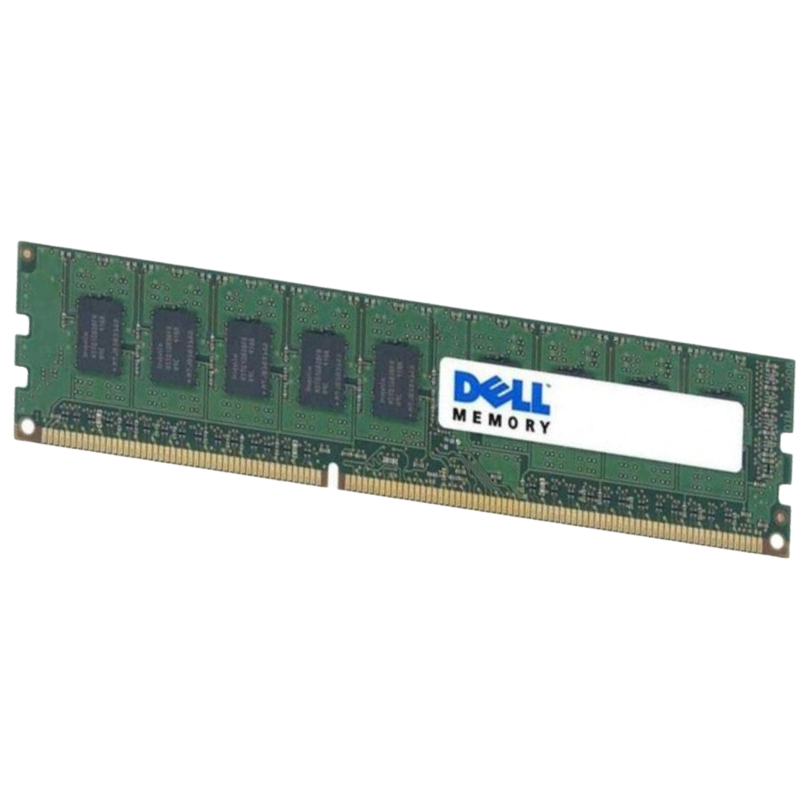
Dell AA810826 16GB 3200mhz PC4-25600 ECC Reg DDR4 SDRAM 288Pin RAM. New (System) Pull with 1 year replacement warranty - Samsung Version
| SKU/MPN | Warranty | Price | Condition | You save |
|---|---|---|---|---|
| AA810826 | 1 Year Warranty | $232.00 | New (System) Pull | You save: $81.20 (26%) |
| AA810826 | 1 Year Warranty | $402.00 | New Sealed in Box (NIB) | You save: $140.70 (26%) |
| AA810826 | 1 Year Warranty | $455.00 | New Sealed in Box (NIB) | You save: $159.25 (26%) |
The Dell AA810826 16GB 3200MT/s PC4-25600 CL22 ECC Registered Dual Rank X8 1.2V DDR4 SDRAM 288-Pin RDIMM for PowerEdge Server Memory Module represents a high-performance, enterprise-grade memory solution engineered for demanding data center workloads. This memory module, optimized for Dell PowerEdge server platforms and validated to meet stringent OEM specifications, blends capacity, speed, and error-correcting reliability into a compact 16GB footprint. With a data rate of 3200 mega-transfers per second (MT/s) and PC4-25600 throughput, this RDIMM is tailored for multi-socket server environments where predictable performance, system stability, and server uptime are critical.
Dell AA810826 16GB 3200mt/s PC4-25600 CL22 ECC Registered Dual Rank X8 1.2v DDR4 SDRAM 288-Pin RDIMM for Poweredge Server Memory Module is a category that targets enterprise-grade server memory solutions engineered for reliability, predictable latency, and long-term stability in datacenter and mission-critical environments. This category centers on a specific part family and specification set—16GB capacity modules manufactured to the PC4-25600 DDR4 standard running at 3200 MT/s with CAS latency CL22, ECC error correction, registered buffering, dual-rank X8 organization, 1.2 volt nominal operating voltage, and the industry standard 288-pin RDIMM form factor—making it immediately relevant to systems in the Dell PowerEdge family and other server platforms that support DDR4 RDIMM modules.
At the heart of the Dell AA810826 category is the PC4-25600 designation, which denotes DDR4 memory with a peak theoretical bandwidth of 25,600 MB/s per module at 3200 million transfers per second (3200 MT/s). This raw throughput metric translates directly into improved data transfer rates between the memory subsystem and the processor(s), which benefits memory-bound workloads such as in-memory databases, virtualization hosts with large VM counts, high-frequency caching layers, and real-time analytics. CAS latency CL22 identifies the column access strobe delay in clock cycles; while CL22 is not the lowest latency available, the end-to-end performance at 3200 MT/s is balanced for enterprise tasks that prioritize throughput and error-correcting capability over single-cycle latency. The 16GB capacity strikes a practical middle ground for balancing memory density and price-per-gigabyte when compared with both lower capacity UDIMMs and higher capacity modules used in other server deployments.
Operating at 1.2 volts, DDR4 reduces power draw per bit compared to prior generations, and in large-scale deployments these small per-module savings scale into significant operational cost reductions for datacenter power and cooling. The 1.2v spec also affects thermal dissipation characteristics and allows higher density memory configurations without commensurate increases in cooling budgets. For datacenter teams optimizing for energy efficiency, using DDR4 RDIMMs like the Dell AA810826 in place of older modules is a predictable and measurable step toward lowering total cost of ownership (TCO) across fleet-level memory upgrades.
Dual rank modules contain two sets of memory banks that the memory controller can address, effectively presenting two ranks to the controller. The X8 designation refers to device organization—each memory chip provides an 8-bit wide data path—commonly used in registered server modules to balance density and reliability. X8 chips combined into a 16GB dual rank RDIMM create a layout that favors a blend of capacity, error-correcting granularity, and manufacturing yield. For systems that support rank interleaving and multi-channel memory controllers, dual rank X8 modules can provide measurable throughput improvement for database query processing, virtualization consolidation, and high concurrency application stacks.
Error-Correcting Code (ECC) is a defining feature of server memory categories. ECC Registered RDIMM modules like the Dell AA810826 detect and correct single-bit memory errors and detect multi-bit errors, significantly reducing the risk of data corruption, system instability, and silent data errors in applications where integrity is non-negotiable. The registered buffer—often implemented as a register between the DRAM chips and the memory controller—reduces electrical load and improves signal integrity when multiple DIMMs populate the same channel. Registered ECC modules are essential for mainstream server platforms running enterprise operating systems, virtualization stacks, and database engines where uptime and data correctness are primary concerns.
Dell PowerEdge servers typically reference hardware compatibility matrices that list supported memory densities, speeds, and module types for each CPU generation, chipset, and BIOS revision. The Dell AA810826 family—marketed for PowerEdge servers—fits into the broader compatibility paradigm where the system firmware recognizes registered ECC RDIMMs, permits full population of memory sockets according to rank and channel rules, and enables features like memory mirroring, sparing, and advanced ECC modes when supported. Administrators planning upgrades should confirm the target server’s supported maximum per-socket capacity, the CPU memory controller’s supported memory speed, and any interdependencies between memory speed and the number of populated channels or ranks. When installed correctly, 16GB 3200 MT/s RDIMMs provide an optimal balance of speed and capacity for PowerEdge servers running modern workloads.
While server memory is not typically hot-swappable like drive components, RDIMMs are designed for easy field replacement by trained technicians with the system powered down following standard maintenance procedures. Dell and other OEMs provide clear part-replacement guidance, and modules conforming to the 288-pin RDIMM form factor fit into standard DIMM sockets with keyed retention to minimize installation errors. For serviceability, maintaining spares and adhering to matched-pair or matched-bank replacement strategies reduces the risk of compatibility issues and minimizes downtime during maintenance windows.
The tangible benefits of deploying Dell AA810826 16GB 3200 MT/s RDIMMs manifest differently across workload classes. In virtualized environments hosting many small-to-medium virtual machines, memory bandwidth and predictable latency determine VM density and responsiveness. For in-memory databases and caching platforms, the increased bandwidth of 3200 MT/s modules reduces query latency and improves throughput under concurrent load. Analytical workloads with large working sets experience quicker memory-to-CPU handoffs, and compute-bound HPC applications that are memory-access sensitive can demonstrate improved iteration times when memory bandwidth constraints are alleviated. The dual rank architecture can be especially beneficial in multi-threaded workloads where rank interleaving exposes the memory controller to more concurrency and reduces bank conflicts.
In the domain of virtualization, a 16GB module is a common building block; administrators routinely plan node configurations using multiples of 16GB to simplify allocation and rightsizing for guests. Databases, whether traditional relational engines or modern in-memory stores, benefit from consistent ECC protection to preserve transactional integrity under heavy load. Cloud-native services requiring numerous containers or ephemeral workloads also see improvements when the underlying host has sufficient bandwidth and error-corrected memory to avoid noisy neighbor effects and reduce host-level memory paging. In all cases, the combination of 16GB density, RDIMM registration, ECC, and 3200 MT/s speed provides a strong foundation for predictable multi-tenant performance.
HPC clusters and parallel compute instances frequently operate across tight memory bandwidth budgets. Using high-speed RDIMMs across multi-socket nodes helps improve memory read/write concurrency and reduces memory-bound stalls in vectorized workloads. The X8 chip organization combined with dual rank modules can optimize memory subsystem efficiency for large-scale simulations, scientific computing, and machine learning inference workloads.
Practical deployment scenarios vary by organization size and application profile. For a web-scale company running stateless frontends with autoscaling, the primary benefit of 16GB 3200 MT/s RDIMMs may be consistent host behavior and predictable performance for edge caching and session handling. For an enterprise running large databases, RDIMMs provide the ECC safety net and bandwidth necessary to maintain transactional integrity. For cloud hosting providers, an inventory of 16GB modules simplifies tenant sizing plans and reduces SKU complexity. In edge computing or remote branch office servers where environmental conditions may be less controlled, the ruggedness of server-grade RDIMMs and their error correction features help maintain uptime and data fidelity.


 Contact Us
 Information
 Catalog
 Solid State Drives (SSD)
 Network Switches
 Hard Disk Drives
 HBA & Controllers
 PC & Servers
 PC & Server Memory
 CPU & Processors
 Network Routers
 Power Supplies
 Tape Drives & Libraries
 Network Devices
 Computer & Network Cables