(7% discount is applied at checkout)
Cart is empty
Your go-to destination for cutting-edge server products
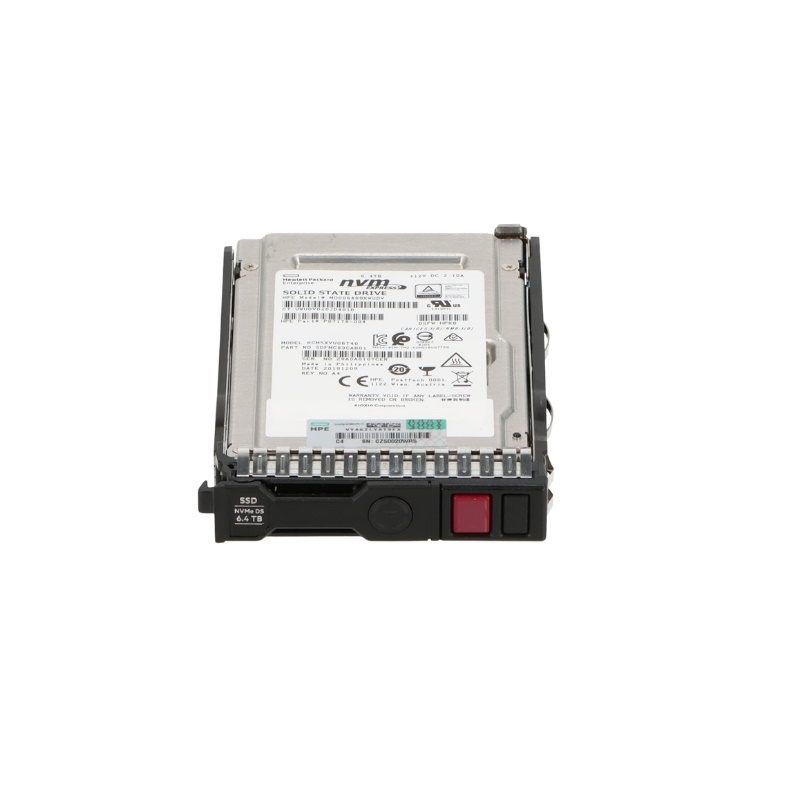


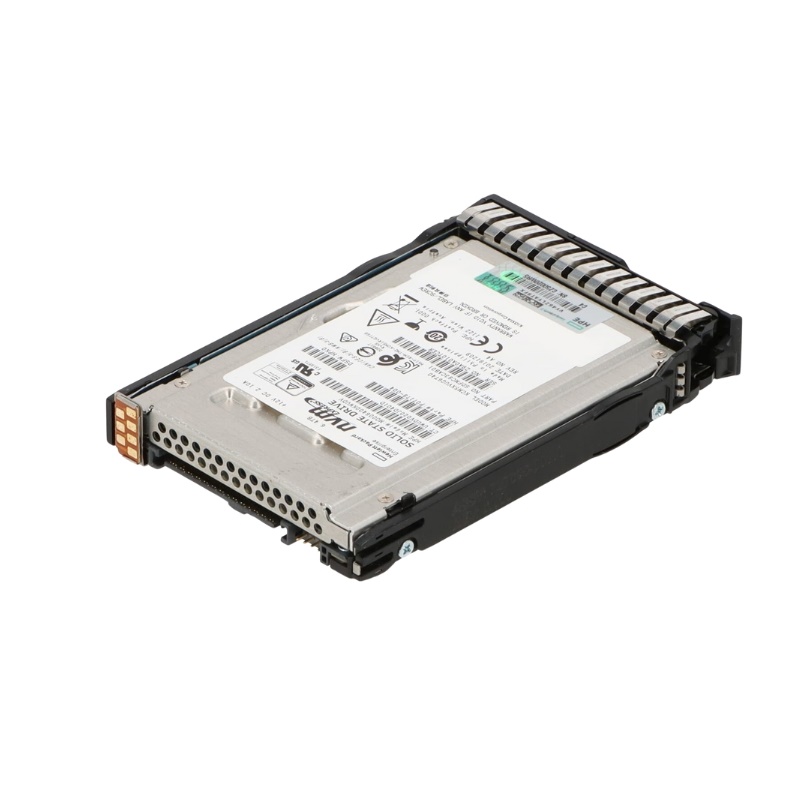
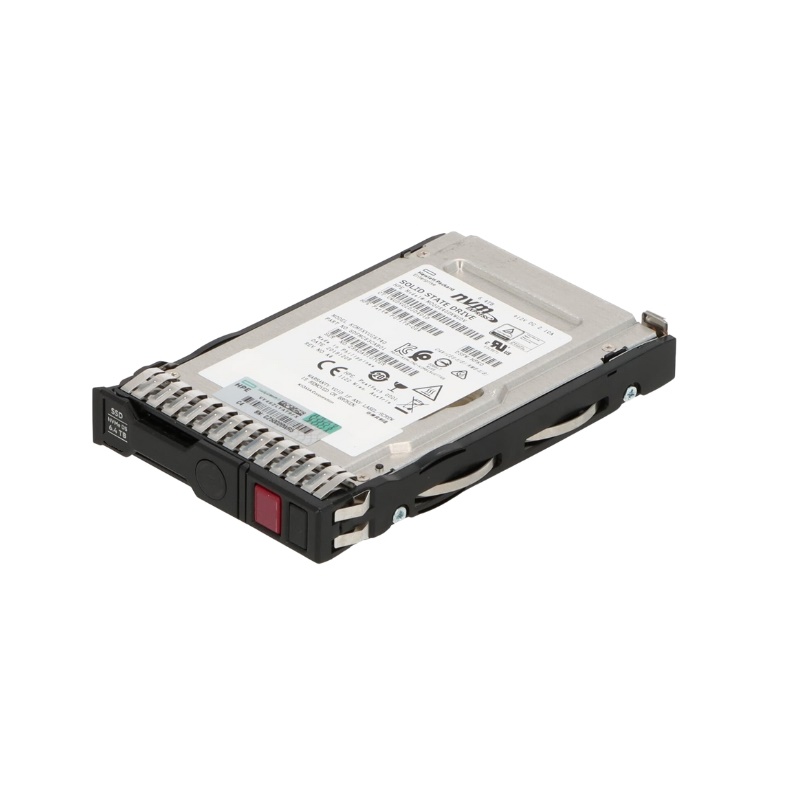
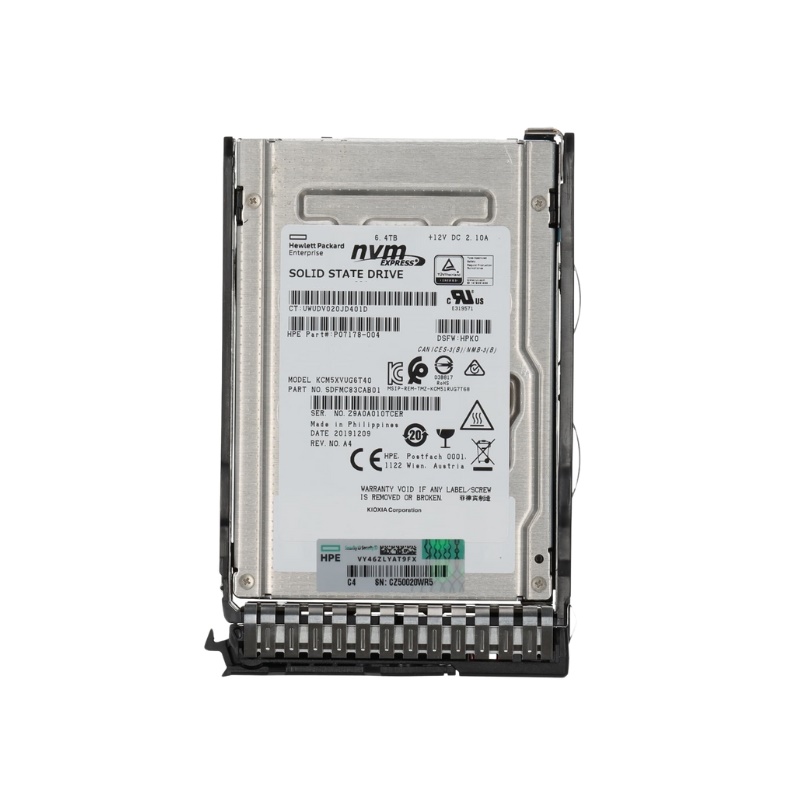
HPE P48127-001 6.4TB NVMe 2.5Inch SFF Hot Plug Solid State Drive. New (System) Pull with 1 year replacement warranty
Discover the HPE P48127-001, a high-capacity 6.4TB NVMe solid-state drive in a compact 2.5-inch SFF form factor. Designed for enterprise servers and data centers, this hot-plug NVMe SSD delivers exceptional throughput and sustained reliability for demanding workloads.
Engineered for high I/O and sequential performance — suitable for latency-sensitive and I/O-intensive applications.
This HPE NVMe SSD is validated for a wide range of HPE server families. Below is a breakdown of compatible models by series.
Non-Volatile Memory Express (NVMe) has revolutionized data storage by providing a streamlined, high-performance interface designed specifically for flash memory. Unlike traditional SATA or SAS interfaces that were adapted from hard drive technologies, NVMe was built from the ground up to leverage the full potential of NAND flash. The protocol reduces latency, increases IOPS (Input/Output Operations Per Second), and maximizes throughput by utilizing the PCIe (Peripheral Component Interconnect Express) bus directly, bypassing the limitations of legacy storage interfaces.
When compared to SAS (Serial Attached SCSI) and SATA (Serial ATA) interfaces, NVMe offers significant performance improvements. While high-end SAS SSDs might deliver up to 1,200 MB/s sequential read speeds, NVMe drives like the HPE P48127-001 can achieve speeds exceeding 3,000 MB/s. More importantly, NVMe dramatically reduces latency from hundreds of microseconds to just tens of microseconds, making it ideal for latency-sensitive applications. The protocol also supports significantly higher queue depths (64K commands per queue) compared to SAS (256 commands) or SATA (32 commands), enabling better performance under heavy workloads.
The HPE P48127-001 6.4TB NVMe SSD delivers enterprise-grade performance with specifications designed to meet the demands of the most challenging workloads. With sequential read speeds up to 3,200 MB/s and sequential write speeds up to 2,100 MB/s, this drive significantly outperforms SATA and SAS alternatives. Random performance is equally impressive, with up to 650,000 IOPS for read operations and 180,000 IOPS for write operations at queue depths optimized for real-world enterprise applications.
With a substantial 6.4TB capacity in a compact 2.5-inch Small Form Factor (SFF) design, the P48127-001 provides exceptional storage density for space-constrained environments. The 2.5-inch form factor has become the industry standard for enterprise servers and storage arrays, allowing for high-density configurations. This specific capacity point offers an optimal balance between performance, endurance, and cost-per-terabyte for mixed-use workloads common in enterprise environments.
The HPE P48127-001 utilizes high-quality 3D TLC (Triple-Level Cell) NAND flash memory, which offers an excellent balance of performance, endurance, and cost-effectiveness for enterprise applications. While SLC (Single-Level Cell) provides the highest endurance and MLC (Multi-Level Cell) offers a middle ground, TLC has become the preferred choice for many enterprise workloads due to technological advancements that have improved its reliability while maintaining competitive pricing. HPE's implementation includes advanced error correction, wear leveling, and over-provisioning to extend the drive's operational lifespan.
Enterprise SSDs are rated for endurance using Drive Writes Per Day (DWPD) or Total Bytes Written (TBW) metrics. The HPE P48127-001 is designed for mixed-use workloads with an endurance rating that ensures reliable operation under continuous write-intensive conditions. With advanced wear-leveling algorithms, bad block management, and power-loss protection, this drive maintains data integrity even during unexpected power failures. The mean time between failures (MTBF) exceeds 2 million hours, demonstrating the exceptional reliability engineered into this storage solution.
HPE has designed its server platforms to fully leverage NVMe technology through direct-attach configurations and NVMe-over-Fabric implementations. The P48127-001 takes advantage of HPE's Gen10 and Gen10 Plus server architectures that provide the necessary PCIe lane allocation and cooling capabilities for high-performance NVMe storage. These systems often include dedicated NVMe backplanes and optimized airflow designs to maintain optimal operating temperatures during sustained heavy workloads.
The HPE P48127-001 utilizes the U.2 (SFF-8639) interface, which supports both NVMe and SAS protocols through the same physical connector. This versatile design allows for flexible deployment in heterogeneous storage environments. The U.2 form factor provides four lanes of PCIe 3.0 connectivity, delivering up to 32 Gbps of bandwidth, along with sideband signals for management functions. The hot-plug capability is implemented through carefully designed staggered pin lengths that ensure proper power sequencing during insertion and removal.
The exceptional performance characteristics of the HPE P48127-001 make it ideally suited for a wide range of demanding enterprise applications. From accelerating database performance to handling real-time analytics, this drive delivers the low latency and high throughput required by modern business-critical workloads.
Traditional storage solutions often become bottlenecks for database performance, particularly for OLTP (Online Transaction Processing) systems with high concurrent user counts. The HPE P48127-001 dramatically reduces query response times and accelerates transaction processing by minimizing storage latency. Database applications such as Microsoft SQL Server, Oracle Database, and SAP HANA benefit significantly from the random I/O performance and consistent low latency provided by this NVMe SSD.
In virtualized environments where multiple virtual machines compete for storage resources, the high IOPS and low latency of the P48127-001 enable higher VM density and improved application performance. Hypervisors like VMware vSphere, Microsoft Hyper-V, and KVM can leverage these drives for both host operating systems and virtual machine storage, particularly for I/O-intensive VMs. Cloud service providers utilize such high-performance NVMe drives to offer premium storage tiers with guaranteed performance levels.
Artificial intelligence, machine learning, and high-performance computing applications generate enormous datasets that require rapid access during training and inference operations. The HPE P48127-001 provides the necessary bandwidth to feed data to GPUs and CPUs, reducing idle time and accelerating time-to-insight. In scientific computing and engineering simulations, these drives enable faster checkpointing and restart capabilities, improving overall computational efficiency.
Beyond raw performance, the HPE P48127-001 includes a comprehensive set of enterprise features designed to simplify management, enhance security, and ensure data integrity in business-critical environments.
HPE provides specialized management tools including the HPE SSD Toolkit and integration with HPE OneView for comprehensive storage management. These tools enable administrators to monitor drive health, firmware versions, temperature, and performance metrics. Predictive analytics capabilities can alert administrators to potential issues before they impact operations, while centralized management simplifies firmware updates across large deployments.
The HPE P48127-001 supports multiple security protocols including TCG Enterprise and TCG Opal 2.0 compliance for hardware-based encryption. With Sanitize Instant Erase (SIE) functionality, the drive can be cryptographically erased in seconds, ensuring data security during decommissioning or repurposing. Power-loss protection with onboard capacitors ensures that data in transit is written to non-volatile memory during unexpected power interruptions, preventing data corruption.
HPE enterprise SSDs undergo rigorous testing and validation processes that exceed industry standards. Each drive is subjected to extended burn-in testing, thermal cycling, and performance validation under various workload conditions. This comprehensive qualification process ensures consistent performance and reliability across the entire product lifecycle, backed by HPE's extensive experience in enterprise storage solutions.
To maximize the performance and lifespan of the HPE P48127-001, administrators should follow established best practices for NVMe deployment in enterprise environments.
NVMe drives can generate significant heat during sustained operations, potentially leading to thermal throttling if not properly managed. HPE servers are designed with optimized airflow paths and cooling solutions specifically for high-performance storage. Administrators should monitor drive temperatures using HPE management tools and ensure that server environmental specifications are maintained, including adequate clearance around air intakes and regular maintenance of air filters.
When deploying multiple HPE P48127-001 drives, proper workload distribution across drives can prevent hotspots and extend the overall lifespan of the storage subsystem. For RAID configurations, hardware RAID controllers with NVMe support or software-defined storage solutions should be evaluated based on performance requirements and management preferences. Different RAID levels offer varying balances of performance, capacity efficiency, and data protection that should be matched to specific application needs.
Regular firmware updates are essential for maintaining optimal performance, security, and compatibility. HPE provides firmware updates through the HPE Support Center, often including performance enhancements and bug fixes. Similarly, keeping NVMe drivers updated ensures compatibility with the latest operating system features and performance optimizations. HPE recommends establishing a regular maintenance schedule for reviewing and applying these updates in test environments before production deployment.


 Contact Us
 Information
 Catalog
 Solid State Drives (SSD)
 Network Switches
 Hard Disk Drives
 HBA & Controllers
 PC & Servers
 PC & Server Memory
 CPU & Processors
 Network Routers
 Power Supplies
 Tape Drives & Libraries
 Network Devices
 Computer & Network Cables