
(7% discount is applied at checkout)
Cart is empty
Your go-to destination for cutting-edge server products
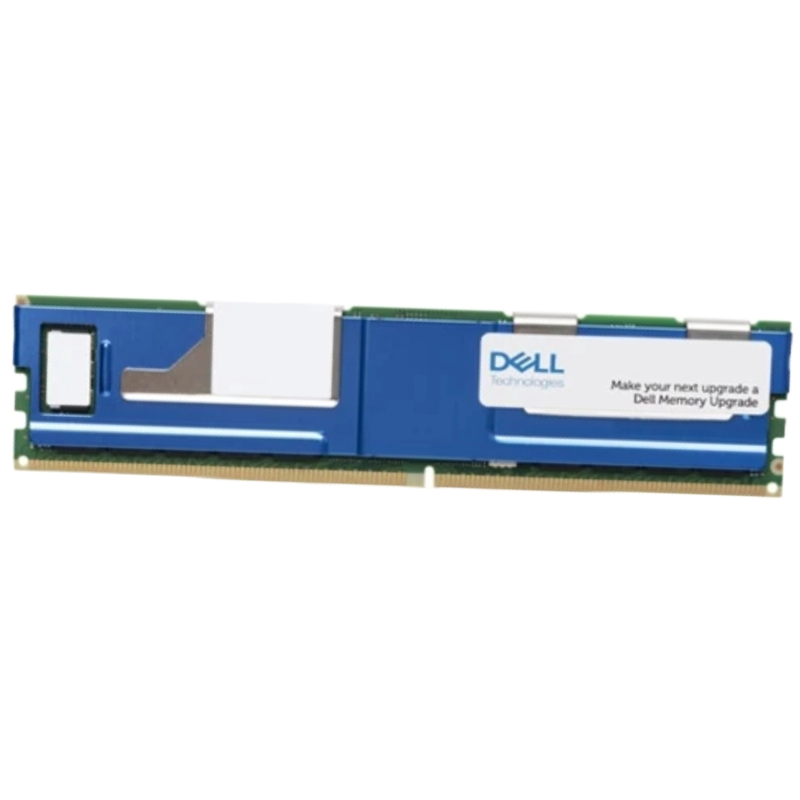
Dell AB675799 128GB DDR4-3200MHz PC4-25600 RAM Persistent Module. New Sealed in Box (NIB) with 1 Year Replacement Warranty
The Dell AB675799 Optane 200 Series 128GB DRAM Persistent Memory Module is engineered to deliver exceptional responsiveness, rapid data access, and improved workload efficiency. Designed for enterprise-grade systems, it blends high‑speed DRAM technology with persistent memory capabilities to support modern applications that require both speed and reliability.
The Dell AB675799 module integrates seamlessly with a range of Dell PowerEdge servers, ensuring optimal performance and stability.
The Dell AB675799 128GB DRAM 3200MHz Persistent for Optane 200 Memory Module represents a specialized category of enterprise memory engineered to bridge the long-standing performance gap between traditional volatile DRAM and conventional non-volatile storage. This category focuses on persistent memory modules that operate directly on the memory bus, delivering latencies measured in nanoseconds while retaining data across power cycles. Within modern data center infrastructure, persistent memory has become a critical architectural element for organizations seeking to reduce data movement, accelerate application responsiveness, and redesign memory hierarchies for large-scale workloads. Unlike classical DIMMs that lose state upon power loss, persistent memory modules maintain data integrity, enabling systems to resume operations with minimal recovery overhead. The evolution of persistent memory technology has been driven by increasing data volumes, real-time analytics demands, and the need to minimize bottlenecks created by storage subsystems. Traditional DRAM provides unmatched speed but is constrained by volatility and cost per gigabyte, while SSDs and NVMe drives offer persistence but at significantly higher latency. Persistent memory modules such as the Dell AB675799 occupy an intermediate tier that redefines how applications interact with memory and storage, allowing databases, in-memory computing platforms, and virtualization stacks to operate with a new balance of speed, capacity, and reliability.
This category of Dell persistent memory modules is designed around Intel Optane 200 Series technology, optimized for second-generation and later Intel Xeon Scalable processors that support persistent memory functionality. The integration with Intel’s memory controller architecture allows these modules to coexist alongside standard DDR4 DRAM, creating a heterogeneous memory environment that can be tuned for specific workload requirements. System architects can allocate DRAM for ultra-low-latency operations while leveraging Optane persistent memory for large datasets that benefit from persistence and high bandwidth. Platform compatibility is a defining characteristic of this category, as persistent memory modules require BIOS, firmware, and operating system support to function correctly.
Persistent memory modules in this category can operate in multiple modes depending on system configuration and application needs. In Memory Mode, the persistent memory acts as large-capacity volatile memory, with DRAM serving as a cache layer to accelerate access. This enables software designed to leverage persistence semantics to store data structures directly in memory, eliminating serialization overhead and reducing recovery times after system restarts. The Dell AB675799 category supports such advanced usage scenarios, making it highly relevant for modern databases, in-memory data grids, and real-time analytics platforms.
The 3200MHz operating frequency associated with this category reflects alignment with contemporary DDR4 memory standards, ensuring balanced bandwidth and compatibility with modern server architectures. While persistent memory exhibits slightly higher latency compared to pure DRAM, its performance is orders of magnitude faster than traditional storage devices. This balance enables applications to process large datasets in place, reducing the need for frequent data transfers between memory and storage layers. Bandwidth efficiency is further enhanced by the ability of persistent memory modules to sustain high throughput under mixed read and write workloads. This characteristic is particularly valuable for transaction-heavy applications, log-intensive systems, and environments where consistent performance under load is essential. The Dell AB675799 category is engineered to deliver predictable behavior across diverse workload patterns, supporting enterprise service-level objectives.
Latency behavior within this category is optimized through close integration with the CPU memory controller and optimized firmware. Although persistent memory latency is higher than DRAM, it remains sufficiently low to support near-real-time processing for many enterprise applications. This enables system designers to place latency-sensitive metadata structures in DRAM while storing bulk data in persistent memory, achieving an optimal balance between speed and capacity. The impact on application performance is often transformative, particularly for workloads that previously relied on disk-based storage for persistence. By eliminating I/O bottlenecks, persistent memory allows applications to scale more efficiently and respond more quickly to user requests and analytical queries.
Reliability is a cornerstone of the Dell AB675799 persistent memory category, as enterprise environments demand continuous operation and data integrity. These modules incorporate advanced error detection and correction mechanisms, ensuring that data stored in persistent memory remains consistent and protected against corruption. ECC functionality and firmware-level safeguards work together to maintain reliability across extended operational lifecycles. Availability is enhanced through support for features such as memory sparing and predictive failure analysis when deployed in compatible Dell server platforms. These capabilities allow system administrators to proactively address potential issues before they impact production workloads. Serviceability is further improved through standardized form factors and Dell’s enterprise support ecosystem, simplifying maintenance and replacement procedures.
A defining attribute of this category is its ability to retain data across power cycles. Persistent memory modules leverage non-volatile media that preserves state even in the event of unexpected power loss. This capability significantly reduces recovery times for applications, as data structures remain intact and accessible upon system restart. For mission-critical workloads, this translates into improved resilience and reduced downtime. The persistence characteristics also enable new application design paradigms, where recovery logic can be simplified and checkpointing overhead minimized. This has profound implications for database systems, financial applications, and other environments where rapid recovery and data consistency are paramount.
The Dell AB675799 category is particularly well-suited for memory-intensive workloads that require both high capacity and persistence. Large-scale databases, including relational and NoSQL platforms, benefit from the ability to store entire datasets in memory while maintaining durability guarantees. This enables faster query execution and more efficient transaction processing compared to disk-based architectures. In analytics and machine learning environments, persistent memory allows large training datasets and feature stores to reside in memory, reducing data loading times and accelerating iterative processing. Virtualization and containerized workloads also benefit from persistent memory by enabling faster VM and container startup times and more efficient memory utilization across tenants.
Scalability is a defining advantage of persistent memory modules, as they enable systems to support significantly larger memory capacities than would be economically feasible with DRAM alone. The 128GB capacity associated with this category allows organizations to scale memory-intensive applications without disproportionate increases in cost. This is particularly important for enterprises managing exponential data growth. Capacity planning in environments that utilize persistent memory requires a holistic approach that considers workload characteristics, access patterns, and persistence requirements.
Adopting persistent memory technology is also a strategic investment in future-proofing data center infrastructure. As software ecosystems continue to evolve to take advantage of persistence-aware programming models, organizations that deploy persistent memory today position themselves to benefit from ongoing innovation. The Dell AB675799 category aligns with this trajectory by offering compatibility with established enterprise platforms and support for emerging workloads. Long-term value is further reinforced by Dell’s commitment to firmware updates, platform validation, and enterprise support, ensuring that persistent memory deployments remain viable and effective throughout their operational lifespan.


 Contact Us
 Information
 Catalog
 Solid State Drives (SSD)
 Network Switches
 Hard Disk Drives
 HBA & Controllers
 PC & Servers
 PC & Server Memory
 CPU & Processors
 Network Routers
 Power Supplies
 Tape Drives & Libraries
 Network Devices
 Computer & Network Cables