
(7% discount is applied at checkout)
Cart is empty
Your go-to destination for cutting-edge server products
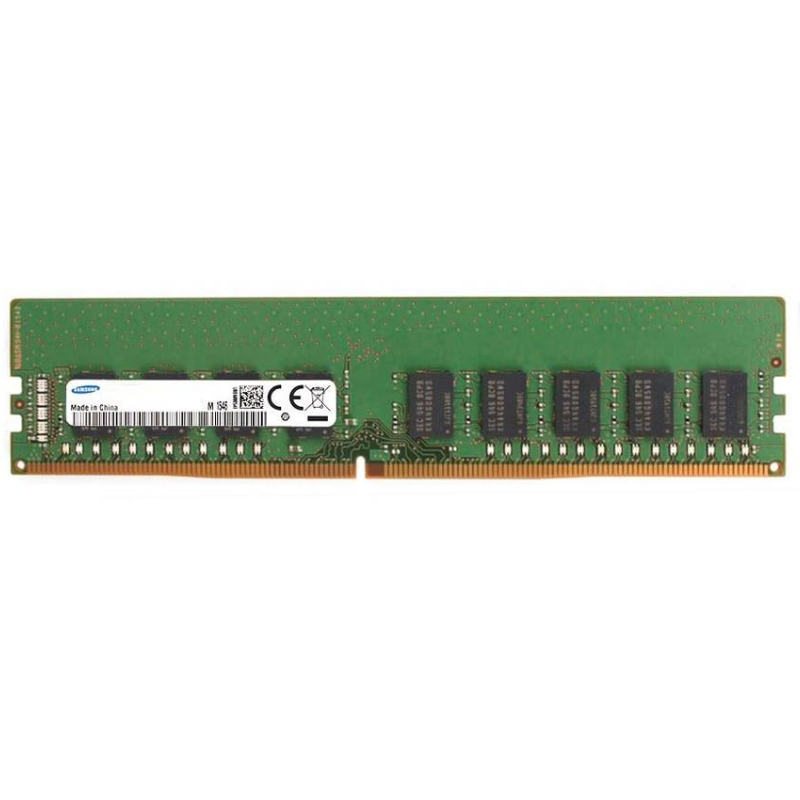
Samsung M391A2K43BB1-CRC00 16GB Memory Module 2400mhz Pc4-19200 Unbuffered. New (System) Pull with 1 year replacement warranty
The Samsung M391A2K43BB1-CRC00 is a high-performance 16GB PC4-19200 DDR4-2400MHz 2RX8 ECC memory module designed for reliability and speed in enterprise and workstation environments.
The category of DDR4 ECC unbuffered UDIMM memory modules is designed to serve professional computing environments where data integrity, system stability, and long-term reliability are essential. Products such as the Samsung M391A2K43BB1-CRC00 16GB DDR4 UDIMM represent a specialized class of system memory optimized for workstations, entry-level servers, network appliances, and embedded platforms that require error correction without the latency overhead of registered memory. This category addresses the growing demand for dependable memory solutions in business-critical applications that operate continuously under sustained workloads.
DDR4 SDRAM technology introduced significant architectural improvements over previous DDR3 generations, enabling higher bandwidth, lower operating voltage, and improved signal integrity. Within this category, DDR4 UDIMM modules operating at 2400 MT/s provide a balanced combination of speed and efficiency, supporting modern processors that rely on faster memory channels to optimize data throughput. The use of PC4-19200 classification ensures compatibility with platforms designed around standardized DDR4 performance metrics, making these modules suitable for a wide range of enterprise and professional systems.
A data transfer rate of 2400 MT/s allows DDR4 UDIMM memory modules to deliver sufficient bandwidth for multitasking environments, virtualization workloads, and data-intensive applications. This speed rating supports smoother communication between the CPU and memory subsystem, reducing latency during peak operational loads. In category terms, memory modules with this specification are commonly selected for balanced performance systems that require dependable throughput without excessive power consumption.
Operating at a nominal voltage of 1.2V, DDR4 memory in this category significantly reduces power draw compared to earlier DDR3 modules. Lower voltage operation contributes to reduced thermal output, improved energy efficiency, and longer component lifespan. For data centers, offices, and industrial environments where systems may run continuously, this characteristic aligns with energy-conscious infrastructure planning and operational cost control.
ECC memory is a defining feature of this category, offering enhanced data reliability through automatic detection and correction of single-bit memory errors. The Samsung M391A2K43BB1-CRC00 exemplifies ECC UDIMM memory designed for systems where data accuracy is non-negotiable. ECC functionality minimizes the risk of silent data corruption, system crashes, and unexpected downtime, making this category particularly relevant for professional workloads.
ECC unbuffered DIMMs combine error correction capabilities with a direct electrical connection between the memory controller and the DRAM chips. Unlike registered memory, UDIMM modules do not introduce additional buffering latency, allowing faster response times while still maintaining data integrity. This makes the category ideal for platforms that support ECC but do not require the scalability of registered DIMMs.
In environments such as financial systems, engineering workstations, database servers, and content creation platforms, data accuracy is critical. ECC UDIMM memory reduces the likelihood of computational errors caused by electrical interference or cosmic radiation. Category products with ECC support help ensure consistent system behavior, even during extended operational cycles.
ECC unbuffered memory modules are supported by specific CPU architectures and chipsets, typically found in workstation-class processors and entry-level server platforms. This category is targeted at users who require ECC benefits without transitioning to full server-class registered memory architectures. Compatibility with Intel Xeon E-series, select Core processors with ECC support, and comparable AMD platforms positions this category as a versatile solution.
The 16GB capacity offered by modules in this category reflects a widely adopted standard for professional systems. This density allows sufficient headroom for modern operating systems, virtualization environments, and demanding applications without overburdening system resources. As memory requirements continue to grow, 16GB DDR4 UDIMM modules remain a foundational building block for scalable configurations.
Dual rank memory architecture, identified as 2Rx8, plays a significant role in performance optimization. By distributing memory access across two ranks, the memory controller can improve interleaving and throughput efficiency. This configuration enhances performance in multi-threaded workloads and improves responsiveness under concurrent memory access scenarios.
In category applications such as virtualization hosts and professional workstations, dual rank memory can provide measurable performance benefits over single rank alternatives. Improved memory access patterns reduce bottlenecks and contribute to smoother execution of parallel tasks. This makes dual rank ECC UDIMM modules a preferred choice in balanced system designs.
Modules with 16GB capacity and dual rank design offer flexibility when expanding system memory. Users can populate multiple DIMM slots to reach higher total capacities while maintaining compatibility and stability. This category supports incremental upgrades, allowing organizations to adapt systems to evolving workload demands without complete hardware replacement.
CAS latency plays a crucial role in determining memory responsiveness. With a CL17 rating, DDR4-2400 ECC UDIMM modules in this category provide an effective balance between speed and stability. While lower latency is always desirable, CL17 at 2400 MT/s aligns with JEDEC standards, ensuring broad compatibility and predictable performance.
CAS latency represents the delay between a memory controller request and data availability. In professional environments, consistent latency is often more important than minimal latency. Category memory modules with standardized timing profiles deliver reliable performance across supported platforms, reducing the risk of instability caused by aggressive timing configurations.
Adherence to JEDEC specifications ensures that DDR4 UDIMM memory modules operate within defined electrical and timing parameters. This category emphasizes compliance to guarantee interoperability with enterprise-grade motherboards and BIOS configurations. JEDEC-standard CL17 timing ensures predictable behavior across a wide range of supported systems.
For workloads such as database management, software development, and virtualization, overall memory throughput often has a greater impact on performance than marginal latency differences. The category focuses on delivering stable, sustained performance rather than peak benchmark figures, aligning with real-world professional usage scenarios.
The 288-pin UDIMM form factor defines the physical and electrical interface for DDR4 desktop and workstation memory. Modules in this category adhere strictly to industry standards, ensuring compatibility with a wide array of motherboards designed for DDR4 UDIMM installation. The physical design supports easy installation and secure seating within DIMM slots.
DDR4 UDIMM memory modules are designed to operate within defined temperature ranges suitable for enterprise and professional systems. Efficient power usage and optimized chip layout help maintain stable temperatures even under sustained workloads. This category supports environments where consistent thermal performance is essential for overall system longevity.
The standard UDIMM height ensures compatibility with most workstation and server chassis designs. Memory modules in this category can be installed alongside large CPU coolers and compact system enclosures without clearance issues, making them suitable for diverse deployment scenarios.
This category of DDR4 ECC unbuffered memory modules is widely used across various professional computing scenarios. From office workstations to small-scale servers, these modules provide a reliable foundation for systems that require consistent performance and data accuracy. The versatility of ECC UDIMM memory supports both single-system deployments and scaled infrastructure.
In engineering, design, and content creation environments, memory stability is essential for maintaining productivity. ECC UDIMM memory reduces the risk of application crashes and data corruption during long rendering sessions or complex simulations. This category supports professionals who rely on dependable system performance.
Small business servers, file servers, and network appliances benefit from ECC memory’s error correction capabilities. Category products provide an affordable path to improved reliability without the cost and complexity of registered server memory. This makes ECC UDIMM modules an attractive option for growing organizations.
Virtualized environments place significant demands on system memory. ECC UDIMM memory modules support stable operation of multiple virtual machines by minimizing memory-related errors. Developers and IT administrators value this category for testing, staging, and production systems where uptime and consistency are critical.
Selecting the correct memory category is essential for successful system integration. DDR4 ECC UDIMM modules must be matched with compatible motherboards, processors, and BIOS configurations. This category is designed for platforms that explicitly support ECC unbuffered memory, ensuring full functionality and stability.
ECC functionality is dependent on CPU and chipset support. This category is intended for systems built around workstation-class and server-capable processors that enable ECC error correction. Proper platform selection ensures that the memory’s full capabilities are utilized.
System firmware plays a critical role in enabling ECC features and optimizing memory performance. Category memory modules are designed to work with standard BIOS settings, simplifying deployment and reducing configuration complexity. Updated firmware ensures optimal compatibility and performance.
For optimal performance and stability, systems should use matched memory modules with consistent specifications. This category supports standardized configurations that reduce the risk of incompatibility when populating multiple DIMM slots. Consistent module selection contributes to predictable system behavior.


 Contact Us
 Information
 Catalog
 Solid State Drives (SSD)
 Network Switches
 Hard Disk Drives
 HBA & Controllers
 PC & Servers
 PC & Server Memory
 CPU & Processors
 Network Routers
 Power Supplies
 Tape Drives & Libraries
 Network Devices
 Computer & Network Cables