(7% discount is applied at checkout)
Cart is empty
Your go-to destination for cutting-edge server products


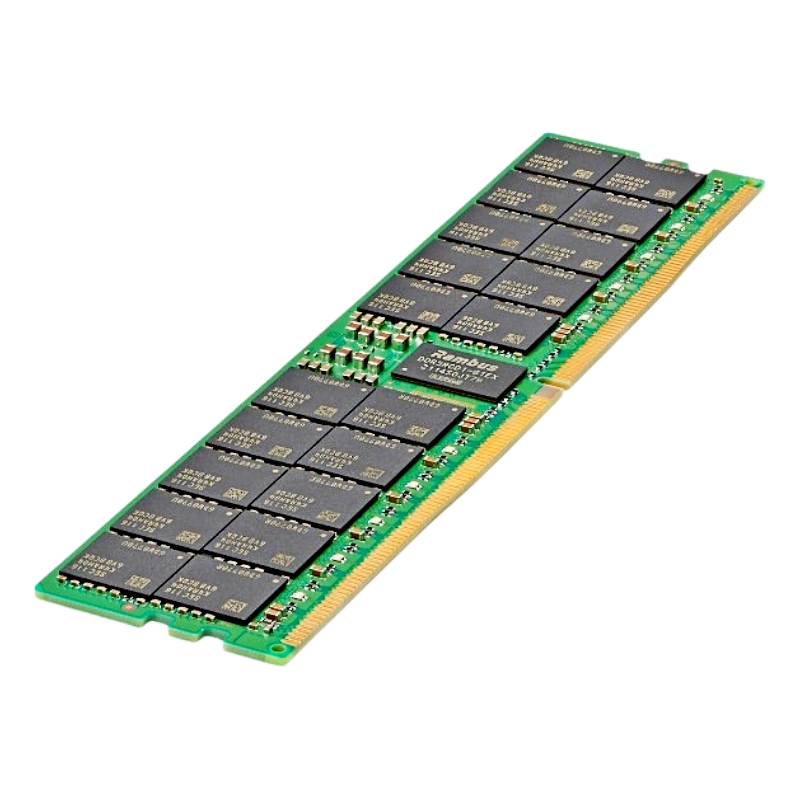
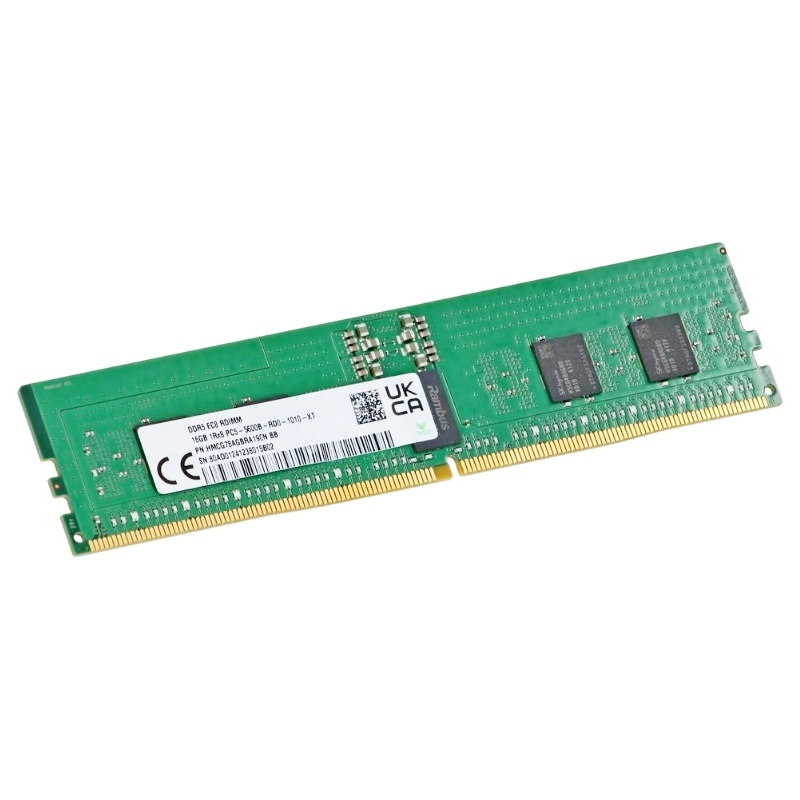
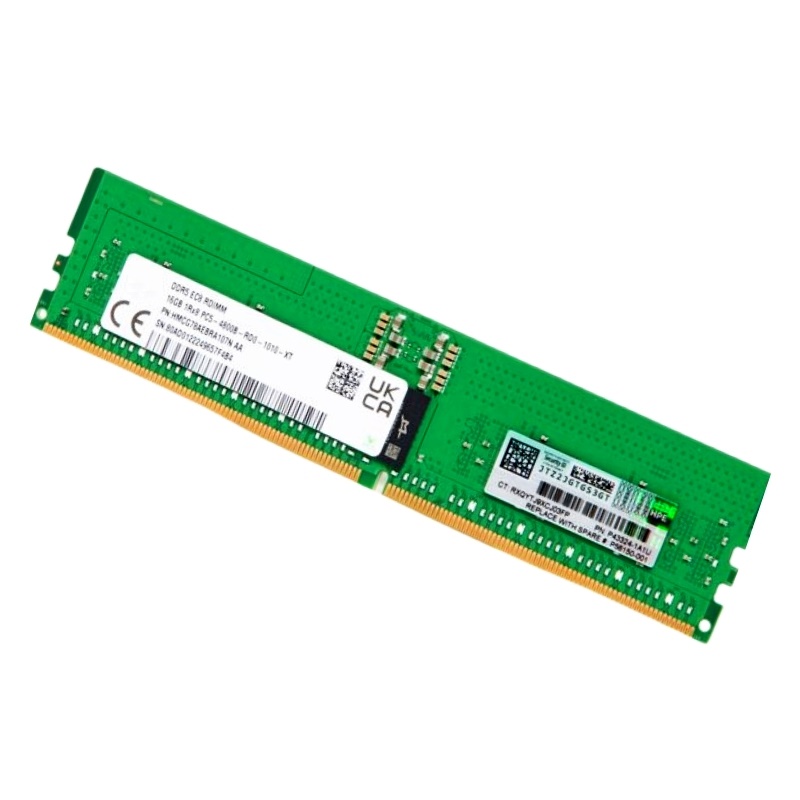
16GB HPE P56150-001 4800MHz PC5-38400 Cl42 ECC Single Rank 288-pin RDIMM Memory. Factory-Sealed New in Original Box (FSB) with 3 Years Warranty
The P56150-001 HPE 16GB 4800MHz PC5-38400 CL42 ECC Single Rank 288-Pin RDIMM Memory module represents a significant advancement in enterprise server memory technology. Designed for modern data centers, virtualization environments, high-performance computing workloads, and enterprise-level database platforms, this DDR5 Registered DIMM module delivers exceptional bandwidth, reliability, and scalability.
DDR5 memory technology introduces significant improvements over previous DDR4 generations. The HPE 16GB 4800MHz PC5-38400 RDIMM memory module offers dramatically increased memory bandwidth, allowing servers to process more data simultaneously. With speeds reaching 4800MHz, DDR5 provides higher throughput that supports demanding workloads such as cloud infrastructure, large database queries, high-speed transaction systems, and artificial intelligence applications.
The PC5-38400 specification refers to the theoretical bandwidth capability of the module. It allows the memory to transfer up to 38.4GB of data per second, which significantly improves system responsiveness and computational performance. This increased bandwidth is particularly valuable for applications that rely heavily on memory access, including virtualization hypervisors and large-scale analytics platforms.
One of the major advantages of DDR5 technology is improved power efficiency. The P56150-001 HPE memory module operates with advanced power management features that allow the system to reduce overall energy consumption while maintaining optimal performance levels. Data centers benefit from lower power usage, reduced heat generation, and improved overall infrastructure efficiency.
DDR5 modules include on-module power management integrated circuits that regulate voltage more effectively compared to earlier memory technologies. This enables more stable operation while also reducing strain on the system motherboard. As servers scale up in memory capacity, these power management improvements become increasingly important for maintaining reliable performance.
DDR5 memory modules also support higher density configurations, allowing modern servers to expand their memory capacity without increasing the physical number of DIMM slots required. The 16GB configuration of the P56150-001 module is ideal for balanced performance environments where multiple DIMMs are deployed across several channels.
With improved memory architecture, organizations can build scalable infrastructures that support future upgrades and expansion. Servers populated with DDR5 RDIMM modules can accommodate growing workloads without requiring significant hardware redesign.
Error Correcting Code technology is a fundamental requirement in enterprise computing environments. The HPE P56150-001 16GB DDR5 RDIMM memory module includes ECC functionality that detects and corrects memory errors automatically. This feature ensures that systems maintain data accuracy and operational reliability even when minor memory faults occur.
Memory errors can arise from various factors including electrical interference, cosmic radiation, and hardware aging. In mission-critical applications, even a single memory error can cause system crashes, corrupted files, or database inconsistencies. ECC memory mitigates these risks by identifying and correcting errors before they affect application performance.
Enterprise servers frequently run workloads that require uninterrupted processing and consistent data integrity. Examples include financial transaction platforms, healthcare data systems, telecommunications infrastructure, and government data services. ECC memory modules such as the HPE 16GB 4800MHz RDIMM ensure that these systems remain stable and reliable.
By integrating ECC technology, organizations can reduce the likelihood of downtime, prevent data corruption, and maintain compliance with strict reliability standards. This is particularly important in industries where accuracy and availability are essential to business operations.
The P56150-001 HPE memory module uses a Registered DIMM architecture. RDIMM technology includes a register that buffers memory signals between the memory controller and the DRAM modules. This buffering process reduces electrical load on the memory controller and enables systems to support larger memory capacities.
Registered DIMMs are specifically designed for enterprise servers and high-performance computing platforms. Unlike unbuffered memory, RDIMM modules maintain signal integrity when multiple DIMMs are installed across memory channels. This allows servers to scale their memory capacity without compromising stability or performance.
Servers often require multiple memory modules installed across several channels to maximize bandwidth and performance. RDIMM technology ensures that these configurations remain stable by buffering control signals and reducing electrical interference. The P56150-001 module is optimized for these high-density configurations.
As enterprise environments expand their infrastructure to support virtualization clusters and cloud services, the ability to scale memory reliably becomes increasingly important. Registered DIMMs allow organizations to build high-capacity memory architectures that maintain consistent performance under heavy workloads.
The HPE P56150-001 DDR5 memory module uses a single rank configuration. A rank represents a group of memory chips that operate together to deliver data to the memory controller. Single rank modules contain one set of memory chips that can be accessed simultaneously, providing efficient communication between the memory controller and the DIMM.
Single rank memory modules are often preferred for certain server configurations because they can provide improved latency characteristics and simplified memory channel optimization. By minimizing complexity within the memory architecture, single rank modules allow systems to maintain consistent performance across multiple channels.
In enterprise servers where multiple DIMM slots are available, single rank modules can help optimize channel balance and improve memory access efficiency. When properly configured, servers equipped with multiple single rank modules can achieve excellent memory throughput while maintaining system stability.
This configuration is particularly effective in systems designed for virtualization, where numerous virtual machines rely on consistent and predictable memory access. By using single rank RDIMM modules, administrators can optimize memory channel utilization and achieve better workload distribution.
The 288-pin DIMM form factor is the standard design for DDR4 and DDR5 server memory modules. The HPE P56150-001 RDIMM follows this specification, ensuring compatibility with supported HPE enterprise servers and platforms that utilize DDR5 memory technology.
The 288-pin configuration provides the physical interface that connects the memory module to the server motherboard. Each pin facilitates communication between the memory controller and the DRAM chips, allowing data to be transferred efficiently across memory channels.
Enterprise servers rely on standardized memory form factors to ensure consistent compatibility and reliable installation. The 288-pin RDIMM design allows data center administrators to install, upgrade, or replace memory modules easily without requiring specialized modifications.
This standardized approach simplifies server maintenance and infrastructure upgrades. Organizations can expand memory capacity quickly by adding additional RDIMM modules that meet the same specifications.
The P56150-001 HPE 16GB DDR5 RDIMM memory module is specifically engineered for compatibility with HPE enterprise servers and computing platforms. HPE designs its memory modules to meet strict quality standards, ensuring optimal integration with supported server architectures.
When installed in compatible HPE servers, this memory module delivers maximum performance and reliability. HPE Smart Memory technologies also allow systems to monitor memory health, performance metrics, and thermal conditions, helping administrators maintain stable infrastructure environments.
Enterprise servers used for virtualization, private cloud infrastructure, database management, and enterprise applications benefit significantly from high-performance DDR5 memory modules. The P56150-001 module integrates seamlessly into these environments, supporting large workloads and high-density computing clusters.
By deploying certified HPE memory modules, organizations ensure compatibility, maintain warranty compliance, and reduce the risk of performance issues that can arise from unsupported memory configurations.
Virtualized environments require significant memory resources to support multiple virtual machines simultaneously. Each virtual machine consumes memory for operating systems, applications, and background processes. The HPE 16GB 4800MHz RDIMM module provides the high bandwidth and reliability needed to sustain these environments.
By deploying multiple DDR5 RDIMM modules across memory channels, administrators can build virtualization clusters capable of supporting hundreds of virtual workloads without sacrificing performance or stability.
Scientific computing, data modeling, and simulation environments require fast memory access and high bandwidth. The PC5-38400 DDR5 specification allows servers to process large datasets efficiently, enabling researchers and engineers to run complex calculations and simulations with minimal latency.
High-performance computing clusters benefit greatly from DDR5 memory technology, which provides the speed and capacity required for advanced computational tasks.
Enterprise databases rely heavily on memory performance to manage large volumes of transactional data and analytical queries. Fast memory access allows database servers to retrieve and process information quickly, improving response times and overall system efficiency.
The P56150-001 HPE 16GB RDIMM module supports these demanding workloads by delivering consistent performance, reliable error correction, and scalable memory architecture.
AI and machine learning applications require extensive memory resources to process training datasets and model parameters. High-speed DDR5 memory modules enable faster data transfer between the CPU and system memory, accelerating training processes and improving overall computational efficiency.
Data centers that support AI workloads benefit from the bandwidth and reliability offered by enterprise-grade RDIMM modules such as the HPE P56150-001.
Genuine HPE memory modules undergo extensive testing to ensure compatibility and reliability with supported server platforms. Each module is validated through rigorous quality control processes that verify electrical performance, thermal stability, and long-term reliability.
By choosing genuine HPE memory components, organizations reduce the risk of system instability, compatibility issues, and unexpected failures. These modules are designed to meet enterprise reliability standards and support continuous operation in demanding environments.
The HPE P56150-001 RDIMM Memory module has a capacity of 16GB. This is an important feature for users as it allows for efficient multitasking and improved system performance. With a larger capacity, users can run multiple applications simultaneously without experiencing a slowdown in their system's speed. This is particularly beneficial for users who work with resource-intensive software such as video editing or 3D rendering programs.
By increasing the memory capacity to 16GB, users can expect improved system responsiveness. This means that tasks such as opening and closing applications, navigating through files, and switching between different programs will be faster and more efficient. With a larger memory capacity, the system can store more data in the RAM, reducing the need to retrieve information from slower storage devices like hard drives.
The 16GB capacity of the HPE P56150-001 RDIMM Memory module enables smooth multitasking. Users can seamlessly switch between multiple applications without experiencing lag or delays. Whether it's running virtual machines, editing large files, or working with complex spreadsheets, the increased capacity ensures that all tasks can be handled simultaneously without compromising performance.
Memory-intensive applications such as video editing software, CAD programs, and virtual machines require a significant amount of RAM to operate efficiently. The 16GB capacity of this memory module provides sufficient resources to ensure smooth operation of these applications. Users can experience faster rendering times, smoother playback, and overall improved performance when working with these resource-intensive tasks.
The HPE P56150-001 RDIMM Memory module features a speed of 4800MHz. This high-speed capability is crucial for users who demand optimal performance from their systems. The faster speed allows for quicker data transfer between the memory module and the processor, resulting in improved overall system performance.
The 4800MHz speed of the memory module translates into improved system performance. Users can expect faster boot times, shorter application load times, and overall snappier system responsiveness. With higher speed, the system can retrieve and process data more quickly, enabling users to work efficiently without experiencing slowdowns or delays.
Gamers can benefit greatly from the 4800MHz speed of this memory module. The high-speed capability ensures smooth gameplay, reduced input lag, and faster loading times for game assets. Whether playing graphically demanding games or engaging in competitive online multiplayer matches, the faster speed contributes to an immersive gaming experience without performance bottlenecks.
For users engaging in tasks that involve heavy data processing, such as video encoding or 3D rendering, the high-speed capability of this memory module is essential. The 4800MHz speed allows for faster data transfer and processing, reducing the time required for complex calculations and improving productivity.
The HPE P56150-001 RDIMM Memory module has a PC rating of PC5-38400. This PC rating indicates the maximum data transfer rate that the memory module can achieve. The higher the PC rating, the faster the data transfer rate, resulting in improved system performance.
The PC5-38400 rating of this memory module ensures faster data transfer between the memory and other components of the system. This means that information can be accessed and processed more quickly, resulting in improved overall system performance. Users can expect reduced loading times and improved responsiveness when working with demanding applications or large datasets.
With the PC5-38400 rating, users can enjoy seamless multimedia streaming. Whether streaming high-definition videos, playing music, or video conferencing, the faster data transfer rate ensures smooth playback without buffering or interruptions. This enhances the overall media consumption experience and allows users to enjoy their favorite content without any hiccups.
The PC rating of this memory module contributes to improved productivity. Users can work with large files, run resource-intensive applications, and multitask efficiently without experiencing performance bottlenecks. The faster data transfer rate enables smoother workflow and reduces the time wasted on waiting for operations to complete.
The HPE P56150-001 RDIMM Memory module supports ECC (Error-Correcting Code) technology. ECC is an important feature that ensures data integrity and reliability by detecting and correcting memory errors. This feature is particularly crucial for users who work with critical data and cannot afford any data corruption or loss.
ECC technology plays a vital role in maintaining data integrity. It detects and corrects errors that occur during memory operations, ensuring that the stored data remains accurate and reliable. By detecting and correcting errors, ECC helps prevent potential system crashes, data corruption, and application failures, providing users with peace of mind when working with important files or critical applications.
The ECC feature of this memory module enhances system stability. By identifying and fixing memory errors in real-time, it helps prevent system crashes caused by memory-related issues. This is particularly important for servers or workstations that need to operate continuously without interruptions. The ECC technology ensures that the system remains stable and reliable, reducing downtime and improving overall productivity.
For users who rely on their systems for mission-critical tasks, the ECC feature provides a reliable computing environment. The ability to detect and correct errors in memory operations reduces the risk of data corruption or loss, ensuring that important files and applications remain intact. This is especially important in industries such as finance, healthcare, and research where data integrity is paramount.
The HPE P56150-001 RDIMM Memory module has a rank of Single. The rank represents how the memory module is organized internally and affects its compatibility and performance in multi-module configurations. A single rank module is ideal for users who require simplicity and compatibility in their system configurations.
The Single rank configuration of this memory module simplifies system configuration. Users can easily install a single module without worrying about complex compatibility issues that may arise with multi-rank modules. This makes it an ideal choice for users who prefer a straightforward and hassle-free installation process.
With a Single rank module, users have the flexibility to upgrade their system's memory as needed. They can add additional modules without the need to match ranks, making it easier to expand the memory capacity in the future. This allows users to adapt their system's memory configuration based on changing needs or budget constraints.
The Single rank configuration ensures optimal compatibility with a wide range of systems and motherboards. Users can be confident that this memory module will work seamlessly with their existing hardware, eliminating the need for complicated compatibility checks or potential compatibility issues that may arise with other rank configurations.
The HPE P56150-001 RDIMM Memory module features a 288-pin design. The pin count determines the physical connection between the memory module and the motherboard. The 288-pin design is a widely used standard and offers compatibility with a variety of systems.
The 288-pin design ensures universal compatibility with a wide range of systems and motherboards. Users can be confident that this memory module will fit and function properly in their system without any compatibility issues. Whether upgrading an existing system or building a new one, the 288-pin design provides peace of mind.
The 288-pin design future-proofs the system's memory configuration. As a widely used standard, it ensures that users will have access to compatible memory modules in the future, even as technology advances. This allows users to easily upgrade or expand their system's memory capacity without worrying about obsolescence or limited options.
The HPE P56150-001 RDIMM Memory module has a CAS Latency of CL42. CAS Latency represents the delay between a command being issued to access data from memory and when the data becomes available for use. A lower CAS Latency value indicates faster data access, resulting in improved system performance.
The CL42 CAS Latency of this memory module ensures faster data access. With lower latency, the memory module can retrieve and deliver data to the processor more quickly, reducing the time required for data-intensive operations. Users can expect improved overall system performance and responsiveness when working with applications that rely heavily on memory access.
Gamers can benefit from the CL42 CAS Latency of this memory module as it optimizes gaming performance. The reduced latency ensures that game assets are loaded quickly, minimizing any potential delays or stutters during gameplay. This results in a smoother gaming experience with improved frame rates and reduced input lag.
The CL42 CAS Latency allows for enhanced multitasking capability. With faster data access, users can seamlessly switch between multiple applications without experiencing performance bottlenecks. This is particularly beneficial for users who need to run resource-intensive software or work with large datasets, as they can efficiently handle multiple tasks simultaneously without sacrificing performance.


 Contact Us
 Information
 Catalog
 Solid State Drives (SSD)
 Network Switches
 Hard Disk Drives
 HBA & Controllers
 PC & Servers
 PC & Server Memory
 CPU & Processors
 Network Routers
 Power Supplies
 Tape Drives & Libraries
 Network Devices
 Computer & Network Cables