(7% discount is applied at checkout)
Cart is empty
Your go-to destination for cutting-edge server products
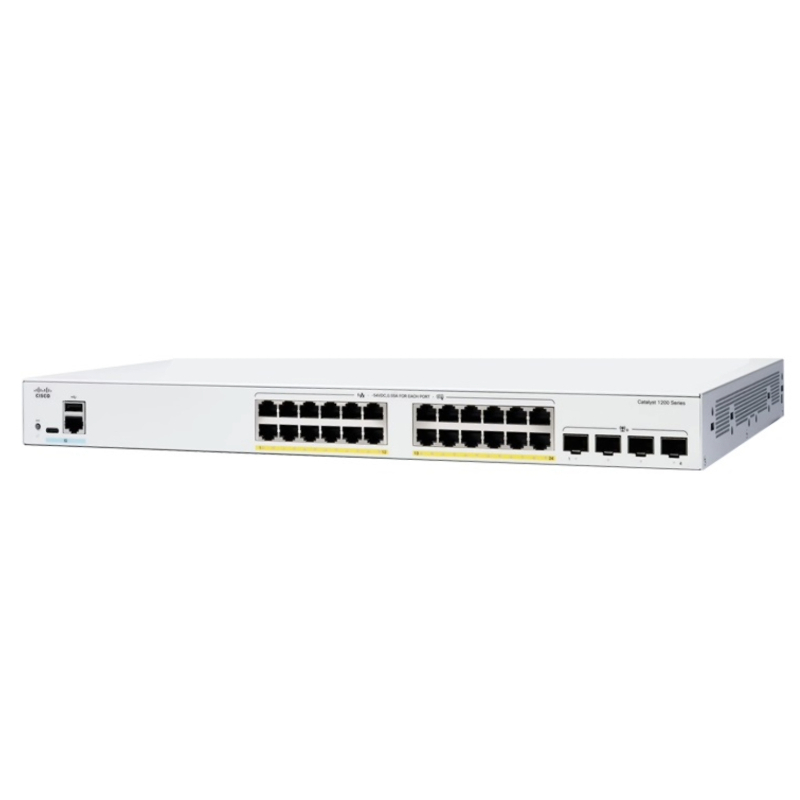


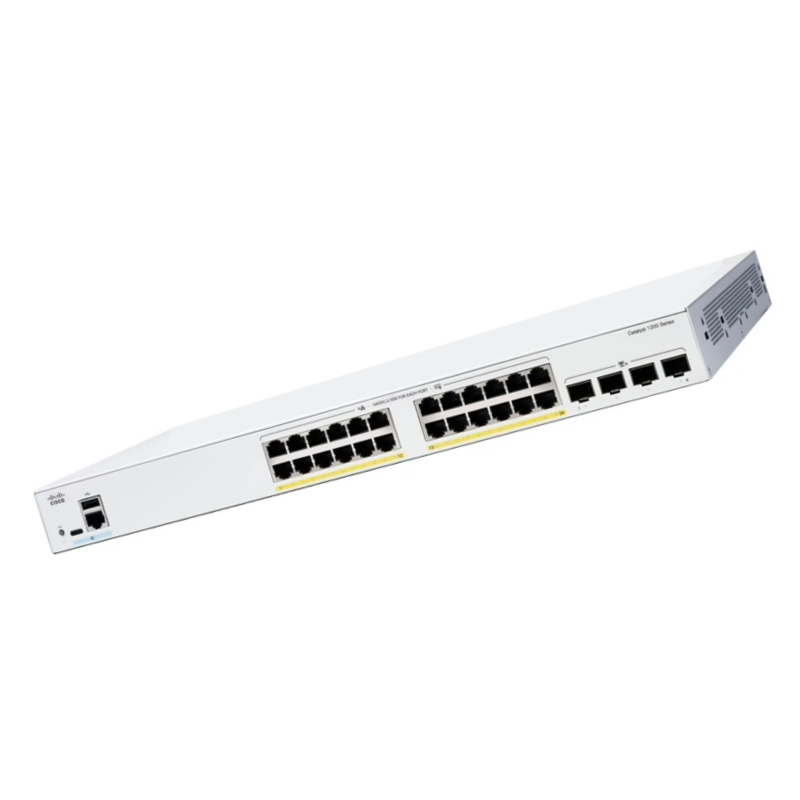
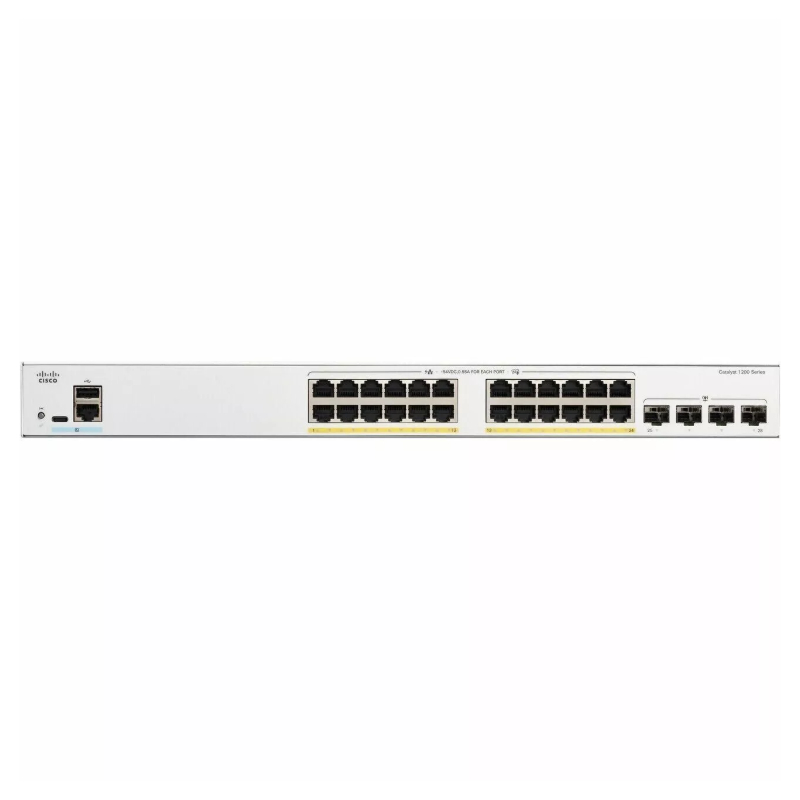
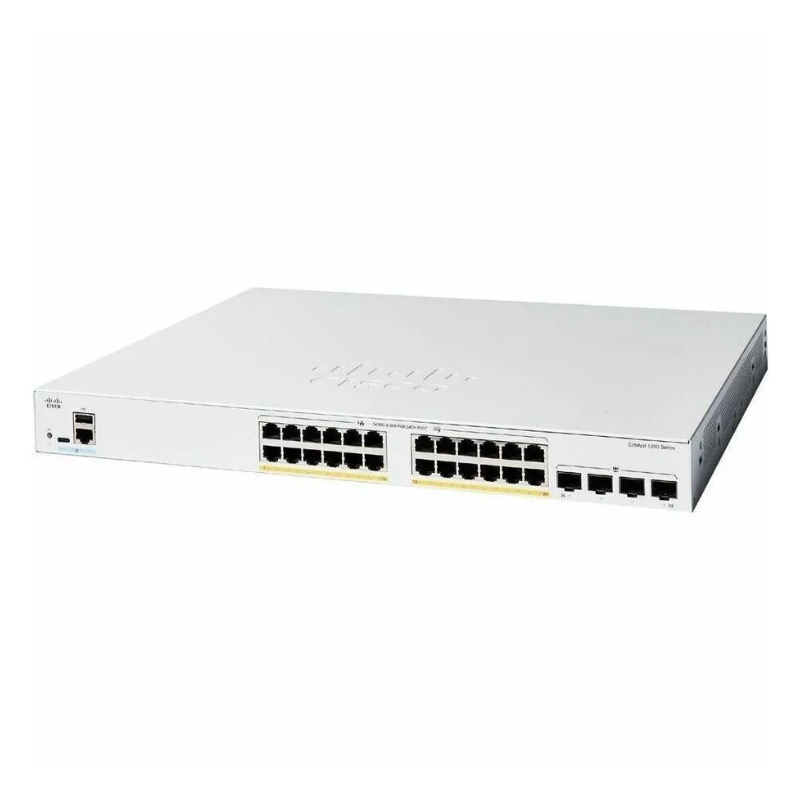
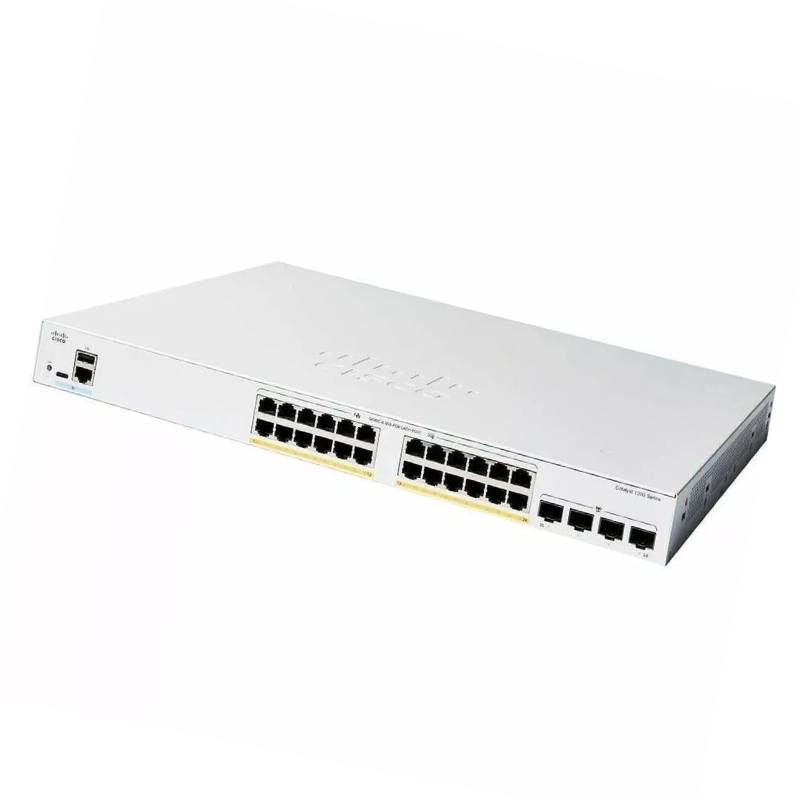
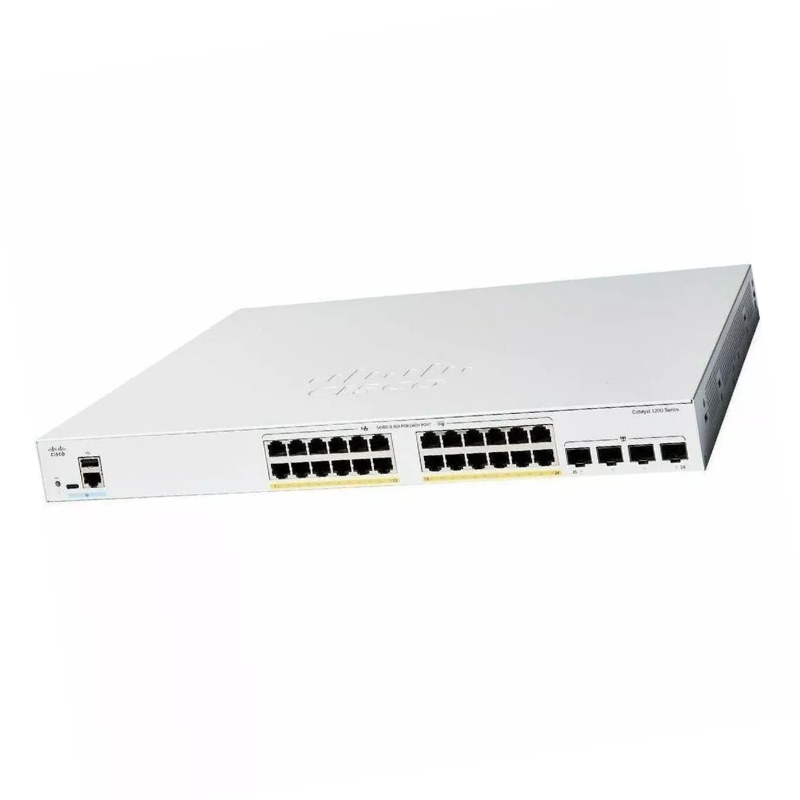
Cisco C1200-24P-4G Catalyst 1200 24 Ports Manageable Switch Poe 4 SFP Ethernet. Factory-Sealed New in Original Box (FSB) with 1 year replacement warranty
The Cisco Catalyst C1200-24P-4G is a high-performance, smart-managed Layer 3 switch designed for modern enterprise and SMB networks. It delivers reliable Gigabit Ethernet connectivity, advanced security, and Power over Ethernet Plus (PoE+) support, making it ideal for IP phones, wireless access points, and surveillance systems.
The Cisco C1200-24P-4G is part of the Cisco Catalyst 1200 Series, purpose-built to deliver reliable, secure, and affordable switching for small and medium-sized businesses that need easy management without sacrificing performance or PoE power. It provides 24 Gigabit Ethernet access ports with PoE+ support and 4 dedicated 1G SFP uplink slots, enabling high-density edge connectivity with flexible fiber uplinks for aggregation or inter-building links in compact, cost-efficient deployments.
Designed to be managed through the Cisco Business mobile app and dashboard, the C1200-24P-4G emphasizes simplicity and operational efficiency for IT teams and managed service providers, blending intuitive controls with enterprise-grade hardware built on Cisco’s networking heritage. This makes it ideal for offices, clinics, retail environments, schools, and hospitality networks looking for manageable access switches with scalable power and fiber options.
Under the hood, the switch offers a switching capacity of 56 Gbps and a forwarding rate of approximately 41.66 Mpps, balanced for Gigabit Layer 2/L2+ access workloads. It leverages a dual-core ARM CPU running at 1.4 GHz, supporting responsive management and feature execution across VLANs, spanning tree variants, and port security features suitable for modern LANs. For structured cabling and standards alignment, it supports IEEE 802.3 10BASE-T, 802.3u 100BASE-TX, 802.3ab 1000BASE-T, 802.3z Gigabit Ethernet, 802.3x flow control, 802.3ad LACP, 802.1D STP, 802.1w RSTP, 802.1s MSTP, 802.1Q/p VLAN, and 802.1X authentication, alongside PoE standards 802.3af and 802.3at for powering endpoints.
At the access layer, the C1200-24P-4G combines PoE+ power delivery with Gigabit throughput across 24 electrical ports, then augments backhaul flexibility with 4 SFP slots for 1 Gbps fiber uplinks. This hardware layout is purposely matched to common SMB network topologies that require dependable edge connectivity for IP phones, APs, cameras, printers, and workstations, while maintaining clean uplink pathways to core or distribution switches over single-mode or multi-mode fiber as needed.
Performance-wise, the 56 Gbps switching capacity ensures headroom for full duplex traffic patterns across multiple VLANs, and the ~41.66 Mpps forwarding rate is appropriate for Gigabit access switching with L2+/ACL workloads. The 1.4 GHz dual-core ARM CPU aids web-managed control-plane functions and contributes to responsive dashboards, configuration propagation, and basic analytics within SMB management frameworks and cloud-connected administrative tools.
Management is positioned to be straightforward and lower-effort through Cisco’s Business mobile app and dashboard, enabling quick adoption and minimizing operational overhead—particularly valuable for teams without deep networking expertise or large IT staffs. This aligns with the Catalyst 1200 Series mission: affordable, reliable access with security-minded features and simple lifecycle operations to anchor evolving digital environments.
The switch’s 24 10/100/1000 Mbps copper ports provide scalable edge connectivity for user endpoints and networked devices across office floors, retail floors, or campus buildings. Each port supports IEEE standards for speed negotiation, flow control, VLAN tagging priority, and LACP teaming, contributing to stable, well-managed traffic flows in mixed device environments with varying bandwidth needs.
Four 1 Gbps SFP slots enable flexible backhaul designs using single-mode or multi-mode optics for inter-switch connections, long-distance runs, or secure uplink segmentation to core services. SFP-based uplinks ensure clean separation from access-port traffic, simplify redundancy designs, and allow IT professionals to match optics to physical plant constraints. This is particularly helpful in multi-floor buildings or campus settings where fiber is preferred for EMI immunity and extended reach.
PoE+ on 24 access ports ensures IP phones, Wi‑Fi 6 access points, PTZ cameras, thin clients, and PoE-enabled IoT sensors can be powered directly from the switch, streamlining wiring and reducing the need for midspans or local AC adapters. Support for IEEE 802.3af and 802.3at standards promotes compatibility with a wide range of devices across vendors, helping teams standardize on a single power-over-ethernet plan at the edge.
IEEE 802.1Q VLANs are core to segmentation on the C1200-24P-4G, allowing isolation of voice, data, guest, camera, and IoT traffic domains. Paired with 802.1p, teams can prioritize delay-sensitive services like voice and conferencing to ensure consistent call quality and multimedia performance. These features are implemented to be accessible through web-based management, helping organizations enforce logical boundaries without heavy CLI requirements.
Support for 802.1D STP, 802.1w RSTP, and 802.1s MSTP allows the network to converge quickly and prevent loops, even in complex partial-mesh or multi-path designs. Rapid convergence improves uptime during maintenance or link failures, while MSTP lets operators map VLANs to multiple spanning-tree instances to balance load and fine-tune redundancy across uplinks and downlinks.
IEEE 802.3ad LACP enables bundling of multiple physical links into single logical interfaces for increased throughput and fault tolerance. This is beneficial in high-demand scenarios such as uplinks to core switches, server connections through downstream edge switches, or bonding between distribution switches to reduce single-link bottlenecks and improve link availability.
IEEE 802.1X provides port-based network access control, enforcing authentication before allowing devices onto the network. In SMB deployments, this helps protect access ports against unauthorized clients, enforce policy, and anchor zero-trust initiatives with simple, standards-based controls integrated at the switch layer.
The Catalyst 1200 Series is designed to be managed through the Cisco Business mobile app and dashboard, prioritizing easy onboarding, configuration, and monitoring for SMBs. This approach reduces complexity for smaller teams, enabling them to deploy VLANs, PoE profiles, port security, and uplinks without deep CLI knowledge, while preserving enough control to tailor networks for growth and performance goals.
As a manageable Layer 2+ web switch, the C1200-24P-4G strikes a balance between advanced features and navigable interfaces. This promotes faster configuration cycles and clearer visibility into port states, PoE utilization, and network health. The result is improved agility in troubleshooting, policy rollouts, and everyday changes—aligned to the operational rhythms of SMBs and branch offices.
Adherence to a broad set of IEEE standards ensures the switch interoperates with legacy devices and modern endpoints alike. The comprehensive compliance list supports VLAN, spanning tree, link aggregation, and authentication, as well as foundational Ethernet standards from 10 Mbps to 1 Gbps across copper and fiber links, helping administrators evolve their environments with minimal compatibility pitfalls.
In office deployments, the C1200-24P-4G can serve as the main edge switch, delivering Gigabit connectivity and PoE+ power for IP phones, wireless access points, and video conferencing endpoints. VLANs can separate voice, corporate devices, and guests; MSTP can provide loop-free redundancy; and SFP uplinks can tie floors together via fiber, reducing interference and ensuring reliable performance under daily collaborative workloads.
Retail floors and hospitality venues often need PoE cameras, access points, POS terminals, digital signage, and IoT sensors. The C1200-24P-4G centralizes power and networking for these devices, while port authentication mitigates unauthorized access risks. Fiber uplinks allow clean connections to back-office systems or aggregation switches, supporting PCI-compliant segmentation and reliable customer Wi‑Fi experiences.
Clinics benefit from VLAN segmentation across administrative, clinical, guest, and medical IoT networks, while PoE+ powers phones and APs. The switch’s standards-based features facilitate consistent uptime for electronic health record systems and telemedicine endpoints. SFP uplinks can connect buildings or floors, meeting EMI-sensitive requirements and maintaining stable, scalable throughput for critical operations.
Classrooms and labs require dependable wired access for computers, printers, and media devices, along with PoE for APs and cameras. The C1200-24P-4G supports multi-VLAN designs separating staff, student, and guest networks, and its fiber uplinks extend reach across campus buildings. Spanning tree variants ensure quick recovery from link issues, and LACP aggregates uplinks to central switches for higher availability during peak usage.
Many SMBs deploy one C1200-24P-4G per floor or per department, then use the SFP slots to uplink to a distribution switch or firewall. This pattern isolates broadcast domains via VLANs, centralizes PoE across the floor, and keeps the uplink clean for inter-VLAN routing and internet access. It’s a practical design for small offices expanding from unmanaged switches to structured, segmented networks.
In higher-availability scenarios, two edge switches can be paired with LACP to a distribution layer and configured with MSTP to avoid loops while balancing VLAN instances. The approach ensures resilience if one uplink fails and adds throughput under normal operations. PoE+ provides consistent endpoint power even as traffic reroutes across aggregated links.
For businesses with multiple suites or buildings, SFP uplinks connect edge switches to a central core. Multi-mode or single-mode fibers can be selected based on distance and infrastructure. VLANs can be carried trunked across the fiber, while authentication and port security protect the edge from untrusted devices, helping maintain a structured, defense-in-depth posture.
PoE+ support means the switch can handle endpoints that require higher power draw than standard PoE, including many Wi‑Fi 6 APs and PTZ cameras. This simplifies deployment by reducing AC adapters and helps ensure coverage and surveillance are not limited by power availability. In practice, teams will assess per-port budgets and prioritize critical devices during power planning.
Administrators typically set PoE priorities to ensure mission-critical devices like APs and phones remain powered under constrained budgets. The web dashboard and app-driven management streamline viewing total power consumption and adjusting per-port policies. Standards compliance with 802.3af/at broadens compatibility with vendor endpoints and supports staged device rollout.
Quality Cat5e/Cat6 cabling helps maintain PoE efficiency and minimize voltage drop. Runs should respect length limits, and patch panels should be inspected for corrosion or loose terminations. Pairing structured cabling with fiber uplinks yields a resilient access layer, combining copper PoE reach with EMI-resistant fiber paths to aggregation.
802.1X is a foundational control to validate devices and users before granting access, reducing exposure to rogue clients and malicious insiders. In SMB networks where devices may change frequently, this control complements VLAN segmentation and supports basic zero-trust practices without heavy infrastructure investment.
Separating guest, IoT, camera, voice, and corporate traffic mitigates lateral movement risks and helps enforce compliance requirements. When paired with a capable firewall, inter-VLAN policies can be applied centrally, while the switch ensures each domain has consistent performance characteristics through QoS and priority tagging.
RSTP and MSTP reduce risk from accidental cable loops and allow fast convergence after link failure, limiting downtime windows that can affect security cameras and voice endpoints. LACP adds physical link redundancy while simplifying overall link management. Together, these features help create predictable, recoverable networks at the access layer.
802.1p marking allows differentiation of voice, signaling, and video traffic versus bulk data or background tasks. In mixed-use environments, this provides smoother conferencing and fewer media disruptions even during file transfers or software updates. Administrators can align QoS settings with upstream policies for end-to-end prioritization.
Aggregating uplinks with LACP improves backbone throughput and reduces single-link contention, ensuring peak-hour data flows remain steady. SMBs can start with dual links and expand as needs grow, balancing cost and capacity without changing edge designs. This flexibility supports growth in cloud adoption and SaaS reliance.
MSTP allows assigning multiple VLANs to different spanning-tree instances, fine-tuning path selection across redundant uplinks. It’s useful for distributing load among multiple aggregation paths and ensuring certain high-priority VLANs prefer shorter, lower-latency routes. This boosts predictability under complex topology constraints.
Support across 10BASE-T, 100BASE-TX, and 1000BASE-T ensures backward compatibility and straightforward migrations to Gigabit across mixed endpoint generations. Fiber support via 802.3z accommodates 1G SFP optics across diverse distances and building layouts, enabling stable inter-switch connections without EMI concerns.
Implementations of 802.3x flow control, 802.1D/802.1w/802.1s spanning tree, 802.3ad LACP, and 802.1X authentication collectively deliver foundational reliability and access control. These standards support consistent behavior across vendors and equipment types, easing multi-vendor deployments at the edge and distribution layers.
The app-led and dashboard-driven approach reduces friction during day-one setup. Administrators can create VLANs, define trunk/access port roles, apply PoE priorities, and set authentication policies without complex CLI sessions. This accelerates deployment in fast-paced SMBs while maintaining alignment with security and performance goals.
The combination of VLANs, spanning tree, LACP, and PoE configurations allows incremental scaling: adding APs, cameras, and desks without redesigning the network core. Fiber uplinks make it straightforward to extend reach to new suites or floors, keeping the same access switch model for uniform management and inventory simplification.
MSTP and RSTP ensure that accidental loops do not take down segments and that recovery times are minimized. This matters for environments dependent on VoIP and live video streams, where seconds of outage can disrupt business processes. Combine these controls with physical cabling standards to maintain a stable baseline.
LACP-based uplinks can be routed over different fiber paths to avoid single route failures. Document the physical paths and label patch panels clearly to reduce human error during maintenance. Test failover periodically to validate real-world recovery expectations.
Use PoE priorities and consider external UPS backing the switch to extend runtime during brief power interruptions. Monitor PoE usage trends so that growth plans include sufficient budget headroom. Align device firmware maintenance windows to minimize simultaneous power and network events.
VLAN, spanning tree variants, LACP, and 802.1X together unify the access layer around predictable behaviors that generalize across vendors. Organizations benefit by avoiding lock-in at the edge and retaining options for upstream architectures, hybrid deployments, and phased upgrades.
Foundational Ethernet standards and 802.3x flow control help maintain stable links under microbursts, complementing QoS at the edge. The result is smoother performance across busy wired segments and more consistent user experience for real-time traffic and bulk transfers alike.
The Catalyst 1200 Series targets SMB budgets, delivering enterprise-grade basics at accessible price points. The emphasis on reliability and simple management reduces total operational effort, helping small teams maintain secure, segmented networks without large IT footprints.
Built-in 802.1X, VLANs, STP variants, and LACP allow SMBs to implement layered security and performance policies typical of larger enterprises. The app and dashboard-driven approach enables quicker adoption and ongoing management, reinforcing operational consistency as organizations grow.
With 24 PoE+ access ports and 4 SFP uplinks, the C1200-24P-4G scales from single-floor offices to multi-building footprints. Administrators can add units, extend fiber, and replicate standardized VLANs, avoiding full redesigns as device counts and applications expand.


 Contact Us
 Information
 Catalog
 Solid State Drives (SSD)
 Network Switches
 Hard Disk Drives
 HBA & Controllers
 PC & Servers
 PC & Server Memory
 CPU & Processors
 Network Routers
 Power Supplies
 Tape Drives & Libraries
 Network Devices
 Computer & Network Cables