(7% discount is applied at checkout)
Cart is empty
Your go-to destination for cutting-edge server products
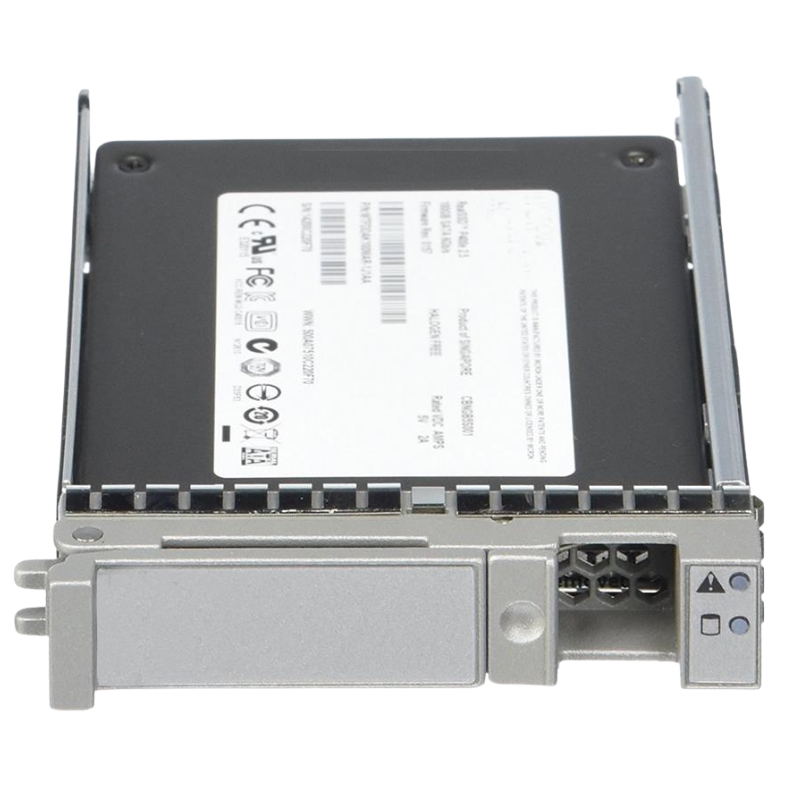


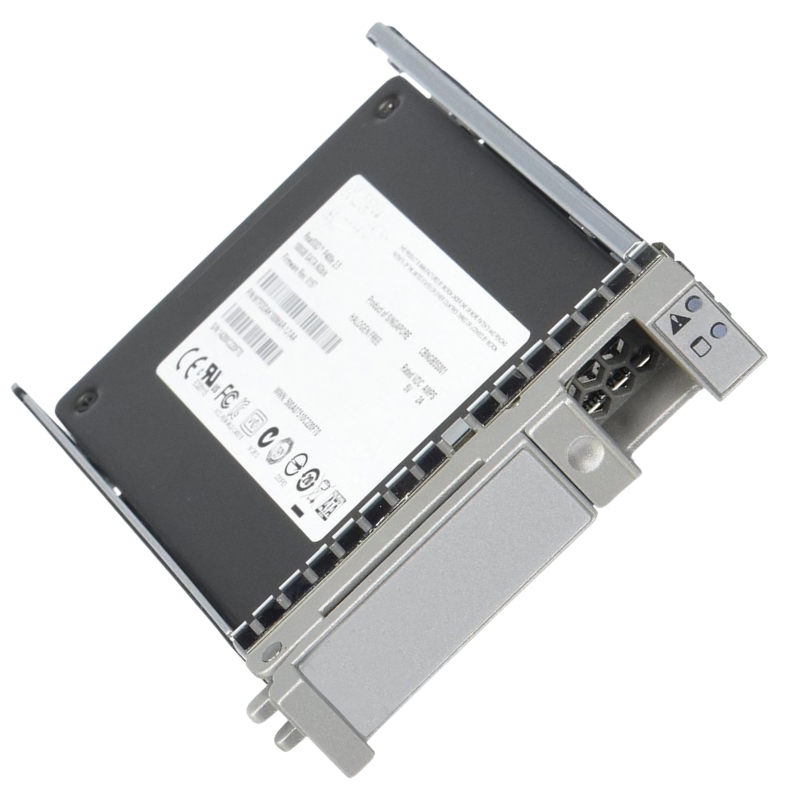
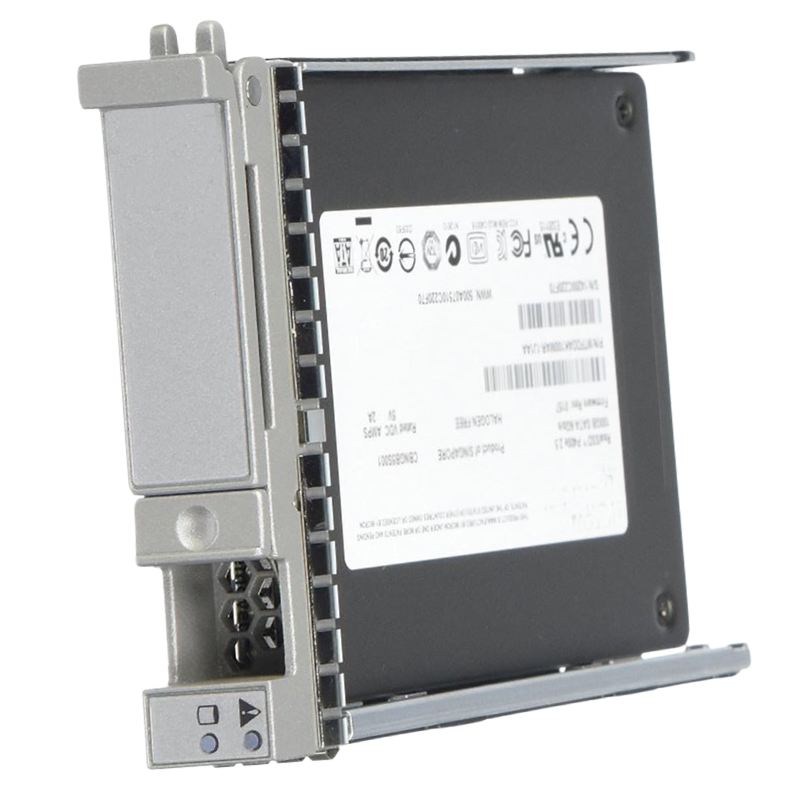
Cisco UCSB-NVMEHW-H1600 1.6TB NVMe SFF High-Endurance with tray Solid State Drive. Excellent Refurbished with 1 year replacement warranty
The Cisco UCSB-NVMEHW-H1600 is a robust 1.6TB internal solid-state drive engineered for demanding data center environments. Designed with a compact Small Form Factor, it delivers exceptional speed and reliability for mission-critical applications.
This SSD fits seamlessly into 2.5-inch drive bays, making it ideal for blade server configurations and scalable enterprise deployments.
Utilizing the U.2 interface with PCIe 3.0 x4 lanes, this drive ensures rapid data access and minimal bottlenecks. The SFF-8639 connector enhances compatibility across modern server infrastructures.
The Cisco UCSB-NVMEHW-H1600 1.6TB NVMe SFF High-Endurance High Performance Solid State Drive with tray represents a focused category of enterprise-class NVMe storage devices engineered for modern data center demands. This category emphasizes endurance, consistent low-latency performance, and a small form factor that fits dense server platforms and converged infrastructure such as Cisco UCS and comparable blade and rack systems. Products in this category are designed not only to deliver raw throughput and IOPS for demanding workloads but also to provide the resilience, manageability, and lifecycle characteristics required by production enterprise systems.
High-endurance NVMe devices like the Cisco UCSB-NVMEHW-H1600 are purpose-built to withstand heavy write cycles and sustained mixed workloads that occur in virtualization, database, analytics, and storage-tiering use cases. Endurance characteristics reduce the risk of early drive replacement under write-heavy conditions and translate to predictable operational costs. In environments where deduplication and compression are limited or where data is inherently write-intensive, selecting high-endurance SSDs mitigates the tradeoffs between performance and lifecycle. This category therefore appeals to architects who plan for consistent write throughput, durability over time, and predictable quality of service for multi-tenant and mission-critical applications.
The small form factor (SFF) design combined with a caddy or tray makes devices in this category ideal for high-density servers and blade chassis where space and cooling are constrained. The included tray ensures secure hot-swap capability and simplifies replacement and serviceability processes, aligning with Cisco UCS hardware management paradigms and similar enterprise platforms. Dense deployment of SFF NVMe drives permits higher usable capacity per rack unit while maintaining airflow and cooling considerations that are central to data center operations.
NVMe protocol unlocks the parallelism of modern NAND flash and multi-core CPUs by providing an optimized command set and a low-latency transport layer over PCI Express. Drives in this category exploit PCIe lanes for direct, high-bandwidth access to system CPUs, offering orders of magnitude better queueing depth handling compared to legacy SATA/SAS SSDs. The result is improved random I/O performance, faster application responsiveness, and reduced CPU stalls. For transactional databases, VDI deployments, caching tiers, and microservice architectures, the performance profile of a 1.6TB NVMe high-endurance device helps maintain consistent response times even under peak concurrency.
When assessing this category, architects look for predictable IOPS and consistently low single-digit microsecond latency under real-world workload mixes. High-endurance NVMe drives are tuned to sustain elevated write amplification and to manage background housekeeping such as garbage collection without causing pronounced performance cliffs. This category is therefore an excellent candidate for primary storage tiers in hyperconverged clusters or as a performance tier in hybrid storage architectures where predictable latency is as important as raw bandwidth.
Enterprise NVMe SSDs in this category commonly include features that safeguard data and system integrity: power loss protection mechanisms, end-to-end data path protection, advanced wear leveling, error correction algorithms, and robust SMART telemetry. These elements contribute to lower unplanned downtime and improved maintenance scheduling. Power loss protection reduces the risk of partial writes during sudden power events, while end-to-end protection ensures that data remains consistent from host memory to flash media. Such features distinguish enterprise-grade NVMe drives from consumer-grade alternatives and are essential for regulated industries and transactional systems.
Although marketed with Cisco UCS model compatibility in mind, drives in this category are generally suitable for a broad ecosystem of servers and storage systems that support NVMe SFF modules and the relevant tray or caddy standards. Compatibility matrices should be referenced for specific server models and firmware combinations to ensure optimal behavior. Enterprises often favor drives that appear on validated hardware compatibility lists (HCLs) for their chosen compute platforms because those lists represent tested combinations that reduce integration risk and speed validation cycles.
Within Cisco UCS environments, using components designed for or validated with UCS can streamline procurement, deployment, and support workflows. The tray-inclusive design makes swapping and service tasks consistent with UCS maintenance procedures.
The high-endurance, high-performance properties of this category make it suitable for several classes of workloads. Virtual desktop infrastructure (VDI) farms that require bursty I/O for login storms, transactional databases with heavy commit rates, write-intensive logging and analytics platforms, and caching layers in front of slower capacity tiers all benefit. In addition, the drives are appropriate for containerized environments where ephemeral volumes may experience rapid turnover and sustained write pressure. The endurance characteristics extend service life in these contexts and reduce the total cost of ownership when compared to lower-endurance SSDs that require more frequent replacement under the same workload.
Because NVMe SSDs can operate at higher temperatures than older form factors, managing ambient conditions is critical. Ensure rack airflow patterns, fan policies, and chassis ventilation match the vendor’s thermal envelope. Elevated temperatures accelerate wear and can trigger throttling behaviors that impact latency. Incorporating temperature thresholds into alerting systems and automating actions such as increased fan speed or workload migration can preserve both performance and drive health.


 Contact Us
 Information
 Catalog
 Solid State Drives (SSD)
 Network Switches
 Hard Disk Drives
 HBA & Controllers
 PC & Servers
 PC & Server Memory
 CPU & Processors
 Network Routers
 Power Supplies
 Tape Drives & Libraries
 Network Devices
 Computer & Network Cables