(7% discount is applied at checkout)
Cart is empty
Your go-to destination for cutting-edge server products
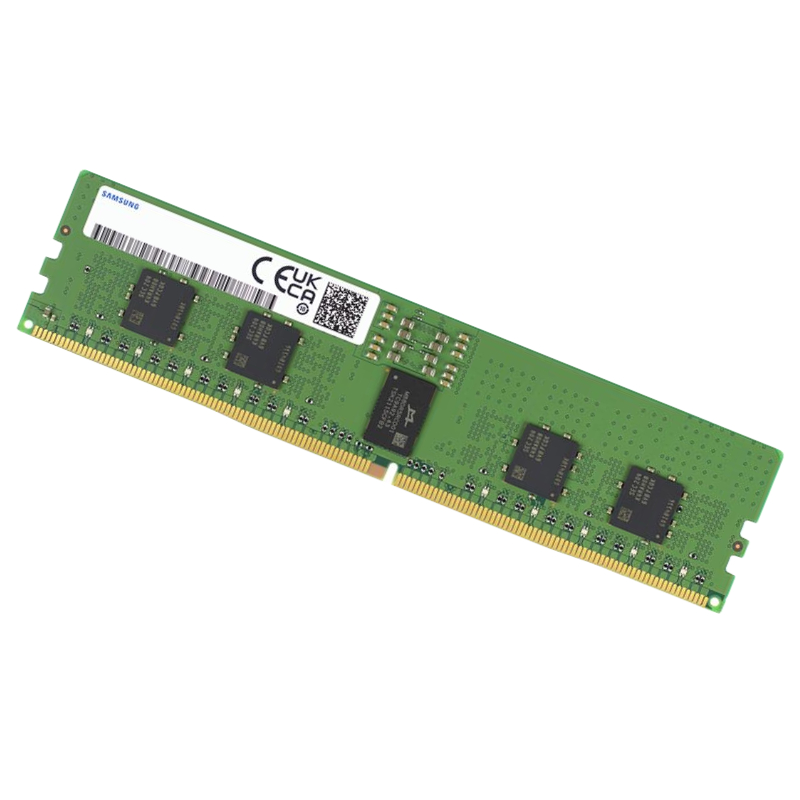


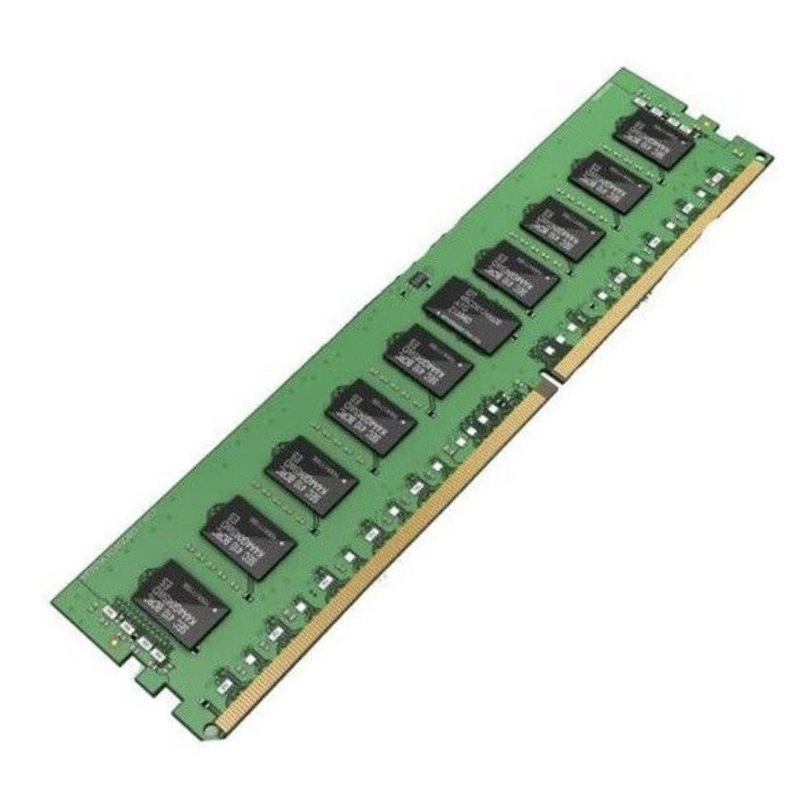
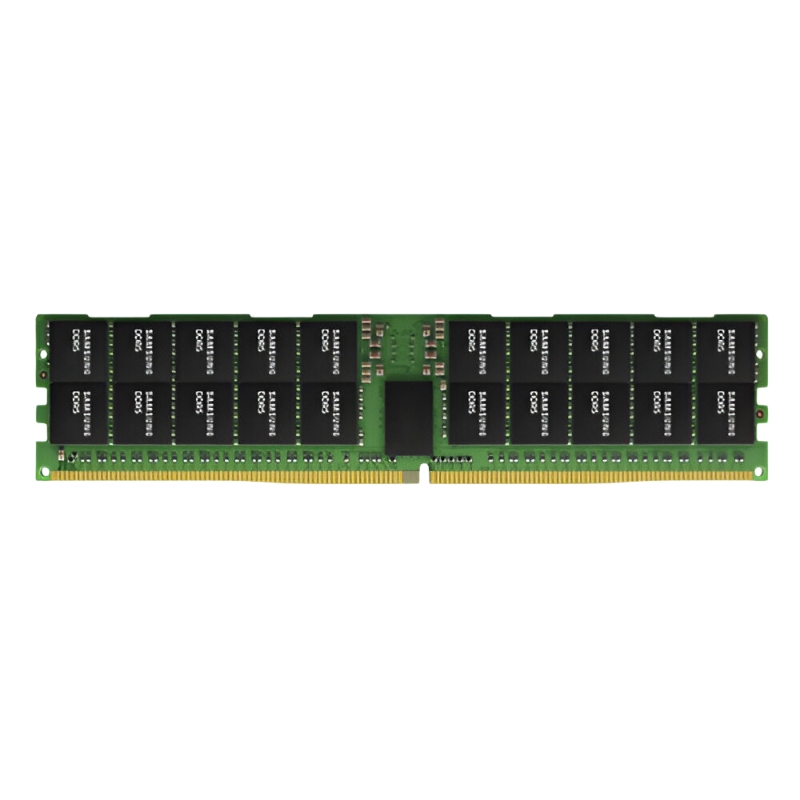
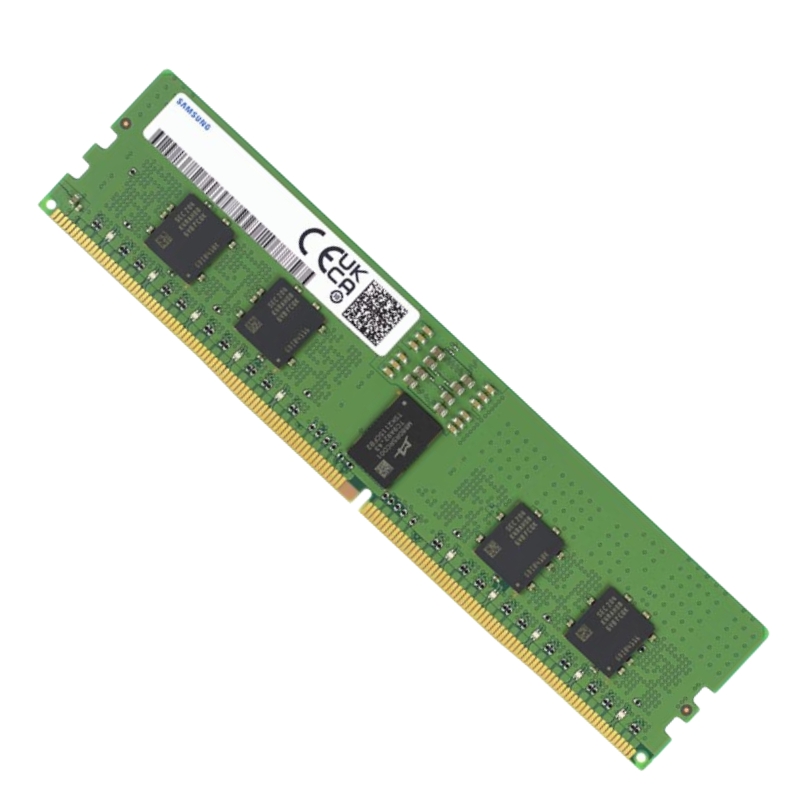
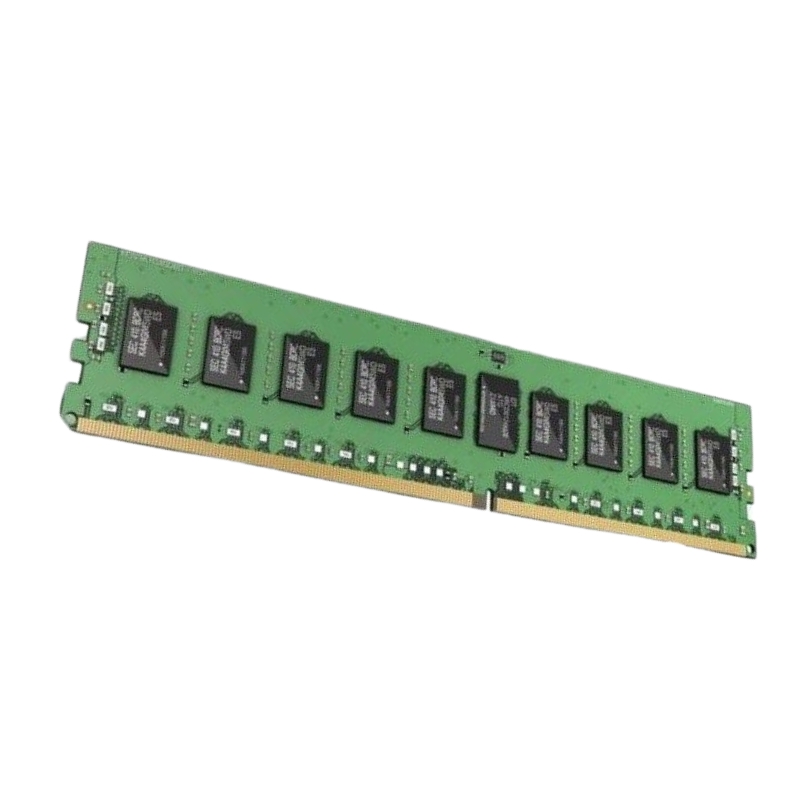
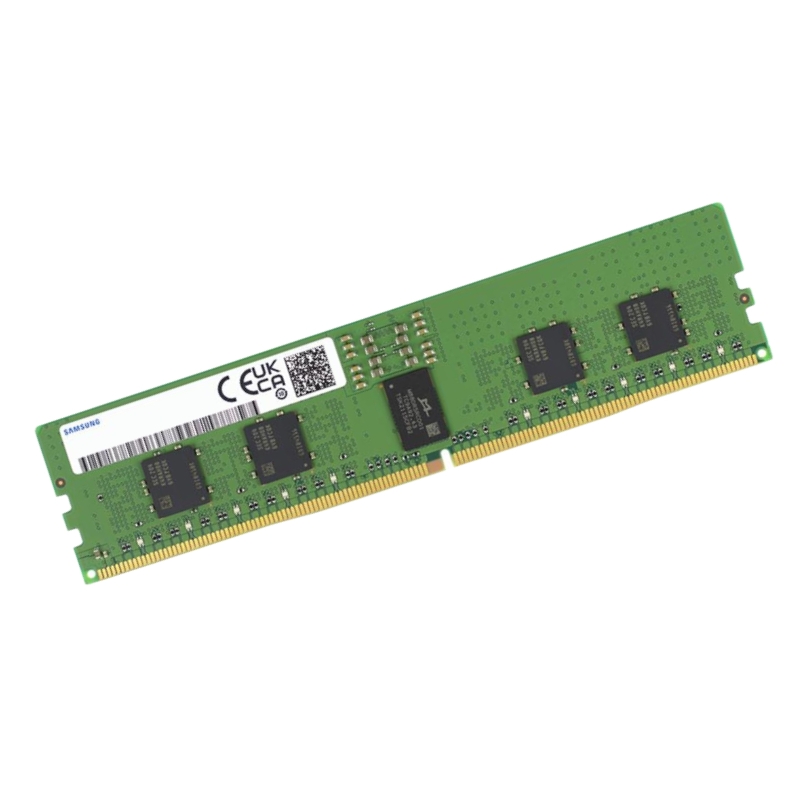
Samsung M321R2GA3BB6-CQKMG 16GB RAM RDIMM PC5-38400R. New Sealed in Box (NIB) with 3 Years Warranty
Discover the Samsung M321R2GA3BB6-CQKMG — a server-grade 16GB DDR5 SDRAM module engineered for enterprise systems and data centers. This single-module memory stick combines high throughput, error-correcting reliability, and power-efficient operation for mission-critical workloads.
Built with ECC and registered buffering, this DIMM improves fault tolerance and reduces the risk of data corruption — essential for servers, storage arrays, and professional workstations.
Every character in this module's lengthy part number signifies a key attribute, defining its place in the server ecosystem. Let's deconstruct the Samsung M321R2GA3BB6-CQKMG to understand its role:
This module offers a single 16-gigabyte capacity in a monolithic package. The "1x16GB" denotes a single module, while "1Rx8" refers to its internal rank and organization. A single rank (1R) means all memory chips on the module are accessed simultaneously for a full data width. The "x8" indicates the DRAM chips have an 8-bit internal architecture. This configuration offers an optimal balance of capacity, performance, and electrical load for many single- and dual-processor server platforms, allowing for flexible population to achieve total system memory goals (e.g., 64GB with four modules, 128GB with eight).
This module belongs to the transformative DDR5 generation. The data rate of 4800 Megatransfers per second (MT/s) is a significant leap over DDR4's common speeds. This translates to a peak theoretical bandwidth of approximately 38.4 GB/s per module (calculated as 4800 MT/s * 8 bytes / 1024 for GB/s). The designation PC5-38400 follows JEDEC standards, where "38400" represents the module's bandwidth in megabytes per second (MB/s), further confirming its high-speed pedigree. This increased speed accelerates data access for CPUs, reducing bottlenecks in data-intensive applications.
These two features are the definitive markers of true server memory.
ECC is non-negotiable for data-critical environments. It goes beyond simple error detection. The module includes extra bits (e.g., 8 bits for a 64-bit word) to form an error-correcting code. When data is written, a code is calculated and stored. Upon readback, the code is recalculated and compared. If a single-bit error (a flipped 0 to 1 or vice versa) is detected, the circuitry automatically corrects it on the fly without interrupting system operation. This prevents silent data corruption, system crashes, and computational errors that could be catastrophic in financial, scientific, or database servers.
A Registered Dual In-line Memory Module (RDIMM) incorporates a register, or buffer, located between the memory controller and the DRAM chips. This register handles command and address signals, stabilizing them and reducing the electrical load on the controller. This allows servers to support a much higher number of memory modules per channel (increasing total system capacity) while maintaining signal integrity and system stability. The trade-off is a slight latency increase (typically one clock cycle), which is vastly outweighed by the gains in capacity and reliability for server workloads.
DDR5 introduces improved power management. The operating voltage of 1.1V is lower than DDR4's typical 1.2V, contributing to better power efficiency—a crucial factor in dense data center deployments where heat and power consumption are major operational costs. The CL40 CAS Latency timing, while numerically higher than DDR4 latencies, must be understood in the context of the much faster clock cycles of DDR5. The actual nanosecond delay is competitive or improved. The 288-pin form factor is physically and electrically incompatible with DDR4's 284-pin design, ensuring correct installation in dedicated DDR5 server motherboards.
The Samsung M321R2GA3BB6-CQKMG is not for gaming PCs or home offices. It is engineered for environments where uptime and data integrity are paramount.
This module is a building block for mainstream enterprise servers from vendors like Dell (PowerEdge), HPE (Proliant), Lenovo (ThinkSystem), and Cisco (UCS). It is ideal for roles such as file servers, email servers, web servers, and mid-tier databases, where ECC protection ensures service continuity and registered design supports robust capacity scaling.
Virtualization platforms like VMware vSphere, Microsoft Hyper-V, and Proxmox are memory-hungry. A host running dozens of virtual machines requires massive, reliable memory pools. Populating a server with multiple 16GB RDIMMs creates a high-capacity, high-integrity memory resource that can be safely allocated to multiple VMs, ensuring that a memory error in one guest does not affect others or the host.
Database servers for SQL Server, Oracle, MySQL, and SAP HANA, as well as Enterprise Resource Planning (ERP) systems, constantly read and write vital business data. The combination of DDR5's high bandwidth (accelerating queries and transactions) and ECC's data protection (preserving data accuracy) makes this module class an excellent choice for these I/O-intensive, mission-critical applications.
In computational research, financial modeling, and big data analytics (e.g., Hadoop/Spark clusters), workloads involve processing enormous datasets. The fast data transfer rates of DDR5 4800 modules help feed CPUs and accelerators more quickly, reducing compute idle time. ECC is essential here to guarantee the mathematical correctness of long-running simulations and analyses.


 Contact Us
 Information
 Catalog
 Solid State Drives (SSD)
 Network Switches
 Hard Disk Drives
 HBA & Controllers
 PC & Servers
 PC & Server Memory
 CPU & Processors
 Network Routers
 Power Supplies
 Tape Drives & Libraries
 Network Devices
 Computer & Network Cables