Your go-to destination for cutting-edge server products
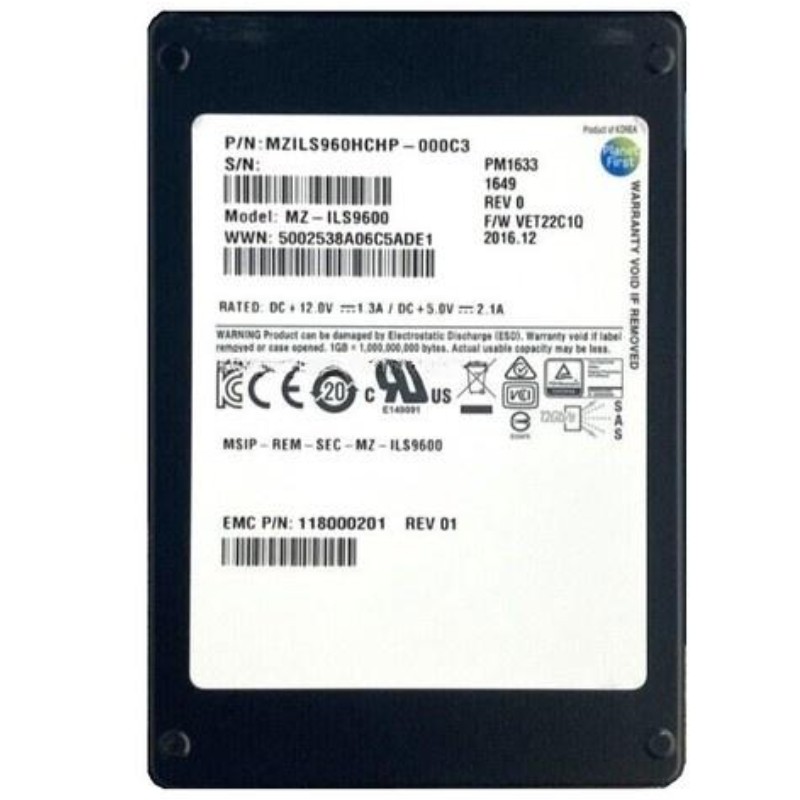
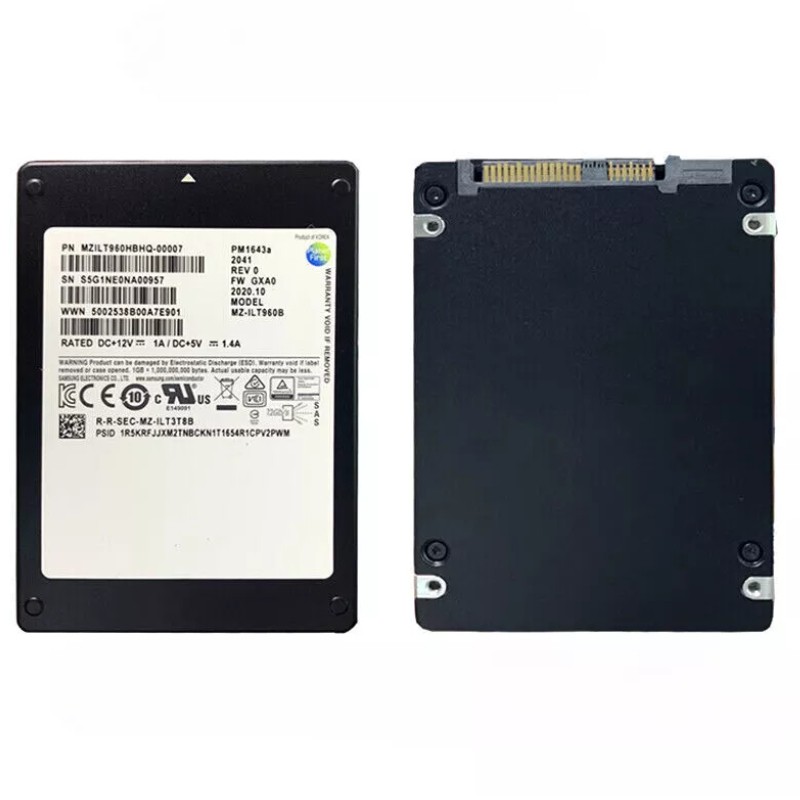
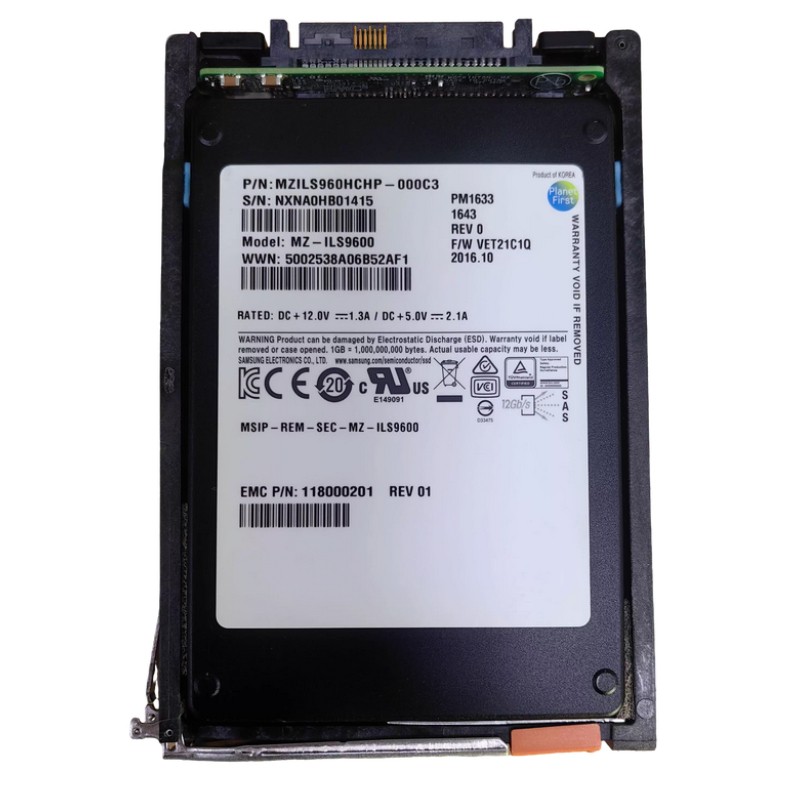
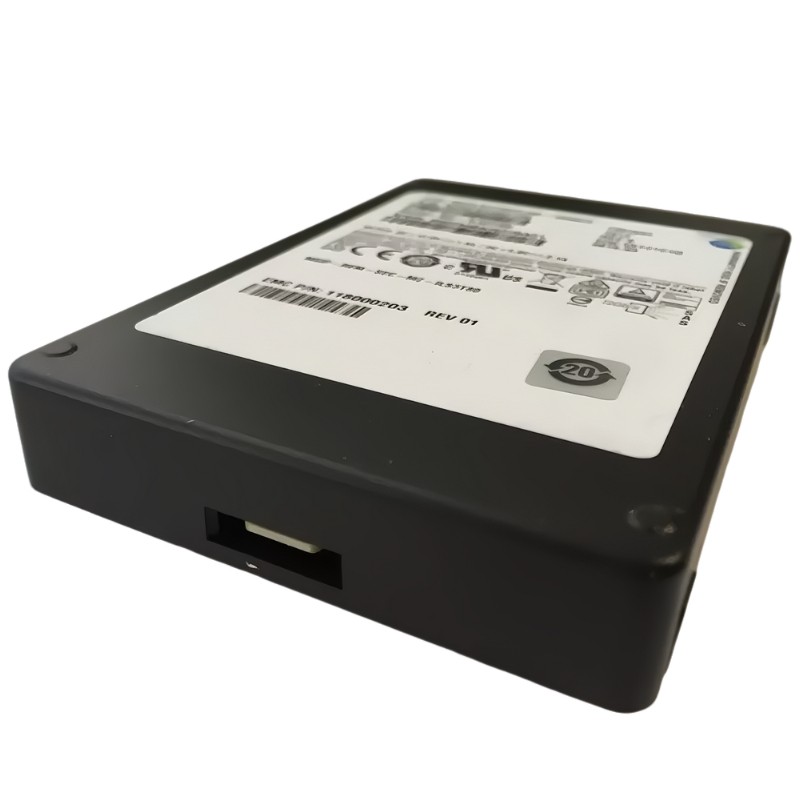
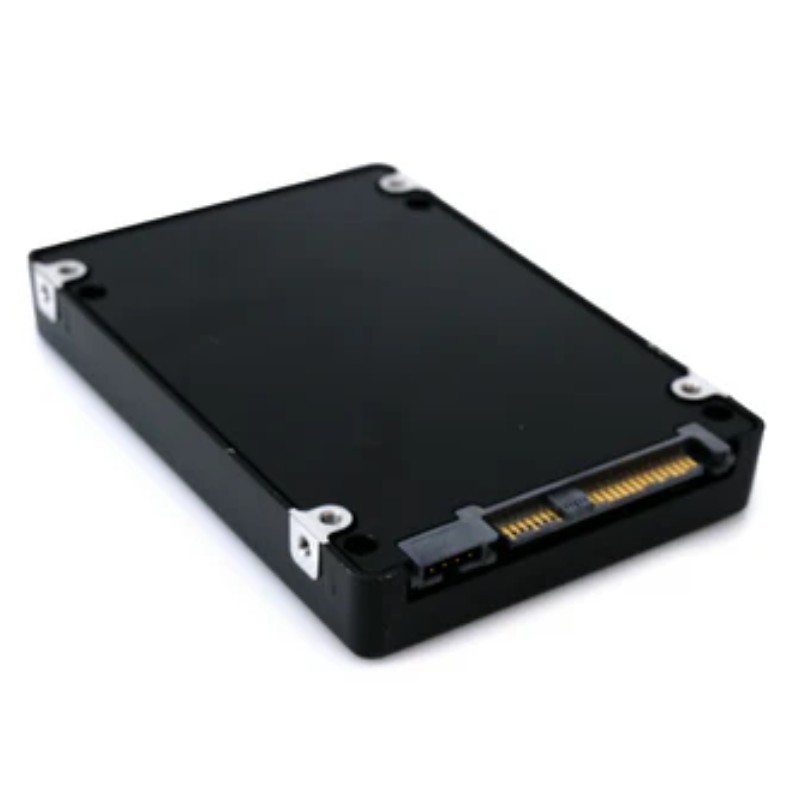
118000201-01 EMC 960GB SAS-12GBPS SSD

118000201-01
* Product may have slight variations vs. image
Hover on image to enlarge

Brief Overview of 118000201-01

EMC 118000201-01 960GB SAS-12GBPS SSD. Excellent Refurbished with 1 year replacement warranty

Contact us for a price
Ask a question

Additional 7% discount at checkout

SKU/MPN118000201-01Availability✅ In StockProcessing TimeUsually ships same day ManufacturerEMC Product/Item ConditionExcellent Refurbished ServerOrbit Replacement Warranty1 Year Warranty
Google Top Quality Store Customer Reviews
Our Advantages
Payment Options
  • — Visa, MasterCard, Discover, and Amex
  • — JCB, Diners Club, UnionPay
  • — PayPal, ACH/Bank Transfer (11% Off)
  • — Apple Pay, Amazon Pay, Google Pay
  • — Buy Now, Pay Later - Affirm, Afterpay
  • — GOV/EDU/Institutions PO's Accepted 
  • — Invoices
Delivery
  • — Deliver Anywhere
  • — Express Delivery in the USA and Worldwide
  • — Ship to -APO -FPO
  • For USA - Free Ground Shipping
  • — Worldwide - from $30
Description

Product Overview of EMC 118000201-01 960GB SAS SSD

The EMC 118000201-01 falls into a class of premium enterprise SSDs tailored for storage array integration, server-class caching, and back-end storage tiers where both endurance and performance matter. Its 960 GB capacity offers a middle ground between lower-tier SSDs and ultra-high capacity models, making it versatile for many enterprise scenarios.

General Information

  • Manufacturer: EMC
  • Part Number: 118000201-01
  • Product Type: Solid State Drive

Technical Specifications

  • Capacity: 960GB
  • Interface: SAS 12GBPS
  • Form Factor: 2.5 Inch

Reliable Storage Built for Demanding Workloads

  • Offers an ample 960GB storage capacity ideal for enterprise applications
  • Designed to deliver consistent performance under heavy-duty operations
  • Engineered for high reliability and endurance in mission-critical environments

Compact 2.5-Inch Form Factor

  • Space-efficient 2.5-inch design fits easily into server bays and data center racks
  • Perfect for upgrades or replacements in compact storage arrays
  • Maintains a low profile without compromising on speed or performance

Lightning-Fast Data Transfer Speeds

  • Utilizes 12Gbps SAS (Serial Attached SCSI) interface for rapid data access
  • Enhances system responsiveness and reduces latency for critical applications
  • Ensures seamless throughput for high-traffic environments like virtualization and database systems

Advanced SAS Interface for Enterprise Applications

  • Incorporates SAS 12Gb/s interface standard for enterprise-grade connectivity
  • Superior error correction and dual-port capabilities for maximum uptime
  • Compatible with a wide range of storage arrays and server architectures

Designed for Data-Intensive Operations

  • Ideal for applications such as online transaction processing, analytics, and virtualized environments
  • Provides exceptional performance consistency under sustained workloads
  • Supports heavy I/O demands with minimal performance degradation over time
Compatibility and Use Cases
  • Suited for both new installations and upgrading legacy systems
  • Excellent fit for EMC and other enterprise storage solutions
  • Commonly used in SANs, RAID arrays, and high-availability servers

Enterprise-Class SAS SSDs: Performance, Reliability, and Longevity

In high-demand data center environments, the choice of storage media can make or break overall system performance. Enterprise-class SAS (Serial Attached SCSI) solid state drives combine the low latency and high throughput benefits of flash storage with the robustness and dual-port architecture familiar in enterprise storage domains. This category encompasses drives designed for mission-critical workloads, database clusters, virtualization hosts, analytics systems, and high-availability enterprise arrays. The EMC 118000201-01 960GB SAS‑12Gbps SSD is a standout among such solutions, representing a balance of capacity, performance, and proven compatibility.

Characteristics of SAS‑12Gbps Enterprise SSDs

  • Dual-port SAS connectivity for path redundancy and failover support
  • Data transfer rates up to 12 Gigabits per second per port
  • Optimized internal architectures for consistent latency under sustained workloads
  • Built-in error correction, wear leveling, power-loss protection, and over-provisioning
  • Compatibility with enterprise-grade controllers, RAID engines, and storage arrays

Because enterprise workloads often include heavy I/O bursts, random I/O, and sustained data transfer, such SSDs must deliver consistent performance even under mixed read/write loads. The SAS interface is preferred in these scenarios due to its mature error-recovery, multipathing support, and robustness under stress.

High-Endurance SAS SSDs

  • Designed for heavy write-intensive workloads such as logging, caching, and real-time analytics
  • Often rated for high drive writes per day (DWPD) or total bytes written (TBW)
  • Enhanced firmware algorithms to manage wear leveling and minimize write-amplication

Specialty Low-Latency SAS SSDs

  • Optimized for ultra-low-latency performance in high-frequency trading, edge analytics, and real-time systems
  • Firmware tuned to reduce I/O response jitter, with tight quality-of-service (QoS) guarantees

Capacity-Focused SAS SSDs

  • Balanced to deliver maximum usable capacity at enterprise-grade endurance
  • Use over-provisioning and advanced flash management to maintain stability at scale

Hybrid Tiered Storage SAS SSDs

  • Intended to coexist with HDD tiers, offering flash caching or tiering for large storage systems
  • Effective in systems that require both high capacity and performance layers within the same array

Performance & Throughput Profiles

Operating over SAS‑12 Gbps, this drive can sustain high data throughput while maintaining low latency. The design is such that under mixed random I/O conditions, performance dip is minimized. Whether performing heavy sequential writes or handling bursty random workloads, the drive is engineered to uphold consistency. In typical enterprise usage, this SSD will display:

  • Sustained throughput nearing interface limits when possible (read/write) in optimal configuration
  • Strong random IOPS performance under deep queue depths
  • Low and stable latencies, even under saturating or multi-tenant loads

Firmware enhancements like write coalescing, intelligent garbage collection, and latency smoothing help preserve these traits when the drive is under prolonged duty cycles.

Reliability, Endurance & Data Integrity

Reliability is non-negotiable in enterprise SSDs, and the EMC 118000201-01 delivers on that front:

  • High endurance flash – able to support significant total writes over its lifespan
  • Robust error detection and correction (ECC) to safeguard data integrity
  • Power-loss protection circuits to flush volatile cache in the event of sudden power failure
  • Wear-leveling algorithms and over-provisioning to balance write wear across memory cells
  • Consistent performance throughout drive life, avoiding “performance cliffs” as the drive ages

Dual-Port SAS & Multipathing Advantages

Dual-port SAS helps maintain access even when a link or controller fails. This redundancy:

  • Permits multipath routing from host systems to drive, improving fault tolerance
  • Enables load balancing across data paths for enhanced throughput
  • Maintains session continuity in clustered or failover storage environments

Firmware Features & Advanced Controls

Modern enterprise SSDs like this one include several firmware-level features that vastly improve real-world behavior:

  • Adaptive garbage collection to minimize performance impact during idle periods
  • Background scrubbing and self-healing routines for data integrity
  • SMART telemetry and diagnostics for predictive failure detection
  • Secure erase and encryption support, where applicable in SAN environments

Typical Use Cases & Deployment Scenarios

The EMC 118000201-01 is highly versatile, suitable for a wide range of enterprise-grade deployments:

High-Performance Tier in SAN/NAS Arrays

  • Acting as hot-tier or cache tier in hybrid storage systems
  • Used in front-end caching layers to accelerate I/O to slower disk tiers
  • Deployed in all-flash arrays where reliability and consistency are top priorities

Database & Transactional Systems

  • Hosting critical database tables or index partitions
  • Supporting OLTP (Online Transaction Processing) clusters and backups
  • Reducing latency to key transactional components

Virtualization and VDI Environments

  • Delivering consistent I/O for multiple VM workloads
  • Reducing “boot storm” latency in virtual desktop deployments
  • Serving as high-speed swap or write-back caching tier

Analytics, Logging & Real-Time Processing

  • Handling persistent write streams from logging, metrics, and events
  • Supporting low-latency ingestion in stream-processing architectures
  • Serving as scratch space or fast buffer tier for analytics jobs

Thermal and Power Considerations

  • Monitor drive temperatures: enterprise SSDs often sustain higher performance at stable operating temps
  • Ensure adequate airflow and cooling within your chassis or storage enclosure
  • Validate that your power supply and backplane can support burst currents during write peaks and power‐loss flush events

Firmware Upgrades & Maintenance Strategies

  • Use manufacturer-supplied firmware updates judiciously, especially in clustered environments
  • Schedule updates during maintenance windows to avoid disruption
  • Enable monitoring and alerting for SMART thresholds and performance anomalies

Comparative Advantages vs. Other Storage Technologies

This SSD model sits at an advantageous intersection of performance, reliability, and enterprise integration features:

vs. SATA SSDs (Datacenter Grade)

  • SAS provides superior error correction, dual-port redundancy, and path failover
  • Greater robustness under simultaneous, concurrent I/O streams
  • Better suited for SAN architectures and enterprise array systems

vs. NVMe / PCIe SSDs

  • NVMe may offer higher raw bandwidth and lower latency in certain architectures
  • However, SAS SSDs remain extremely stable in shared multi-tenant environments
  • Legacy enterprise storage systems, backwards compatibility, and tooling often favor SAS deployment

vs. HDD & Hybrid Disk Arrays

  • Offers dramatically lower latency, higher IOPS, and better throughput
  • Less power consumption per I/O processed, especially under heavy load
  • More consistent performance under random access patterns

Best Practices for Deployment & Operation

To extract optimal performance and reliability from the EMC 118000201-01 960GB SAS‑12Gbps SSD, keep these suggestions in mind: Align your RAID / storage group stripe sizes to match the internal block architecture of the drive. Use multipathing to fully exploit dual-port benefits and distribute load. Leave free spare capacity to allow internal wear leveling and garbage collection. Perform regular health monitoring via SMART data and vendor tools.

Scalability & Growth Planning

This model’s balance of capacity and performance makes it well-suited to scaling tiers of flash storage: Add more drives in parallel to build higher aggregate bandwidth and IOPS. Mix capacity tiers within the same array, using the EMC 960 GB units for performance tiers while retaining larger drives for bulk data. Plan refresh cycles before drive wear-out thresholds to ensure uninterrupted service.

Lifecycle & Deprecation Strategy

Track total writes and SMART metrics for each drive to predict end-of-life. Rotate or decommission older drives before performance degrades severely. Use hot-spare or standby units to facilitate seamless replacements.

Firmware Versions & Compatibility Notes

Including firmware revision identifiers in product listings helps prospective customers verify supportability with their arrays or controllers. You might create subsections comparing firmware branches, known fixes, or recommended versions compatible with specific EMC or third-party platforms.

Benchmarks & Real-World Metrics

Publishing or referencing measured throughput, IOPS under mixed workloads, and latency distribution charts can differentiate your page. Use standardized tests (e.g. random 4K, 8K queues, sequential throughput) and quantify performance under steady-state loads versus bursts. This gives users confidence in actual service behavior.

Migration & Upgrade Path Strategies

Many organizations will ideally upgrade from lower-tier SAS (6Gbps or 3Gbps) SSD or HDD tiers. Offering guidance on migration steps, RAID rebalancing, or interoperability with legacy controllers helps prospective buyers plan their deployment.

Leveraging Structured Data & Markup

Although this block is only the descriptive section, the overall page should consider schema markup (e.g. “Product,” “ItemList”) to highlight attributes like capacity, interface, model number, and performance. The descriptive content here supports those structured elements organically.

Periodic Updates & Evergreen Content Strategy

Because enterprise storage technology evolves, revisiting and refreshing this description periodically can help maintain rankings. Consider adding updates on firmware improvements, comparative analyses with NVMe or upcoming protocols, and new use-case stories.


Features
Product/Item Condition:
Excellent Refurbished
ServerOrbit Replacement Warranty:
1 Year Warranty