(7% discount is applied at checkout)
Cart is empty
Your go-to destination for cutting-edge server products
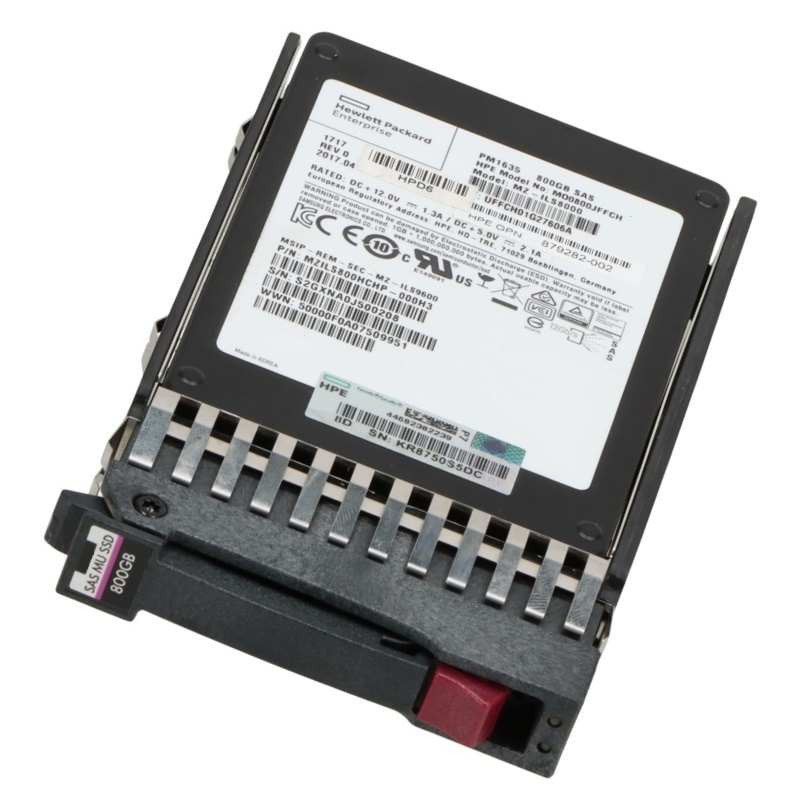


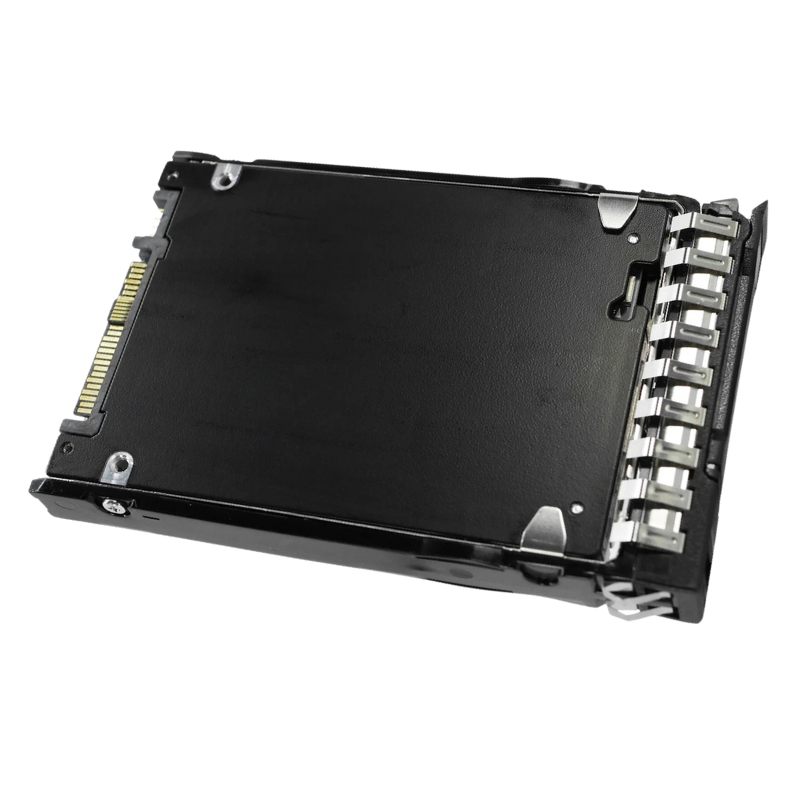
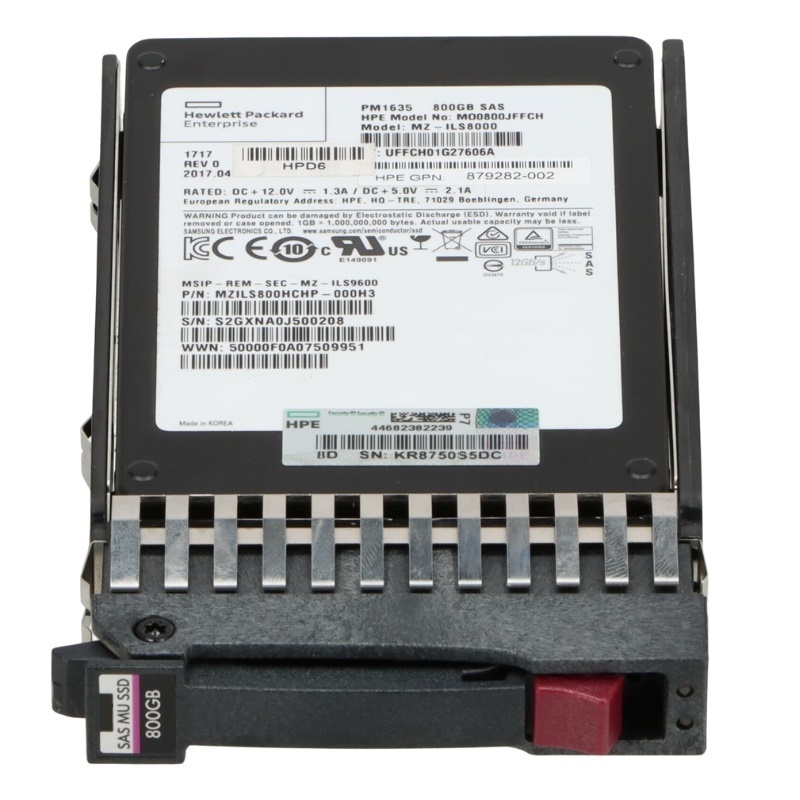
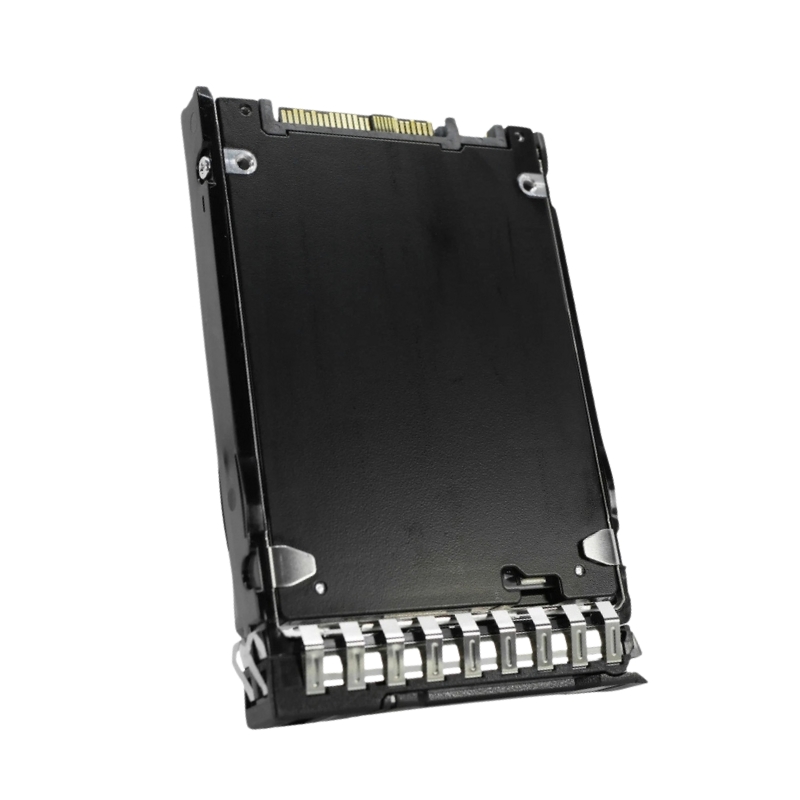
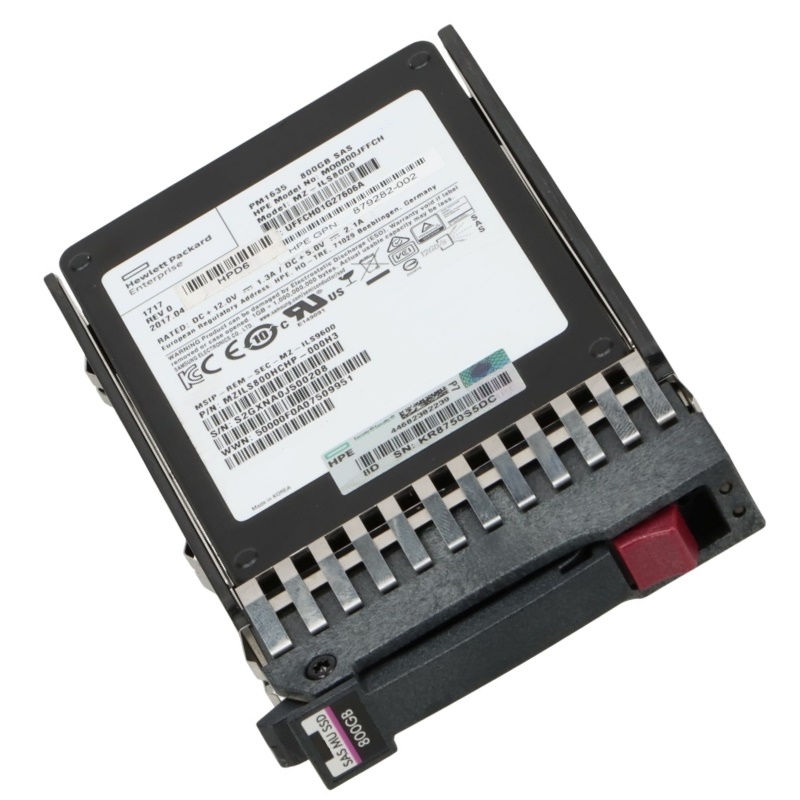
HPE 653964-001 800GB SAS 6GBPS Enterprise Mainstream 2.5-inch SSD. Excellent Refurbished with 1 year replacement warranty
| SKU/MPN | Warranty | Price | Condition | You save |
|---|---|---|---|---|
| 653964-001 | 1 Year Warranty | $420.00 | Excellent Refurbished | You save: $147.00 (26%) |
| 653964-001 | 1 Year Warranty | $2,055.00 | Factory-Sealed New in Original Box (FSB) | You save: $719.25 (26%) |
The HPE 653964-001 800GB SAS 6Gbps Enterprise Mainstream 2.5-inch solid state drive is engineered for data center workloads that demand a balanced mix of performance, endurance, and predictable latency. As an enterprise-class mainstream SAS SSD, this model occupies a strategic position between read-optimized and write-intensive product tiers, delivering dependable throughput for mixed-use database transactions, virtualization hosts, and general-purpose block storage arrays. With an 800GB capacity presented in a 2.5-inch form factor and interfacing over the SAS 6Gbps link, the drive integrates into existing HPE ProLiant and HPE storage platforms as a drop-in storage medium for scaling capacity while improving I/O responsiveness.
Key technical attributes of the HPE 653964-001 include the 800GB native capacity, SAS 6Gb/s interface, enterprise-grade flash media, and firmware tuned for mainstream mixed workloads. The 2.5-inch small form factor enables higher density server and array configurations compared with 3.5-inch alternatives. The SAS 6Gbps interface ensures compatibility with a wide range of HPE RAID controllers and HBAs while providing the multi-pathing and full-duplex reliability expected in enterprise deployments. Firmware features typically include power-loss protection, end-to-end data path protection, and background media management routines that preserve data integrity across sustained operation cycles. These capabilities reduce the risks of data corruption and provide the predictable performance profile IT teams need for service level agreement (SLA) planning.
Performance for an enterprise mainstream SSD such as the HPE 653964-001 is commonly characterized by strong random read and write IOPS at small block sizes and consistent sustained throughput for sequential transfers. The SAS 6Gb/s interface is capable of handling the drive’s peak bandwidth demands while the controller and NAND architecture determine IOPS and latency. For mixed-use workloads—typical of virtualized servers and multi-tenant application hosts—this drive offers low and stable latency under moderate to heavy concurrent I/O, which translates into faster transaction completion times and improved application responsiveness. When planning storage tiers, administrators should model both IOPS per terabyte and latency at varying queue depths, since these metrics directly affect database transaction rates, VM boot storm behavior, and multi-user application performance.
Endurance for the HPE 653964-001 is engineered to meet enterprise lifecycle expectations. Mainstream enterprise SSDs are designed with NAND wear-leveling strategies and over-provisioning to deliver a balance of lifespan and usable capacity. The drive incorporates features that improve endurance such as dynamic over-provisioning and optimized write amplification control built into firmware. Reliability metrics include mean time between failures (MTBF) figures aligned with enterprise requirements and support for S.M.A.R.T. and telemetry reporting. Power-loss protection components protect in-flight data during unexpected outages, while robust error correction and background scrubbing processes reduce latent errors. These attributes make the drive suitable for production environments that require continuous availability and predictable maintenance windows.
The HPE 653964-001 is validated for HPE ProLiant servers and many HPE storage arrays, facilitating straightforward upgrades and expansions. Its 2.5-inch format allows for high density in blade enclosures and rack servers that accept SFF drives. Compatibility notes typically include full support for HPE storage controllers that speak SAS 6Gb/s, and integration with HPE system firmware for health monitoring and lifecycle management. When deploying at scale, administrators should verify controller firmware versions, enclosure backplane compatibility, and drive firmware levels to ensure seamless compatibility. HPE's storage management tools and embedded system agents can surface drive health, wear, and performance statistics, simplifying operational monitoring and capacity planning.
This 800GB SAS SSD is best employed in environments requiring a balance between capacity efficiency and I/O performance. Common use cases include virtualization hosts running many moderate-IO virtual machines, general-purpose databases handling mixed transactional and report queries, boot and OS volumes for latency-sensitive servers, and tiered caching layers within hybrid flash/HDD arrays. It can also serve as a flexible building block in converged or hyperconverged systems where consistent latency and modest endurance are preferred over the very high endurance of write-intensive drives. For read-heavy caching scenarios, it delivers faster query times than spinning media; for write-accelerated workloads, it provides predictable behavior while preserving media longevity across sustained writes.
In database environments, lower latency and higher IOPS directly reduce query response times and transaction commit length, improving user experience and application throughput. The HPE 653964-001 can reduce I/O wait times for both OLTP and mixed OLTP/OLAP workloads. For virtualization, the drive’s responsiveness mitigates VM boot storms and improves provisioning speed for snapshots and clones. When integrated with hypervisor-level caching strategies, the mainstream SAS SSD improves consolidation ratios and reduces the need for over-provisioning compute resources. Proper capacity and IOPS planning ensure that virtual machine sprawl does not lead to unpredictable performance degradation.
Installing the HPE 653964-001 involves standard hot-plug procedures common to HPE servers and enclosures. The drive is typically inserted into a caddy or tray and hot-plugged into a drive bay while the server or storage array remains operational. Once detected, storage teams should provision logical volumes via the RAID controller or storage OS, set appropriate stripe sizes and write cache policies, and apply recommended firmware updates. Firmware updates and drive health monitoring may be performed through HPE integrated management tools. Regularly scheduled telemetry reviews and applying vendor-supplied firmware updates maintain long-term performance and protect against known issues that can affect interoperability.
When provisioning drives of this class, administrators should apply storage policies that safeguard endurance and performance. This includes reserving a modest over-provisioning percentage within the storage pool to reduce write amplification, setting up tiered storage where flash is prioritized for metadata and hot data, and aligning RAID levels to balance redundancy and usable capacity. Choosing the proper stripe width and RAID level can reduce rebuild times and minimize risk during failure scenarios. Additionally, tuning host-side queue depths and leverage of multi-path I/O can help the system fully utilize the SAS 6Gbps interface without creating contention at the controller layer.
HPE 2.5-inch enterprise SSDs are optimized for the thermal environment of server racks and dense enclosures. Compared to larger form factors, small form factor SSDs enable more drives per chassis, increasing thermal load. Systems integrators should validate airflow paths, ensure that cooling is adequate for the number of drives installed, and monitor temperature metrics exposed through HPE management utilities. Power consumption for this class of SSD is modest relative to mechanical drives, but cumulative power draw in dense configurations should inform rack-level power budgeting and uninterruptible power supply (UPS) sizing. Maintaining recommended operating temperatures extends NAND life and reduces the likelihood of thermal throttling that can reduce sustained performance.
Mainstream enterprise SSDs like the HPE 653964-001 are distinct from both read-optimized and write-intensive models. Read-optimized drives are tuned for high read throughput with reduced write endurance requirements, making them ideal for archival or analytic workloads with infrequent writes. Write-intensive drives provide very high endurance and are intended for heavy logging or real-time transactional workloads with continuous writes. The mainstream tier deliberately sits between these two extremes, offering a blend of endurance and performance suitable for heterogeneous server environments. When architects evaluate storage options, they should match the drive tier to the workload profile to avoid overspending on unnecessary endurance or undersizing endurance where it is critical.
From a total cost of ownership perspective, the mainstream 800GB drive often presents favorable economics for many enterprises. It provides a reasonable cost-per-GB while still delivering enterprise-class reliability and latency characteristics. Lifecycle economics also consider factors such as drive replacement schedules, warranty coverage, and the impact of performance on application efficiency. By reducing transaction times and improving VM density, these drives can indirectly lower the number of required compute nodes and reduce licensing costs tied to per-server instances. Proper monitoring of wear indicators ensures that drives are retired proactively rather than reacting to failures, which further optimizes lifecycle expenses.


 Contact Us
 Information
 Catalog
 Solid State Drives (SSD)
 Network Switches
 Hard Disk Drives
 HBA & Controllers
 PC & Servers
 PC & Server Memory
 CPU & Processors
 Network Routers
 Power Supplies
 Tape Drives & Libraries
 Network Devices
 Computer & Network Cables