(7% discount is applied at checkout)
Cart is empty
Your go-to destination for cutting-edge server products
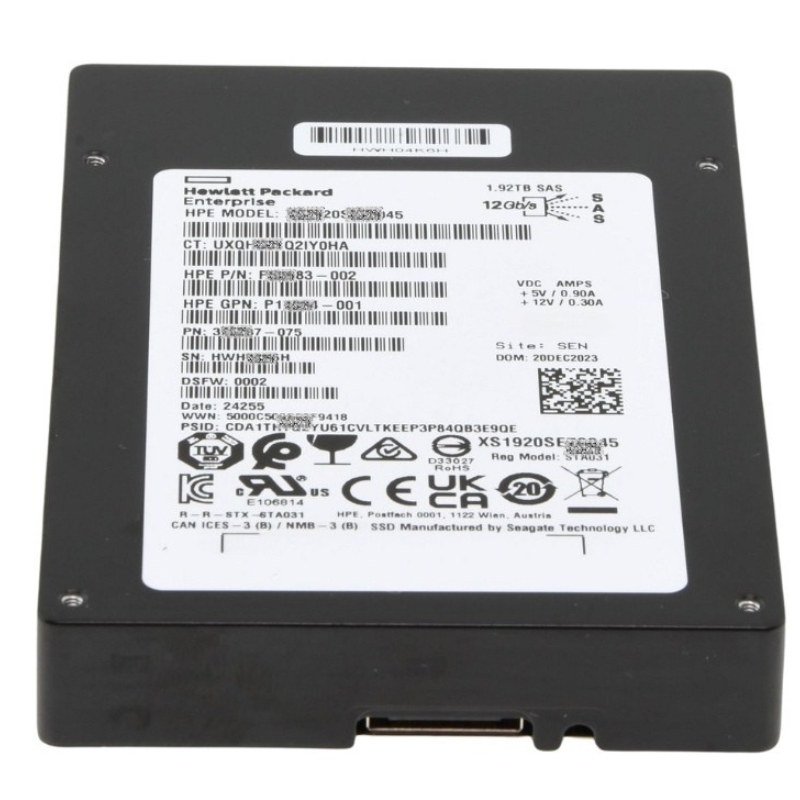


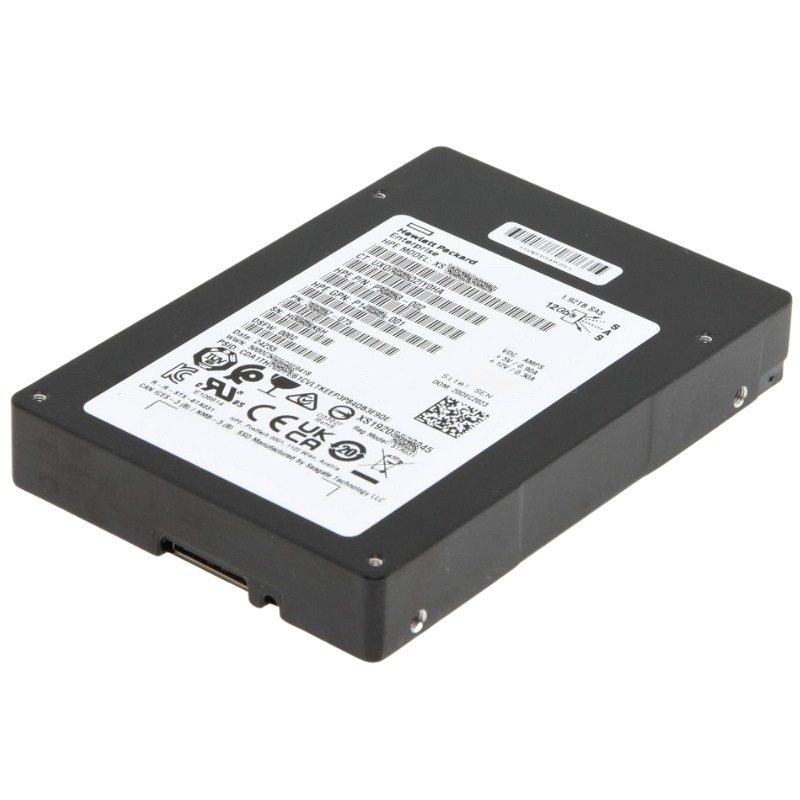
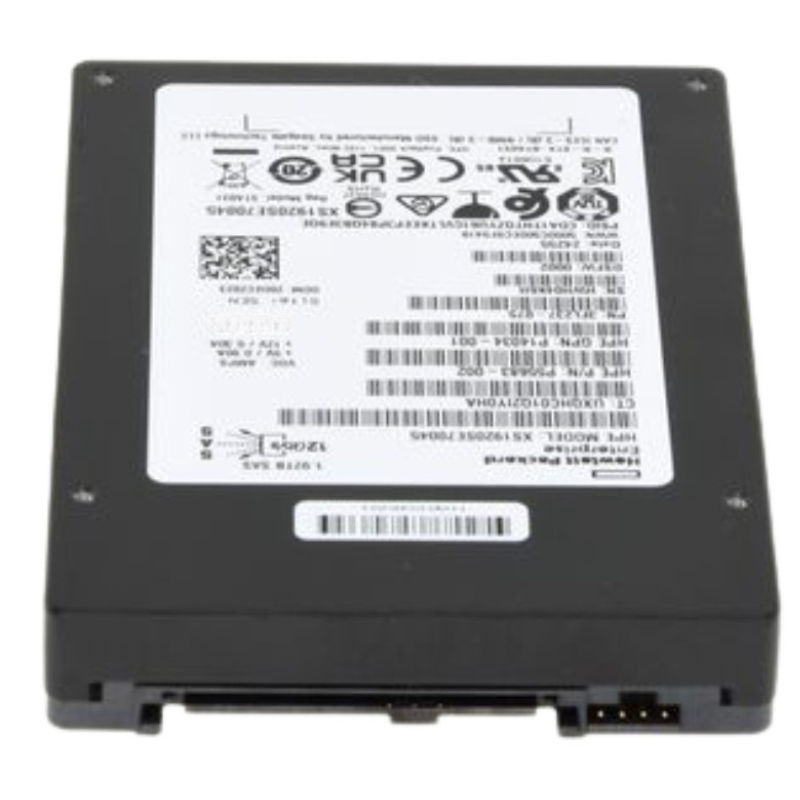
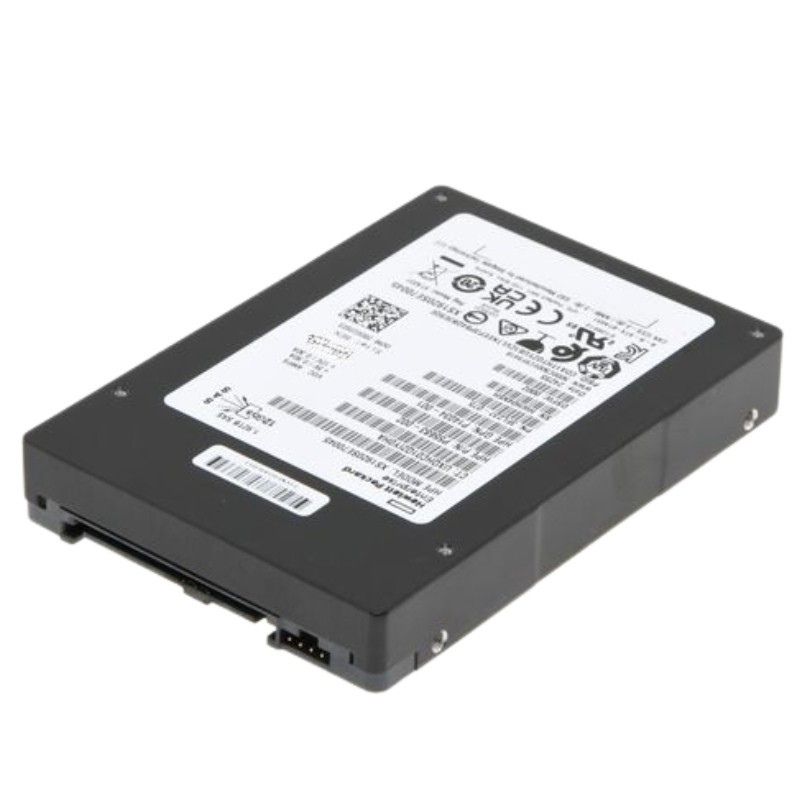
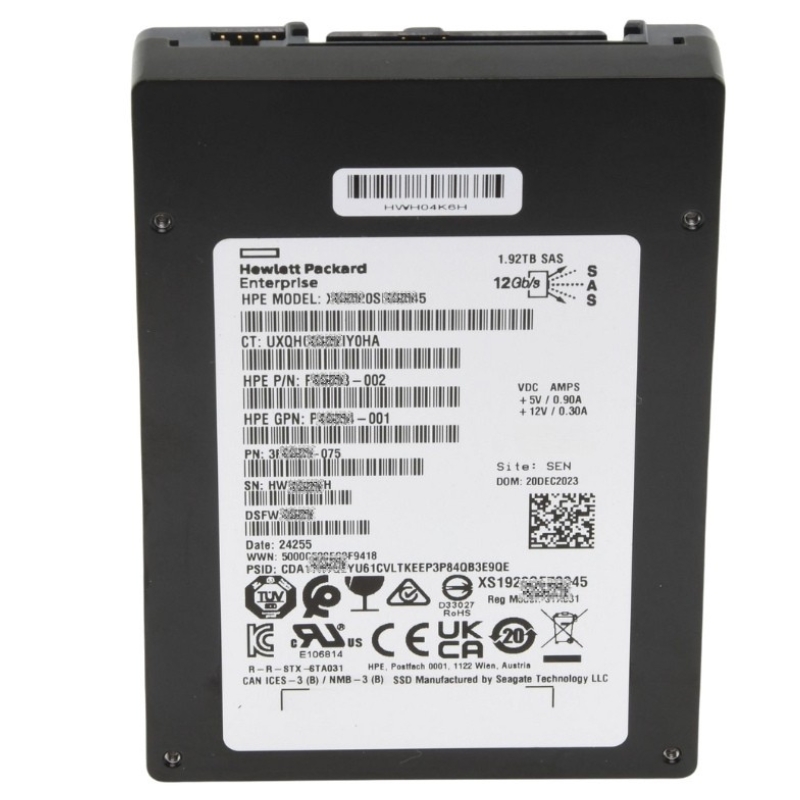
HPE P42693-002 1.92TB SAS 12GBPS SFF Mixed Use Hot Swappable SSD for Server. Excellent Refurbished with 1 Year Replacement Warranty
HPE P42693-002 1.92TB SAS 12Gbps SFF Mixed Use Hot Swappable SSD is engineered for enterprise server and storage environments where a balance of high capacity, consistent performance, and strong endurance is essential. Designed as a Small Form Factor (SFF) drive with a 2.5-inch footprint, this solid state drive leverages the SAS 12Gbps interface to deliver reliable throughput, low latency, and advanced data protection features expected in modern data centers. The drive targets mixed-use workloads that require both sustained write capability and read-intensive operations, making it suitable for virtualization, database acceleration, application servers, and tiered storage architectures.
Hpe P42693-002 combines a compact SFF design with the enterprise-standard SAS 12Gbps interface to offer broad compatibility with HPE ProLiant servers, storage enclosures, and SAS RAID controllers. The SFF 2.5-inch form factor allows dense storage configurations and supports hot-swap trays, which enable maintenance and replacements without disrupting running services. The SAS interface ensures full-duplex communication and advanced error recovery mechanisms, providing predictable performance under heavy concurrency and multi-queue I/O patterns common in server environments.
Performance of this mixed-use SSD emphasizes a balance between random read/write IOPS and sequential throughput. Random I/O performance is optimized for transactional workloads where small-block I/O and high IOPS are critical. Sequential throughput is substantial enough to support bulk data transfers, backups, and large file operations. Consistency in latency is a central design goal: the drive is tuned to minimize latency spikes and maintain steady response times across sustained loads, which directly improves application performance and user experience in multi-tenant and virtualized systems.
Mixed-use classification denotes a focus on both read and write durability. The P42693-002 drive employs enterprise-grade NAND and firmware strategies, including advanced wear-leveling algorithms, overprovisioning, and error-correction mechanisms, to deliver a predictable endurance profile. This allows IT teams to deploy the drive for database log volumes, virtual machine storage, and caching layers where writes are more frequent than in read-only scenarios but less extreme than write-intensive archival workloads. Endurance metrics and TBW (terabytes written) expectations should be validated against the customer's workload characteristics for accurate lifecycle planning.
Reliability is a cornerstone of enterprise storage. Hpe P42693-002 includes power-loss protection features to help ensure that in-flight data is protected in the event of sudden power interruptions. Integrated error correction code (ECC) and strong firmware-level metadata integrity checks reduce the risk of silent data corruption. Smart monitoring with S.M.A.R.T. attributes and vendor-specific telemetry enables proactive drive health analysis and replacement planning. Firmware can typically be updated through HPE management tools and server utilities to take advantage of bug fixes, performance optimizations, and compatibility updates.
Compatibility with HPE servers and storage solutions is a major benefit for customers standardizing on HPE infrastructure. The drive is designed to work with HPE ProLiant series systems, HPE Smart Array controllers, and HPE storage enclosures, facilitating plug-and-play deployment and leveraging HPE’s system-level health reporting. Integration with HPE management suites allows administrators to monitor drive-level metrics, schedule firmware updates, and automate replacement workflows. Compatibility matrices should be consulted prior to large rollouts to confirm controller firmware and platform support for specific server models and RAID levels.
Hpe P42693-002 is an excellent fit for a variety of enterprise use cases. Virtual desktop infrastructure (VDI), where many small random I/Os and consistent responsiveness are required, benefits from mixed-use SSDs. Databases—both relational and NoSQL—gain reduced query latency and faster transaction commit times when critical data sets or log files are hosted on these drives. Application servers with unpredictable access patterns and mid-tier caching layers also experience better performance and improved Quality of Service (QoS). In hybrid-tier storage deployments, P42693-002 can be used as a performant tier between high-speed NVMe caches and high-capacity HDD arrays.
In virtualized environments, the distribution of I/O among many virtual machines can create bursty and mixed read/write patterns. Hpe P42693-002’s mixed-use profile attenuates those bursts by delivering steady random IOPS and tolerating a higher proportion of writes than read-optimized SSDs. This translates into faster VM boot storms, quicker clone operations, and more predictable performance for critical VMs. Pairing these drives with hypervisor-level features such as thin-provisioning, storage I/O control, and host-level caching can further optimize overall infrastructure efficiency.
When deploying Hpe P42693-002 drives, careful attention to system architecture and environmental constraints will maximize value. Cooling and airflow must be adequate for high-density server bays; SSDs operating at consistent elevated temperatures may experience throttling that impacts sustained throughput. Power provisioning should allow for peak loads and the presence of multiple drives per chassis. Proper RAID selection and queue depth tuning on host controllers also influence both performance and resiliency. Implementing monitoring and alerting based on SMART attributes enables predictive maintenance, reducing unplanned downtime.
Choosing the right RAID level is crucial for balancing performance, capacity, and fault tolerance. RAID configurations that combine mixed-use SSDs with hardware RAID controllers can provide low-latency caching, fast rebuild times, and protection against single-disk failures. Careful selection of stripe width, chunk size, and rebuild policies can significantly reduce the performance impact of drive failures. In many enterprise designs, a combination of RAID for redundancy and storage tiering for cost optimization yields the best trade-offs between availability and expense.
Hot swap is a practical requirement for modern data centers. The HPE P42693-002 drive supports hot plug replacement, enabling technicians to remove or insert drives without powering down the server. This capability reduces maintenance windows and helps maintain SLAs for mission-critical applications. Drive carriers and trays should be handled according to manufacturer guidelines to prevent ESD events, and hot-swap procedures should be integrated into ops runbooks to ensure safe and fast replacements.
Security features are essential for enterprise storage. The drive can support hardware-assisted encryption standards that protect data at rest, preventing unauthorized access if drives are removed or decommissioned. Secure erase and cryptographic erase features accelerate data sanitization when drives are reassigned or retired. Integration with server-level security and key management systems enhances compliance with regulatory requirements for data protection. Administrators should validate supported encryption standards and key management compatibility to ensure alignment with organizational security policies.
Choosing between SAS mixed-use SSDs, NVMe drives, and SATA SSDs requires weighing performance, compatibility, and cost. SAS 12Gbps SSDs like the P42693-002 offer broad compatibility with existing server backplanes and RAID controllers while delivering enterprise-class features and predictable latency. NVMe drives deliver significantly higher raw performance and lower latency but may demand platform support and architectural changes to realize benefits. SATA SSDs are often less expensive per gigabyte but may lack the throughput, dual-port capabilities, and advanced error recovery of SAS devices. Mixed-use SAS SSDs are frequently selected when an organization seeks enterprise reliability and compatibility without a full NVMe redesign.
Thermal behavior is an operational consideration for dense server deployments. While SSDs typically consume less power than HDDs, high-density SSD arrays generate significant heat. Proper rack airflow design, chassis fan policies, and temperature-aware firmware features are necessary to avoid thermal throttling and sustain peak performance. Power efficiency benefits translate into lower operational cost at scale. Administrators should include SSD power profiles in capacity planning to ensure that power delivery and UPS systems accommodate peak and fault conditions.
Capacity planning should consider usable capacity after RAID overhead, and realistic growth rates based on application forecasts. Overprovisioning helps maintain sustained performance, and administrators may allocate a percentage of spare capacity in the storage pool to absorb write spikes and rebuild activities. When planning for replication, snapshots, or backups, include the overhead that these functions add to the raw storage footprint. Pricing negotiations often reference usable capacity and support terms, so clarity on effective density and endurance expectations is beneficial during procurement.
Benchmarking with tools that simulate production I/O patterns is crucial to validate the drive’s performance claims. Use representative block sizes, queue depths, and mixed read/write ratios to capture realistic results. Baseline tests before deployment and post-deployment monitoring against those baselines detect regressions caused by firmware, controller firmware, or environmental changes. Benchmarking should also measure tail latencies and latency distribution, which are often more critical than average throughput in multi-tenant systems.
Enterprises with regulatory obligations should account for secure erase capabilities, data retention policies, and disposal protocols for retired SSDs. Compliance with RoHS, WEEE, and other environmental directives may influence recycling and disposal decisions. Documented chain-of-custody procedures for drive decommissioning, coupled with certified data sanitization practices, help maintain compliance during hardware retirement and asset disposition.
Choose SAS mixed-use drives like the P42693-002 when you need an enterprise balance of capacity, endurance, and compatibility with existing SAS infrastructure. This choice is especially compelling when migrating legacy systems that would benefit from flash acceleration without wholesale platform redesign. For workloads that require the lowest possible latency and the highest throughput and where NVMe infrastructure is available and desired, NVMe may be the better option. Conversely, where cost per gigabyte and broad compatibility are the priorities, SATA or high-capacity HDDs might be considered. The mixed-use SAS SSD occupies the middle ground, offering a pragmatic balance for many data centers.


 Contact Us
 Information
 Catalog
 Solid State Drives (SSD)
 Network Switches
 Hard Disk Drives
 HBA & Controllers
 PC & Servers
 PC & Server Memory
 CPU & Processors
 Network Routers
 Power Supplies
 Tape Drives & Libraries
 Network Devices
 Computer & Network Cables